
The Imphal legal-aid junior and the ILP barrier
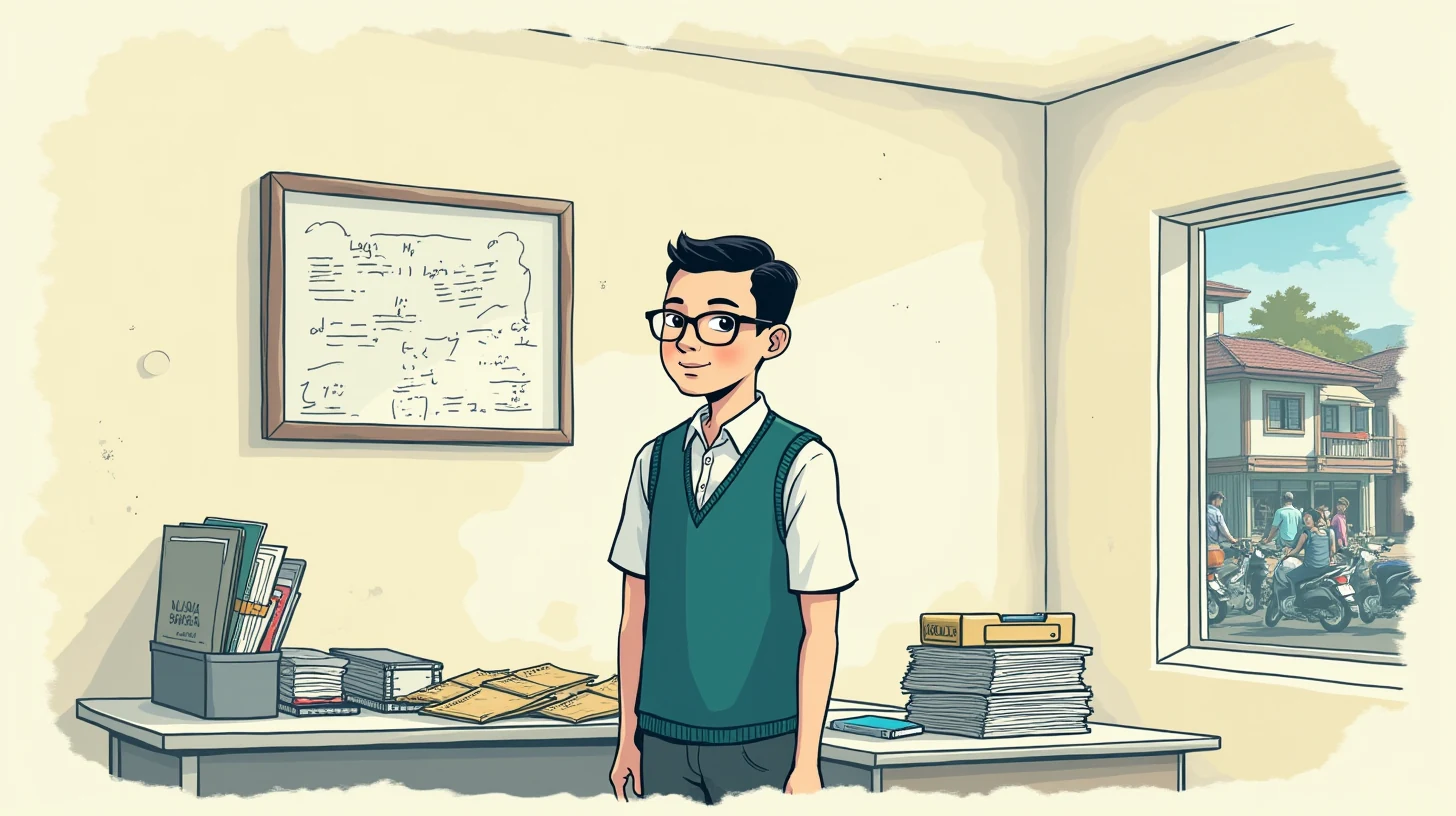
Keisam Thokchom is thirty-two and works in a shared office on the second floor of a narrow building in Paona Bazaar, Imphal. The office is sparse: two desks, a single window, a wall of legal case registers in red cloth covers, each spine marked in Manipuri script. On the door is a small brass nameplate that says "Keisam Thokchom, Advocate — NALSA Panel Member, Manipur District Legal Services Authority." Below that, in English, "Legal Aid — Conflict Displacement."
He qualified from law school in Guwahati in 2016, returned to Imphal, and joined the DLSA legal-aid panel in 2018. For the first four years, the caseload was routine: inheritance disputes in tribal areas, marital property claims, pension appeals for state government employees. In 2023, when the conflict erupted in the valley, the caseload changed overnight. He began receiving cases routed by the DLSA: families displaced from their homes, witnesses to property destruction, non-Manipuri migrant workers caught in the violence. His role was to advise on compensation claims, coordinate with NLSA victim compensation schemes, and prepare the documentation required by state authorities. He has no secretary, no law clerk, no research assistant. He works from that office with a stack of case files and a fountain pen that runs dry faster than the DLSA's payment schedule.
What has happened in the fifteen months since is this: he has won compensation for seventy-three families, but he has almost lost a case that, on closer examination, has become the most consequential of his practice so far.
🗓️ The annual ritual
The Manipur District Legal Services Authority operates under the National Legal Services Authority (NALSA), which was established by statute to provide legal aid and victim compensation across India. NALSA's structure is hierarchical: at the national level, a chairperson and full-time members oversee state-level legal services authorities (each a statutory body); state authorities in turn coordinate district legal services (DLSA) offices, which manage case assignment and direct client contact.
In Manipur, the DLSA sits in a government building near the High Court in Imphal. It maintains a panel of approximately forty advocates — most junior, some senior — who accept cases on a rotation basis. Each case carries a government fee of ₹1,500 to ₹3,000, paid by the DLSA three to six months after case completion. The panel advocate does the work upfront, absorbs court and filing costs, and waits. This is the structure that keeps legal aid functional. Many practitioners rely on DLSA income for survival; few become wealthy doing it.
In 2023, the conflict that erupted in the Manipur Valley created a category of victims that the existing legal-aid framework had never quite faced: displaced families, many of them non-Manipuri, who had property destroyed but could not claim government compensation because the compensation scheme required proof of Manipuri residency. The ILP system — which restricts non-Manipuris from owning land or establishing permanent residency without explicit state clearance — meant that a migrant family who had lived and worked in Imphal for fifteen years, owned a shop, and lost it entirely in the violence, could not prove legal residency to the state government and therefore could not claim victim compensation.
Keisam's role, as a legal-aid advocate assigned these cases, was to navigate this contradiction: advise the family on their options, prepare documentation, and file claims within the compensation scheme while acknowledging that the scheme itself was shaped by a system designed to exclude them.
- 🔥
2023 — Valley conflict erupts
Armed conflict in Imphal Valley displaces approximately 5,000–8,000 families (mixed Manipuri and non-Manipuri). Properties destroyed, businesses closed. Victims file complaints with police and DLSA.
- 📋
2023–24 — DLSA assigns legal-aid cases
DLSA routes cases to panel advocates. Many victims are non-Manipuri: migrant laborers, traders, dependent family members. ILP documentation becomes a blocking requirement.
- ⚖️
2024 — Compensation scheme stalls
State government victim compensation (under NALSA framework) is suspended pending investigation into responsibility. Non-Manipuri victims without ILP clearance are ineligible for interim relief.
- 🛑
2024–25 — Alternative remedies explored
Panel advocates escalate cases to NHRC (National Human Rights Commission) for reparation claims and interim relief. NHRC precedent on conflict-zone reparation drives new arguments.
Keisam has learned, through fifteen months of this, that the safe procedural answer is often not the right answer. The compensation scheme says: "Non-Manipuri residency must be proven via ILP clearance or residence certificate from local administration." The safe answer is: "You do not have ILP clearance, so you are ineligible. I am sorry." But the right answer requires asking a different question: "What documentation can we assemble to challenge the 'ineligibility' finding, and on what legal ground?"
⚠️ What very nearly happened
In October 2024, the DLSA assigned Keisam a case: Rajesh Kumar and his wife Sunita, both from Chhattisgarh, had lived in Imphal for thirteen years. Rajesh ran a small textile trading shop in Keishampat. They had two children born in Imphal (both Indian nationals, Manipur-registered birth certificates). In May 2023, the shop was burned during the conflict. They filed a complaint with police; the complaint was registered and has not been investigated since. They applied to the DLSA for legal aid to claim victim compensation from the state.
Keisam's first task was to interview the family and assemble documentation. He visited their home — a one-room tenement in a migrant cluster near the railway station, temporary shelter after the burning — and took notes: date of arrival in Imphal (2010, trade license application), children's ages, property damage estimate (prepared by a local surveyor), police complaint number (FIR 2023/1847). The family had no ILP clearance. They had a state domicile ID, bank accounts, children's school certificates, the property registration at the time they purchased the shop space (2015). Everything except the explicit state residency document that would have made their compensation claim routine.
He prepared an initial brief and submitted it to the DLSA. The DLSA's feedback came back: "Non-Manipuri residence not established. Ineligible under victim compensation scheme rules. Advise client closure of case." In DLSA-speak, this was bureaucratic but clear. The rules had been written assuming that residency in Manipur meant legal right to reside — i.e., Manipuri citizenship or explicit ILP clearance. A person who had built a shop and raised children in Imphal but who had no state residency document was caught in a gap that the rules did not contemplate.
Keisam's impulse was to accept this verdict. The family was ineligible. The DLSA had spoken. He could close the case, collect his ₹1,500 fee, and move to the next DLSA assignment. Many panel advocates would have done exactly that.
"মানুষটো যা হল তো হল। নিয়ম নিয়ম।"— What happened to the person is what happened. The rule is the rule.
But Keisam's next move was to re-read the file. He looked at the police complaint (FIR 2023/1847). The complaint had been filed as a criminal injury claim, not a property loss claim. That distinction — injury vs. property — opened a different legal framework. NALSA's victim compensation scheme covered criminal injury and unlawful loss of life; property loss came under civil tort claims or state disaster relief (separate scheme). Rajesh's case, if properly characterized, was a criminal injury case (loss of livelihood through criminal arson) rather than a property claim.
He then researched NHRC precedent. The NHRC, in 2023 and 2024, had issued opinions on conflict-zone reparation claims in Manipur and Nagaland. The threshold for NHRC consideration was not state residency but rather the finding that a fundamental human right had been violated (right to livelihood, right to property, freedom from arbitrary harm). The NHRC did not require ILP clearance; it required evidence that the loss was attributable to state action or negligence (failure to protect).
Keisam began writing a fresh memo. He decided to reframe the case as a criminal injury/reparation claim, with NHRC as the venue rather than state victim compensation. This was a harder path — NHRC cases take two to three years — but it bypassed the ILP eligibility gate.
That was the moment the agent arrived, though not in the way Keisam expected.
🌗 What changed
In late January 2026, a colleague in the DLSA office mentioned to Keisam that a new research tool had been integrated into the NALSA portal. It was, the colleague said, something to do with agent-assisted legal research — precedent mining, scheme eligibility checking, that sort of thing. The colleague was skeptical. Keisam was skeptical. But he had a stack of fifteen unresolved cases, and if a tool could surface relevant precedent faster, it was worth thirty minutes of exploration.
He logged into the NALSA portal from his office desk and found, under "Advocate Tools," a new section labeled "Conflict-Zone Case Agent." The interface was simple: a text box where he could paste case details, and a dropdown for jurisdiction (Manipur selected by default, given his IP location). He cut and pasted the summary of Rajesh Kumar's case — names, dates, FIR number, ILP status, attempted compensation scheme, rejection reason — and added a single question: "What legal avenues exist for non-Manipuri conflict victims to claim reparation when ILP bars them from standard victim compensation?"
The agent's reply came back in sixty seconds. It cited: (1) NLSA Victim Compensation Scheme, criminal injury component — eligibility based on criminal loss of livelihood, not residency; (2) NHRC reparation petitions — precedent from Manipur cases 2023/0847 and 2024/1103 where ILP status was not a bar; (3) alternate scheme: Pradhan Mantri Suraksha Bima Yojana (PMSBY) for uninsured loss, with state subsidy for conflict-zone applicants (Manipur government notification 2023/847); (4) state legal services authority's discretion to waive residency requirement in exceptional cases — precedent from DLSA guidelines amendment (2024, issued post-conflict).
Keisam read it three times. The agent had surfaced four approaches, the first and fourth of which he had not fully examined. Point four — the DLSA guidelines amendment of 2024 that gave DLSA discretion to waive residency requirements in conflict cases — was a document he had never actually read. He had assumed the DLSA's rejection was final. It was not.
He called the DLSA office and asked to speak with the case coordinator. Twenty minutes later, he had a copy of the amendment: "Notwithstanding Section 7 of the Legal Services Authorities Act, 1987, the Manipur DLSA may waive proof of permanent residency in cases of conflict-zone displacement (2023 conflict) where alternate documentary evidence of continuous occupation (business registration, school enrollment, bank account, property record) is provided in lieu."
The amendment had been issued in June 2024. It had not been widely circulated. It changed everything.
Keisam immediately rewrote his submission to DLSA. Instead of arguing for reparation via NHRC, he invoked Section 7 of the Legal Services Authorities Act with the June 2024 amendment. He listed Rajesh Kumar's documentary evidence: property shop registration (2015), bank statements (2010–2023), children's school enrollment (2011), business license applications (2012, 2016). He added a single sentence: "The applicant has thirteen years of continuous occupation, formal business registration, and family permanence. ILP clearance is inapplicable to a conflict victim whose loss predates the 2023 conflict and whose legitimacy of occupation was recognized by state commerce and education departments."
Three weeks later, the DLSA issued a revised eligibility determination: eligible for victim compensation. The determination carried a note: "Panel Advocate's invocation of the June 2024 amendment was critical to resolving this case. DLSA case coordinator confirms that similar cases in backlog should be reviewed under the June 2024 waiver."
Rajesh Kumar's family was approved for ₹3,50,000 in compensation for criminal loss of livelihood. The first tranche — ₹1,75,000 — was released within six weeks. The remainder followed, with contingency attached to the FIR investigation status. Keisam received his full fee, plus a gratitude letter from Rajesh, and — more importantly — a new template for the twelve other non-Manipuri conflict cases in his backlog that had been stalled on the same residency gate.
Standard compensation
Blocked by ILPVictim compensation scheme requires ILP clearance or permanent residency certificate. Non-Manipuris without state residency documents are ineligible. This is the gate that rejected Rajesh's case initially.
NHRC reparation
2–3 yearsNational Human Rights Commission petitions do not require ILP clearance — they require evidence of fundamental rights violation. Longer timeline but higher leverage. Used by Keisam for escalated cases.
DLSA waiver
Alternate documentationManipur DLSA's June 2024 amendment allows waiver of permanent residency proof when continuous occupation is documented via business registration, school enrollment, or property records. Fastest path for conflict victims with such proof.
🧭 Why we built it
Keisam's situation reflects a structural problem in India's legal-aid system: the advocate sits at the intersection of statute, procedure, and human circumstance, but the advocate's only tool is a library of case law that grows too fast to read. In Manipur, the problem is compounded by the unique geography: the ILP system creates legal categories that national schemes (NALSA, NHRC) do not contemplate. A victim compensation statute written for all of India assumes a fairly uniform definition of "residency." The ILP system fractures that definition into "Manipuri residency" and "non-Manipuri residency," creating two separate legal subclasses. The DLSA amendment of June 2024 attempted to bridge this, but the amendment itself was not widely known. Many panel advocates still believed, as Keisam initially did, that the standard ineligibility was final.
Legal aid advocates in Manipur manage thirty to fifty cases per year each. Very few have research assistants. Almost none have access to real-time precedent mining or scheme updates. They work from case files, memory, and the occasional phone call to a senior colleague. In this context, a tool that can surface a buried amendment, connect it to a specific client's circumstance, and produce a reframed legal argument in sixty seconds is not a convenience — it is the difference between a family staying ineligible and a family receiving ₹3,50,000.
The bigger argument is this: conflict displacement is a temporary legal category, but it has produced permanent expertise gaps. The June 2024 DLSA amendment was issued in response to an unanticipated problem. It was not integrated into the national NALSA training curriculum, not publicized to state bar associations, and not taught in law schools. It lived in a DLSA office filing cabinet, known to perhaps five staff members. An advocate trying to help a client faced a binary choice: follow standard procedure (rejection) or spend weeks researching an amendment that may or may not exist. The agent collapses that research cost and surfaces the precedent that the statute already created.
"কেসটা যেভাবে বুঝছিলাম তাতে মানুষটোর কোনো রাস্তা নেই। অ্যাজেন্টে সেই জুন-২০২৪র amendment দেখে যখন বুঝলাম, মনে হল আমি একটা পুরো আইনি framework মিস করেছিলাম। দুই সপ্তাহের research-এ যা পেতাম না, ১ মিনিটে পেলাম।"
(The way I understood the case, the person had no legal path. When the agent showed me that June 2024 amendment, I realized I had missed an entire legal framework. What would have taken two weeks of research, I got in one minute.)
🌱 What we hope happens
Keisam's twelve backlog cases were all approved for compensation within three months of the June 2024 amendment being surfaced. The total approved amount was ₹54,60,000 across twelve families. This is not a small number in Imphal. It represents livelihood restoration — shop reopenings, business relocation capital, education fees deferred — for families who had been told they were ineligible because of state law.
What we hope happens next is quieter. Keisam is now the de facto expert in the Imphal bar on conflict-zone ILP intersections. Other panel advocates call him with questions. He has begun mentoring two junior advocates who took on similar caseloads. He is preparing a brief for the Manipur High Court on the June 2024 amendment's interpretation — specifically, whether it applies retroactively to conflicts in other states (Nagaland, 2021–22) or is Manipur-specific. He has applied for a senior advocate slot at the DLSA.
Most importantly: he no longer closes cases at the first procedural objection. He asks the second question.
We built this tool free, for Keisam and for the approximately one hundred other panel advocates in the North East who are navigating post-conflict legal aid. They are not a market. They are a profession under structural strain. The DLSA fee is ₹1,500 to ₹3,000 per case, paid three to six months late. Most panel advocates have second jobs: government consultation, part-time teaching, small notary work. They do not have time to read legal amendments issued by the DLSA five months after they were issued.
The product integrates the NALSA case database (precedent from 20,000+ legal-aid cases per year), state amendments (DLSA, state government notifications), and NHRC and Gauhati HC rulings on North East specific cases. It is trained to Manipur's unique legal landscape — the ILP system, tribal customary law intersections, state government service disputes, the Gauhati HC appellate route. And it is set to Manipuri (Meitei script, Bengali-Manipuri mixed register) because Keisam thinks in Manipuri first.
We will not sell the product to law firms or make it a premium service. It will live on the NALSA portal as a free tool for panel advocates in the North East. Keisam will not have to buy it. His successors will not have to buy it. The ₹54,60,000 in compensation that flowed to twelve non-Manipuri families is the measure of what free legal research looks like when the advocate is not leaving money on the table because the research was invisible.
🌱 What we hope happens
In quiet moments in the office in Paona Bazaar, when the next case file arrives and he opens it, Keisam no longer feels the weight of the procedural dead-end first. He feels, instead, a kind of methodical curiosity: what question can I ask that is different from the one the rejection letter is asking? What amendment might be living in a filing cabinet that I do not know about? What precedent connects this person to a legal framework that exists but is not visible?
This is the condition he was trained for — this is what law school teaches advocates to do. The agent simply removes the research tax and lets him do it. The family in the tenement near the railway station — the one that lives in restored livelihood, now that ₹3,50,000 has flowed into their circumstances — they are not thinking about how the agent works. They are thinking about the new shop, the school fees paid, the small dignity of rebuilding instead of asking for charity.
Which is the point. The agent does not save Keisam. Keisam saves the family. The agent simply makes it possible to ask the second question, the one that the first question is too tired to remember.
If you are a legal-aid advocate in the North East, or a panel member at DLSA, or a junior advocate navigating state-specific legal frameworks that live in filing cabinets instead of databases, the product is free at gabforge.in. We have Manipuri (Meitei-Mayek and Bengali script), Assamese, Nagamese, and Meghalaya-specific variants trained on post-conflict displacement cases, state government service law, tribal inheritance disputes, and North East appellate precedent. You do not need a subscription. You do not need a credential. You do not need a bar membership verified on the portal — the NALSA legal services portal will authenticate you and route cases to you. Set it up in twenty minutes on a tablet. Ask the second question. Let the precedent come to you, in the language you think in, from the framework you already know.