
The Kavaratti doctor and the island emergency
Dr. Sunitha Menon is thirty-seven years old and has never imagined leaving Lakshadweep, though she thinks about it nearly every day. She has been a general physician for twelve years—five years at a government hospital in Kozhikode, Kerala, and seven years posted here on Kavaratti island under a National Health Mission contract. Kavaratti is the administrative capital of the union territory, a small island in the Arabian Sea with a population of about 15,000 people. The island has one government hospital: Lakshadweep Hospital, with one hundred beds, a skeleton staff of three permanent doctors though the roster says eight, and no specialists. The nearest cardiologist, surgeon, or nephrologist is in Kozhikode, 180 kilometers away across open water that closes during monsoon.
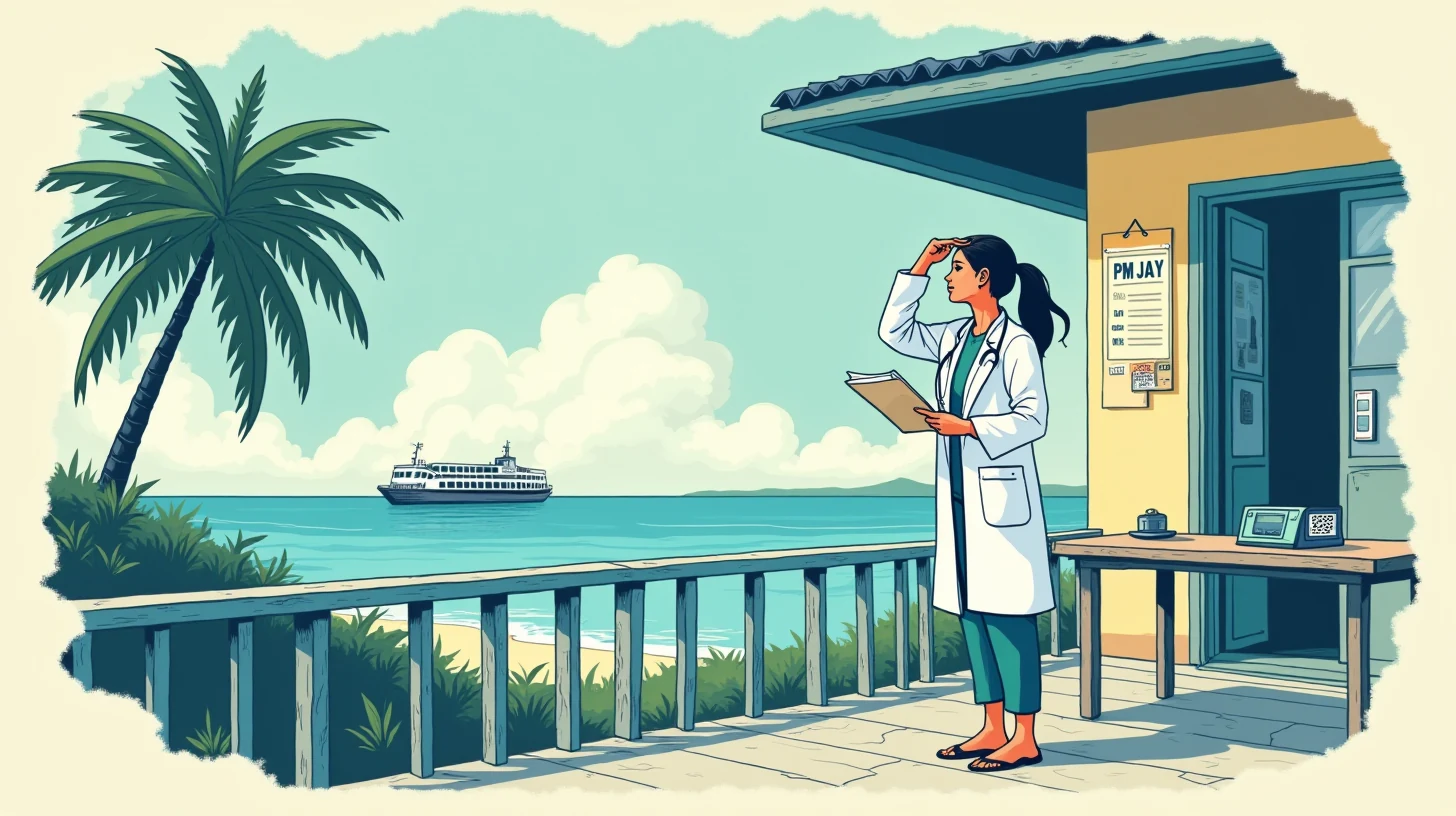
Her salary is ₹52,000 per month—a National Health Mission scale for general physicians. Her hardship allowance, for posting on a remote island with restricted access to specialty care and family separation, is ₹8,000 per month. By the standards of Kerala, where similar physicians earn ₹75,000 to ₹90,000, she is underpaid. By the standards of Lakshadweep's informal economy, where most people earn ₹15,000 to ₹25,000 monthly from dock work or fishing, she is well-compensated. She has stayed because she believes the work is important. She has stayed because the alternative—leaving the island—means someone else inherits the emergency that arrived on June 2, 2026, during the peak of monsoon season.
That evening, at 11:47 PM, her on-call phone rang.
🗓️ The annual rhythm
Medical emergencies on Lakshadweep follow a calendar written by geography and weather. The monsoon runs from June to September, when the Arabian Sea becomes rough—ferry sailings are unpredictable, sometimes cancelled for days. The Coast Guard helicopter, based in Kochi 320 kilometers away, is on standby for emergencies, but response times depend on their current location and whether the weather permits flight. For eight years, the island has handled this with a single government hospital, one or two permanent physicians, and the unspoken rule that acute illness should, if possible, arrive on a day when the ferry is running.
Most patients who arrive with emergencies at Lakshadweep Hospital are those who have waited too long. They come with uncontrolled hypertension that has silently damaged their kidneys over years. They come with infections that have spread to sepsis because the primary health center on their island—staffed by an ANM with limited diagnostic capability—could not identify the severity. They come with diabetic complications, obstetric emergencies, and heart attacks that could have been prevented if the patient had been able to see a specialist at any point in the preceding decade.
Hypertension, specifically, is the invisible killer on Lakshadweep. There is no systematic screening program. The ANMs on the smaller islands see patients for acute illness—fever, infection, childbirth—not for chronic disease management. A person can live for years with a blood pressure of 180 over 110, feeling well enough, until the day their kidneys fail and their potassium rises to a level that stops the heart.
- 🏥
Year 1–3: Silent high blood pressure
Patient lives on a small island with one ANM. No routine screening. Feels well. No symptoms. Blood pressure undiagnosed and unmedicated.
- ⚠️
Year 4–6: Kidney damage begins
The silent damage accumulates—glomerular filtration rate drops, creatinine begins to rise. Patient still feels well. No referral to Kozhikode because there is no trigger for alarm.
- 🛑
Year 7: Decompensation
Suddenly, the kidneys fail rapidly. Patient develops edema, confusion, abnormal heart rhythm. Now the emergency arrives at the hospital when it is already a crisis.
- 🚑
Emergency transport or in-situ management
Coast Guard helicopter, ferry, or improvised treatment in the island hospital. Outcome depends on timing, weather, and family's financial capacity to pay for transport.
Sunitha has learned this rhythm. She has also learned that the rhythm is, in many cases, preventable. If the ANMs on each island had a monthly telemedicine check-in with the hospital physician, if blood pressure screening were systematic, if the twelve-year gap between diagnosis and crisis could be compressed—the island's emergency rate would fall dramatically. Instead, she watches the rhythm repeat: silence, then a phone call at midnight, then a choice between death and financial ruin.
⚠️ What very nearly happened
The call came from Rajeshwari, a staff nurse who had worked at Kavaratti hospital for twenty-three years. She spoke in the tone of someone delivering bad news she had already rehearsed.
"Sunitha, we have a patient. Fifty-six years old male. Admitted three days ago for swelling in the legs and high blood pressure. His creatinine is 6.8. His potassium is 6.1. I checked twice. His urine output since yesterday is two hundred milliliters. He is confused."
Acute kidney injury, stage 5. Hyperkalemia—dangerously elevated potassium, the mineral that regulates heart rhythm. When potassium rises above 6.0, the heart's electrical system begins to misfire. Peaked T-waves on the ECG, which Rajeshwari had already noted and was watching for, meant the heart was approaching lethal arrhythmia.
Sunitha said: "Is he on cardiac monitor?"
"Yes. But his T-waves are peaked."
The clinical picture was clear. This patient needed dialysis. Kavaratti hospital had no dialysis machine. The nearest dialysis center was in Kozhikode, reachable by ferry—six to eight hours—or helicopter—thirty minutes, weather permitting.
Sunitha did what she had learned to do in seven years: she calculated the options.
Option one: manage the hyperkalemia with medications she had available—calcium gluconate to stabilize the heart, insulin and dextrose to shift potassium into the cells, sodium polystyrene sulfonate to remove potassium through the gut—and hope the patient survived the night. Outcome: unpredictable.
Option two: call the Coast Guard helicopter. Cost to the family: ₹2 to ₹4 lakhs. Cost to the patient's survival: unknown. The family might not have the money. The government might reimburse, or might not. The helicopter might arrive in two hours, or might be grounded by weather.
Option three: do both. Call the helicopter as a contingency, manage the medication as the primary strategy, and hope that one or both would succeed.
She went to the hospital.
🌗 What changed
The patient's name was Hameed. He was a dock laborer—one of the few wage-labor positions available on Kavaratti—earning ₹15,000 to ₹20,000 per month depending on shipping activity. He had had high blood pressure for three years, had been given medication at the primary health center years ago, had not taken it regularly because he felt well and the regular trips to the clinic cost time and ferry fare. Three days ago, his feet had swollen so badly he could not walk. His wife Fathima had brought him to the hospital.
By the time Sunitha examined him at 12:30 AM, his mind was slipping. His creatinine had risen to 6.8. His potassium was at 6.1. His wife was sitting in the waiting area, having calculated the same financial equation that Sunitha had in her bedroom minutes earlier.
Sunitha sat with Fathima and said, directly: "Your husband's kidneys are failing very quickly. His potassium is dangerously high. Without dialysis, his heart could stop. The only dialysis in our region is in Kozhikode. To get him there, we need the helicopter. It will cost between two and four lakhs."
Fathima's face did not change. She said: "How much do we have if we say no?"
"We have medications. They might work. Or they might not. If his potassium continues to rise, his heart could stop during the night. I cannot promise he will survive without dialysis."
Fathima looked down at her hands, then back at Sunitha. "We have fifty thousand rupees saved for our daughter's wedding next year. That is all."
In that moment, Sunitha understood that the barrier to medical care on Lakshadweep was not the distance to Kozhikode. It was the fact that a dock laborer's family, living paycheck to paycheck on a small island, did not have access to ₹2 lakhs for an emergency. It was the fact that government health insurance covered the hospital cost but not the transport. It was the fact that the island's only physician was sitting across from a woman who had just been asked to choose between her daughter's wedding and her husband's life.
She said: "Let me talk to my superintendent. Let me see what we can do."
"ഈ സമുദ്രത്തിൻ്റെ ഇരുപുറത്തുമുള്ള ആളുകളെ സൃഷ്ടിച്ച ദേവത ഇത് കുറിപ്പ് വേണ്ടതായിരുന്നു."— This God who created people on both sides of this sea—He should have noted it.
Sunitha called Dr. Ashok Sharma, the hospital superintendent. He arrived at 1 AM and looked at Hameed's chart. He called the Lakshadweep Health Department in Silvassa, the territorial capital on another island, thirty kilometers away.
The answer: Coast Guard evacuation was a medical decision, not an administrative decision. The doctor decides if it is medically necessary. If the doctor says yes, the government might cover the cost under emergency hardship relief. But "might" meant bureaucracy, meant applying after the fact, meant the family paying first.
At 2:15 AM, after the superintendent had left and Sunitha was alone in the ward, she opened her tablet—the one she had set up three weeks earlier for the emergency medical assistant on Minicoy, the southern island—and searched for the island-health-coordination agent she had been testing. She had meant to use it for antenatal screening. But Hameed's case was different.
She typed in Malayalam: "കോഴിക്കോടിൽ കിഡനി ഡയാലിസിസിൻ്റെ വെയ്റ്റ് എത്ര? കോസ്റ്റ് ഗാർഡ് ഹെലികപ്റ്റർ കോസ്റ്റ് കിട്ടാൻ പാരമ്പരിക ഹാർഡ്ഷിപ് റിലീഫ് സ്കീം ഉണ്ടോ?" — What is the dialysis wait in Kozhikode? Is there a hardship relief scheme that covers Coast Guard helicopter cost?
The agent checked the Kozhikode Medical College Hospital portal, cross-referenced the PM-JAY coverage limits, and replied in Malayalam:
"തിരുവനന്തപുരം ആദ്യം പരിശോധിക്കണം. കോഴിക്കോടിൽ ഇപ്പോൾ 4 അടിപ്പടികൂടി ക്യൂ ഉണ്ട്. എന്നാൽ കൈ കാര്യമായ കേസാണെങ്കിൽ അത് സ്കിപ് പറ്റും. പിഎം-ജെএ യ് കാര്യം പോലെ പാരമ്പരിക ദുരിതാശ്വാസ ധനം കൊടുക്കാം, പക്ഷെ അത് കോസ്റ്റ് ഗാർഡ് ഹെലികപ്റ്റർ കോസ്റ് എങ്കിലും സംഭവിച്ചതുകഴിയ സബ്മിറ്റ് ചെയ്യണം."
(Check Thiruvananthapuram first. Kozhikode currently has four patients ahead in queue. But if it is a critical case, it can be prioritized. Hardship relief funds can be applied after the fact, similar to PM-JAY, but the helicopter cost must be paid by the family first, with reimbursement following.)
Sunitha's hands did not tremble, but her breath became steady. The agent had given her something she did not have before: a specific pathway. Not a hope, but a procedure.
By 6:30 AM, after Sunitha had spent the night managing Hameed's potassium with calcium gluconate, insulin, and sodium polystyrene sulfonate—medications that were meant to be temporary bridges to dialysis, not the primary treatment—his mental status had improved slightly. His potassium had dropped from 6.1 to 5.9. The treatment was beginning to work. But his respiratory rate was rising. His lungs were beginning to accumulate fluid. Without dialysis, he was deteriorating.
Fathima came to Sunitha at 8 AM and said: "Call the helicopter. We will find the money. We will sell the gold."
Sunitha pulled out the tablet again and showed Fathima the hardship relief portal on the Lakshadweep UT Health Department website—a page she had bookmarked after the agent's guidance. She explained: the government might cover the cost after evacuation. But Fathima would need to file the claim within seven days. She wrote down the procedure in Malayalam, step by step, as the agent had laid it out.
The helicopter was confirmed at 9:15 AM. It arrived at 11 AM. By 1:15 PM, Hameed was on dialysis at Kozhikode Medical College Hospital. By evening, his potassium had dropped to 5.2. His cardiac rhythm had stabilized. Within two weeks, he was discharged with a prescription for blood-pressure medication he promised, this time, to take daily.
Fathima filed the hardship relief claim on June 8. The government reimbursed ₹1.8 lakhs within four months. The family still owed ₹20,000, which Hameed paid in installments over six months.
But Sunitha—sitting in the hospital office at 2 PM on June 2, after the helicopter had taken off and the ward was quiet—did not feel like he had survived anything. She felt like she had witnessed a crisis that should not have been a crisis. She felt like she had spent eight hours managing a potassium level with temporary medications, holding back a tide that had decided, this time, to pause.
🧭 Why we built it
There are approximately 60,000 people living on ten inhabited islands in Lakshadweep. Fewer than 200 of them have seen a cardiologist, surgeon, or nephrologist in person. Most health decisions are made by ANMs—Auxiliary Nurse Midwives—who have completed an eighteen-month training and are now the de facto primary-care providers for islands they serve. The ANMs are highly capable at what they are trained for: routine immunizations, normal deliveries, basic infections. They are not trained for diagnostic reasoning, for reading ECGs, for knowing when a patient with high blood pressure needs referral to Kozhikode before the crisis arrives.
The barriers to screening and prevention are structural. There is no systematic blood-pressure monitoring program. There is no telemedicine link between island health centers and the hospital in Kavaratti. There is no specialist consultation available short of a ferry journey and hotel stay in Kozhikode. And there is no financial support for transport costs—a family of dock laborers cannot absorb a ₹2-lakh helicopter bill without selling jewelry or going into informal debt.
What Sunitha identified, sitting in her hospital office in the aftermath of Hameed's evacuation, was that the frontier of medical care on Lakshadweep was not a lack of knowledge. She knew how to manage hyperkalemia. She knew the protocols for acute kidney injury. The frontier was the time to implement knowledge consistently, for 60,000 people spread across an archipelago, with ANMs as the primary contact point and a single government physician as the backup.
What it does
- 🔍Verifies which Kerala hospitals have dialysis capacity and current wait times, and cross-references hardship relief schemes that cover emergency transport costs.
- 🗂️Identifies which reimbursement paperwork is required before, during, and after evacuation, and provides the portal links and deadlines for filing.
- 📞Finds the specific contact pathway for Coast Guard helicopter request, wait-time expectations, and the government form for post-evacuation hardship relief claim.
What it does not do
- 🔒Never makes the medical decision to evacuate—Sunitha decides if dialysis is medically necessary, and only then does the agent help navigate the bureaucracy.
- 💳Never submits a claim, contacts the government, or files paperwork on behalf of the physician—every step is reviewed and confirmed by Sunitha or the family first.
- ✅Never decides which patients are eligible for relief—it surfaces the criteria and the forms; Sunitha and the patient's family determine eligibility.
🌱 What we hope happens
On May 20, 2026, Hameed returned to part-time dock work. His nephrologist in Kozhikode has recommended reduced physical labor while his kidney function stabilizes, but Hameed is eager to return to earning—the family has ₹80,000 remaining to pay from the helicopter cost. The government reimbursed ₹1.8 lakhs under hardship relief, but the bureaucracy took four months. He will spend the next two years recovering financially from his medical crisis.
Fathima's daughter's wedding is still planned for next year. The jewelry has been replaced with lower-grade gold, and the wedding will be smaller than originally planned. But it will happen.
Sunitha is still at Kavaratti Hospital, 9 AM to 5 PM, Monday through Friday, with an on-call roster that never closes. Her monthly income remains ₹60,000 salary plus allowance. But she has started something that the hospital does not fund and the government has not authorized: she is documenting every acute kidney injury case that arrives at the island—patient age, creatinine trajectory, blood pressure history, treatments available, outcomes. She is building a case series, unpaid, during her lunch breaks and evenings at home.
The case series is evidence that most of the acute kidney injuries on Lakshadweep are preventable. They are not genetic anomalies or rare diseases. They are the result of ten-year gaps between first diagnosis of high blood pressure and the moment a patient arrives at the hospital in crisis. If those gaps could be closed—if ANMs had a protocol for monitoring blood pressure, if patients had a reason to visit for preventive care, if there was a telemedicine link to the hospital once a month—the number of Hameeds would fall.
"എൻ്റെ കണക്കനുസരിച്ച്, കഴിഞ്ഞ മൂന്നു വർഷത്തിൽ എങ്കിലും അട്ടു പേരെ പറഞ്ഞു കാവറത്തിലേക്കു കൂടാൻ. ആറുപേർ കാണുനില്കുന്നു. രണ്ടുപേർ മരിച്ചു. ഇത് വിധിയാണോ, അതങ്കിൽ സ്ഥാപനത്തിൻ്റെ പരാജയമാണോ?"
(By my count, in the past three years, I called the helicopter eight times. Six survived. Two died. Is this fate, or is this the failure of a system that should have caught them earlier?)
Sunitha does not present herself as a reformer. She is still a doctor on a small island, still answering the on-call phone at midnight, still calculating options in the silence of the Arabian Sea. But the case series exists. It is sitting in a folder on her laptop, evidence that the crisis is not inevitable—it is the result of systems that have never been built. And she is waiting for the moment when data, instead of just experience, makes it possible to propose to the government: a telemedicine system, a blood-pressure screening protocol, a permanent ANM training program, and—quietly, alongside the medical reforms—a tool that sits on a tablet in the hospital office, set to Malayalam, that reads the hardship relief forms before the family drowns in paperwork.
The frontier of Indian medicine on Lakshadweep is not knowledge. It is not equipment. It is not the distance to Kozhikode or the monsoon or the Arabian Sea. It is time and money deployed systematically to prevent the moment when a dock laborer's family must choose between a daughter's wedding and a husband's life. And it is the quiet availability of clear, specific pathway information when the only moment to act is 2 AM on a monsoon night.
That is what we hope happens next.