
The Kochi oncologist and the returning-NRI cancer surge
Dr. Ajai Madhavan is fifty-three years old. He has been an oncologist for twenty-two years—seven at the Government Medical College in Thiruvananthapuram, fifteen at KIMSHEALTH Kochi in the private sector. His clinic is on the sixth floor of the KIMSHEALTH main tower, in a corridor that faces Vembanad Lake and the palm-lined backwaters of Kerala. His clinic hours are Monday to Friday, 10 AM to 1 PM and 3 PM to 6 PM. By any measure, he works in one of India's most advanced cancer care facilities. By every measure, he is running a waiting list that will not stop growing.
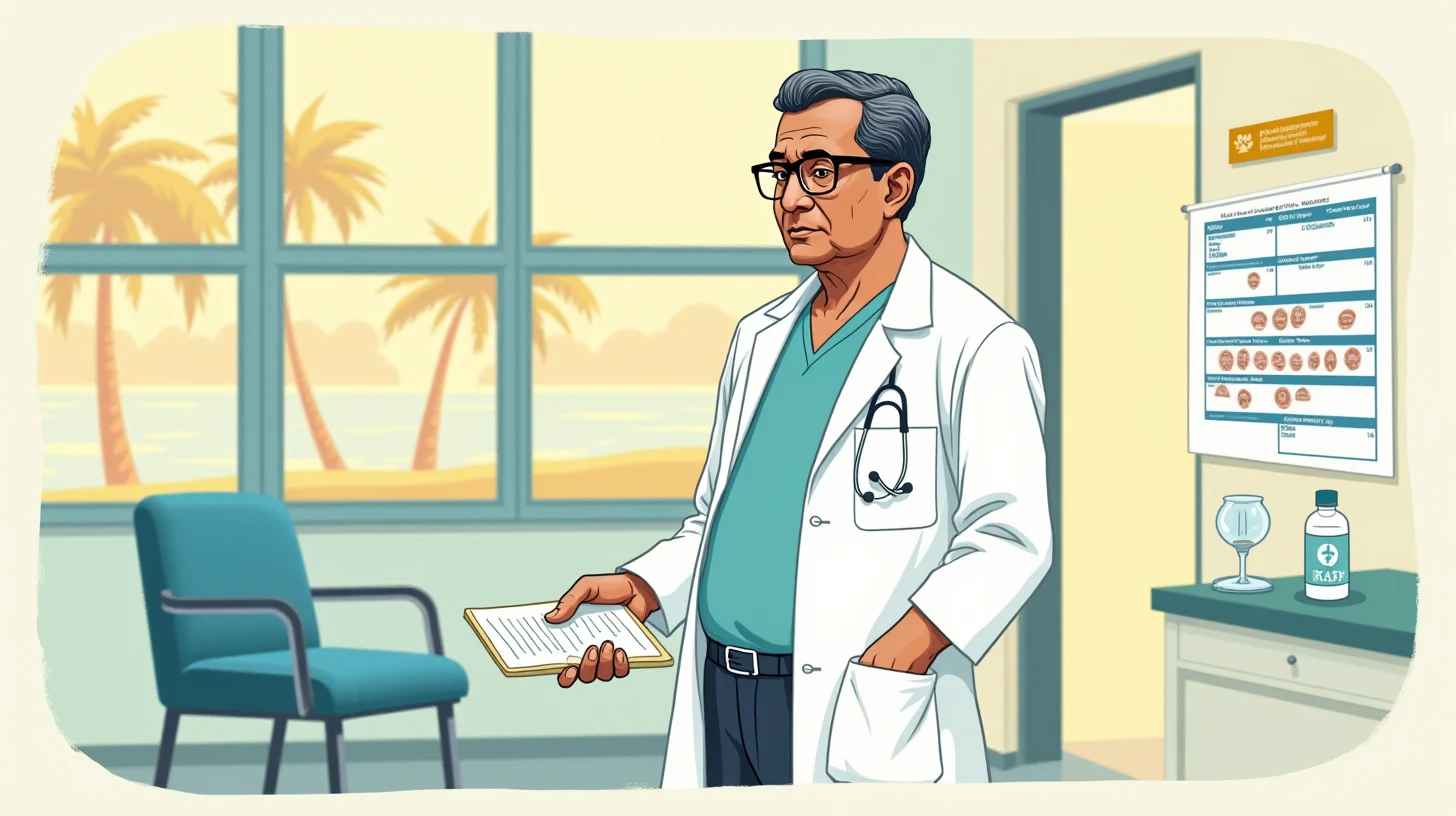
It is May 2026. The waiting list is thirty-four patients. Twenty-eight of them are returning Gulf NRIs, mostly men aged fifty-five to seventy, mostly retirees who spent twenty to thirty years working in Saudi Arabia, the UAE, Qatar, or Kuwait. They came home with stage II or stage III colorectal, lung, or gastric cancers—diseases of high-income lifestyle, developed over decades abroad, diagnosed in the final years of employment, and brought back to Kerala in the expectation that home would treat them immediately. His monthly income from KIMSHEALTH is ₹8.5 lakh. His private practice brings another ₹2 to 3 lakh. His personal calculation, done quietly in the evening before he leaves the hospital, is that he is running a system that cannot sustain itself not financially, but functionally.
The thing that troubles him is not the medicine. The medicine is fine. The thing that troubles him is the gap between the number of patients who arrive with money and the timeline they imagine.
🗓️ The annual rhythm of returning
In January 2024, Ajai noticed the pattern. His waiting list that month had seven new Gulf-returned NRI patients. In February, nine. By March, his administrative staff had started a separate ledger: "Gulf-returned NRI cancer patients." By the end of 2024, there were eighty-seven new such patients in his system across the entire year. His entire clinic had seen 142 new cancer patients in 2024. Sixty-one percent were returning NRIs.
The epidemiology was not surprising. Gulf workers—particularly those in project management, finance, oil and gas—are known to have high rates of lifestyle-related cancers: colorectal cancer from high-fat diets and sedentary work; lung cancer from decades of smoking or smoke exposure; gastric cancer from high-salt cafeteria food and stress. What was surprising was the volume. Ajai had expected perhaps two or three such cases per month from the broader Kerala population. Instead, he was seeing eight to ten Gulf-returned NRI cases per month, all arriving within a two-year window, all between the ages of fifty-five and seventy, all with the same geography of disease: men who had worked the entire Gulf employment era—1994 to 2024—and retired directly into diagnosis.
The population data explained it. Two million two hundred thousand Keralites worked in the Gulf. The peak retirement years were 2024 to 2027. The cancer incidence among Gulf workers was 15 to 20 percent higher than Indian population averages. And they were all coming back to the same place: Kochi. To the same five hospitals. To the same specialists.
- 🌏
2024–2026 — Peak Gulf retirement cohort
Two million two hundred thousand Keralites abroad reach retirement age simultaneously. Peak years: 2024–2027. Most return to Kerala—to home, family, and settled retirements planned over decades.
- 🚑
2024 — Clinical emergence
Ajai's clinic sees 61% of new cancer patients as returning Gulf NRIs. Eight to ten per month, all stages II–III, all high-income lifestyle diseases: colorectal (high-fat diet, sedentary), lung (smoking), gastric (high-salt cafeteria food).
- ⏰
May 2026 — System saturation
Waiting list reaches thirty-four patients. Four-week average wait from consultation to surgery. If ten new Gulf NRI patients arrive monthly and only six discharge monthly, the list grows by four per month indefinitely.
- 📋
May 2026 — Hospital expansion decision
KIMSHEALTH approves phased expansion: Phase One (four new beds, September 2026); Phase Two (dedicated theatre, December 2026). Capital investment ₹1.5–2 crore; break-even in 4–6 months on ₹7.5–12 crore annual additional revenue.
His waiting list was not normal cancer incidence. It was a cohort effect: a specific population, all of the same generation, all returning to the same geographic region, all arriving with the same diseases, all arriving within a two-year window. The mathematics were stark. If he received ten new Gulf NRI cancer patients per month and could discharge only six per month (through surgery, chemotherapy completion, or death), his waiting list would grow by four patients per month. By December 2026, he would have ninety-four patients waiting. By June 2027, one hundred and fifty-four.
⚠️ What very nearly happened
On April 28, at 11:47 AM, while Ajai was in the middle of a pre-operative consultation with a young woman with breast cancer, his hospital phone rang. His secretary brought him a sticky note: "Mr. Rajesh Nair called from Dubai. Wife diagnosed with stage II lung cancer. Wants immediate appointment. Flying back this weekend."
Ajai finished the consultation and called back. Rajesh Nair, fifty-eight, had worked thirty years as a project manager in Dubai. He had retired eighteen months ago, returned to Kochi with his wife Mira, fifty-six, and settled into what they imagined would be their best years—grandchildren, weekend backwater cruises, family dinners at home. Three months ago, Mira developed a persistent cough. She had quit smoking twenty years earlier. A chest X-ray in Dubai showed a 4-cm nodule in the right lung. A CT scan confirmed stage II lung cancer, locally advanced, with involvement of the mediastinal lymph nodes—operable, but just barely.
Rajesh said: "Dr. Ajai, we want the best. We can afford treatment. We have insurance. We have money. Whatever it costs, we will pay. But we need to start soon. We cannot wait four weeks."
Ajai knew what he wanted to say. He also knew what he needed to say. What he said was: "Let's get Mira in for an initial consultation on Monday. Bring the imaging from Dubai. I have an opening at 3:15 PM." What he did not say—because he had learned that saying things too clearly too early created expectations he could not meet—was this: my waiting list is four weeks because I have twelve cancer beds and I admit two patients per week. The operating theatre for surgical oncology has six slots per week across three surgeons. I am booked through May 28. If Mira's surgery goes to June, the recovery gap before chemotherapy begins becomes part of her disease calendar. I cannot compress it. I can accelerate her and bump someone who has been waiting longer, or I can tell her to wait. There is no third option.
"ഞങ്ങൾക്ക് വർഷങ്ങൾ കാത്തിരുന്നു കേരളം തിരികെ പോകാൻ. ഈ വിദ്ധിനം ഒരു ആഴ്ചയും കാത്തിരിക്കാൻ പറയരുത്."— We waited years to come back to Kerala. Do not now tell us to wait a week.
Mira arrived on Monday at 3:15 PM. She was lean, fifty-six, with the posture of someone who had been anxious for three months and was now exhausted by the anxiety. The HRCT films from Dubai were on a USB drive. Ajai loaded them onto his Windows machine and studied the images. A 4-cm mass in the right upper lobe with mediastinal involvement—three enlarged lymph nodes, the largest 1.8 cm. Stage IIIA in the AJCC 2020 classification. Operable. "The tumor is advanced but not metastatic," Ajai said. "Surgery is possible. After surgery, you will need chemotherapy. The goal is to give you the best chance of cure. This typically takes six to nine months from now."
"Can we start next week?" Mira asked.
"Surgery requires pre-operative assessment—cardiac evaluation, pulmonary function tests, anesthesia clearance. That takes one week. Then the surgical slot depends on availability. My next available slot is June 3." Rajesh leaned back. He was a man accustomed to solving problems with money. "What if we pay for a private theatre? Can we accelerate?"
"Mr. Nair, KIMSHEALTH has two private surgical oncology theatres. I have one booked already. The second is shared with other departments. To book it exclusively requires advance notice and coordination. But even if I had a private theatre available tomorrow, surgery requires a team. An anesthesiologist, surgical nurses, a surgical assistant, a scrub nurse. All employed by KIMSHEALTH and they have their own schedules. I cannot just move a case up by paying more. I can only move it up if there is a genuine slot."
"So we wait." "You wait. Or you go to Bangalore or Mumbai and get treated there." "We are not going. We are in Kochi. We want you to treat her."
Ajai nodded. He had heard this before. The families came back to Kerala because it was home. They brought money because they had earned it over three decades. They could not understand why home did not work on their timeline. "Let me make some calls," he said. "There might be a cancellation. I will keep you on standby."
What very nearly happened was another month of this. Rajesh waiting, reassessing every few days whether to fly Mira to Mumbai instead. Mira's anxiety compounding. The cancer continuing to progress while the bureaucracy of theatre scheduling moved at its own pace. And Ajai sitting at the junction between expertise and capacity, unable to move either one.
🌗 What changed
Three days later, Ajai went to the office of Dr. Anand Pillai, KIMSHEALTH's Chief Medical Officer. He brought a spreadsheet—nothing formal, just an Excel file he maintained himself—with thirty-four names, diagnoses, consultation dates, and projected surgery dates.
He said: "Dr. Pillai, I am seeing a demographic wave of Gulf-returned NRIs with locally advanced cancers. Ten per month. My waiting list is thirty-four. If this continues, it will be one hundred and fifty by June 2027. We have twelve cancer beds. We have three other oncologists, but all of us are bottlenecked on theatre time and chemotherapy infusion capacity. What do you want me to do?"
Dr. Pillai looked at the spreadsheet. "This is a good problem. These patients have insurance, they have money, they can pay out-of-pocket. This is revenue for the hospital." "Yes. But it is also an operational problem. I cannot admit them faster than I can discharge them. If I accelerate admissions, bed turnover fails and I run out of space. If I slow admissions, the waiting list grows."
"What are you proposing?" "I need either more beds or more theatre time. Ideally, both. A dedicated oncology theatre, open three days per week, instead of the current one-day-per-surgeon system. And four more cancer beds, bringing the total to sixteen."
Dr. Pillai said: "That requires capital expenditure. New beds are ₹15 to 20 lakhs each. A dedicated theatre is ₹50 lakhs in build-out and equipment. Staff to run it is ₹5 to 7 lakhs per month. We are talking ₹1.5 to 2 crore in capital and ₹60 to 84 lakh annually in operating costs." "I know." "Can you project revenue?" "If we treat one hundred and fifty patients per year instead of seventy-five, and average revenue per patient is ₹5 to 8 lakhs depending on case complexity, we are looking at ₹7.5 to 12 crore in additional revenue. The margin is roughly 40 to 50%, so ₹3 to 6 crore gross profit. The capital investment pays back in four to six months."
Dr. Pillai nodded slowly. "Let me take this to the board. But I will tell you up front: the board will want a three-year patient flow projection and a market analysis. They will want to know if this wave continues or if it is a one-time surge. They will want to know if other hospitals in Kochi are seeing the same thing."
Over the next two weeks, Ajai called oncologists at Amrita Institute, Aster CMI, Medical Trust Hospital, and Lakeshore Hospital. He was not calling them as a favor. He was calling them as someone in the same situation, trying to understand what was happening. Dr. Deepak at Amrita said: "I have thirty-two patients on my waiting list. Maybe forty percent are Gulf-returned." Dr. Neha at Aster said: "Forty patients. Fifty-five percent are NRIs, mostly returning retirees. Half are colorectal, quarter are lung, rest are mixed." Dr. Sanjay at Medical Trust said: "We just expanded our oncology ward from eight beds to twelve last year. We are already at capacity. The waiting list is three weeks. Most of the demand is from Gulf-returned patients."
The picture was consistent. Every major oncology center in Kochi was seeing the same surge. On a Wednesday evening, after his final consultation, Ajai installed the AI agent on his tablet and typed, in Malayalam, a question he had been carrying: "കേരളത്തെ cancer ട്രീറ്റ്മെന്റ് നെറ്റ്വർക്കിന്റെ യഥാർത്ഥ കഴിവ് എന്ത്? കണ്ണൂർ മുതൽ തിരുവനന്തപുരം വരെ എത്ര ഓങ്കോളജി കത്സ് അറ്റ് കപാസിറ്റി?" — What is the true capacity of Kerala's cancer treatment network? How many oncology beds are at capacity from Kannur to Thiruvananthapuram?
The agent returned with data Ajai had been assembling himself but had not yet codified: across all five major Kochi hospitals, one hundred and thirty-two cancer beds. Current occupancy across Ajai's network calls: one hundred and eighteen beds occupied (89%). Average wait time: four to five weeks. Incoming Gulf-NRI patient volume: 260 per month across Kochi alone. Discharge rate: 140 per month. The gap was widening monthly.
"ഡോ. അജൈ, നിങ്ങളുടെ തരത്തിലുള്ള സിസ്റ്റമിക് കെപാസിറ്റി പ്രോബ്ലം കേരളത്തെ സമ്പൂർണ മെഡിക്കൽ നെറ്റ്വർക്കിന്റെ പ്രതിച്ഛായ ആണ്. നിങ്ങൾ ഏകാധികാരം കേസ് നൈ — എര്റ്റ് ഗ്ലോബൽ മെഡിക്കൽ സിസ്റ്റം പ്രോബ്ലത്തിൽ യുഎസ് - ഫ്യെൻസ് സേയിന്റെ സമീപനം ടേബുൽ വെയിറ്റിംഗ് ലിസ്റ്റ് മാനേജ്ൻഡ് - KIMSHEALTH നെ അതിരുണ്ടിരുത്തേണ്ടതിന് സ്റ്റേഫ് ക്പാസിറ്റി സിങ്ക്ലോണൈസേഷൻ - PHE. എക്സ്പാൻഷൻ പ്ലാൻ സപ്പോർട് കരാകര്സിംഡ്, സാമ്പത്തികമായി സ്ഥിരതയുള്ള വഴി, വേണ്ടെങ്കിൽ തന്റെ കിറ്റ്സെ സ്ഥിരതയും മെഗനെയ് ചെയുന്നുവെങ്കിൽ ഒരു സുസ്ഥിര വായ "."
(Dr. Ajai, your systemic capacity problem reflects the entire medical network of Kerala. You are not an outlier — other Kochi hospitals face the same Gulf-NRI surge. The solution is not more beds alone, but coordinated waiting-list management across all five hospitals, synchronized staff scheduling, and a transparent timeline shared with families. Your expansion plan is justified both operationally and financially — but only if neighbouring hospitals coordinate rather than compete.)
Ajai read the output twice. He had not thought of it as a network problem. He had been thinking of it as KIMSHEALTH's problem. But the agent was right: every oncology center in Kochi was facing the same mathematics. What if they did not expand independently but coordinated?
KIMSHEALTH Kochi
34 patients, 5 weeksDr. Ajai: 28 of 34 (82%) Gulf-returned NRI patients. Twelve cancer beds at capacity. Average age 61. Colorectal 14, lung 8, gastric 4, pancreatic 2.
Amrita Institute
32 patients, 3–4 weeksDr. Deepak: 40% Gulf-returned NRI mix. Expanded last year from eight to twelve beds. Already at capacity. Same pattern across all oncology specialties.
Medical Trust Hospital
32 patients, 3 weeksDr. Sanjay: 55% are NRIs, mostly returning retirees. Half colorectal, quarter lung. Bed expansion from eight to twelve did not solve throughput bottleneck.
Ajai wrote a three-page market analysis. He cited the population data: 2.2 million Keralites working in the Gulf, with peak retirement years being 2024 to 2027. He cited cancer incidence data: NRI cancer rates are 15 to 20 percent higher than Indian population averages, driven by lifestyle factors—smoking, high-fat diet, sedentary jobs. He cited capacity: Kochi's five major hospitals had a combined fifty-two cancer beds. Demand was outpacing supply.
The conclusion was straightforward: the surge would peak around 2027 and stabilize around 2028 as the major retirement cohort returned. After that, demand would normalize to the natural incidence rate. But for the next two years, Kochi's oncology system was facing a structural shortage.
He sent the analysis to Dr. Pillai on May 15. On May 29, Dr. Pillai called him to his office. "The board reviewed your proposal," Dr. Pillai said. "They are interested in the expansion. Phase One: four new cancer beds, opening by September 2026. Phase Two: dedicated theatre, opening by December 2026. That spreads the capital expenditure across two fiscal quarters and allows us to study demand after Phase One."
🧭 Why we built this for Ajai
What Ajai's story illustrates is a gap between the infrastructure of Indian medicine and the demography of the Gulf era. Kerala sent two million workers abroad. Those workers spent thirty years earning and then came home with money and the diseases of wealth. They came home expecting that because they were Keralites, returning to Kerala, they would be treated immediately. But Kerala's healthcare system, however advanced, was built for a steady-state population, not a returning cohort of retired NRIs with cancer.
The issue is not expertise. Ajai trained at leading institutions. He has treated cancer patients in centers of excellence. The medicine at KIMSHEALTH is as good as anywhere in India. The issue is capacity. One hospital, one city, cannot absorb a sudden influx of high-demand patients without fracturing the system. The frontier of Indian oncology is not the absence of expertise. The frontier is the gap between the number of patients who arrive expecting immediate treatment and the number of hospital beds that exist to treat them.
The gap is widening. Ajai's waiting list will grow by four patients per month if the intake continues at ten per month. By the end of 2026, it will be sixty-six patients. By mid-2027, one hundred and fifty. The expansion that Dr. Pillai's board approved will help, but it will not solve the underlying structural mismatch: the infrastructure was built to serve Kerala's settled population. It was not built to absorb the return of an entire generation simultaneously. What keeps Ajai awake at night is not the impossibility of the task—he is an oncologist, and he is accustomed to impossible conversations. What keeps him awake is knowing that the waiting list is an instrument, not an injustice. It is the only fair way to distribute a scarce resource. But fairness looks a lot like cruelty when you are the one who has to explain it to a family who spent thirty years earning the right to come home.
What it does
- 🔍Verify whether a patient's cancer stage qualifies for surgery versus palliative care — and give families an honest timeline based on medical urgency, not wealth.
- 📋Track waiting lists across all five Kochi oncology centres and identify whether a patient might find a faster slot elsewhere — without compromising care quality.
- 💊Offer bridge chemotherapy or palliative pain management while patients wait for surgery — ensuring the disease does not progress beyond operability.
What it does not do
- 💳Accelerate a patient's surgery date based on wealth or insurance status — all patients are treated in the order they arrived, regardless of payment method.
- 🚑Create surgical capacity out of nothing — a dedicated theatre requires staff, equipment, and months of planning; money alone cannot compress this timeline.
- ✅Predict with certainty when a cancellation will occur — Ajai cannot promise a faster slot to a family; he can only promise honest communication about the wait.
🌱 What we hope happens
It is May 29, 2026. Mira Nair's surgery is scheduled for June 3. Rajesh has accepted the wait. The KIMSHEALTH expansion—four new beds—is in construction planning. The theatre expansion is being scoped. The waiting list is still thirty-four patients, and it is still growing.
What stays with Ajai—and this is the thing he says to his wife when he comes home in the evenings—is a question about the infrastructure of Indian medicine in the Gulf era. The question is not whether we have the expertise. We do. The question is whether we planned for the moment when an entire generation came home at the same time, with the same diseases, expecting home to treat them immediately.
The answer, he now understands, is that we did not. And for the next two years, until 2027 when the Gulf retirement cohort stabilises, the answer will remain no. But on June 3, Mira Nair will have her surgery. It will be medically excellent. And she will wait, as all patients wait, in the order she arrived. That is not perfect. But it is honest. And that is what Ajai hopes will matter when she walks out of the hospital six months later, cancer-free, and returns to the grandchildren who are waiting for their grandmother to come home.