
bhubaneswar-pattachitra-shop-and-the-gi-producer-registration
Seema Moharana arranges the latest Pattachitra paintings on the whitewashed wall of her stall at Ekamra Haat in central Bhubaneswar. Ochre-and-indigo temple scenes, the women's heads tilted in grace notes of gold leaf, each piece a week of work inherited through her family line. Her mother had done this. Her grandmother had. On the shelf below, folded Sambalpuri sarees in red and green ikat catch the afternoon light—woven in Sambalpur district, sixty kilometres west, the thread work done by the same weaving families she has known since childhood.
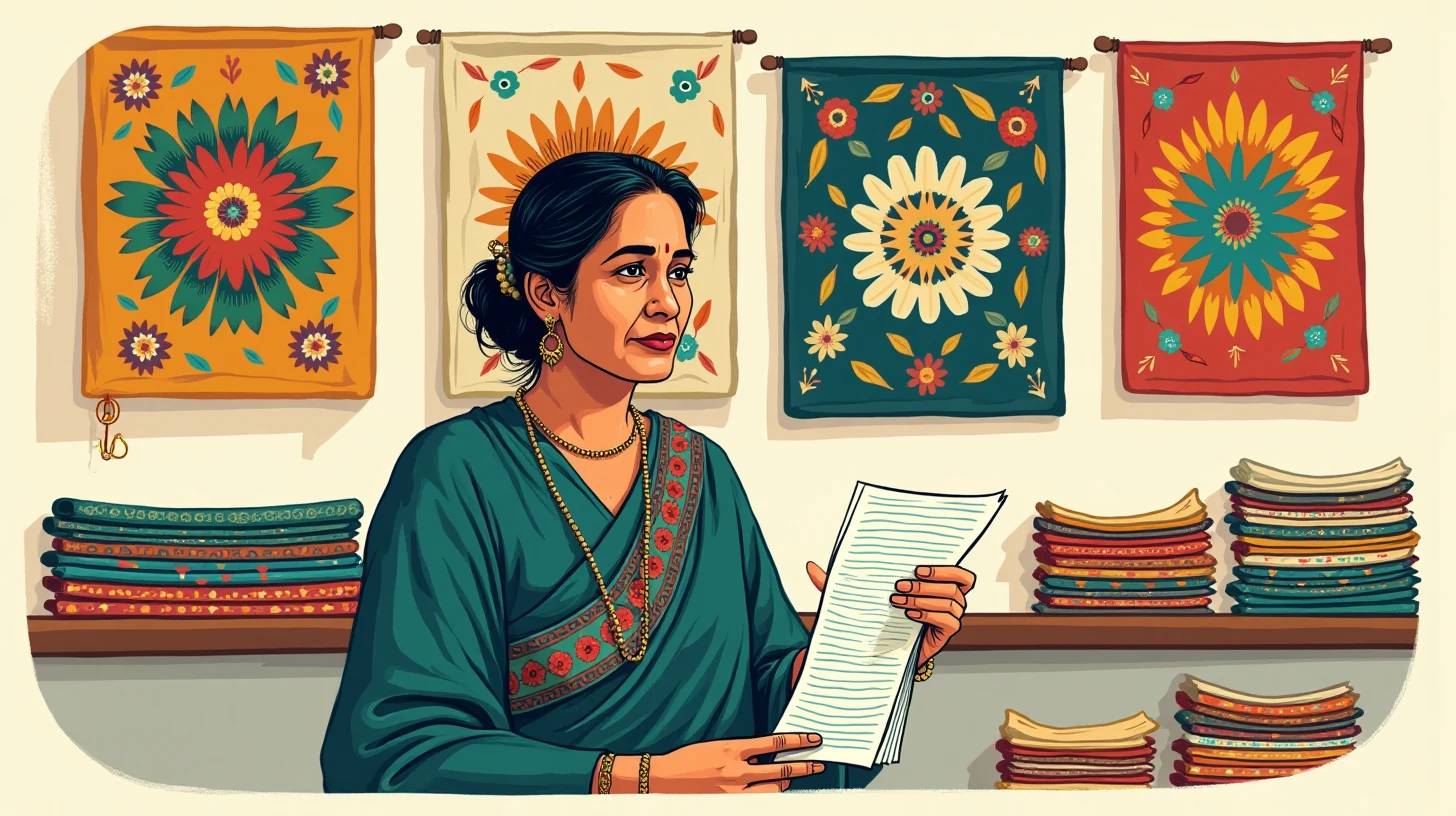
At forty, Seema has built a steady reputation among local collectors and regional galleries. But last month, a gallery in Delhi that she had spoken with for months sent her a message with conditions attached: they would place a substantial bulk order—thirty Pattachitra pieces, twenty sarees—on one condition. They needed a GI producer registration certificate before they signed the contract.
GI producer registration. Geographical Indication. Seema had heard the term before, in the context of Pattachitra being protected across India. But the process? That remained obscure.
🗓️ The GI Tag and the Registration System
Pattachitra—the scroll painting tradition of Odisha—carries a Geographical Indication (GI) tag, registered in 2007. Like Darjeeling tea, Basmati rice, or Champagne wine, GI status restricts use of the name to authentic producers from the recognized region and trained in the traditional method. For Pattachitra, that region is primarily Raghurajpur village in Puri district, though producers from recognized lineages in other parts of Odisha—and indeed, artists trained in the craft—can register as authorised GI producers.
The GI tag is meant to protect quality and authenticity. But it creates a barrier that many sellers—especially individual artisans working from regional markets—don't understand. The system itself sits at the intersection of intellectual property law, handicraft policy, and state cultural promotion. And the pathways to registration are not intuitive.
Alongside this, Odisha has its own cultural commerce infrastructure. The Odisha Handicrafts Corporation (OHPC) is a government body tasked with promoting and procuring craft goods for state initiatives, national exhibitions, and institutional gifting. OHPC has a seller empanelment scheme that gives registered producers access to guaranteed purchase, national marketing platforms, and direct procurement from government institutions. It is a parallel but separate pathway to legitimacy and sales.
For many sellers like Seema, both systems exist in a fog.
⚠️ The Gallery's Condition and the Portal Problem
Seema opened her laptop and navigated to the GI Registry website. She found herself looking at a portal designed for lawyers, intellectual property professionals, and administrators. The language was legal. The forms assumed prior knowledge of trademark law and registered proprietorship. There were sections on opposition, cancellation, and infringement—matters that belonged to large associations and registered proprietors, not to an individual seller working from a craft market.
She tried to find an "application form" for individual producers. There was nothing obvious. She called the Delhi gallery to explain the confusion. They were sympathetic but firm: without a GI producer registration certificate on her letterhead, they could not proceed with such a large order. Their own lawyers required it for supply-chain documentation.
This is where many sellers get stuck. The GI Registry portal presents itself as the obvious place to apply. But for individual artisans, it is a dead end. The actual registration happens elsewhere—through a different channel, governed by a different administrative structure.
Seema's craft is not in question. Her lineage, her training, her skill—all legitimate. But the path to prove it formally to a Delhi gallery, to make that legitimacy portable and documented, remained blocked.
🌗 A Culture Officer Shows the Way
At a regional crafts fair in Bhubaneswar the following week, Seema was setting up her stall when a government culture department officer stopped to admire the Pattachitra pieces. The two fell into conversation about the challenges of scaling. Seema mentioned the gallery order and the GI registration puzzle.
The officer smiled. "Have you heard of GabFORGE?" he asked. "There's an AI agent that explains exactly these kinds of government schemes—in Odia, so you don't have to struggle with English documentation."
Seema was skeptical of AI, but the officer showed her the interface. Within minutes, she was chatting with the GabFORGE agent, speaking in her own language.
She explained her situation: a gallery requiring a GI producer registration certificate, and confusion about how to apply.
The agent responded clearly, in Odia:
"ସୀମା, GI ପ୍ରଡ଼ୁସର ରେଜିଷ୍ଟ୍ରେସନ ପାଇଁ ସିଧା GI Registry ରେ ଆବେଦନ ହୁଏ ନାହିଁ — ସେଇଟା ଆଇନଜୀବୀ ଓ registered proprietor ଙ୍କ ପାଇଁ। ତୁମ ପାଇଁ Raghurajpur ର Shilpa Guru Craftsmen Association ଙ୍କ ମାଧ୍ୟମରେ ଆବେଦନ ଦିଅ — ସେମାନେ Pattachitra ର registered proprietor। OHPC empanelment ପାଇଁ odishahandicraft.gov.in ରେ ଦିଅ।"
(Seema, GI producer registration can't be applied for directly on GI Registry — that's for lawyers and registered proprietors. For you, apply through the Shilpa Guru Craftsmen Association in Raghurajpur — they are Pattachitra's registered proprietor. For OHPC empanelment, apply at odishahandicraft.gov.in.)
The agent went further. It explained that the Shilpa Guru Craftsmen Association, based in Raghurajpur, is the legally recognized proprietor of the Pattachitra GI tag. Individual producers—including those from neighbouring regions and those trained in the tradition—can apply for producer registration through the association. The association verifies lineage, training, or apprenticeship, and then submits the producer registration application on the individual's behalf to the GI Registry.
It was a two-step system, not one. First: apply through the association (your proof of craft legitimacy). Second: the association files with the GI Registry (the legal channel).
And OHPC? The agent explained that separately. OHPC empanelment is not the same as GI registration, but the two complement each other. OHPC seller empanelment gives Seema access to:
- Direct procurement for government institutions and national projects
- Inclusion in OHPC's national marketing and exhibition roster
- A government seal of approval that galleries and buyers often find reassuring
- Potential participation in state-sponsored craft fairs and exports
The applications were on parallel but separate timelines. She could file both.
🧭 The GI Authentication Gap in Odisha's Craft Market
What the agent helped Seema understand is a structural gap in how India's handicraft authentication system works.
The GI tag protects a tradition at the national level. But individual producers—especially those outside the primary geographic cluster (Raghurajpur)—exist in an ambiguous zone. Are they authentic? Are they trained? Have they inherited the craft? Are they diluting the tradition? The system needed a way to verify without requiring every seller to hire a lawyer.
The registered proprietor—the craft association—is the legal intermediary. The Shilpa Guru Craftsmen Association in Raghurajpur serves this role for Pattachitra. They know the lineages, the training, the standards. When an individual producer registers through them, they are essentially vouching for that producer's legitimacy. The GI Registry then issues a producer-level certificate, distinct from the broader GI tag, that certifies the individual as an authorised producer.
Odisha's OHPC fills a different gap. While GI registration is about legal authenticity and intellectual property, OHPC empanelment is about market access. OHPC is a procurement agency. When a seller empanels with OHPC, they are entering a government supply network. This gives them visibility and legitimacy in the eyes of corporate buyers, government institutions, and even galleries—many of which prefer buying from government-affiliated suppliers for audit and compliance reasons.
For Seema, both matter. The GI certificate satisfies the Delhi gallery's legal requirement. The OHPC empanelment opens doors to institutional buyers and national craft initiatives—potentially worth more than a single gallery order.
What it does
What it does not do
"ଯାଇ GI Registry website ଖୋଲିଲି — ବୁଝିଲି ନାହିଁ। ତା'ପରେ ଜାଣିଲି ଯେ ଏ ଆବେଦନ ଆଉ ଅଲଗା ରାସ୍ତାରେ ଯାଏ।"— I opened the GI Registry website — couldn't understand it. Then I learned the application goes through a different path entirely.
🌱 Registration Filed, OHPC Application Started
With the agent's guidance, Seema drafted an email to the Shilpa Guru Craftsmen Association in Raghurajpur. She included documentation of her family's lineage as Pattachitra painters, photographs of her work, and a brief history of her training under her mother and grandmother. She explained the Delhi gallery's order and the need for a producer registration certificate.
The association responded within a week. They asked for a few additional documents—high-resolution photographs of completed pieces, a brief write-up on her techniques, and signatures from two other association members who could vouch for her training. Standard verification.
Alongside this, Seema filled out the OHPC seller empanelment application at odishahandicraft.gov.in. This was more straightforward—her name, address, craft type, annual production capacity, pricing, and bank details. OHPC processes empanelments in batches, typically within 45-60 days. Once approved, her name would appear in OHPC's digital directory, and she would receive notifications about procurement opportunities.
Three weeks later, the Shilpa Guru Craftsmen Association submitted her producer registration application to the GI Registry on her behalf. The process, they explained, typically takes 30-45 days. In Seema's case, it took 38 days. A certificate arrived—formal, on government letterhead, with her name, the GI tag reference, and a producer registration number. It stated that Seema Moharana, producer from Ekamra Haat, Bhubaneswar, is an authorised Pattachitra producer under GI protection.
She forwarded it to the Delhi gallery. They confirmed the order two days later.
The OHPC empanelment came through 52 days after submission. Seema received an email notification and access to the OHPC supplier portal. Within the first month, she fielded inquiries from two government institutions looking for Pattachitra pieces for a national exhibition. One was a bulk order—smaller than the gallery's, but at government rates with guaranteed payment.
What had seemed like an impenetrable regulatory barrier—a Delhi gallery's legal requirement, a government system designed for lawyers—became navigable once Seema understood the actual structure. The channel existed. The association was there to help. OHPC was accessible. But without someone explaining it in clear language, in her language, the doors appeared locked.
The agent did not file the forms. It did not contact the associations or guarantee outcomes. What it did was clarify a map that had been obscured. In Odia, without jargon, showing Seema exactly which door to knock on and why that door—not the obvious one on the GI Registry website—was the right one.
Today, Seema's stall at Ekamra Haat displays two framed certificates on the wall: the GI producer registration, and the OHPC empanelment approval. They are not just documents. They are proof that the craft system, opaque as it seems, has pathways built in for people like her. You just need someone to draw the map.