
Gurugram auto parts shop and the EPFO/Shram Suvidha notice
Deepak Sharma has run his auto parts shop in Old Gurugram for a decade. Two full-time workers handle the counter and stock. Three part-timers deliver orders to repair shops across the city on their two-wheelers—delivery gigs that Deepak pays them for by the trip. It's a lean operation: Rs 15–20 lakh annual turnover, family-managed, the kind of shop you see on every industrial street in Haryana.
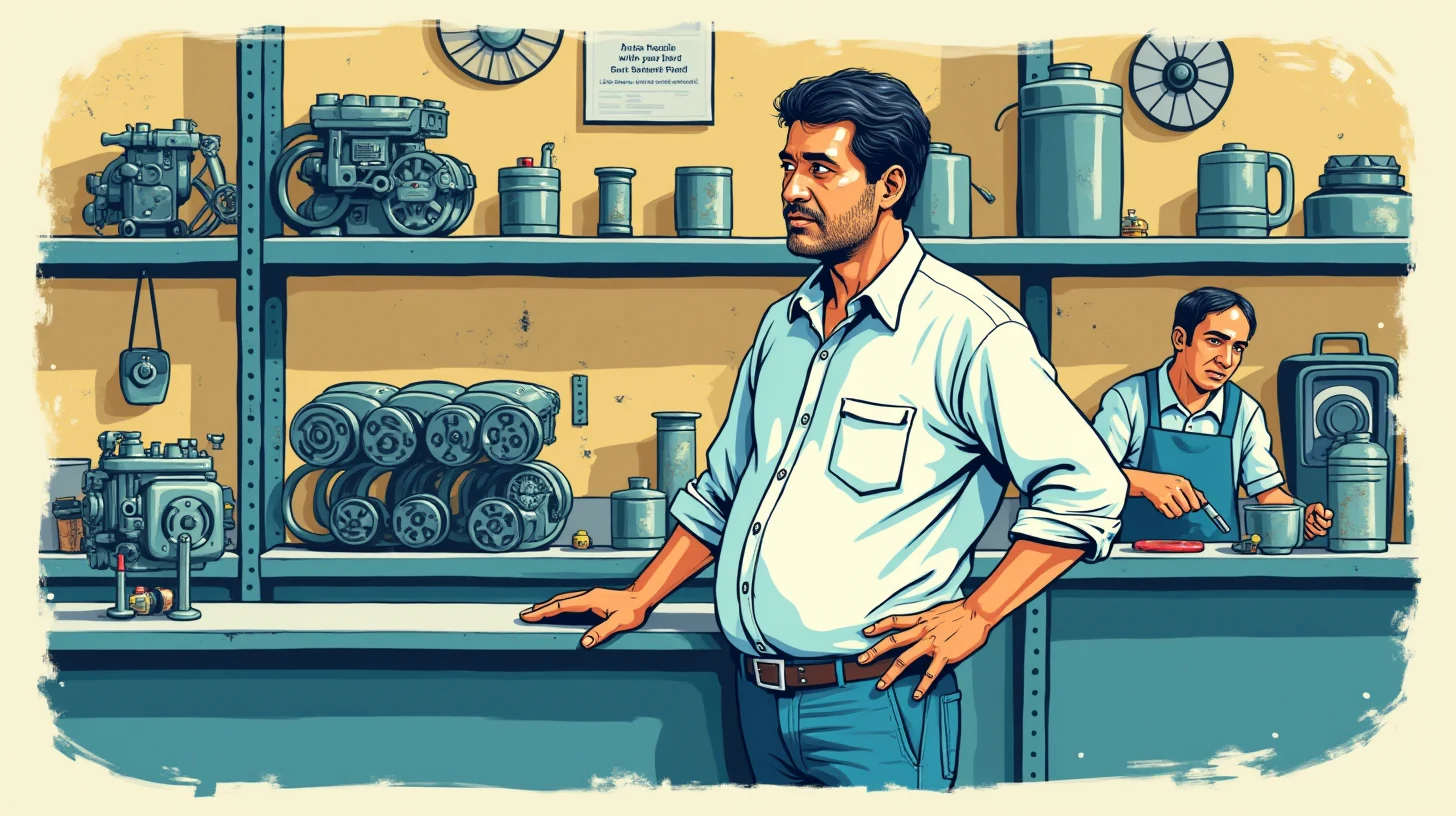
Then the notice arrived.
A Shram Suvidha portal message: Employees State Insurance Corporation (ESIC) registration required. Establishments employing 10 or more workers must register for social security. Deepak's stomach dropped. He called his CA immediately. "Don't worry," the CA said. "That threshold is EPFO—20 employees. You're nowhere near it." But the Haryana Labour Department's email was clear. And then came the inspector.
🗓️ EPFO and ESIC: The two-threshold maze
The confusion is routine in shops like Deepak's. India's labour laws run on multiple thresholds, each triggering different obligations:
EPFO (Employees' Provident Fund)—the retirement and gratuity scheme—kicks in mandatory when an establishment crosses 20 workers. Below that, registration is voluntary but recommended. It's employer and employee contributions, managed at the central level through the Employees' Provident Fund Organisation.
ESIC (Employees State Insurance Corporation)—the health and accident insurance scheme—becomes mandatory at 10 workers. Not 20. Ten. And that threshold includes part-time workers on your payroll, whether they're shop assistants, delivery riders, or gig workers you pay a salary to.
Deepak has five workers. By the EPFO rule, he's safe—for now. But by the ESIC rule, he crossed the threshold the moment he hired his third part-timer.
Shram Suvidha portal is the Haryana Labour Department's unified filing system. Employers file compliance returns here, declare their worker count, and manage registrations under both schemes. The notice Deepak received wasn't a penalty—it was a reminder to declare his actual worker count and register for ESIC if applicable.
⚠️ The inspector, the injury, and the insurance gap
The inspector's visit happened on a Tuesday morning. He was courteous but direct: "ESIC registration for establishments with 10 or more workers is mandatory. We need your declaration and proof of registration."
Deepak started to protest. "We have five workers—"
"Including part-time?" the inspector asked.
The silence that followed was admission enough.
That same week, one of the delivery boys—Rajesh, who'd been with Deepak for three years—caught his hand in a compressor while helping a customer load a replacement unit. Two fingers fractured, palm grazed. Rajesh went to a private clinic (no health insurance through work), ran up a bill of Rs 8,500, and missed a week of deliveries. Deepak covered the medical costs from pocket cash—a hit he couldn't afford to repeat.
"I should have registered for ESIC," Deepak told his wife that evening. "But I don't know where to start, and my CA is too busy to explain the difference between EPFO and ESIC."
🌗 The chai-session solution
Deepak's neighbour, Vikram, is an HR manager at a software firm in Sector 31. They met over chai on the weekend, and Deepak mentioned the inspector visit.
"Have you heard of GabFORGE?" Vikram asked. "There's an agent that explains labour law in Hindi. No legal advice—just clarity on what the rules say and what you need to do."
Deepak opened GabFORGE on his phone. Within minutes, a conversational agent (in Hindi) walked him through the tangle:
"दीपक भाई, ESIC और EPFO अलग-अलग हैं। ESIC की सीमा 10 कर्मचारी है — part-time delivery boys भी count होते हैं। तुम्हारे 5 workers हैं, तो EPFO अभी mandatory नहीं है, लेकिन ESIC है। esic.gov.in पर register करो — employee का accident और illness इसी से cover होता है। जो worker injured हुआ, उसके लिए registration के बाद treatment refund हो सकता है।"
(Deepak, ESIC and EPFO are different. ESIC threshold is 10 employees—part-time delivery boys count too. You have 5 workers, so EPFO is not mandatory yet, but ESIC is. Register at esic.gov.in—employee accidents and illness are covered under this. For the injured worker, treatment can be reimbursed after registration.)
The agent went further, clarifying Haryana's gig worker notification (which extends certain protections to informal delivery workers even without formal ESIC), the process for filing a Shram Suvidha return, and the documentation Deepak would need for ESIC registration (Aadhaar, address proof, bank account, list of workers).
For the first time, the thresholds made sense.
🧭 Why small Gurugram shops fall into this gap
The Gurugram auto parts district has hundreds of shops like Deepak's. The threshold confusion is widespread for a reason:
EPFO is older and better-known. It's been part of labour discourse for decades. Shop owners talk about "20 employees" the way they talk about GST limits. ESIC, by contrast, is quietly mandatory and less visible in informal chatter.
Part-time and delivery workers are treated like contractors, not employees. Deepak pays them per trip (Rs 50–100 per delivery), not a monthly salary. He assumed they wouldn't count toward any threshold. But ESIC counts anyone on your payroll, whether salaried or paid by the job.
Haryana's gig worker notification (2023) extends some protections to delivery workers without formal ESIC enrollment, which can create a false sense of security. Some shop owners hear "gig workers are covered" and stop there, not realizing ESIC enrollment is still the baseline requirement.
Labour inspectors are vigilant but not always consistent. Some focus on written records; others check payroll. The inspector who visited Deepak was thorough. A shop two blocks away might not have been checked in five years.
The result: thousands of Deepak-sized operations running a compliance gap. One accident away from a bill they can't pay.
What it does
What it does not do
🌱 From notice to peace of mind
Three weeks after the GabFORGE conversation, Deepak filed ESIC registration on esic.gov.in. He declared all five workers—the two full-timers and the three part-time delivery boys—along with their Aadhaar numbers and bank details.
The registration was approved within 10 days. Deepak received an ESIC code and a list of employer and employee contributions (roughly 4.75% employer, 0.75% employee on gross wages).
The immediate win: Rajesh's medical treatment from the previous week was approved for reimbursement. The clinic submitted the bills, and ESIC processed a refund of Rs 7,200—not everything, but most of it.
The longer-term win: Deepak now files Shram Suvidha returns quarterly. The portal asks for updated worker lists, payroll summaries, and any workplace incidents. It's administrative overhead (roughly 30 minutes per quarter), but it's also a buffer. If an inspector visits again, Deepak has a clean trail.
And he finally understands the difference.
"मुझे लगा EPFO और ESIC एक ही है — 20 कर्मचारी से। निकला कि ESIC 10 से है और मैं पार कर चुका था।"— I thought EPFO and ESIC were the same—20 employees. Turned out ESIC starts at 10 and I had already crossed it.
For other shop owners in Gurugram: If you employ 10 or more workers (part-time included), ESIC registration is not optional. If you have 5–10 workers now, set a reminder to register when you hit 10—the compliance window closes fast once an inspector makes contact. And if someone on your team gets hurt, you'll be grateful for it.
The inspector's notice, which felt like a threat that Tuesday morning, became a wake-up call that saved Deepak both money and headache.