
The Ranchi tribal craft seller and the TRIFED empanelment she needed overnight
Sunita Munda's shop sits in a narrow lane near Ranchi's Tribal Research Institute, its wooden shelves lined with dokra metalwork — cast-brass figurines of cattle, horses, and dancing figures, each one a three-week commitment by her husband. Above them, folded handwoven shawls in indigo and madder red. Brass earrings, bangles, and chokers catch the afternoon light. For eight years, the shop has drawn a steady stream of local buyers and visitors. Then, last month, online orders arrived.
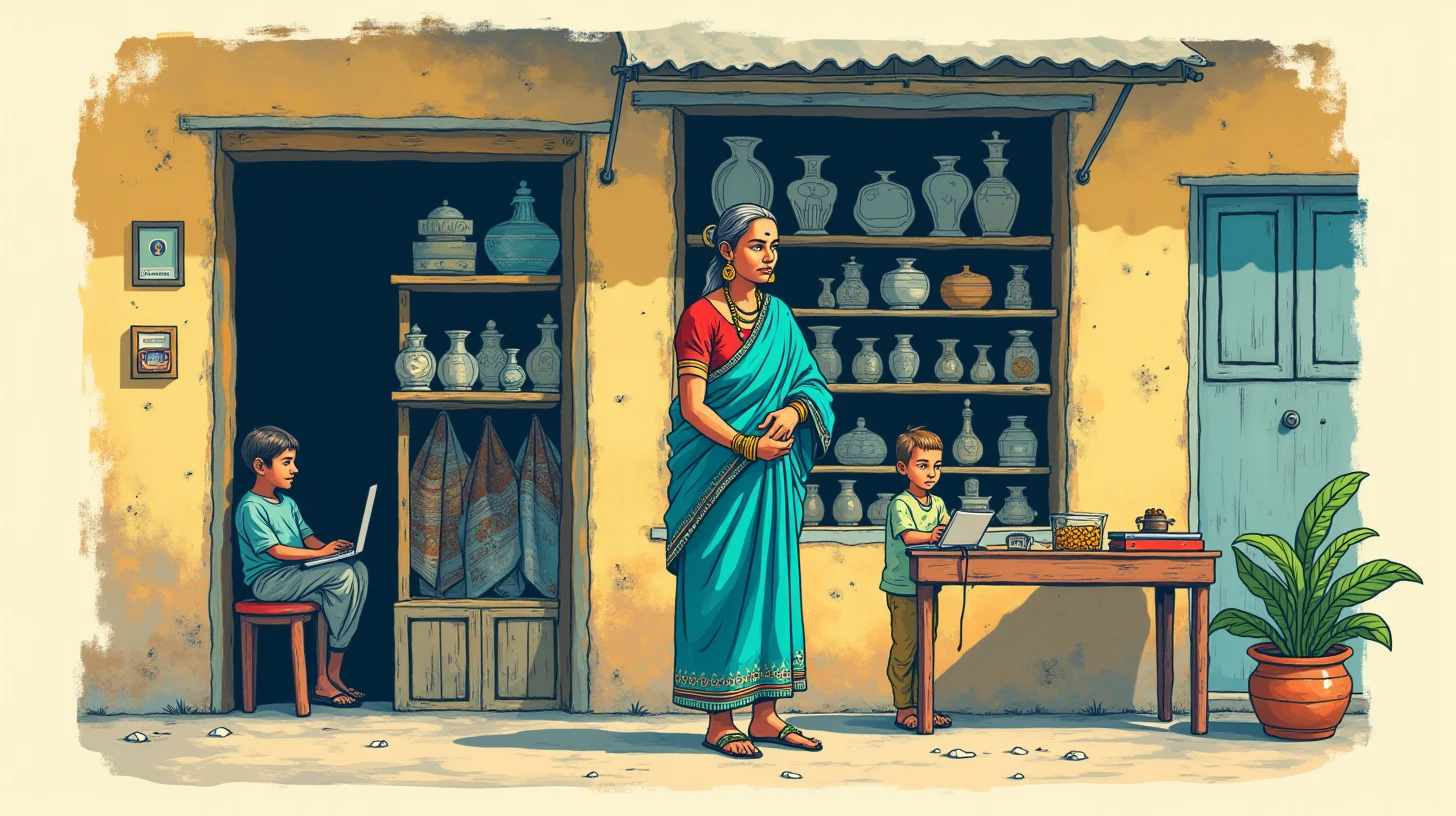
A buyer on Craftsvilla asked: "Do you have TRIFED empanelment certificate?" Sunita did not. Three days later, another buyer on Amazon asked the same question. She called her son, who was finishing his graduation in Ranchi, and asked him to search. What came back was a tangle of abbreviations — TRIFED, MSME, PM Vishwakarma — and a portal that looked different each time her son reloaded it.
She did not panic. But she knew that without clarity, those online orders would go to someone else.
🗓️ Tribal certification, artisan registration, and the Delhi market gap
TRIFED — Tribal Cooperative Marketing Development Federation — exists to connect tribal producers across India to national markets. Online platforms increasingly ask for TRIFED empanelment as a trust signal: it means a government body has verified the product is authentically tribal-made, that the artisan or trader is registered, and that supply chain governance is in place.
PM Vishwakarma, launched in 2024, is a parallel system for individual artisans — it grants toolkit grants (₹15,000), working capital credit (₹00,000–₹1,25,000), and interest subsidy (4%) to traditional craft workers, but it applies to the artisan, not the trader. Sunita's husband makes dokra; Sunita sells it. They are two registrations, two portals, two paths. Nobody had told her that.
Jharkhand's tribal artisan economy — dokra, dhokra variants, stone carving, handloom — sits at the intersection of two incentive systems. A government social worker from a nearby NGO visited Sunita's shop in mid-May. The worker, who uses GabFORGE for her own work, knew the AI agent had a Hindi-language capacity. She set up a call on Sunita's son's laptop.
⚠️ Online buyers asking for certificates, PM Vishwakarma confusion, and the husband's trade category
The confusion that trapped Sunita was not peculiar to her. TRIFED empanelment and PM Vishwakarma registration address different people and different goals:
PM Vishwakarma requires the artisan (the person making the craft) to register and verify trade category. Dokra casters fall under Trade 14: Sculptor and Stone Carver — but the portal does not advertise this, and many artisans look for "metalwork" or "brass" and find nothing. The assumption that a trade category missing is a system failure leads families to abandon the registration halfway.
TRIFED empanelment requires the trader (the person selling) to apply with proof of tribal identity, business registration, and samples. Sunita's husband's registration does not automatically empower her to apply for TRIFED; she must apply separately as a tribal trader. But tribal certificates, issued by revenue departments, are often delayed or issued with errors that TRIFED rejects.
Sunita's husband had attempted PM Vishwakarma the previous month. He logged into pmvishwakarma.gov.in, filled in his name, age, village, and craft. When he reached the trade category dropdown, it offered hundreds of options — Weaver, Blacksmith, Potter, Woodcarver — but the term "dokra" appeared in only two places, buried as a note in Sculptor. He did not see it. He closed the browser and did not try again.
Sunita also had a tribal certificate — issued by the Ranchi district revenue office two years prior — but she had never thought to use it for market access. Craftsvilla and Amazon wanted a TRIFED certificate, not a tribal certificate. She did not know they were different documents or that one led to the other.
🌗 An NGO social worker shows GabFORGE; the agent explains both paths in Hindi
The call with GabFORGE's agent (available in Hindi) lasted 35 minutes. The agent's approach was diagnostic: understand which person needed which certificate, in what order, and why.
To Sunita's husband:
"Bhaisaab, PM Vishwakarma mein aapka registration sirf ek kaam ke liye kaam karega: dokra ke liye. Portal mein 'Sculptor and Stone Carver' likha hai — English naam hai, lekin dokra usi ke under aata hai। Trade number 14 hai. Usme aap apne naam, age, aur gaon ki jankari denge, phir ₹15,000 toolkit grant mil jayega, aur ek lakh rupaya tak credit ₹4% sood par।"
(Sir, your registration in PM Vishwakarma will only work for one purpose: dokra. In the portal it says 'Sculptor and Stone Carver' — the English name is different, but dokra falls under it. Trade number 14. You enter your name, age, and village info, then you get a ₹15,000 toolkit grant, and credit up to a lakh rupees at 4% interest.)
To Sunita:
"Aap trader hain, aapki apni registration chahiye. Aapka tribal certificate, revenue office se jo tha, ussi se TRIFED ka application banenge। TRIFED par aapko register karna hai — Sunita Munda, tribal status, dokra aur handloom items. Phir online buyers ko aap bata sakti ho ki aapka empanelment complete ho raha hai।"
(You are the trader; you need your own registration. The tribal certificate from the revenue office — we will use that for the TRIFED application. You have to register with TRIFED — Sunita Munda, tribal status, dokra and handloom items. Then you can tell online buyers your empanelment is in progress.)
The agent then walked Sunita's husband through the pm vishwakarma.gov.in portal step by step, showing him exactly where Trade 14 sat in the dropdown, and instructed Sunita on the documents required for TRIFED (tribal certificate, shop registration, product photos, bank account). The agent also flagged a critical detail: Jharkhand MSME's tribal artisan loan scheme (₹10 lakh for tribal craft enterprises, ₹2% interest subsidy) could support buying additional metalworking tools once PM Vishwakarma toolkit grant arrived. But that application would come later, after both registrations were confirmed.
🧭 Tribal artisans and the certification gap — crafts worth thousands blocked by paperwork
The paradox of tribal artisan markets in Jharkhand is that verification exists to protect buyers, but verification systems are fragmented and opaque to the artisans themselves. A dokra figurine that takes three weeks of labor — firing clay molds, pouring molten brass, chasing and polishing — sells for ₹400–₹800 in a regional market. The same piece, with a TRIFED empanelment label, sells for ₹1,200–₹2,000 on Amazon or Craftsvilla. The markup is not because the product changed; it is because a government certificate now stands behind it.
But the certificate path requires navigating:
- Trade category confusion in PM Vishwakarma (artisans don't find "dokra" without help)
- Separate applications for artisan and trader (a family business needs two registrations, not one)
- Tribal certificate delays (revenue offices take 3–6 months; TRIFED won't start empanelment without one)
- Portal language and design (forms default to Hindi, but navigation mirrors government websites that assume literacy in both English and bureaucratic terminology)
- No clear timeline (TRIFED empanelment takes 45–90 days, but online buyers want confirmation in days)
Sunita's husband spent two weeks with a PM Vishwakarma agent before enrollment succeeded. Sunita's TRIFED application was filed 20 days after the GabFORGE call. Both are now in the system, but neither she nor her husband expected the wait. They had thought a single application would unlock the market.
🌱 Husband in PM Vishwakarma, TRIFED filed, first Delhi order
Five weeks after the GabFORGE call, Sunita's husband received his PM Vishwakarma enrollment confirmation. The toolkit grant (₹15,000) was approved. He used it to buy new chasing tools and a better furnace blower. Sunita's TRIFED empanelment application reached the final verification stage. A buyer in Delhi — who had initially asked for TRIFED empanelment — placed a bulk order: 200 dokra figurines, ₹1,80,000. The order is on hold pending empanelment completion, but Sunita now knows it will clear in 20 days.
Their son registered the shop as a micro-enterprise under Jharkhand MSME. They are now eligible for the tribal artisan loan scheme (₹10 lakh at ₹2% interest subsidy), though they have not yet applied — the PM Vishwakarma grant is still being deployed.
Sunita says: "हमारे यहाँ काम हमेशा से है। बस Delhi walon ko kaagaz chahiye tha — woh kahan se aata hai, यह कोई नहीं बताता था।" The work has always been here. The Delhi buyers just needed a certificate — nobody told us where that comes from.
The gap was not in the work. It was in the bridge.
What it does
What it does not do
"हमारे यहाँ काम हमेशा से है। बस Delhi walon ko kaagaz chahiye tha — woh kahan se aata hai, यह कोई नहीं बताता था।"— The work has always been here. The Delhi buyers just needed a certificate — nobody told us where that comes from.
Key takeaways for tribal craft traders
PM Vishwakarma and TRIFED are separate systems for different people. The artisan registers in PM Vishwakarma (toolkit grant, credit). The trader registers in TRIFED (empanelment, national market access). A family business needs both.
Dokra falls under Trade 14: Sculptor and Stone Carver. If you don't see "dokra" directly, search by the trade category name, not the material.
TRIFED empanelment requires tribal certificate, proof of business, and product samples. Get your tribal certificate from your district revenue office first. Plan for 45–90 days from application to empanelment completion.
Online platforms increasingly request TRIFED empanelment as a trust signal. Once empanelled, your product markup on online marketplaces can double or triple.
Jharkhand MSME tribal artisan loan scheme can follow. After PM Vishwakarma and TRIFED, you are eligible for ₹10 lakh at ₹2% interest subsidy for scaling.
Have a tribal craft business and need clarity on TRIFED or PM Vishwakarma? GabFORGE agents are available in Hindi and can walk you through both paths, trade categories, and timelines. Reach out through your local NGO or government MSME cell.