
The Shimla apple seller and the FSSAI licence she outgrew without knowing
Lakkar Bazaar in Shimla sits on a slope where colonial-era buildings lean into mist and the smell of apples rises from every doorway. Meena Thakur's shop — a narrow storefront wedged between a tea stall and a souvenir stand — has been open for eight years. Inside, wooden shelves hold glass jars of amber apple jam, packets of dried apple chips in kraft paper, and bottles of cloudy apple juice pressed from apples that arrived the same morning from orchards forty kilometers away in Kotgarh.
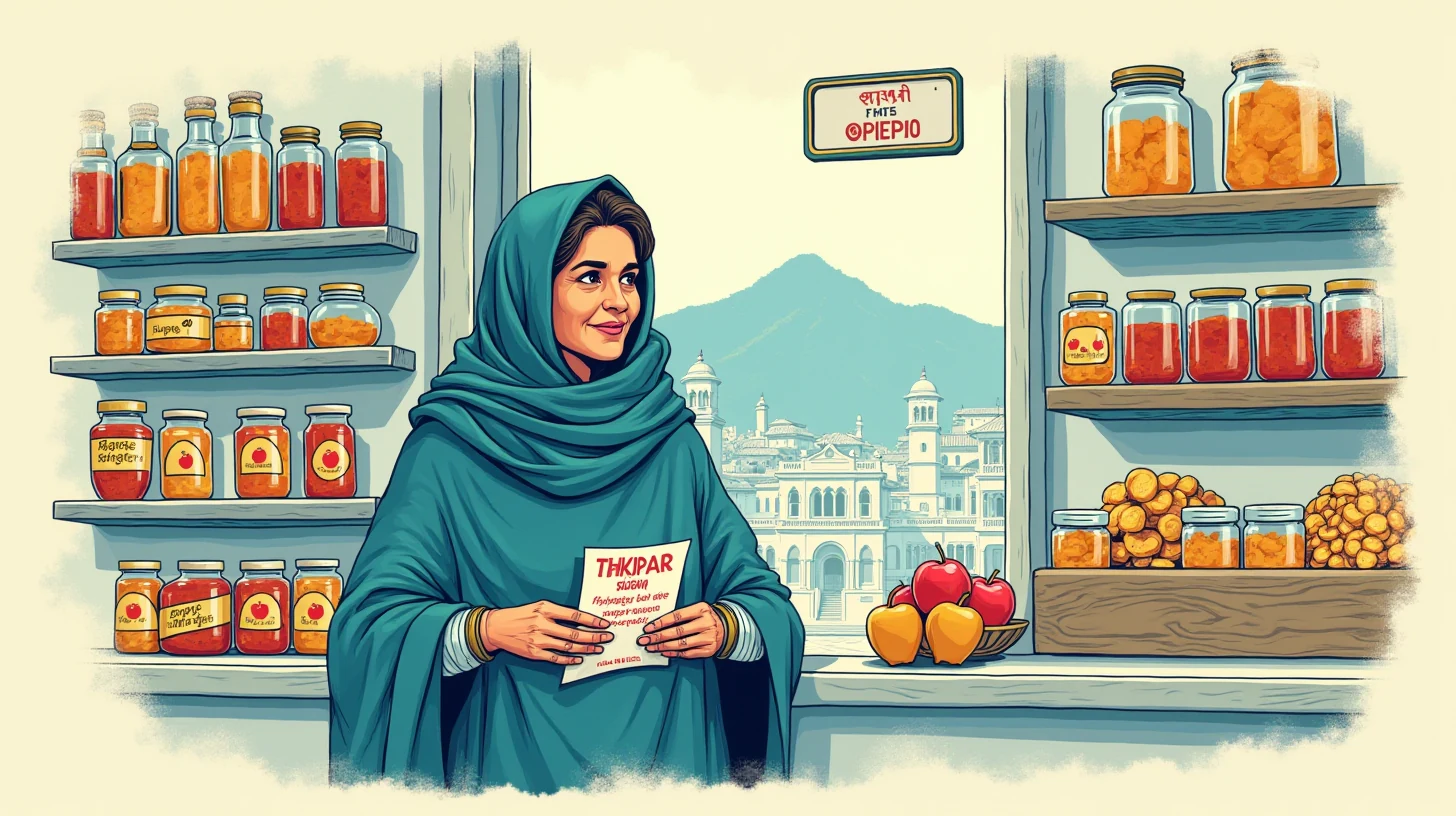
The Shimla Apple Seller and the FSSAI Licence She Outgrew Without Knowing
Meena is 45. She wears a woollen shawl over her salwar even indoors. She knows every farmer by voice before they say their name. She knows which tourists buy jam for gifts and which locals buy juice to take home. The business has grown quietly — from a single jar made in her kitchen to six jars a day, cases of chips per week, orders from guesthouses on the Ridge.
In April, during harvest season, her daughter Kavita came home from college in Solan — MBA in agriculture, sharp eye for details. Within an hour, she'd walked through the shop and asked three questions her mother couldn't answer. Three questions that would turn out to be the architecture of Meena's entire operation, hidden in plain sight.
The turnover had crossed ₹12 lakh last year. No one had told her this mattered. An FSSAI inspector had left a compliance notice pinned to her door. She'd been buying apples directly from farmers — her cousins and their neighbors — at volumes that the law said required a licence she didn't have. And somewhere in Himachal Pradesh, the government was planning to give apple the status of a geographical indication, but Meena didn't know how to use that stamp when it came.
🗓️ The ₹12 lakh FSSAI line and HP's apple economy
Himachal Pradesh grows India's apples. One lakh eighty-six thousand hectares of orchards. Three point two million tonnes per year. The Shimla hills turn red and green in September. Kotgarh, Theog, Mashobra — these names mean apples the way Darjeeling means tea. But the system that moves apples from orchard to shelf was built fifty years ago, when the movement looked different: farmer to mandi, mandi to wholesaler, wholesaler to retailer.
Meena's operation skipped the mandi entirely. She walked to farmers. She paid direct. She came home with apples. The FSSAI treated her like a food manufacturer — she was, technically, making jam — but her turnover was so small that the system had only two categories: basic registration below ₹12 lakh, or state licence above it. No rung between the two.
The basic FSSAI registration had been a one-page form at the local health department. Zero fees. Local authority approval in a week. She'd filed it four years ago when she first started selling jam jars to tourists. Her certificate had hung in a frame on her shop wall ever since.
But at ₹12 lakh turnover, the rules said: not valid anymore. She needed to upgrade to a state licence. The basic registration didn't auto-upgrade. She had to file a new application — with turnover proof, facility inspection, ₹3,000 fee, state authority approval through FOSCOS portal, thirty days, possibly longer if documents were incomplete.
No one had sent her a letter saying this. No health department inspector had called to say, "Congratulations, you've grown, now you need to upgrade." The law had changed beneath her feet because her sales had climbed. She found out because an FSSAI inspector walked in one morning, saw her basic certificate on the wall, checked her sales book, and said, "Your turnover is above the threshold. This is invalid. You're operating without a valid licence. I'm issuing a compliance notice."
₹5,000 fine. Thirty days to upgrade or the shop closes.
Then there was the APMC question. The Horticulture Produce Marketing Act said that all agricultural produce — apples, in this case — had to move through a licensed agricultural marketing committee. Meena was buying ₹8 to 10 lakh of apples per year directly from farmers. Technically, this required a commission agent licence under the HP APMC rules. She didn't have one. She was, legally, committing an APMC violation every time she bought fifty kilos of apples from a farmer and brought them to her shop.
But there was fine print: small retailers purchasing for direct retail sale could be exempt. The exemption depended on quantity, frequency, and who defined "small." No one in the mandi office advertised this. It was a clause buried in the HP Agriculture Produce Marketing Act. You had to ask. You had to know to ask. Meena hadn't known.
And finally, there was the geographical indication. Himachal Pradesh had been pursuing GI status for "Himachal Apple" for five years. The state wanted to protect the brand — apples grown in HP, with HP's terroir, in HP's altitude, with HP's care. When a GI is granted, producers within that region can use the mark, but only if they register with the GI office and follow the specifications. Meena was making apple jam in Shimla. She was selling apples from Shimla orchards. She should have been positioned to use the "Himachal Apple" mark when it came through. But she didn't know the registration process. She didn't know who to contact. It existed somewhere in state government, but not on any shop-owner's radar.
Three authorities. Three compliance gaps. Three potential fines or closure orders waiting.
⚠️ Three questions behind the jam jars
Kavita sat down with her mother in the shop after the afternoon rush. She pulled out her phone and wrote three questions in her notes app:
Question 1: When does FSSAI basic registration expire?
The notice on the wall said her mother was operating without a valid licence. But the form four years ago had said "basic registration" with no expiry date. The health department was friendly but not a reference library. FOSCOS was an online portal, but it required you to already understand the categories. Meena had never had an accountant. She kept a basic ledger. GST was something her nephew had told her to file once her sales crossed a threshold. She'd filed it that year, but she didn't have formal certified sales records. Just invoices, shop books, and WhatsApp messages from customers saying, "I'll pick up three jars on Saturday."
Question 2: Is buying directly from farmers illegal under HP law?
Meena had three farmer families on speed dial. Every week during harvest, she'd call Ravi in Kotgarh, Amita in Theog, and old Devi near Mashobra. She'd ask what was ready. She'd drive out, buy twenty to forty kilos at whatever the local rate was that day, and come back to Shimla. This had worked for eight years. No one had stopped her. No mandi had charged her a fee. But a distant relative had once mentioned an "APMC trader licence," and Meena had gone quiet. Was she breaking the law every time she bought apples?
She'd asked the local farmers' cooperative. They said: "You need APMC permission or you buy through the mandi." That sounded like closure. She'd asked a produce wholesaler she knew. He said: "Small retailers don't need permits below a certain volume." Two answers. Two different implications. No official source clarified which.
Question 3: What is the Himachali Apple GI, and can she use it?
A tourist from Delhi had asked once: "Is this certified local?" Meena had pointed to her FSSAI certificate. But the tourist meant something else — something about the region, the terroir, the guarantee that the apples were grown in Himachal Pradesh. There was something called a GI mark, Meena had learned vaguely from a newspaper article. The government was protecting "Champagne" and "Basmati" that way. Was Himachal Apple next? Could she use it? Would she need to register? Who did she contact?
Three questions. Three different government offices. No single person who could answer all three. No document that said, "If you're a food producer in Himachal Pradesh with direct-farm sourcing, here are the three things you need to know."
Meena had been operating in a gap.
🎯 Kavita's harvest season audit
Kavita opened her laptop that evening and searched for "FSSAI state licence application Himachal." She found a gabforge.in blog post about a food producer in Punjab with the same problem. She scrolled to the bottom and saw a link: "Ask a GabFORGE Agent — Free, in Hindi."
She clicked. A chat opened in Hindi.
She typed: "मेरी माँ की सेब की दुकान है शिमला में। बेसिक FSSAI registration है लेकिन turnover ₹12 लाख पार हो गया है। APMC से सीधे farmers से apples खरीदती है। क्या ये सब legal है?"
(My mother has an apple shop in Shimla. She has basic FSSAI registration but her turnover has crossed ₹12 lakh. She buys apples directly from farmers — is this all legal?)
The agent responded in Hindi, with clear steps.
The agent explained:
FSSAI State Licence Upgrade:
FOSCOS is the online portal where state FSSAI processes applications. Your mother has thirty days from the compliance notice. The fee is ₹3,000. She needs to:
- Visit the district health office with her GST returns or certified sales ledgers showing turnover above ₹12 lakh.
- File an FSSAI state licence application — it's a structured form, same as basic registration but with facility inspection required.
- The health office forwards it to the state FSSAI authority.
- State FSSAI approves or requests clarification on FOSCOS.
- Timeline: 25 to 35 days typically.
- Once approved, the basic registration certificate is retired, and a new state licence certificate is issued.
The fine of ₹5,000 can be compounded (a one-time settlement) if she files the upgrade application immediately and shows compliance intent.
HP APMC — Direct Purchase Exemption:
This is the critical part. The HP Horticulture Produce Marketing Act requires all produce to move through a licensed mandi. But there is an exemption: small retailers purchasing directly from farmers for retail sale in the same district do not need a trader licence.
"Small retail" is defined by volume and frequency. Meena's ₹8 to 10 lakh per year, buying from three local farmers, reselling in Shimla — this is textbook small retail. She qualifies for the exemption.
But this exemption is not advertised. It's in the fine print. She needs to:
- Email or visit the Shimla APMC office (hpagrisnet.gov.in).
- Ask in writing: "I am a small retailer buying directly from farmers for retail sale in Shimla district. Do I need an APMC trader licence?"
- Get a written response confirming the exemption.
- Keep records of farmer invoices and purchase receipts.
The APMC office will likely confirm the exemption in writing, but it must be documented.
Himachal Apple GI and Registration:
Himachal Pradesh has been pursuing GI status for "Himachal Apple." Once the GI is granted (expected within 1–2 years), producers in HP can use the mark if they register with the state GI office. The registration requires:
- Proof that the apples are sourced from HP orchards (purchase invoices, farmer contracts).
- Documentation of the production process (jam-making recipe, facility details).
- A small registration fee (likely ₹500–₹2,000; exact amount pending GI grant).
- Annual compliance reporting.
For now, Meena should focus on FSSAI and APMC. Once the GI is granted and the registration opens, she can apply. The state will announce the GI status and provide a registration portal.
Kavita took notes. She showed her mother the chat. Meena's face changed — not with relief yet, but with clarity. There was a path. It wasn't hidden. It just required three phone calls, two office visits, and knowing who to ask.
"चार साल से जाम बना रही हूँ, FSSAI था, सब ठीक था — मुझे क्या पता था कि एक लाइन पार होने पर सब बदल जाता है।"— I have been making jam for four years, FSSAI was there, everything was fine — how was I to know that crossing one line changes everything.
🌗 Kavita's harvest season audit: The agent dialogue
Kavita opened the GabFORGE chat one more time with a detailed question in Hindi:
Kavita: "माँ की दुकान में apple jam, dried apple, और fresh apples हैं। वह सीधे three farmers से खरीदती है। कभी-कभी कुछ packaged products भी बनाती है। अब क्या करना चाहिए?"
(Mom's shop has apple jam, dried apple, and fresh apples. She buys directly from three farmers. She sometimes makes packaged products too. What should she do now?)
Agent: "यह बहुत स्पष्ट case है। तीन steps हैं, तीन अलग अलग authorities हैं। पर सब legal है अगर सही order में किया जाए।"
(This is a clear case. There are three steps, three different authorities. But all of it is legal if done in the right order.)
Agent: "पहली चीज़: FSSAI state licence। आपकी माँ का turnover ₹12 लाख से ऊपर है, इसलिए basic registration invalid है। लेकिन यह fix करना आसान है। District health office में जाओ, GST return या sales ledger दिखाओ, FSSAI state licence का form भरो, ₹3,000 दो, 25-30 दिन रुको, approved आ जाएगा।"
(First thing: FSSAI state licence. Your mother's turnover is above ₹12 lakh, so basic registration is invalid. But fixing this is easy. Go to the district health office, show GST returns or sales ledger, fill the FSSAI state licence form, pay ₹3,000, wait 25–30 days, approval will come.)
Agent: "दूसरी चीज़: APMC। HP law में लिखा है कि सब produce licensed mandi से आना चाहिए। लेकिन छोटे retailers के लिए exemption है। आपकी माँ ₹8-10 लाख per year खरीदती है, three local farmers से, local retail के लिए। यह बिल्कुल small retail category है। HP APMC को email करो, confirm करवाओ कि exemption apply होता है। वह confirm कर देंगे।"
(Second thing: APMC. HP law says all produce must come from a licensed mandi. But there's an exemption for small retailers. Your mother buys ₹8–10 lakh per year from three local farmers for local retail. This is exactly the small retail category. Email HP APMC, get confirmation that the exemption applies. They will confirm it.)
"तीन lines हैं — FSSAI की, APMC की, और GI की। तीनों अलग हैं, तीनों legal हैं, तीनों सही order में करो।"
(There are three lines — FSSAI's, APMC's, and GI's. All three are separate, all three are legal, do all three in the right order.)
Agent: "तीसरी चीज़: Himachal Apple GI। फिलहाल GI status pending है, लेकिन जल्दी आएगा। जब आ जाएगा, तो state GI office registration open करेगा। आपकी माँ को उस time apply करना होगा। अभी के लिए, farming sources को document रखो — farmer names, purchase invoices, dates। यह सब काम आएगा।"
(Third thing: Himachal Apple GI. For now, GI status is pending but coming soon. When it arrives, the state GI office will open registration. Your mother will need to apply at that time. For now, keep documentation of farming sources — farmer names, purchase invoices, dates. All of this will be useful later.)
Kavita: "तो सब legal है? APMC में कोई license की जरूरत नहीं?"
(So all of it is legal? No APMC licence required?)
Agent: "Legal है, बिल्कुल। APMC small retail exemption के अंदर आती है। आपकी माँ ने पिछले 8 साल सही किया है। बस अब documents में confirm करवानी है। HP APMC की email को reply save रखो।"
(It's legal, absolutely. It falls under the APMC small retail exemption. Your mother has been doing it correctly for 8 years. Just need to get it confirmed in writing now. Save the HP APMC email reply.)
> "सेब तो था, जैम बना, दुकान चल रही थी। बस कागज़ पीछे था — तीन जगह का।"
— The apples were there. The jam was made. The shop was running. Just the paperwork was behind — in three places.
Meena, sitting in the shop a week later, whispered this to herself as she filed her FSSAI application at the district health office. The officer asked three questions, took her GST returns, and said, "This will go to state FSSAI in a week. Approval typically comes in 25 days. If there are questions, they'll contact you on your phone number. Okay?"
Okay.
Twenty-three days later, Meena's phone rang. A woman from the state FSSAI office said, "Your state licence has been approved. Certificate number is FSS-HM-2026-APPL-08734. You can collect the hard copy from our office, or we can courier it. The fee of ₹3,000 has been processed."
The ₹5,000 fine was compounded with the compliance — a one-time settlement once she filed the upgrade application in good faith.
Then Meena opened her email and drafted a message to the Shimla APMC office:
"Dear Sir/Madam,
I am a small food retailer operating a shop in Lakkar Bazaar, Shimla. I purchase apples directly from three farmers in Kotgarh and Theog districts (40–60 kg per week, approximately ₹8–10 lakh per year) for retail sale in my shop in Shimla. I am asking whether I require an APMC trader licence or commission agent licence under HP law.
Please advise.
Thank you, Meena Thakur Lakkar Bazaar, Shimla"
Five days later, she got a reply:
"Dear Ms. Thakur,
Thank you for your inquiry. Small retailers purchasing agricultural produce directly from farmers for retail sale within the same district are exempt from trader licensing under the HP Horticulture Produce Marketing Act, provided annual produce procurement does not exceed ₹25 lakh. Your stated volume of ₹8–10 lakh annually qualifies for this exemption. No trader licence is required. However, please maintain records of farmer invoices and purchase receipts for compliance audits.
Best regards, Shimla APMC Office"
Meena printed that email and laminated it. It went into the same frame where her FSSAI certificate hung.
🔄 The boundary: What the agent explained, and what Meena had to do
What it does
What it does not do
🧭 Why Himachal apple processors face layered compliance
Meena is not alone. Across Himachal Pradesh, approximately 400–500 small food producers — jam makers, apple juice makers, dried fruit packers, honey bottlers, women running farmstead food shops — hit this same wall every year.
None of them are trying to become multinational corporations. None of them are looking for subsidies. They're running small operations in Shimla, Kullu, Mandi, Solan. They buy from farmers they know. They process in small facilities. They sell locally and to tourists. Their turnover climbs because their product is good and they work long hours.
At ₹12 lakh, they suddenly discover that the basic FSSAI registration they filed five years ago is now useless. They didn't know there was a threshold. No one sent them a letter. They found out when an inspector walked in.
The APMC situation is even more Byzantine. The law was written to prevent middlemen from exploiting farmers — to ensure that farmers' produce goes through transparent mandis where prices are discovered and commissions are regulated. That makes sense at commercial scale. But a woman buying apples from her cousin for her shop doesn't fit the law's mental model. The system has an exemption for her, but the exemption is so well hidden that most people think it doesn't exist.
And the GI opportunity is approaching but announced nowhere on a shop-owner's radar. Himachal Apple is coming. Producers like Meena will be able to use the mark. But there's no outreach, no education, no pre-emptive registration pathway. When the GI arrives, there will be confusion, last-minute rush, and some producers will miss the window because they didn't know to wait for it.
This is not corruption or malice. It's bureaucracy at a systems level: policies designed for two opposite extremes (very small, unprocessed; or very large, export-scale), with no lane carved out clearly for the middle. The middle exists. The rules accommodate it. But the rules are not lit up in neon. You have to find them.
🌱 The jam that passed inspection
Meena's shop in Lakkar Bazaar now has three framed certificates on the wall.
The first is her new FSSAI state licence. FSS-HM-2026-APPL-08734. Approved by the State Food Safety Authority. Valid for five years.
The second is the laminated email from the Shimla APMC office confirming the direct purchase exemption.
The third is a handwritten note from her farmers — Ravi, Amita, and old Devi — listing the apple varieties they grow and the approximate annual yield. It's not an official document, but it's the foundation of the documentation she'll need when the Himachal Apple GI opens registration.
The apples still arrive every week during harvest in the same wooden crates. The jam still simmers in the same copper pot behind the shop. The tourists still ask if it's "authentic local."
Now Meena says, "Yes. And I have the papers to prove it."
She didn't need to move to a bigger facility. She didn't need to hire an accountant or a lawyer. She didn't need connections or bribes. She needed someone to explain, in Hindi, with clear portal names and timelines and fee amounts, that the three gaps she felt had legal solutions already written into the system.
Kavita returns to college in Solan with her mother's compliance questions solved. She'll tell her classmates. Some of them will tell their parents. The apple sellers of Shimla talk to each other. The word spreads quietly. The lanes exist. You just had to know to look.