
surat-textile-shop-and-the-gst-itc-reversal-notice
Suresh Patel's textile wholesale shop on Ring Road, Surat, has been his livelihood for eighteen years. Rows of synthetic sarees — printed cotton blends, chiffon borders, silk-look nylon — fill the space from floor to ceiling. His wife Kalpana manages the books. His two sons are in college. The business moves steady: ₹12–15 lakh monthly turnover, mostly to boutique owners and resellers across Gujarat and neighbouring states.
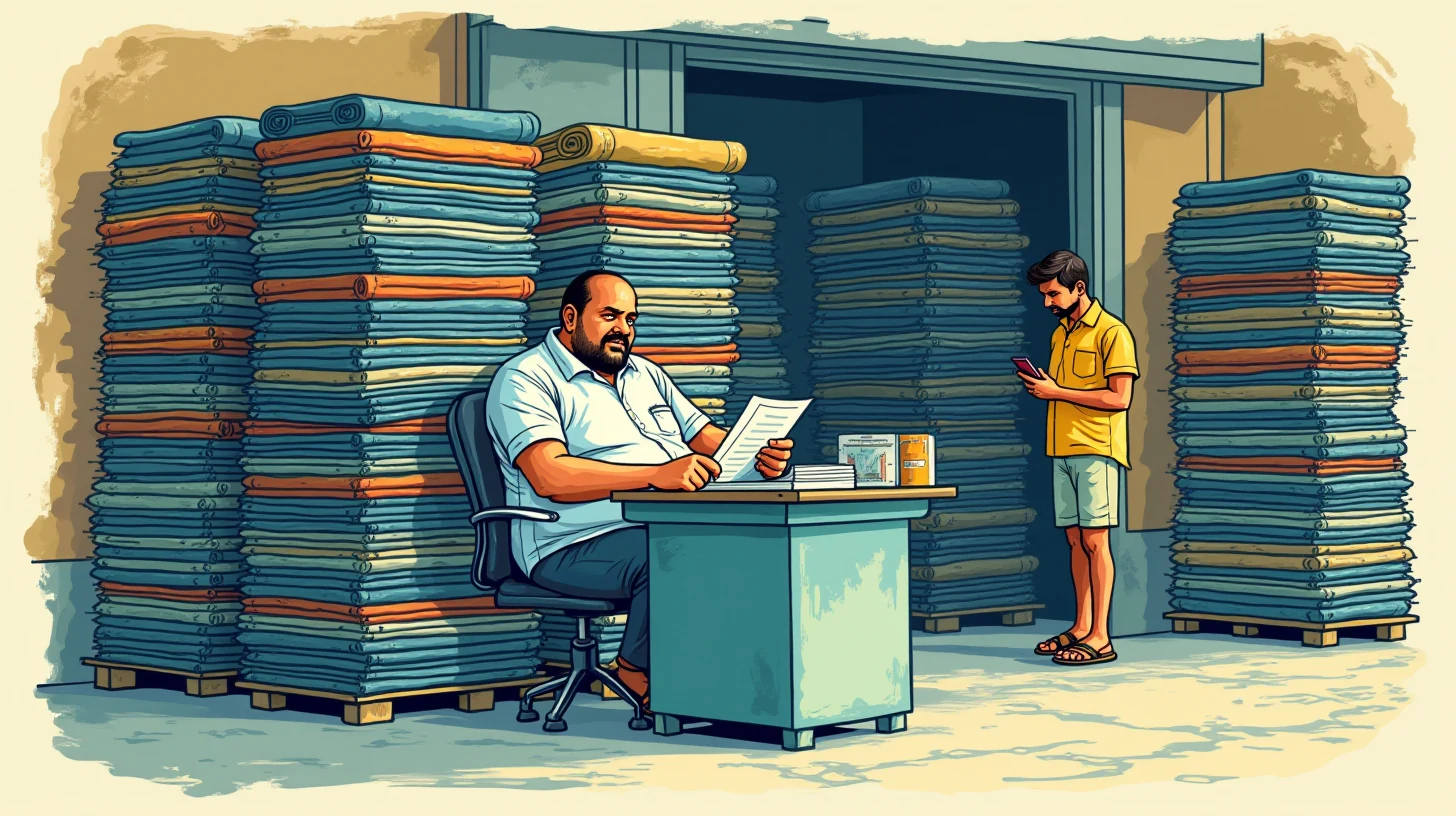
Last month, a notice arrived from the GST department. ASMT-10 scrutiny. The words landed like a stone in his stomach.
The notice said the GST officer had identified a mismatch in his Input Tax Credit (ITC) claims. Three of his suppliers — whom he had purchased from for years — had filed GSTR-1 returns showing sales to him, but never filed their own GSTR-2A downloads. Because of this, his ITC claims for those purchases didn't match the department's records. The officer was demanding reversal of ₹2.3 lakh in ITC he had claimed.
Suresh called his accountant. The accountant said it was "routine scrutiny" and would "sort itself out." That was it. No urgency. No plan.
Suresh sat with the notice for three weeks, anxiety compounding daily. His nephew—a CA student in Surat—noticed the worry. "Chacha, let me show you something," he said, opening GabFORGE on his phone. An agent, speaking Gujarati, explained what had happened and what Suresh could do.
🗓️ How ITC and GSTR-2A Matching Work — and Why Supplier Non-Filing Breaks It
Under GST, when Suresh buys textiles from a supplier, he pays tax on that purchase. That tax becomes Input Tax Credit (ITC). He uses ITC to offset the tax he collects on sales to his customers. The system works when both sides file their returns on time: the supplier files GSTR-1 (listing sales), and Suresh files GSTR-2A to claim ITC against those purchases.
But when a supplier doesn't file GSTR-1, the GSTR-2A doesn't show that transaction. The GST department sees a gap: Suresh claimed ITC, but the supplying seller's record is blank.
This is the ITC mismatch.
It is, on the surface, unfair to Suresh. He paid the tax. He has invoices and delivery challans. But under GST law, the buyer's ITC claim depends on the seller's GSTR-1 filing. If the seller doesn't file, the department doesn't accept the buyer's ITC without documentary proof.
Suresh's three suppliers were small operators—one a saree dyer in Vapi, another a synthetic weaver in Surat's Katargam area, and a third a wholesaler in Rajkot. None of them had filed GSTR-1 returns for the months in question. For a wholesale buyer like Suresh, this was a disaster that had nothing to do with his own compliance.
⚠️ The ₹2.3 Lakh Demand and the 30-Day Response Window
The ASMT-10 notice gave Suresh thirty days to respond. It outlined four purchase invoices across the disputed period, totalling ₹14.8 lakh in purchases (ITC claim: ₹2.3 lakh at 18% GST rate on synthetic textiles).
The demand was stark: reverse the ITC and deposit the amount into the government's account, or risk penalties and interest.
His accountant, who should have been guiding him through the response process, was passive. "It will take time to resolve," the accountant said vaguely. No action plan. No deadline tracking. No acknowledgment that the thirty-day window was non-negotiable.
Suresh's anxiety turned into something else: urgency.
🌗 Nephew Installs GabFORGE; Agent Explains ASMT-10 in Gujarati
Suresh's nephew downloaded GabFORGE Connect and navigated to the Gujarati agent. The conversation started in Gujarati—Suresh's language, without the barrier of English tax jargon.
"Suresh bhai, ASMT-10 notice naa response mein aapne aapna supplier sathe na transactions ni proof aapvi padse — bank transfer, invoice, delivery challan. GST portal par ASMT-11 form mein reply karo 30 din mein. Jo ITC aapne claim karyu chhe ane aap prove kari sako ke aapne actually payment karyu chhe, e ITC restore thay. Baaki amount supplier e GSTR-1 file kare tyare resolve thay."
(Suresh, in the ASMT-10 notice response you need to provide proof of transactions with your supplier — bank transfer, invoice, delivery challan. Reply via ASMT-11 form on the GST portal within 30 days. ITC you claimed and can prove you actually paid will be restored. The remaining amount resolves when the supplier files his GSTR-1.)
The agent broke down what ASMT-10 means: it's an assessment notice, not a demand order. It's the GST officer's preliminary finding. But Suresh has the right to respond—to present evidence that he actually made the purchases, actually paid the tax, and the supplier's non-filing shouldn't penalize him.
The evidence matters:
- Bank transfer proof: statements showing the exact payment date, amount, and payee (the supplier's name).
- Original invoices: the GST invoice from the supplier with their GST ID and the specific ITC claim details.
- Delivery challans: proof that the goods arrived at Suresh's shop.
If Suresh could prove all three, the officer would likely restore the ITC associated with that purchase, even if the supplier hadn't filed.
The agent also clarified: "I explain what you need. Your CA files the reply. The GST officer decides what restores. I don't file or guarantee."
Suresh's shoulders dropped. There was a path.
🧭 Surat's Textile Trade and the ITC Mismatch Problem
Suresh isn't alone. Surat's textile wholesale market is built on small suppliers—family operations, cash-light businesses, sometimes informal. Many defer their GST filings or miss deadlines. Larger buyers like Suresh absorb the compliance risk despite having done their own job correctly.
The GST law, in theory, tries to solve this through the "deemed credit" mechanism and recovery procedures: if the supplier later files, the ITC should flow to the buyer retroactively. But the process is slow and uncertain, leaving buyers like Suresh in limbo for months.
The GabFORGE agent explained this to Suresh: "This is a trade structure problem, not your fault. But you have to respond—not for fairness, but to protect your own ITC and credit score with the GST department."
The e-way bill confusion Suresh mentioned during the call also made sense now. He'd been generating e-way bills for intra-state textile movement within Surat district, and some of them were marked as "inter-state" by mistake. The GST officer might have flagged these too. The agent clarified:
- Intra-state movement within Surat: e-way bill required only if the value exceeds ₹50,000. Suresh's inter-godown transfers sometimes crossed that threshold and needed bills.
- Correct classification: the bill should always mark the destination as within Gujarat, and the supply type as "intra-state."
A small procedural fix, but it prevented another complication.
🌱 Reply Filed, ₹1.4 Lakh Restored, Supplier Vetting Now Routine
Suresh's nephew helped him gather the documents. Bank statements from the past eighteen months (Suresh maintained meticulous records—a habit from pre-GST days). Original invoices, carefully filed. Delivery challans, matched to purchase dates.
They took the list to Suresh's CA, with a copy of the GabFORGE agent's explanation. The CA, now properly briefed, filed the ASMT-11 reply within the thirty-day window. The reply provided bank transfer evidence for two of the three suppliers, with invoices and challans backing every transaction. For the third supplier (Rajkot), one purchase couldn't be fully documented, so they didn't claim ITC reversal for that transaction—a tactical choice to avoid deeper scrutiny.
Six weeks later, the GST officer's response came. The ITC for the two documented suppliers was restored: ₹1.4 lakh. The third transaction (₹0.9 lakh) remained under review, pending the Rajkot supplier's GSTR-1 filing. The officer noted that if the supplier filed within six months, Suresh could apply for relief under the ITC relief mechanism.
The ₹2.3 lakh demand effectively became ₹0.9 lakh contingent, and that too with a clear path forward.
More importantly, Suresh learned a lesson about supplier vetting. He now asks new suppliers upfront: "Are you GST-compliant? Do you file GSTR-1 regularly?" For high-value orders, he requests copies of their GSTR-1 filings—proof of their own compliance. It costs him an extra phone call and sometimes creates friction, but it prevents future mismatches.
The GabFORGE agent explained this too: "In Surat's textile market, you can't always control what your suppliers do. But you can control what you buy from them. Small checks now save big notices later."
What it does
What it does not do
"સપ્લાયરે return ભર્યો નહીં, penalty અમને. ITC ઘર પર આવ્યો — એ ક્યારે ફાઈલ કરે, એ સવાલ અમારો ક્યાં છે?"— The supplier didn't file his return, but the penalty comes to us. When he files is not our question — but the ITC is ours.
Checklist: Defending an ASMT-10 ITC Notice
If you receive an ASMT-10 scrutiny notice for ITC mismatch:
- Identify the supplier: the notice will list the supplier's name and GSTIN. Contact them immediately to confirm whether they filed GSTR-1 for the disputed period.
- Gather your proof: bank statements showing payment to that supplier, original invoices (with GSTIN, tax amount, and date), and delivery challans or proof of receipt.
- File your reply within 30 days: use ASMT-11 form on the GST portal. Attach scanned copies of all supporting documents. Be specific about which transactions you're defending ITC for.
- Follow up with the supplier: if the supplier hasn't filed GSTR-1, remind them. Some officers grant relief once the supplier files late.
- Keep your CA looped in: the reply is a legal document. Your CA should draft it, not you.
The process is slow and sometimes incomplete. But it's better than surrendering ITC without a fight.
What This Means for Your Shop
The GST system, in theory, should not penalize a buyer for a supplier's non-compliance. In practice, it does—unless you respond with evidence. ASMT-10 notices are not death sentences. They're invitations to prove your case.
Suresh's story is common in Surat's textile trade, but his outcome—partial restoration and a clear path forward—happened because he didn't ignore the notice. He responded. He gathered proof. He had a CA file on time.
The larger lesson is about the structure of supply chains under GST. If you buy from small, informal suppliers, you inherit their compliance risk. Mitigate it by vetting suppliers upfront and maintaining meticulous records of every transaction. In Surat's wholesale market, that discipline is not just good housekeeping—it's survival.