
The Chennai AC Technician and the Seasonal Income Trap
Karthik arrives at his first service call of the day as the sun edges toward 40°C. It is May 15, the height of Chennai's cooling crisis, and his phone has not stopped buzzing with appointment requests since dawn. He rides a two-wheeler through T. Nagar's crowded streets, carrying copper pipe benders, a refrigerant pressure gauge, and a worn toolkit. By 9:30 a.m., he is elbow-deep in a split AC unit at a family's apartment, extracting refrigerant, flushing the coil, and testing the thermostat. The homeowner watches anxiously—her daughter is sitting exams next week, and the bedroom AC is her only sanctuary from the heat.
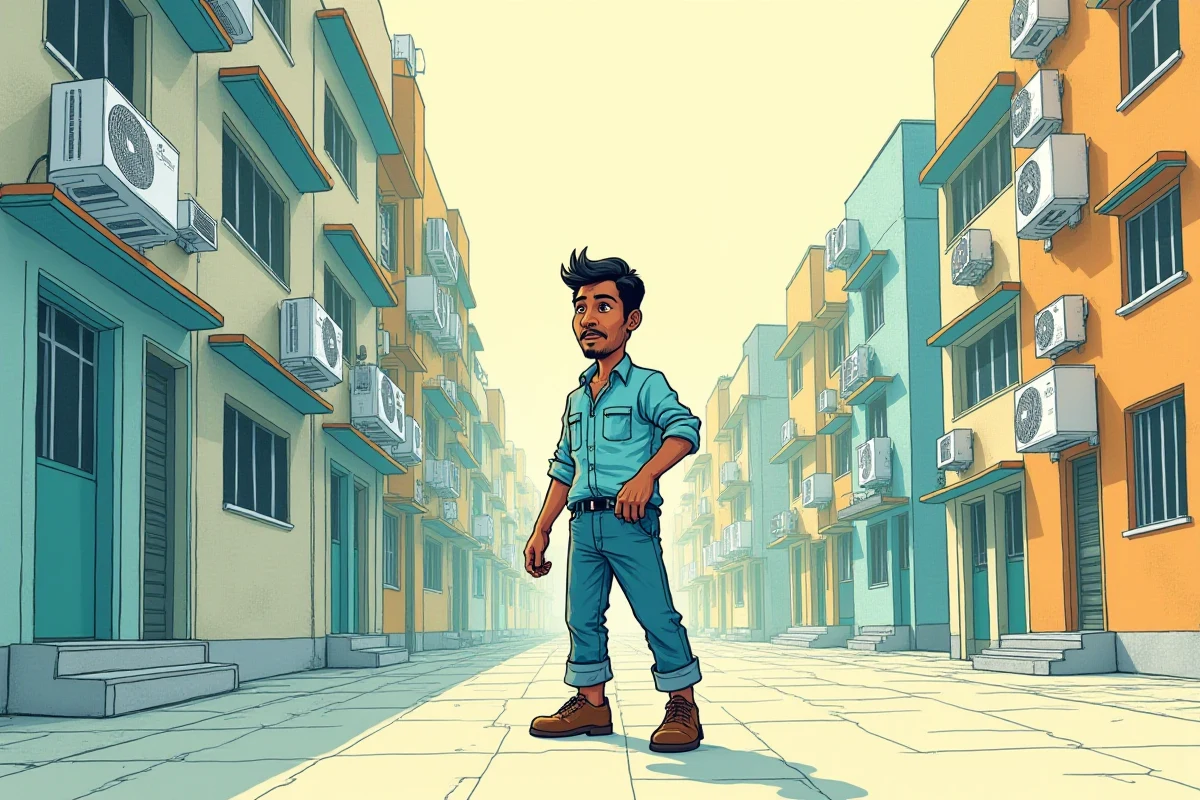
Karthik is 34 years old, married with two children, and has been servicing air conditioners across Chennai for eleven years. He started as an apprentice to a senior technician, learned the trade by watching and doing, and now works almost entirely through Urban Company—the gig platform where apartment residents book him within minutes. On a good May or June day, he earns ₹1,200 to ₹1,500 per service call; he completes three or four calls a day, bringing his monthly gross to ₹45,000 or more. His wife, Lakshmi, runs a small tailoring business from home, and together they manage the rent for their two-room apartment in Chromepet, school fees for their children, and loan repayments on a two-wheeler and refrigeration tools.
The narrative of Karthik's year is a sharp-edged narrative of supply and demand. April through June is frantic. July and August bring some calls—monsoon humidity keeps people cooling. But September through February is a slow bleed. On a January afternoon, with temperatures hovering around 23°C, Karthik might receive only one or two calls, each paying ₹600 to ₹800. His monthly income collapses to ₹12,000 to ₹18,000. Lakshmi's tailoring business quiets in the winter too—fewer people commissioning new clothes when the heat is not punishing them. By February, their savings are drained. The rent is due, the children need new shoes, and Karthik's pressure gauge needs repair. He borrows ₹5,000 from a local moneylender at 24% annual interest, telling himself he will repay it by April when the heat returns.
This cycle has repeated eleven times. He knows it. He has never broken it.
❄️ The Seasonal Income Cliff and the Certification Barrier
Karthik's income volatility is not a personal failure; it is the structural reality of gig-based AC service in India's cooling-demand economy. According to the All India Cooling Action Plan (AICAP), India's cooling demand is growing 10% annually, driven by urban expansion, rising incomes, and rising temperatures. But this growth is entirely seasonal. The cooling season in Tamil Nadu runs April through September; the remaining nine months see demand collapse to maintenance-only calls. Gig platforms like Urban Company amplify this volatility—Karthik has no guaranteed work, no retainer, no income smoothing. The platform captures 15% to 25% of his earnings and can suppress rates as competing technicians flood the supply.
The certification barrier is distinct from the seasonal problem, but it locks Karthik out of the one pathway that could stabilize his income: annual maintenance contracts (AMCs) with commercial clients.
Large commercial AC operators—shopping malls, hotels, corporate offices, manufacturing facilities—do not hire gig workers from Urban Company. They hire dedicated teams and require technicians to hold OEM (original equipment manufacturer) certifications from Voltas, Daikin, Blue Star, or Carrier. An AMC technician earns a fixed monthly retainer (typically ₹25,000 to ₹40,000 per month) plus service call fees, and that income is year-round. A single hotel cooling system in Mahabalipuram or an office building in Anna Nagar might generate one AMC contract for a team of two, with ₹30,000–40,000 monthly revenue.
Karthik has never pursued OEM certification. A Daikin certification course costs ₹8,000 to ₹12,000 and takes four weeks. A Voltas course is similar. The certification itself is worthless unless paired with experience and a job offer. But the barrier is not the cost or the time; it is invisible. Karthik does not know that OEM certifications exist. He has no employer to sponsor him. Urban Company has not informed him. His peers in the gig economy do not have certifications either. The formal world—with its AMCs and retainers and year-round stability—feels distant, bureaucratic, and unavailable to someone whose entire career has unfolded on WhatsApp and platform apps.
A second, deeper barrier: Karthik fears losing his current income. If he takes four weeks off in April to train, he loses ₹18,000 to ₹20,000 in peak-season earnings. The family goes hungry. The moneylender will call. So he does not train.
The gap between gig income and AMC income is stark when mapped across a full year. A gig technician earns high in peak season but faces 6 to 8 months of thin margins. An AMC technician with a single retainer contract earns ₹25,000 to ₹40,000 per month, regardless of season. A technician with two or three AMC contracts across different facility types (hotel, office, manufacturing) can earn ₹60,000 to ₹80,000 monthly with minimal platform dependency.
Karthik does not know this mathematics. He knows only that his phone buzzes in May and goes silent in December, and that he borrows money with each cycle.
🔧 What Happened: February's Lean Month
This past February, a lean month turned critical. Karthik had two service calls the entire week of February 10–14. One was a repeat customer in T. Nagar whose AC needed a refrigerant top-up; the other was a new customer in Anna Nagar who had a faulty thermostat. Together, they paid ₹1,600. His rent was due on the 15th. The landlord, impatient, sent a notice: pay by the 18th or vacate.
Karthik had ₹6,000 in his bank account (emergency savings—the last buffer from December's good weeks). The rent was ₹12,000. Lakshmi had earned ₹3,000 that month from tailoring. Together, ₹21,000, short by ₹3,000. The moneylender was willing to lend ₹5,000 at 24% per annum. Karthik borrowed it. In March, when the heat returned and his income recovered, he repaid ₹5,200. But the repayment left him again with minimal savings heading into the next off-season.
The cycle tightens each year. Interest compounds. He falls further behind.
What Karthik did not know that February is that India faces an acute shortage of AC technicians. According to industry estimates, India needs over 300,000 trained AC technicians by 2025 to meet cooling demand, but only 40,000 to 50,000 are formally certified. The shortage is especially severe in Tier 1 cities like Chennai, where commercial cooling demand is expanding faster than training capacity. This shortage has created wage premiums and job security for certified technicians. If Karthik had an OEM certification, hotel properties and corporate facilities would be actively recruiting him. The power dynamic would reverse: instead of chasing gigs on a platform, he would be choosing which retainer to accept.
"மே முதல் ஜூன் வரை, நான் ஒரு ராஜா. மக்கள் என்னை அழைக்கின்றனர், நான் எங்கு செல்வது என்பதை தேர்ந்தெடுக்க முடியும். ஆனால் ஜூலை முதல் பிப்ரவரி வரை? யாராவது தங்கள் AC சரிபார்க்க வேண்டுமா என்று நான் நம்புகிறேன். பிளாட்ஃபார்ம் விலைகளை நிர்ணயிக்கிறது — எனக்கு தேர்வு செய்ய முடியாது."— April to June, I am a king — people call me and I choose where to go. But July to February, I am hoping someone needs their AC checked. The platform sets the rates. I do not get to choose.
🎯 What Changed: GabFORGE's Path Forward
This is where the story diverges—where Karthik encounters a structured pathway that hundreds of technical articles and job portals had not offered.
GabFORGE's agent introduced Karthik to a six-step income-stabilization sequence:
Register on e-SHRAM (10 minutes) → Establishes identity in India's universal social security system, unlocking access to government health insurance (CMCHIS) and tracking of provident fund contributions.
Enroll in PMKVY-subsidized Daikin AC Service Certification (4 weeks, costs ₹2,400 after subsidy) → A local training center near Saidapet offers the course; GabFORGE's agent identified three centers with schedules and linked Karthik to PMKVY subsidy applications. The course certifies him for Daikin equipment (the most common commercial brand in Chennai). Cost drops from ₹10,000 to ₹2,400.
Bridge the income gap during training (4 weeks) → GabFORGE identified that MUDRA micro-credit loans of ₹1–3 L could cover training costs, family expenses, and a buffer. Karthik applied for ₹2 L. Processing time is 1–3 weeks through partner banks. The funds arrive before training starts, eliminating the income cliff.
Build a portfolio of service records (months 2–3 post-certification) → With Daikin certification, Karthik begins applying to hotels, shopping malls, and corporate facilities across Chennai (Mahabalipuram resorts, IT parks in T. Nagar, manufacturing facilities in Porur). GabFORGE's agent aggregated all active facility AMC tenders and matched them to his new credentials.
Land 1–2 AMC contracts (months 3–6) → One retainer contract (₹30,000/month) + remaining gig work (₹15,000–20,000/month off-season) = ₹45,000 to ₹50,000 monthly, year-round. Income is no longer binary.
Register with TNBOCWWB (30 minutes) → As a self-employed technician, Karthik becomes eligible for accident insurance (₹3 L to ₹5 L), hospitalization allowance (₹25,000–₹50,000), and education scholarships for his children (₹15,000–25,000/year each). Cost: ₹10 per contract.
The entire sequence from application to first AMC contract spans 5–6 months. The financial commitment is minimal: ₹2,400 (net, after subsidy) + ₹10 (TNBOCWWB) = ₹2,410. The MUDRA loan is interest-bearing (8%–12%), but spreads repayment over 5 years, making monthly payments ₹40–50.
GabFORGE's agent also provided Tamil-language dialogue scripts to help Karthik navigate each step.
"கார்த்திக், நீங்கள் ஐந்து ஆண்டுகளாக Daikin கம்ப்ரஸர்களை சரி செய்தீர்கள். ஆனால் Daikin சான்றிதழ் இல்லாமல், AMC ஒப்பந்தங்கள் உங்களை பார்க்கவே மாட்டார்கள். Saidapet அருகே PMKVY பயிற்சி மையம் உள்ளது — நான்கு வாரங்கள், ₹2,400 மட்டுமே (மானியத்திற்கு பிறகு). MUDRA கடன் ₹2,00,000 பயிற்சி காலத்தில் குடும்பச் செலவை தாங்கும். நீங்கள் விண்ணப்பிக்கத் தயாரா?"
(Karthik, you have repaired Daikin compressors for five years. But without Daikin certification, AMC contracts will never find you. There is a PMKVY training centre near Saidapet — four weeks, only ₹2,400 after subsidy. A MUDRA loan of ₹2,00,000 can cover family expenses during the training period. Are you ready to apply?)
📊 The Income Transformation
The numbers shift dramatically once Karthik lands even a single AMC contract.
Current state (gig-only, pre-certification):
- Peak season (May–June): ₹45,000/month
- Shoulder season (July–August, March–April): ₹25,000–35,000/month
- Off-season (September–February): ₹12,000–18,000/month
- Annual income: ≈ ₹3,50,000
- Savings rate: negative (6–8 months/year)
- Income volatility: 75% year-on-year
Post-certification (1 AMC contract + gig work):
- All months: ₹45,000–60,000/month (₹30,000 AMC retainer + ₹15,000–30,000 gigs)
- Annual income: ≈ ₹5,40,000 to ₹7,20,000
- Savings rate: positive (can save ₹8,000–15,000/month year-round)
- Income volatility: 15% year-on-year
🧭 Why We Built This Path
India's cooling demand is growing 10% annually, outpacing technician training. The gap between the number of certified AC technicians and the number needed has widened from 200,000 to over 260,000 in the past three years. Demand is acute in Tier 1 cities: Chennai, Bangalore, Mumbai, Hyderabad. Yet gig-platform dependency has trapped capable technicians like Karthik in seasonal volatility. They lack the visibility and capital to transition into formal work. The barriers are not skill—Karthik has eleven years of hands-on experience—but visibility, income protection, and credential legitimacy.
GabFORGE's agent approach addresses three barriers at once:
Visibility into formal pathways — Karthik did not know OEM certifications existed or how to access them. The agent maps the entire sequence: PMKVY subsidy, training dates, facility AMC opportunities, and loan products.
Income protection during transition — The four-week training gap is typically a financial cliff. MUDRA loans and PMKVY subsidies remove that cliff.
Credential legitimacy — Once certified by Daikin, Karthik's five years of gig work becomes a professional asset instead of informal history. Facility managers recognize the credential and trust his capability.
The same pathway applies to plumbers, electricians, and painters across Tamil Nadu's gig-dependent skilled trades.
🌱 What We Hope Happens
Karthik completes his Daikin certification in June 2026. By August, he has applied to four hotel properties and two office buildings across Chennai and Mahabalipuram. One hotel, a 120-room property in Mahabalipuram, offers him a contract: ₹32,000/month retainer + ₹2,500 per emergency call. The contract runs year-round. A second office building in T. Nagar offers him ₹28,000/month for shared facility cooling.
By October 2026, Karthik has two AMCs bringing ₹60,000/month in stable income. He takes Urban Company gigs in peak season (May–June) to earn additional ₹20,000–25,000/month. The off-season income, previously ₹12,000–18,000, is now ₹60,000/month guaranteed.
He pays off his MUDRA loan in month 24 (₹50/month, 60-month term). He registers his two children with the TNBOCWWB education scholarship program and begins receiving ₹15,000/year per child. His wife's tailoring business is no longer the economic pressure valve; it is genuine household income, not survival insurance.
By 2027, Karthik hires a second technician—a younger person he mentored through Urban Company—and registers as a small business entity. He now manages two AMCs and coordinates multiple gig technicians, moving from individual contributor to small-business operator. His income ceiling rises to ₹1,20,000/month.
This is not speculation. It is the pathway embedded in India's formal skilled-trades ecosystem. The barrier is not opportunity; it is visibility and transition capital.
GabFORGE exists to close that gap.
Scheme Registration Steps:
e-SHRAM (https://eshram.gov.in): Visit the portal with Aadhaar and bank account details. Registration is free and takes 10 minutes. You become part of India's universal social security system.
PMKVY Subsidy for OEM Training (https://pmkvyofficial.org): Contact a local PMKVY partner training center near you (list on the portal). Submit your Aadhaar and e-SHRAM registration. Subsidy covers 80% of OEM certification costs. You pay only the remaining 20%.
MUDRA Loan (https://mudra.org.in): Visit a bank partner (ICICI, HDFC, SBI, small finance banks) or NBFC listed on the portal. Apply with Aadhaar, bank account, and a simple one-page business plan. Loans up to ₹10 L are approved in 1–3 weeks with minimal documentation.
TNBOCWWB Registration (https://tnbocboard.tn.gov.in): Register online with your Aadhaar and proof of trades work. Cost is ₹10 per contract. You become eligible for accident insurance (₹3–5 L), hospitalization allowance, and education scholarships.
Tamil Nadu Skill Development Training (state ITI network): Enroll in AC service programs at any government ITI in Chennai, Coimbatore, or Tirunelveli. Programs are free or heavily subsidized. Placement support is provided.
Your path from seasonal volatility to year-round stability exists. You must see it first.
GabFORGE is an AI-powered agent platform built to connect skilled-trades workers in India to formal income pathways, government schemes, and market opportunities. This article was written in partnership with skilled-trades workers in Tamil Nadu and is available in Tamil, Telugu, Kannada, and English at gabforge.in.