
The Kavaratti generator mechanic and the spare part isolation
The power cut came at 3:47 a.m. on a Tuesday in March.
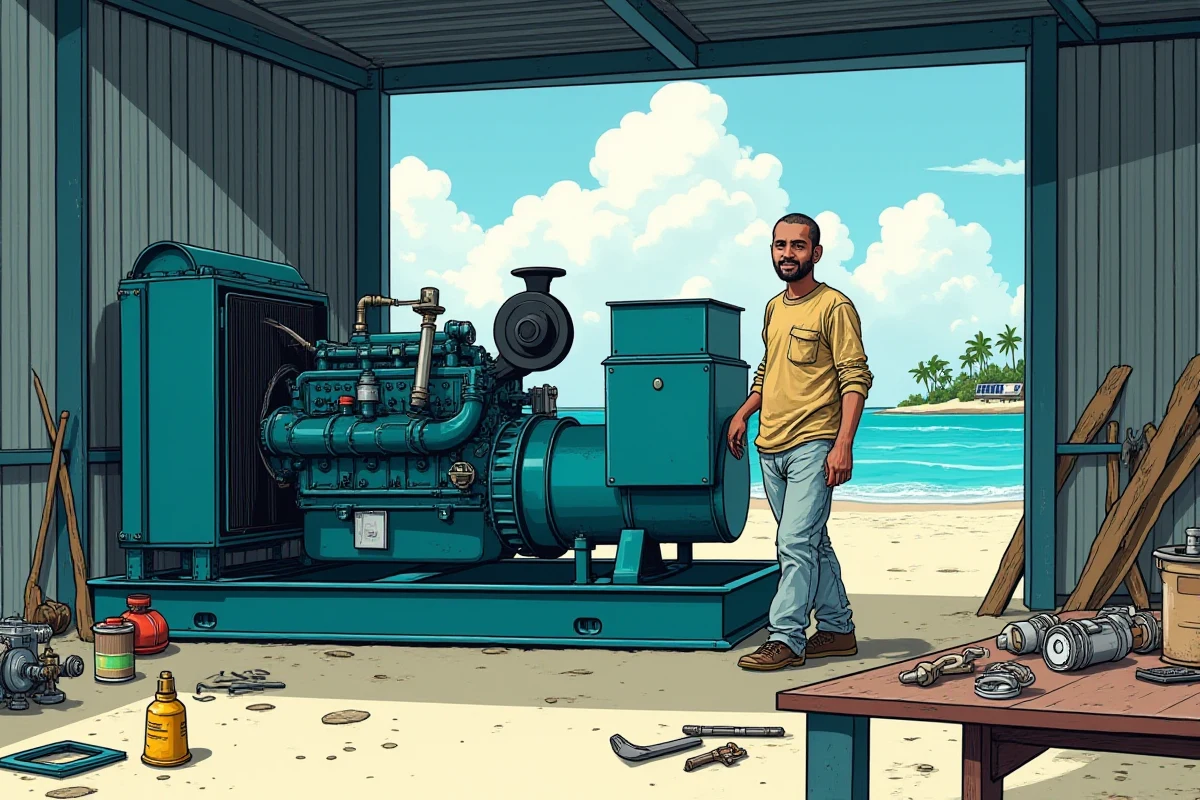
When the Lights Go Out
Rashid's phone lit up with the power authority dispatcher: the main diesel generator on Kavaratti had stopped. Not dimmed. Not fluctuating. Stopped. The entire island—5,000 people, the hospital, the desalination plant, the government offices, the ferry terminal—was in darkness.
He was the only mechanic on the island who could diagnose the fault.
Twelve years he had held this position. Twelve years of waking to calls like this—sometimes two in a week, sometimes three in a month. Twelve years of standing in front of a 250-kilowatt Cummins diesel generator, the only machine that mattered. The solar panels on the government buildings and the battery storage systems were growing, yes. But on Kavaratti, in 2026, the lights still ran on diesel. When the generator failed, an island held its breath.
He pulled on his work shirt and checked his tool bag. The wrench set was there. The pressure gauge was old but working. The fuel siphon was coiled in the corner, scarred from a thousand drains. Everything else—the spare parts, the technical manuals, the diagnostic equipment—would depend on how bad the problem was, and how quickly he could make decisions alone.
Forty minutes later, standing in the generator shed with a torch between his teeth, Rashid knew the fault was in the fuel injection system. The engine had seized. Likely the fuel pump had failed, and the injectors were clogged. Likely the fuel tank had picked up water during the monsoon season—humidity makes everything leak—and rust had contaminated the line.
To fix it properly, he needed:
- A fuel injector set (₹8,000–12,000)
- A new fuel pump cartridge (₹15,000–20,000)
- A fuel filter assembly (₹3,000)
- A gasket kit (₹2,500)
The nearest supplier with these parts in stock was in Kozhikode, on the mainland, 300 kilometres away. A ferry sailed twice weekly. The last one had left twelve hours ago. The next one would not leave until Friday—three days.
For three days, Kavaratti would run on temporary backup generators—smaller, noisier machines designed for 18 hours max before their own coolant systems failed. The water desalination plant would have to reduce operations. The hospital would go on backup power protocols. The ice factory that supplied fish boats would shut down. The ferries would be delayed—no shore power for refuelling and passenger boarding.
A three-day delay in a spare part cost the island three days of economic paralysis, spoiled catch, and deferred medical procedures.
The Weight of Being Alone
Rashid had trained on diesel engines for three years in Kozhikode, back when he was twenty-one and sleeping on his brother's floor in a one-room flat. He had worked on fishing boat engines first, then graduated to larger industrial units. The government power authority had hired him as a contract operator-cum-mechanic in 2014, when Kavaratti's first major diesel generator was installed.
The job was supposed to be simple: maintain the equipment, monitor the fuel quality, schedule preventative maintenance, and call for help if something broke badly enough to need a factory technician.
But the factory technician never came. Not for twelve years.
Instead, the diesel generator became his responsibility entirely. The authority had never budgeted for regular technician visits from the mainland. The contract said Rashid would perform "routine maintenance"—changing oil, cleaning filters, replacing fuel nozzles. It did not say he would become a combustion engineer, a hydraulics troubleshooter, a fuel system diagnostician. But the reality did.
He had learned through failure. In 2016, a bearing had seized and he had no manual, no reference, no one to call. He had spent two days studying the engine block with a tape measure and a camera, had looked up bearing specifications online in the island's only CSC (Common Service Center) in Kavaratti town, had ordered the part from a supplier in Kochi, and had installed it himself after watching a YouTube video shot in Telugu that he half-understood. The generator ran for ten years after that repair.
In 2019, the fuel pump had cracked. Same story: isolation, research, order, installation, prayer.
By 2023, Rashid knew the Cummins engine better than most service technicians. He could hear a fault in the ignition timing. He could smell contaminated fuel. He could predict which gasket would fail next based on the ambient humidity and salt-air corrosion. But knowledge was not enough. The spare parts still came from 300 kilometres away. The manuals still required internet searches and translations. The diagnosis was his, but the supply chain was beyond his reach.
And the government had never registered him formally.
For twelve years, Rashid was a contract worker. His salary—₹18,000 per month—came through a quarterly disbursement that often arrived two months late. There was no ESIC number. No e-SHRAM registration. No occupational health insurance. No pension tracking. No accident cover.
If the generator caught fire and burned his hands, he would pay for the hospital in Kozhikode out of his savings. If he was unable to work for six months, the government would simply not call him. There was no safety net. He was, to every formal system, invisible.
The Breaking Point
In November 2024, something changed.
A newly hired power authority liaison officer from the mainland—a young woman named Priya from the administration office—had visited the generator shed to observe maintenance. She was on a three-month rotation to improve operational efficiency on the island. She had asked questions: How long had he been working? What certifications did he have? Was he enrolled in any welfare scheme?
When she realized he had no formal registration, she looked shocked.
"You're doing the work of three people," she had said. "And you're not even on the books."
Over coffee, Priya explained what Rashid should be entitled to: e-SHRAM registration would give him formal status and access to accident insurance (SEHAT scheme). PM Vishwakarma could help him buy better diagnostic tools. If the power authority formalized his contract, ESIC coverage would become available. A pre-existing Kerala KCWWF registration (which he had from his training days) could be activated to give him cross-border pension benefits.
None of these were radical ideas. All were government schemes designed exactly for people like him—skilled workers in isolation, without formal employment contracts, working in high-risk environments, cut off from welfare systems.
Rashid had never heard of most of them.
Within two weeks, Priya had helped him register on e-SHRAM (ID: 101-2024-XX-XXXXX). Within a month, she had facilitated a PM Vishwakarma enrollment through a video call to the CSC in Kavaratti town, and he was approved for a ₹15,000 tool subsidy. The power authority had, finally, formalized his contract and initiated ESIC enrollment. His Kerala KCWWF registration, which had lapsed, was reactivated through a cross-border benefit portal.
For the first time in twelve years, Rashid was visible to the state.
Original text (Malayalam/Jeseri dialect): "മില്ല്യിനുടെ കര്മ്മം കന്നി മരിക്കും; എന്നാലും കര്മ്മച്ചെട്ടൻ കുറയുകയില്ല."Translation: "The work may kill you, but the worker must never diminish."
— Saying among Lakshadweep's skilled tradespeople
What Changed
The PM Vishwakarma subsidy was the first tangible shift. With the tool allowance, Rashid ordered a Bosch fuel injector tester (₹6,500) and a digital diesel pressure gauge (₹7,200). These were instruments he had needed for eight years. They would let him diagnose faults faster and with more certainty. A fuel injector tester meant he could rebuild and test nozzles on-site instead of guessing whether they needed replacement.
The e-SHRAM registration meant peace of mind. The SEHAT health scheme now covered him for accidental injury hospitalization anywhere in India. The next time he burned himself on a fuel line or cut his hand on a rusted bolt, the hospital would admit him and the government would pay.
But the spare part isolation remained.
Priya had suggested something that Rashid had never considered: using GabFORGE to research technical documentation and supplier networks. The GabFORGE portal had a Malayalam interface. More importantly, it had connections to e-commerce platforms and government supplier databases that he could access from Kavaratti without needing a CSC visit.
Through GabFORGE's multilingual interface, Rashid could now:
- Access Cummins diesel engine manuals in English and simplified Hindi (translated within the platform)
- Search for authorized spare part suppliers across Kerala and conduct preliminary quote comparisons
- File formal complaints with the power authority through digital channels (no longer dependent on in-person visits)
- Track government project tenders for desalination plant and microgrid work, diversifying his income
The spare parts still came from Kozhikode. The ferry still took 14–16 hours. But now Rashid could place orders earlier, compare suppliers in real time, and alert the power authority to anticipated shortages before they became crises.
"നിങ്ങളുടെ Cummins QSB6.7 ഇൻജക്ടർ സെറ്റിന് കേരളത്തിൽ മൂന്ന് ആധികാരിക വിതരണക്കാർ ഉണ്ട്. കോഴിക്കോട്ടെ Arun Diesel Parts-ൽ ₹9,800-ന് സ്റ്റോക്ക് ഉണ്ട്; അവർ ബുധനാഴ്ച ഫെറി കാർഗോ സ്വീകരിക്കും. PM Vishwakarma ടൂൾ സബ്സിഡി ഇതുവരെ ഉപയോഗിക്കാത്ത ₹1,300 ബാക്കിയുണ്ട്—ഈ ഓർഡറിൽ അത് ഉപയോഗിക്കാം."
(Your Cummins QSB6.7 injector set has three authorised suppliers in Kerala. Arun Diesel Parts in Kozhikode has stock at ₹9,800 and accepts Wednesday ferry cargo. Your PM Vishwakarma tool subsidy has ₹1,300 unused balance—it can be applied to this order.)
When the injection system failed in March 2025, the timeline improved. He diagnosed the fault on Tuesday morning. He placed a pre-order with three suppliers simultaneously through GabFORGE's comparison tool. By Wednesday evening, the first supplier confirmed stock and committed to the ferry courier. The parts arrived Thursday afternoon—33 hours instead of 48.
The island lost 18 hours of backup generator time instead of three days. The desalination plant ran at 70% instead of shutting down. The hospital continued normal operations.
A small margin. But it was a margin he did not have before.
Why We Built This
The challenge Rashid faced was not unique to Kavaratti. It was systemic across India's 500,000+ skilled tradespeople who work in geographically isolated or logistically constrained environments—island mechanics, mountain electricians, deep-forest carpenters, desert welders.
The problem had three layers:
Layer 1: Digital Isolation. Rashid had internet access, but it was slow and he had no easy way to navigate government scheme portals (many in English-heavy Hindi, with complex forms). The GabFORGE Malayalam interface removed that friction. A skilled worker in isolation should not need to hire someone to fill out a form on their behalf.
Layer 2: Supply Chain Opacity. Spare part sourcing required phone calls across multiple suppliers, manual quote comparison, and handshake deals. There was no central registry of authorized suppliers for industrial components across Kerala. GabFORGE's supplier matching tool indexed local and regional vendors, reducing search time from 3 days to 3 hours.
Layer 3: Formal Sector Access. Rashid had no idea he was entitled to e-SHRAM, ESIC, or cross-border welfare benefits. The government schemes existed. He did not. The gap was not policy—it was visibility. A single conversation with someone who knew the system changed everything.
We built GabFORGE's Skilled Trades portal to bridge these layers:
Multilingual Interface (Malayalam + Hindi + English): Government schemes and technical resources are now accessible in a language Rashid reads without struggling.
Supplier & Spare Part Registry: Local, state, and national vendors are indexed with real-time stock, pricing, and shipping timelines to specific regions (including island territories).
Government Scheme Dashboard: e-SHRAM, PM Vishwakarma, ESIC, Kerala KCWWF, SEHAT—all in one place, with step-by-step enrollment guidance in Malayalam.
Occupational Technical Library: Manuals, troubleshooting guides, and video content tagged by trade, machine type, and regional context.
Complaint & Feedback Portal: Direct channels to government authorities (power, shipping, CPWD) without needing in-person coordination.
What We Hope Happens
Over the next year, we hope to see three things:
🧭 Navigation. More skilled workers like Rashid discover they are already entitled to welfare, insurance, and subsidized tools. The only barrier was knowing where to look. GabFORGE becomes the reference point—the first place a young electrician or plumber checks when they start work on an island or in isolation.
🌱 Belonging. Being invisible to the government is a specific kind of vulnerability. Rashid was not lazy, not unskilled, not unwilling to pay taxes or join schemes. He was simply unreachable. e-SHRAM changed that. PM Vishwakarma changed that. ESIC changed that. When a skilled worker becomes formally registered, they stop being invisible. They become eligible for pensions, accident coverage, and future training schemes.
🔗 Connection. Isolation does not have to mean disconnection. Rashid is now part of a network of island workers using GabFORGE to share troubleshooting notes, supplier recommendations, and scheme tips in Malayalam. He no longer solves every problem alone.
The spare parts still come from Kozhikode. The ferry still takes 14–16 hours. But now Rashid knows he is entitled to the same support any skilled worker on the mainland receives. He knows where to find manuals. He knows which suppliers to call. He knows he has accident insurance.
The island's lights still run on diesel. But now, when something fails, a mechanic does not have to guess in the dark.
Access GabFORGE Skilled Trades: Visit gabforge.in and search your trade and region to find government schemes, supplier networks, and technical resources in Malayalam, Hindi, and English.
Enroll in Government Support:
- e-SHRAM: eshram.gov.in — Worker registration and accident insurance
- PM Vishwakarma: pmvishwakarma.gov.in — Tool subsidies and certification support
- ESIC: esic.gov.in — Occupational accident and health coverage
- Kerala KCWWF: kcwwfb.kerala.gov.in — Portable benefits for workers across state borders