
The Kochi Plumber and the Gulf-Return Gap
Eight years ago, Rajesh pulled his last job sheet from the Abu Dhabi construction site where he'd installed manifold systems in villas that cost more than his entire district would earn in a lifetime. He was good at it—too good to ignore. German piping, Japanese pressure regulators, water-heating matrices that required calculations he'd learned on the fly, correcting local contractors who'd ordered the wrong specifications. He had calluses that could read a pipe's condition by touch alone.
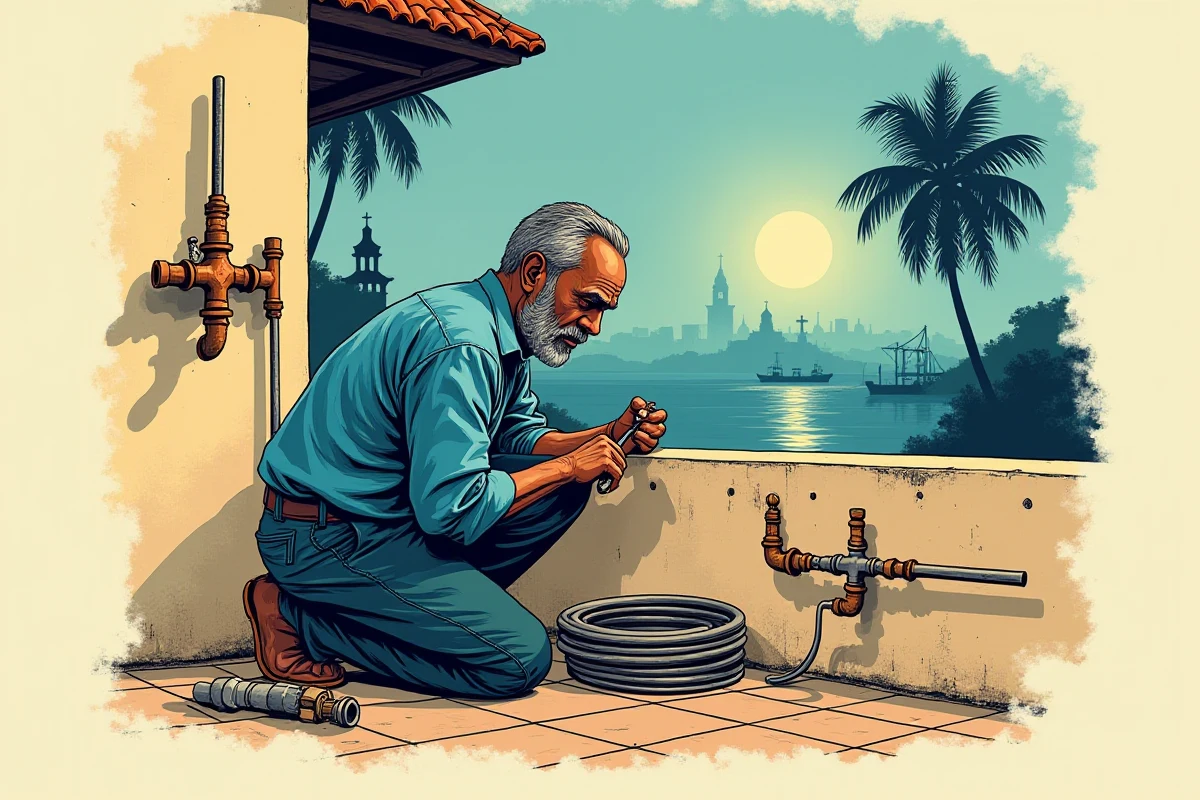
Now, back in Kochi for two years, that expertise counted for nothing on a bid sheet.
The Return
The decision to come home wasn't simple. His wife had parents in Alappuzha who needed care; his youngest was in Class XII; his mother had suffered a stroke. Abu Dhabi offered ₹65,000 a month, accommodation, and a structured work visa that renewed every three years without question. But it offered no permanence either—one contract end, one visa rejection, one dispute with a foreman, and he'd be back on a plane with two suitcases and no home to land in.
He came home in 2023. By 2024, he'd learned the hardest part of returning: experience doesn't translate when the country has built a certification system in your eight-year absence.
Kochi's construction boom is real. NRI money flows in steady. Every month, new villas rise in Infopark, Vypin, and the back roads of Thrissur where Gulf returnees build family homes with specifications they've memorized in Dubai and Doha. A plumber with Rajesh's knowledge—manifold systems, pressure regulation, desalination-integrated piping, corrosion-resistant materials for coastal humidity—should be valuable. He quotes ₹1,800 a day, top-end for Kerala, because he knows what he's worth.
But the tender sheets ask for NCVT certification. Or ITI diploma. Or apprenticeship papers from a registered center. Rajesh has none of these. He has eight years of on-site experience, letters of recommendation from contractors whose companies don't exist anymore (the visa sponsorship model means no permanent Indian employment records), and muscle memory that his hands could teach any ITI student in a week.
What he doesn't have is a piece of paper from Delhi recognizing what his hands already know.
The Problem
"They ask for ITI," he told his wife, spreading out three tender rejections on the kitchen table. "I tell them I have eight years. They say, log kya sochenge? What will people think? How do we know you have this?"
She poured him tea in the Kerala way—with the clinking of metal vessels, the way mothers do when their sons are in trouble.
"You should have gotten certified before you came back."
He had thought about it. In 2023, in Abu Dhabi, with his savings growing and the Kochi market heating up, he'd actually walked into the vocational center in Al Khalidiya and asked about Indian certifications. They told him: ITI programs run 18 months in India. You'll sit in a classroom with 18-year-olds. You'll learn piping you already know by heart. And your work visa expires in 2024, so you won't have time anyway.
He thought of himself at 46, sitting next to teenagers who'd never installed a system more complex than a bathroom. He thought of the ₹60,000 course fee. He thought of 18 months of lost wages while he sat in a training center. He decided to come home and let his reputation speak for itself.
Reputation doesn't speak to tender committees.
In Kochi, the certification system works well. Most plumbers and electricians are registered with KCWWF or have completed ITI programs. Young, trained workers are available at good rates (₹900–1,600 a day). Contractors know how to evaluate them: check the certificate, verify the board, maybe ask the trainer. For a complex project—high-pressure systems, desalination integration, expensive copper and titanium work—they want the reassurance that a formal body has validated the worker.
What they don't have is a category for "worker who learned abroad and has eight years of undeniable skill."
Rajesh started taking smaller jobs. A villa here needing a bathroom replumb. A apartment block there needing a manifold replacement. Word of mouth is still strong in Kerala. People call him. He does excellent work. They pay ₹1,500–2,000 for a day's labor because the work is flawless.
But he cannot bid on the tenders. And the tenders are where the real contracts live.
The Certification Gap
The gap between Gulf experience and Indian credentials is structural. When a worker goes abroad on a visa—and over 2 million Indian skilled workers have done this, many from Kerala's construction sector—they leave behind the Indian certification pathway. They work legally abroad because the host country recognizes their employer. But when they return, India doesn't have a system that says: "We recognize you learned something valuable overseas."
India's formal system is designed around domestic training: ITI, vocational schools, apprenticeships registered with the Ministry of Skill Development & Entrepreneurship (MSDE), or specialized certifications like SIAM (automotive) or AWS (welding). These are gold-standard credentials. An ITI electrician has a certificate from the National Council for Vocational Training (NCVT) that carries weight.
A man with eight years of on-site experience installing systems that ITI graduates read about in textbooks? He has a WhatsApp number and a testimonial from a contractor who can't be reached because he's in Qatar.
The problem compounds for Gulf returnees specifically. Their work history is fragmented: contracts end, companies fold, visa sponsorships don't port to new employers, and employment records stay buried in emirate labor registries that Indian contractors can't easily verify. Rajesh had worked for three different companies in Abu Dhabi. Each one treated him as a temporary hire, perfect for the system there, catastrophic for the verification system here.
By late 2024, he was doing ₹18,000–22,000 a month in ad-hoc work. He had mouths to feed, parents to support, and zero pathway to the ₹30,000+ a month that a certified plumber with a portfolio could command.
He started asking around. "How do I get certified?" The answers came back predictable:
- "Go to ITI, three years, you'll get a certificate."
- "Apply for apprenticeship, but they're for young people."
- "Just get on Urban Company, build ratings, no certificate needed."
He tried Urban Company. The platform wants residential service workers—a taps repair here, a drainage fix there. It wasn't built for high-end systems work, manifold installation, or the kind of technical consultation that a Gulf-experienced plumber could offer. His ratings were perfect, but the jobs paid ₹800–1,200 a day, and the platform took a cut.
Urban Company was steady. It wasn't dignity.
A Collision of Timelines
:::infographic: The Gulf Career vs. the India Certification Gap
Rajesh (Plumber, age 46)
─────────────────────────────────

2016–2024: Abu Dhabi (8 years)
├─ Company A (2016–2018): Manifold systems, pressure regulation
│  └─ Employer training: on-site only, no formal certificate
├─ Company B (2018–2021): Water-heating integration, desalination pipes
│  └─ Employer training: on-site only, no formal certificate
└─ Company C (2021–2024): Complex coastal systems, German/Japanese specs
   └─ Employer training: on-site only, no formal certificate

Skills accumulated:
• High-pressure piping (German standards)
• Manifold assembly & regulation
• Desalination-integrated systems
• Corrosion-resistant material selection
• Pressure-drop calculations
• Blueprint reading (metric + imperial)

BUT: Zero NCVT certificate. Zero ITI diploma. Zero formal Indian credential.

──────────────────────────────────────────────────────────────────

India Certification System (as of 2024)
─────────────────────────────────────────

Entry Points:
├─ ITI (18-24 months): Designed for 10th-pass entrants; full classroom cycle
├─ Apprenticeship (18-24 months): Wage-earning but requires employer + board approval
└─ Direct employment with on-the-job training (no formal credential)

Outcome: NCVT certificate from Ministry of Skill Development
Status: Valued by formal contractors, required for tenders

Gap: No pathway for "experienced worker returning from abroad"
Risk: Skilled workers waste 18 months repeating basics, or skip certification entirely
Outcome: Informal workforce (WhatsApp-based), no tender access, wage ceiling at ₹1,500–2,000/day
Rajesh was stuck in the gap. Eight years of expertise. Zero formal pathway to recognize it in India.
The Problem Becomes Personal
The breaking point came in November 2024. A contractor in Kochi—someone he'd actually worked for, on a subcontract basis, installing the systems in a high-end villa near the Bolgatty Palace—called him for a new project. A government housing scheme under LIFE Mission (Kerala's flagship housing for the underprivileged) was expanding into Kochi district. They needed experienced plumbers for a 200-unit block project. The contractor wanted to bid on it. He remembered Rajesh's work from the villa job.
The tender requirements were clear: "Plumber with NCVT or ITI certification OR 5+ years documented experience with employer references."
Rajesh had eight years. But his "employer references" were three companies in Abu Dhabi, and the tender committee in Kochi wasn't about to call Ajman labor courts to verify a worker's credentials.
He called the contractor. "Can't you vouch for me? You saw my work."
The contractor was sympathetic but firm. "Rajesh, I believe you. But if I put your name on a tender without proper papers, and the project audit happens, they question me. I can't risk it. The government will cancel the bid, fine the company, maybe bar me from future work."
This is the structural problem no amount of individual skill can overcome. The system protects buyers—the government, the contractor, the NRI client—by requiring verifiable credentials. It does this because, historically, it works. Workers who went through formal training are less likely to fail on complex systems. Paperwork creates accountability.
But the system also locks out workers who learned in a different system, even if that system produced better results.
Rajesh went home and told his wife that he was thinking about applying for ITI. He was 46 years old. It would take 18 months. They'd lose his income. By the time he finished, he'd be pushing 48, and younger, cheaper, ITI-fresh plumbers would be bidding against him.
"At least you'd have a piece of paper," his wife said.
That night, Rajesh did something he'd been avoiding: he called his cousin in Dubai and asked whether coming back to the Gulf was still an option.
What Changed
The discovery happened by accident. His wife's nephew, a young electrician in Thiruvananthapuram who'd completed ITI but was struggling with work during monsoon, mentioned something at a family gathering: "I heard there's a new scheme now. Something where experienced workers don't have to go back to ITI. They call it RPL—Recognition of Prior Learning. If you have enough experience, you can take an assessment instead of the full course."
Rajesh's wife grabbed onto this thread. "Ask him more. Find out."
The nephew didn't know much, but he pointed them to a government portal: PMKVY (Pradhan Mantri Kaushal Vikas Yojana), Ministry of Skill Development. On the PMKVY site, there it was: Recognition of Prior Learning (RPL).
The description was dense government prose, but it meant this: If you have documented experience in a trade (plumbing, electrical, masonry, etc.), you don't have to repeat 18 months of training. You can take an assessment by a certified body. If you pass, you get an NCVT certificate recognizing your skill level.
No classroom. No 18-month slog. Assessment-based.
"രാജേഷ്, നിങ്ങളുടെ ട്രേഡ് — പ്ലംബിംഗ് — PMKVY RPL-ൽ ടൈപ്പ് 3 കാറ്റഗറിയിലാണ്. കേരളത്തിൽ ഇതിനുള്ള അസ്സസ്മെന്റ് ബോഡി PSC ആണ്. ഡോക്യുമെന്റേഷൻ ആവശ്യകത: മൂന്ന് വർഷത്തെ അനുഭവ സർട്ടിഫിക്കറ്റ്, തൊഴിൽദാതാവിന്റെ കത്ത്, ഒരു ഫോട്ടോ ഐഡി. pmkvyofficial.org-ൽ ഈ ട്രേഡിന്റെ ഏറ്റവും അടുത്തുള്ള RPL ക്യാമ്പ് Kakkanad-ൽ ആണ് — അടുത്ത തീയതി ഈ മാസം 18-ന്."
(Rajesh, your trade — plumbing — falls under Type 3 category in PMKVY RPL. The assessment body for Kerala is PSC. Documentation needed: three years' experience certificate, employer letter, one photo ID. On pmkvyofficial.org, the nearest RPL camp for this trade is in Kakkanad — next date is the 18th of this month.)
Rajesh read it four times. He wasn't sure whether to hope or be suspicious. Government schemes often look better on paper than they work in practice.
He called the nearest vocational training center in Kochi and asked about RPL. The instructor, a woman named Malini, was patient. "Yes, we do RPL. You need two things: proof of at least three years of documented experience in the trade, and a willingness to take the assessment. If you pass, you get NCVT certification same as ITI students."
"How long is the assessment?"
"Depends on the trade. Plumbing, probably 3–4 hours. Practical skills test, some theory questions, site inspection maybe."
"And if I pass?"
"You get a certificate. NCVT-recognized. Same certificate as someone who did ITI."
Rajesh asked the question he'd been afraid to ask. "What counts as 'documented experience'? I have experience, but my records are all in Arabic."
Malini paused. "That's the tricky part. The official requirement is employer-issued documentation or apprenticeship papers from recognized training centers. Most RPL applications come from workers who've apprenticed informally—masons, carpenters, electricians who trained under contractors here in Kerala. For someone with foreign experience, it's less straightforward. We'd have to see what you have."
"And if I don't have the right papers?"
"Then we'd probably need to work with the PMKVY district coordinator to make a case. You might need letters from employers, maybe photographs of your work, documented projects. The RPL assessment has some flexibility for experienced workers, but the documentation is the barrier."
This was both honest and terrifying. The door existed. But the handle was rusty.
:::pullquote: Malayalam dialogue
Rajesh to his wife, later that evening:
"എന്നിൽ പാളിച്ചത് കരുതാൻ ആണ് സമയം. കാര്യങ്ങൾ കാണാൻ തുടങ്ങിയിരിക്കുന്നു."
(Now it's time to start thinking straight. Things are starting to make sense.)
His wife:
"കർത്താവ് എപ്പോഴും വാതിലിരയ്ക്ക് കാത്തിരിക്കുന്നു."
(God always waits by the door.)
He spent the next week gathering documentation. He photographed every project in Kochi he'd worked on—the Bolgatty Palace villa, apartment buildings, the Urban Company residential jobs. He asked the contractors he'd worked for to write letters. Most were happy to help; one, the man from the Bolgatty Palace job, actually understood the RPL concept and wrote a detailed letter describing Rajesh's work on the high-pressure manifold system.
He called the Abu Dhabi contacts. Three companies. One had folded. One transferred him to a labor office that (after some phone tag) issued a document in Arabic confirming employment and plumbing roles for the period 2016–2024. The third, still operating, sent an email confirming his years of service.
It wasn't perfect paperwork. It wasn't a transcript. But it was evidence.
He scheduled an appointment with the vocational training center. A month later, he sat down with Malini again, this time with a folder full of photographs, letters, and employment confirmations.
She flipped through it slowly. "This is better than most RPL applications," she said. "Gulf experience is actually less common here. Most of our applicants are masons and carpenters who've trained informally in Kerala. You have international standard work, good documentation, and recommendations. I think we can make a case to the PMKVY coordinator."
Two weeks later, Rajesh was registered for RPL assessment.
The Assessment & Recognition
The assessment took place on a Thursday morning in a center outside Kakkanad. A practical section: set up a small piping system, demonstrate knowledge of manifold assembly, explain pressure regulation, identify materials by spec. A theory component: calculations, safety protocols, Indian plumbing codes (which he hadn't studied in the ITI way, but which he understood conceptually from his site work). An evaluator walked through his practical work, asked questions, and took notes.
Rajesh wasn't nervous. This was muscle memory being tested, not academic knowledge.
He finished the practical in 90 minutes. The theory took another 45 minutes. The evaluator, a man named Krishnan who'd worked in plumbing for 30 years, looked at his manifold assembly and nodded. "Tight work. German standard, looks like."
"Abu Dhabi, last job I did," Rajesh said.
Krishnan smiled. "Good practice. Indian contractors need more of this standard."
The results came three weeks later: NCVT certification for Plumbing trade, Level 4 (advanced). Not just a pass. Advanced level, based on the complexity and quality of his demonstrated work.
It was a single document, A4, printed from the government system. But holding it, Rajesh felt something shift. This piece of paper said: The government has verified that you are a competent plumber. Whatever you learned in Abu Dhabi, whatever your hands know, this is official.
What Changed Next
With the NCVT certificate in hand, Rajesh went back to the contractor who'd turned him down for the LIFE Mission tender.
"I have the certification now," he said.
The contractor verified it online (NCVT-MIS, the Ministry's database), and within a week, Rajesh was on the tender sheet for the 200-unit housing block. The bid went in. The project was awarded to the contractor's company. Rajesh was assigned as the lead plumber for the manifold and water-heating systems.
The contract is for 14 months. He's earning ₹2,100 a day, hired as a primary contractor (not a subcontractor), with documented project experience that will build his portfolio. When this project ends, he'll have formal, on-record experience that tender committees can verify without calling Abu Dhabi.
He also did something practical: he registered with KCWWF, the Kerala Construction Workers Welfare Fund Board. This registration ensures he's covered by the occupational health insurance, pension contribution scheme, and disaster relief funds if monsoon or accident strikes. The ₹1,600–2,400 monthly pension (which he'll be eligible for after 15 years of contributions) suddenly felt achievable again.
:::infographic: Certified vs. Uncertified Plumber Bidding Outcomes
Scenario: High-end villa plumbing project in Kochi (₹8–12 lakh contract)

─────────────────────────────────────────────────────────────────

UNCERTIFIED PLUMBER (Rajesh, before RPL)
────────────────────────────────────────

Tender Requirements:
✗ NCVT/ITI certification
✗ Apprenticeship papers

Rajesh's Qualifications:
✓ 8 years Gulf experience
✓ References (hard to verify)
✓ Portfolio (informal)

Tender Committee Decision:
❌ Rejected (missing formal credential)

Outcome:
└─ Ad-hoc work through WhatsApp networks
  └─ ₹1,500–2,000/day
  └─ 4–5 days/month (irregular)
  └─ Monthly income: ₹6,000–10,000
  └─ No employment record
  └─ No pension contributions
  └─ No occupational insurance

Timeline: Indefinite, unless attends 18-month ITI program
Cost of opportunity: ₹18–24 months × ₹20,000 = ₹3.6–4.8 lakh

─────────────────────────────────────────────────────────────────

CERTIFIED PLUMBER (Rajesh, after RPL)
──────────────────────────────────────

Tender Requirements:
✓ NCVT certification (RPL pathway)
✓ Documented experience (verified)

Rajesh's Qualifications:
✓ 8 years Gulf experience
✓ References + NCVT verification
✓ Portfolio + formal credential

Tender Committee Decision:
✅ Approved (NCVT certified, advanced level)

Outcome:
└─ Government housing project (200 units, 14 months)
  └─ ₹2,100/day
  └─ 20–22 days/month (consistent)
  └─ Monthly income: ₹42,000–46,200
  └─ Formal employment record
  └─ KCWWF pension contributions (₹400–500/month)
  └─ Occupational insurance + disaster relief
  └─ Pathway to ₹2,500–3,000/day for premium work

Timeline: 4 weeks (assessment → certification)
Cost of opportunity: ₹0 (assessment fee ~₹1,500; no lost wages)
Ongoing pension benefit: ₹1,600–2,400/month (after 15 years)

─────────────────────────────────────────────────────────────────
The difference was stark. The RPL pathway cost him almost nothing in time or money. The 18-month ITI would have cost him ₹60,000 in fees and ₹3.6–4.8 lakh in lost wages. RPL took 30 days and ₹1,500 in assessment fees.
And it worked.
Why We Built This
There are over 2 million Gulf returnees in India. The Ministry of Skill Development estimates that at least 300,000 of them work in construction trades—plumbing, electrical, masonry, carpentry, welding. They left India because Gulf wages were higher and work was steady. Most came back because family, age, or visa policy pushed them home. And most discovered what Rajesh discovered: eight years of expertise means nothing if the government can't verify it on paper.
The RPL pathway exists, but it's invisible. Contractors don't advertise it. State skill councils don't market it. Workers who might benefit from it—Gulf returnees, informal apprentices, experienced laborers in small towns—don't know it's there.
Gabforge exists in part because of this gap.
We built tools to help skilled workers navigate the certification system. When Rajesh was struggling to document his Abu Dhabi experience, he had no central place to upload files, organize photographs, or prepare a narrative that a PMKVY coordinator would understand. He did it alone, with his wife's help, in fits and starts.
What if he could have filled out a form, uploaded his employment confirmations and project photographs, and received guidance from a system that understood the RPL requirements?
What if, two months into looking for work, someone had told him about PMKVY RPL instead of suggesting he sit in an ITI classroom for 18 months?
What if, after certification, he could have registered with KCWWF with a single click instead of walking to the board office with paperwork?
The tools we're building do three things:
Credential Navigation: Help experienced workers understand which certifications unlock which doors (tenders, platforms, wage levels).
Documentation Support: A structured way to gather, organize, and present employment history in a form that government assessors can verify—whether that history is from Kerala or the Gulf.
Scheme Awareness: Connect workers to the schemes they're eligible for (PMKVY RPL, KCWWF registration, PM Vishwakarma, MUDRA loans for contracting, MSME Udyam registration for solo operations).
Rajesh didn't use Gabforge for this journey (it didn't exist yet in the form he would have needed). But he represents the exact problem we're trying to solve: skilled people, invisible pathways, lost time.
What We Hope Happens
Over the next six months, we're expanding support for Gulf returnees and experienced informal workers across skilled trades:
Plumbers and Electricians (like Rajesh): Recognition pathways for on-site experience, credential navigation to high-wage contract work, KCWWF registration support.
Masons and Carpenters: Documentation systems for informal apprenticeships, portfolio-building tools for heritage and specialty work, connection to LIFE Mission and flood-reconstruction contracts.
Specialized Trades (welders, AC technicians, EV mechanics): Certification mapping by specialty, equipment and supplier networks, employer matchmaking for premium work.
We're also working to make information available in Malayalam. When government schemes exist in Hindi and English but skilled workers work in Malayalam-speaking regions, the gap between the worker and the opportunity stays wide.
Rajesh's story could have ended in 2024 with him back in Abu Dhabi or training in an ITI classroom at 46. Instead, it's continuing—with formal recognition of his skills, a 14-month contract that pays triple what he was earning informally, and a pension pathway that didn't exist when he left India.
The piece of paper that did this cost ₹1,500 and took a month.
Next Steps:
If you're a skilled worker returning from abroad—or an experienced worker without formal certification—these portals are your entry points:
- PMKVY RPL registration: pmkvyofficial.org — Look for "Recognition of Prior Learning" in your state and trade.
- NCVT-MIS verification: ncvtmis.gov.in — Check whether a certificate is authentic and what credentials it carries.
- KCWWF Pension & Registration: kcwwfb.kerala.gov.in (Kerala) — Register for occupational insurance, pension contributions, and welfare benefits.
- PM Vishwakarma (for traditional craftsmen): pmvishwakarma.gov.in — Digital advance, credit guarantee, toolkit subsidy.
- MUDRA loans (for contracting or solo business): mudra.org.in — Up to ₹10 lakh for self-employed trades workers.
- MSME Udyam registration: udyamregistration.gov.in — Free registration for solo operations or small contractor businesses.
Rajesh found one door. The others are waiting.