
The Ludhiana EV Mechanic and the Dying Trade
Rajinder Singh's hands smell like diesel and machine oil—the smell of 15 years. At 38, he has rebuilt more two and three-wheeler engines than he can count. Carburetors stripped and reassembled. Clutch plates judged by touch. Exhaust systems welded in Ludhiana's Golden Ganj mechanical cluster, the narrow laneway behind the vegetable market where a hundred repair shops cough blue smoke from sunrise to dusk.
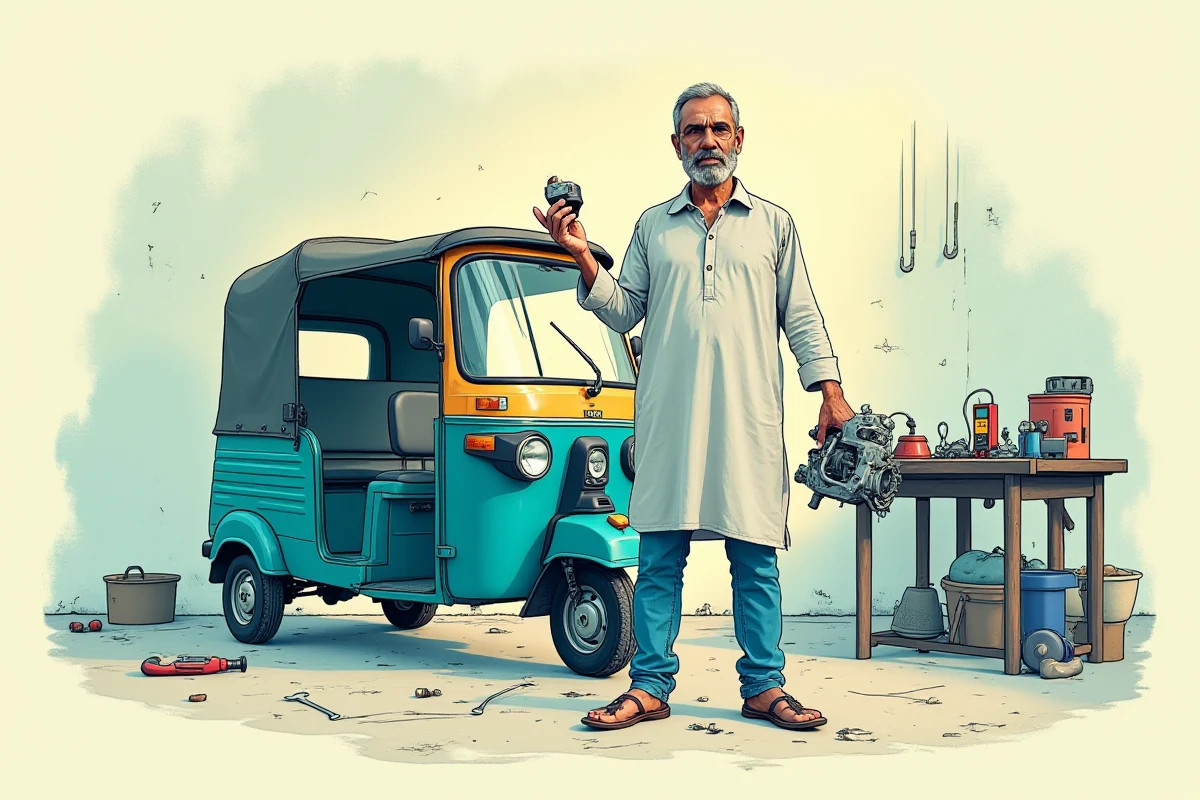
He lives in a two-room flat in Gill Park with his wife, Kaur—who teaches tailoring—and two children: Arjun, 14, and Priya, 11. The flat costs ₹6,000 a month. Rajinder's workshop—a rented 200-square-foot stall he shares with a plumber—runs ₹3,000. His income, until six months ago, was steady: ₹14,000–18,000 a month from bike repairs, auto-rickshaw overhauls, and the occasional truck brake job. Enough to cover rent, food, school fees, and maybe a cinema trip once a month.
In early 2025, the work stopped.
Electric autos—e-rickshaws, e-bikes, e-autos—arrived in Ludhiana's streets like a silent tide. They made no noise. They had no carburetors, no clutches, no oil. A mechanic's entire vocabulary became useless. Rajinder watched his contractor, Harpreet, stop calling. He heard through the workshop WhatsApp group that larger repair shops were opening "EV-certified" bays. He saw younger mechanics, 24 and 25, talking about "battery management systems" and "regenerative braking" with a confidence he didn't recognize in his own voice.
The Golden Ganj fell quieter.
⚡ The Disappearing Market
By March 2025, Rajinder's workshop had moved from four jobs a day to one. The plumber next door told him the landlord was thinking of raising rent—"Modern times need modern shops." Rajinder's hands, which had earned him respect and bread, were now hands that couldn't fix the future.
He wasn't alone. Across Ludhiana's industrial belt, traditional auto mechanics were facing the same wall. The city's e-rickshaw assembly cluster—Bajaj e-Trader, Pure EV, Hero Electric, and a dozen smaller startups—was pulling in hundreds of new workers. But those jobs went to younger technicians or mechanics willing to spend ₹10,000–30,000 on specialized training. Rajinder had a ₹50,000 monthly target to hit, two kids in school, and a wife earning ₹8,000 from tailoring. He couldn't afford a bootcamp. He couldn't afford to stop working.
More than the money, there was the shame. In Ludhiana's tight contractor networks, skills have currency that paychecks don't carry. Rajinder had stood in that mechanic's circle for 15 years. He knew engines the way a master knows ragas. Now he was hearing contractors say, "We're only hiring EV guys now," and his throat would tighten.
In April, something broke. A customer—a taxi owner he'd serviced for eight years—came to him with an e-auto that had a dead battery. Rajinder stared at it like a surgeon facing an organ he'd never learned to touch. He told the owner, "Come back when I know this."
The owner didn't come back.
That night, sitting on the workshop stool with the shop door locked, Rajinder made a decision. He would take a loan. He would pay for the training. He would learn, or he would watch his trade die around him.
The next morning, he walked to the nearest CSC kiosk in the market. A man named Manjit—who ran the digital center—told him about PM Vishwakarma, a government scheme for self-employed artisans and skilled workers. Rajinder qualified. He could get ₹15,000 in collateral-free credit within two weeks.
🔋 What Nearly Happened
In late April, desperate for quick money, Rajinder borrowed ₹2,00,000 from a local moneylender at 28% annual interest. The plan was mad: he'd take the loan, skip the training, and somehow negotiate with contractors to let him shadow younger EV mechanics while still doing odd jobs. Self-teaching. Humiliation. A crushing debt.
By mid-May, the interest alone had added ₹4,600 to his burden. His wife, Kaur, sat across the dinner table and said nothing—but her silence was louder than argument. Their daughter's school fees were due. His oldest, Arjun, needed new shoes; his feet had grown two sizes in a year. Rajinder could feel the floor collapsing under him.
Then Manjit called from the CSC. The PM Vishwakarma loan was approved. ₹15,000, zero interest, available within a week.
That same week, Rajinder discovered NSDC had partnered with a Ludhiana training center—TechSkill Hub near Railway Station—to run an 8-week EV mechanic bootcamp. The cost was ₹12,000. With the PM Vishwakarma credit, he could pay the deposit (₹3,000) immediately and pay the rest over two months from his bootcamp stipend (NSDC provides ₹2,000/month allowance to trainees).
More importantly, Bajaj e-Trader had signed a placement agreement with TechSkill Hub. Pass the bootcamp, pass the final assessment, and you had a job waiting: ₹18,000–22,000/month, depending on your apprenticeship track.
Rajinder called the moneylender and repaid the ₹2,00,000 in full (with accumulated interest: ₹204,667). It cleared his debt in a single catastrophic swallow. But it was gone. The weight lifted.
📞 The Conversation That Changed Direction
Two weeks into the bootcamp, Rajinder was paired with a trainer named Pradeep—a 34-year-old former two-wheeler mechanic who'd switched to EV three years earlier and now led battery diagnostics training.
"How are you feeling?" Pradeep asked during a break, watching Rajinder measure voltage on a battery module with the multimeter.
"Like I'm learning a new language with the same hands," Rajinder said in Punjabi.
Pradeep nodded. He'd said the same thing once. He told Rajinder a story: in 2022, he was also standing in the Golden Ganj with obsolete skills. He'd resisted training for six months. Then a young customer came in with an e-auto and asked the same question: "When will you know this?" And he'd broken.
"The breaking is the point," Pradeep said. "After that, the rest is just mechanics. You already know how to fix things. This is just a different engine."
They spent the next hour not on batteries but on Rajinder's hands. Pradeep showed him how the muscle memory he'd built—the way he diagnosed problems by sound and vibration—applied to electric motors too. "Listen," Pradeep said, running the motor. "That slight hum? In a diesel engine, you'd hear carbon knock. In EV, that hum tells you rotor imbalance. Same diagnosis. Different alphabet."
Rajinder felt something shift. He wasn't starting from zero. He was translating.
--- quote: "ਸਾਡੇ ਹੱਥ ਅਸੀਂ ਹਨ। ਸਿੱਖਣਾ ਆਸਾਨ ਹੈ। ਪਰ ਵਿਆਹ ਕਰਨਾ ਭੁੱਲਣਾ ਪਏ।" translation: "Our hands are us. Learning is easy. But we must forget the old marriage." attribution: Pradeep, EV trainer context: "On the difference between retooling and retaining; on letting go of the IC engine identity" ---
The last five weeks of bootcamp were different. Rajinder wasn't struggling against the new—he was building a bridge from the old. He learned:
- Battery Management Systems (BMS): Reading voltage, current, temperature across cell modules; diagnosing swelling, dead cells, thermal faults
- Motor & Controller Diagnostics: Testing motor phases, reading controller error codes, understanding regenerative braking
- Safety Protocols: High-voltage hazards (traction battery runs 48–72V DC; one misstep kills), proper grounding, arc-flash risk
- Assembly & Maintenance: How e-rickshaw frames are welded, where motor mounts go, how to do a full assembly quality check
- Digital Tools: Using OBD2 equivalent scanners for EV diagnostics, reading telemetry from the cloud-connected apps newer e-autos use
On the final assessment day in July, Rajinder rebuilt a mock battery module, diagnosed three pre-planted faults in an assembled e-motor, and passed a written test on safety protocols. He scored 87%.
When TechSkill Hub called Bajaj e-Trader with his name and score, the callback came within three hours.
🚗 What Changed
The night before his first day, Rajinder sat at the kitchen table with his phone and typed his PM Vishwakarma application number into the agent.
"ਤੁਹਾਡੀ PM ਵਿਸ਼ਵਕਰਮਾ ਅਰਜ਼ੀ (ਨੰਬਰ PV-2025-04-XXXX) ਬੰਦ ਹੋ ਗਈ ਹੈ — ₹15,000 ਦੀ ਕ੍ਰੈਡਿਟ ਲਾਈਨ ਜਾਰੀ ਕੀਤੀ ਗਈ ਸੀ 14 ਮਈ ਨੂੰ। TechSkill Hub ਦੇ ਪੋਰਟਲ 'ਤੇ ਤੁਹਾਡਾ NSDC ਸਰਟੀਫਿਕੇਟ 87% ਸਕੋਰ ਨਾਲ ਅੱਪਲੋਡ ਹੈ। Bajaj e-Trader ਦਾ ਪਲੇਸਮੈਂਟ ਰਿਕਾਰਡ ਦਿਖਾਉਂਦਾ ਹੈ ਕਿ ਕੱਲ੍ਹ ਸਵੇਰੇ 8:30 ਵਜੇ ਡੁਗਰੀ ਫੈਕਟਰੀ ਵਿੱਚ ਰਿਪੋਰਟ ਕਰਨੀ ਹੈ।"
(Your PM Vishwakarma application is closed — the ₹15,000 credit line was issued on 14 May. Your NSDC certificate with an 87% score is uploaded on the TechSkill Hub portal. The Bajaj e-Trader placement record shows you report to the Dugri factory tomorrow at 8:30 a.m.)
He read it twice. Then he set his phone down and told Kaur, "Everything checks out."
Rajinder walked into the Bajaj e-Trader assembly facility in Ludhiana's Dugri Industrial Area on a August morning with his certificate, a new pair of work gloves, and his wife's prayer.
The scale was nothing like the Golden Ganj. Twenty workers stood at assembly stations—motors, controllers, battery packs, frames, wiring harnesses. A quality-check area. A test track out back. Modern. Loud with machinery and younger voices. For a moment, he felt ancient.
His supervisor was Anil, 26, who'd come up through the same NSDC bootcamp two years earlier. Anil sat him at a station where battery packs were being installed into e-rickshaw frames.
"Your job first month: you install packs," Anil said in simple Hindi. "You make sure the connectors sit clean, the voltage reads right on the terminal check, and the frame sits balanced. Doesn't matter how old you are or what you used to fix. You get this right, you get 100 rupees a pack. You make 120 packs a day, you take home ₹12,000. Bonuses on top for zero defects. Sound good?"
It sounded good. On the first day, Rajinder installed 78 packs. No defects. On day five, he hit 118. On day thirty, he was at 136, with a ₹2,000 bonus for the month's zero-defect record.
His paycheck for August: ₹22,400.
When he brought it home and laid the cash on the kitchen table, Kaur cried. Not loudly. Just wet eyes and a long breath. Arjun asked, "Papa, are you safe in this job?" and Rajinder could say, without lying, "Yes. Very safe."
The e-rickshaw market in Ludhiana was only growing. By late 2025, at least four major EV manufacturers had begun assembly operations. The bootcamp had tripled its cohort. Contractors were begging for trained mechanics. The Golden Ganj still existed—some shops had retooled, others had closed—but Rajinder wasn't thinking about it anymore. He was thinking about saving ₹5,000 a month toward a down payment on a house where Arjun and Priya could each have their own room.
At 38, Rajinder had learned that being a mechanic wasn't about engines. It was about the ability to look at a problem, pick up the right tools, and fix it. The rest—whether it's carburetors or batteries—was just knowing where to look.
🧭 Why We Built It
The e-rickshaw and EV transition is happening across urban India now. Cities like Bangalore, Delhi, Pune, Mumbai are all seeing the same wave. And in every city, there's a cohort of mechanics like Rajinder—skilled, experienced, but trained on technology that's becoming scrap metal. They face a choice: retrain or disappear.
The barrier isn't aptitude. It's friction—cost, time, the shame of starting over, the fear that you're too old or too embedded in the old way. Rajinder's story works because three systems aligned:
PM Vishwakarma provided the credit to absorb the bootcamp cost without predatory moneylending. ₹15,000 may seem small, but it's the difference between "I cannot afford to retrain" and "I can take the first step."
NSDC's bootcamp infrastructure translated his 15 years of auto-mechanic knowledge into EV-specific skills within eight weeks. It didn't ask him to forget carburetors—it showed him how to read a problem the same way on a different machine.
Direct placement partnerships (Rajinder's NSDC cohort had Bajaj e-Trader standing by at graduation) removed the second fear: "Even if I train, I won't find a job." The job was waiting.
But here's what didn't happen in Rajinder's story: no government agency knocked on his door. No contractor called to say, "Upskill and we'll rehire you." No union organized a retraining drive. Rajinder had to walk to the CSC himself. He had to hear about PM Vishwakarma and NSDC from Manjit, who runs a digital center, not from his industry association.
The gap remains structural. Thousands of mechanics are still in the Golden Ganj, waiting—not out of laziness, but out of invisibility. They don't know about NSDC because NSDC's outreach doesn't reach repair shops. They don't know about PM Vishwakarma because the scheme is built for "artisans," and no one has told them they count. They don't know bootcamp placement is guaranteed because no one invited them to look.
🌱 What We Hope Happens
For Rajinder and mechanics like him: That GabFORGE's portal connects skilled workers to the EV bootcamp ecosystem—not as a program we run (we don't), but as a transparent guide to NSDC training routes, placement partners, and PM Vishwakarma credit that actually works. That the next mechanic in Ludhiana doesn't have to stumble to Manjit's CSC by accident; they can search "EV mechanic bootcamp Ludhiana," find a curated path, apply, and enroll.
For GabFORGE: We're building the connective tissue between government schemes and the workers they're designed to help. Rajinder is an NSDC success story. It just took him six months of pain to discover NSDC existed. That's a design failure—and we're fixing it in Punjabi and Hindi, with routes rooted in how skilled workers actually move: WhatsApp, CSC networks, contractor groups, and the digital word-of-mouth that travels through repair shops and construction sites.
The EV transition is a 10-year story. Thousands of mechanics will either retrain or exit. But with visibility—with clarity on where to go, what to learn, how to pay for it, and where the jobs are—that exit can become a pivot. A hand that knows how to fix things will always find something to fix.
For Rajinder, August came with ₹22,400 and a future. The Golden Ganj will continue to fade. But Rajinder's work isn't fading. It's just changing color—from diesel smoke to battery current.