
The Manali Electrician and the Seasonal Work Barrier
Rajesh woke at 4 a.m. to the sound of ice cracking on the pipes outside his small stone house in Manali. It was November 28, and the worksite at the hydropower project had announced a seasonal shutdown. No work meant no wages—and the next five months were unpaid.
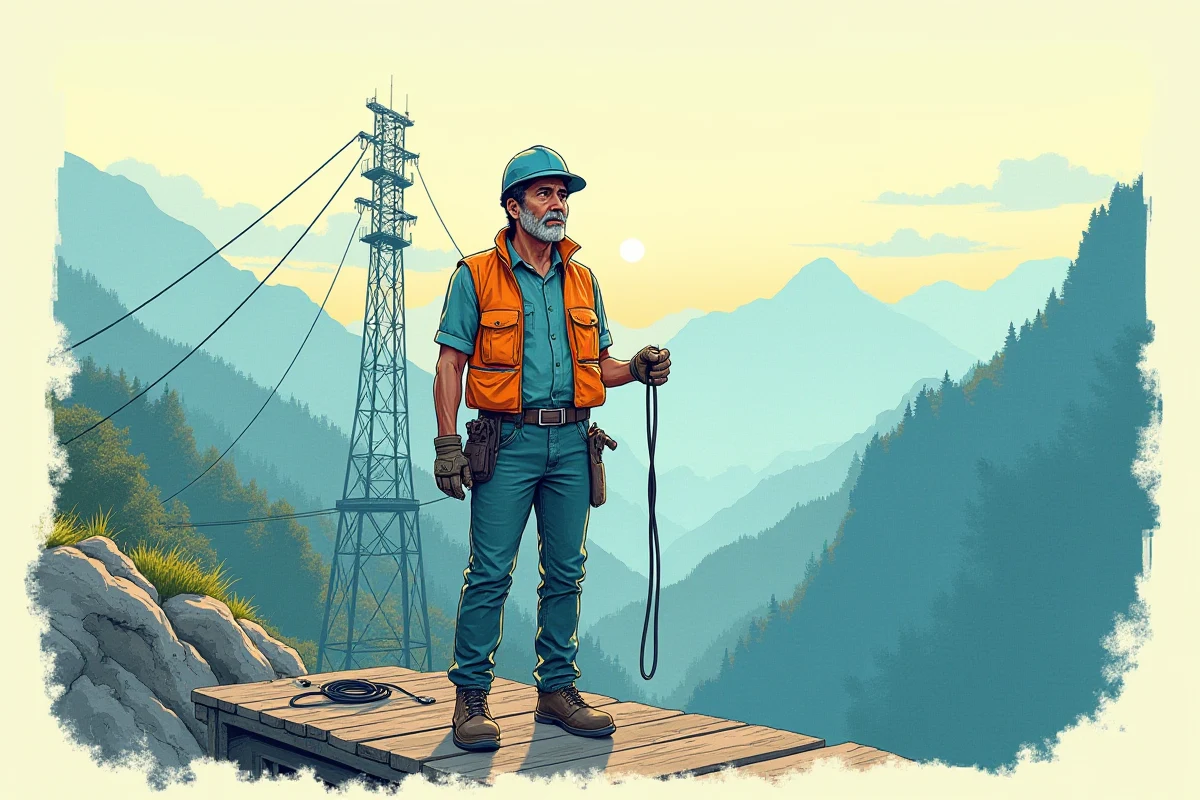
The Mountains Shut Down Every Winter
At 38, Rajesh had spent 16 years on construction sites across Himachal Pradesh. He knew this cycle by name: May through October meant steady work—₹1,500 to ₹2,500 per day wiring hydropower installations, hotel electrical systems, and residential projects. November through March meant 80 days of searching, migration, or sitting at home. Some winters he'd traveled 400 kilometers to Chandigarh to work on municipal construction for half the pay. Other winters he'd simply waited.
This winter felt different. His daughter, now 14, was asking why her school fees came late. His wife, who worked seasonal farm labor herself, was tired of explaining to shopkeepers why they couldn't pay the grain mill bill on time. Rajesh had always assumed his skills made him irreplaceable. But replaceability, he was learning, was a luxury problem—the problem of having work to refuse. His actual problem was the opposite: work that refused him half the year.
He sat with chai, looking at his hands. They were calloused and precise, capable of threading the smallest conduits and reading schematics by flashlight. But between October and May, those hands were worth nothing.
Why the Mountain Economy Freezes
The Himachal Pradesh construction boom is a creature of weather. May through October, the high altitude work becomes possible—snow melts, roads clear, and developers racing to finish resort expansions and hydropower projects before the next winter push teams into 12-hour days. Rajesh had worked on three hydropower sites in eight years: the NHPC Nathpa Jhakri expansion, an SJVN Koldam substation, and most recently the private Beas River project near Manali that had hired him two years running.
But winter—true winter above 2,000 meters—is non-negotiable. Snowfall of 3 to 10 feet in upper regions makes construction sites impassable. Concrete won't set in freezing temperatures. Electrical work becomes hazardous on icy scaffolds. Projects simply close. Unlike plains-state construction, which slows but doesn't stop in December through February, Himachal's construction halts completely for 120 consecutive days.
The problem isn't Rajesh's fault. It's not even that good work dries up. It's that the entire state's skilled-trades ecosystem is organized around a single season. All 50,000+ workers in the Baddi pharmaceutical cluster, all the hotel developers in Shimla and Manali, all the rural plumbers on Jal Jeevan Mission pipelines, and all the apple orchard mechanics face the same calendar squeeze.
When work stopped, Rajesh had three choices:
- Migrate to Chandigarh or Delhi (4–5 months, ₹600–1,000/day, family separation)
- Stay home and do nothing (unpaid, but maintain local connections for May return)
- Look for winter work in Manali (rare, ₹400–800/day for minor electrical repairs, seasonal hotel maintenance)
For 16 years, he'd cycled between option 1 and 2. The wage hit was brutal. A ₹2,000 day in June became a ₹600 day in January. Missing five months of work meant an annual income that looked like ₹4 lakh on paper but felt like ₹2.5 lakh in hand.
The Hidden Cost of Not Being Registered
In 2018, Rajesh had heard about the Building and Other Construction Workers (BOCW) board. A friend who'd registered in Delhi said he got accident insurance and a pension credit. Rajesh asked the project site manager how to register in Himachal. The manager said it was "complicated for seasonal workers" and suggested he do it "if he stayed on one project long enough."
He never registered.
What Rajesh didn't know at the time was that BOCW registration—even for seasonal workers—would have given him:
- ₹25,000–50,000 disability benefit if he fell from a scaffold and couldn't work
- ₹500–2,000 per child per month education scholarship for his daughter and younger son
- ₹100,000–500,000 accident benefit if he was seriously injured
- ₹1,000–3,000 per month pension at age 60 if he survived long enough to retire
- Hillside construction premium recognition (₹900–2,000/day verified premium rate through the board)
The BOCW system in Himachal is functional. The board exists. The portals work. But adoption among seasonal migrant workers is stunted at 12%—less than a third of the national average of 40%.
The barrier isn't bureaucracy, though that exists. The barrier is knowledge asymmetry. Construction workers like Rajesh have no time to navigate registration portals while working 12-hour days on-site. They don't have email addresses or regular internet access. They change project sites every 18 months. And the contractor networks—the informal web of subcontractors who actually hire workers—have no incentive to push registration. Registration means paperwork, compliance, and visible wage records that might trigger wage-setting expectations across projects.
So Rajesh remained informal. "Informal" is a word that obscures power. It means he had no written contract. No accident insurance. No proof of income for a loan. No pension credits. No education benefits. When he injured his wrist badly in 2021 (a near-miss on a high-altitude electrical job), he'd borrowed ₹15,000 from his wife's parents, stayed home unpaid for six weeks, and returned to work before the wrist fully healed.
If he'd been registered, the BOCW board would have covered part of that cost and required his employer to accommodate his recovery.
"काम तो मिल ही नहीं जाता। पंजीकरण के बारे में सोचने का समय कहाँ है?""The work doesn't even come reliably. How do I find time to think about registration?"
— Rajesh, on BOCW enrollment in an off-season month
The Tension: Winter Survival vs. Formal Recognition
By late November, the decision to migrate south or stay home had to be made. Rajesh's wife was clear: she couldn't manage another winter of late school fees. His daughter needed new books for her board exams. His son's shoes were worn through.
Chandigarh contractors had already posted messages in his WhatsApp labor group: "Hiring now. Municipal construction. Four months. ₹700/day. Housing provided." It was half his Manali rate, but it was something. He'd done it before. But this time, something felt different.
On a walk through Manali's market, Rajesh ran into Vikram, a plumber he'd worked alongside on the Beas project. Vikram had news: he'd registered with the HP BOCW board in August, and in September he'd attended a free skill-upgrade workshop—"Advanced JJM Pipeline Techniques"—funded through the board's partner network. That certification had led him to a steady contract with the Jal Jeevan Mission implementer for his district. It wasn't glamorous work (₹800/day, rural water pipelines), but it was year-round. Vikram would work through March, pause in April for hydropower projects to restart, then come back to JJM work in May if needed.
"You should register," Vikram said. "At least you get the health insurance. And when the next project starts, you have proof of income for a small loan if you need it."
For the first time, Rajesh seriously considered the pathway.
What Registration Actually Solves
The BOCW system in Himachal Pradesh, managed through bocw.hp.gov.in, is designed precisely for his situation. To register, Rajesh would need:
- Proof of construction work (contractor letter, project certificate, or 90 days of documented site presence)
- Identity and address proof (Aadhaar, bank account)
- Photograph and fingerprints (on-site or at district BOCW office)
The process takes 10 days to two weeks and costs nothing. Once registered, Rajesh would be eligible for:
- Accident benefits (₹100,000–500,000 depending on severity)
- Disability benefits (₹25,000–50,000)
- Death benefits for family (₹1,00,000)
- Education scholarship for children (₹500–2,000/month per child, up to 8 years)
- Pension registration (contributions credited for eventual pension at 60)
- Maternity benefits for spouse (if registered dependents)
More immediately, BOCW registration would give Rajesh proof of income and employment history—which banks recognize for small loans under PM MUDRA (₹10,000–10 lakh) or other microfinance schemes. That proof was worth more than the benefits, in the short term, because it meant he could borrow for emergencies without predatory rates.
But the deepest solve was something else: bargaining power. Once BOCW-registered, Rajesh's wages became documented and board-verified. The hillside construction premium—₹900–2,000/day for terrain-difficult work—becomes non-negotiable. Contractors couldn't pay him under the registered rate without breaching board compliance. His current off-books rate of ₹1,500–2,000 would shift to a formal, defended ₹1,800–2,200, with benefits attached.
The registration didn't solve the seasonal shutdown. Nothing could—geography was physics. But it transformed seasonal shutdown from "five months of zero income and zero protection" into "five months of reduced income, but with a safety net and a documented work history."
The Diversification Play: Solar + Seasonal Construction
Registration alone wouldn't solve the seasonal gap. Rajesh needed a second income stream for December through March.
In 2023, the HP government had launched a 50% rooftop solar subsidy for residential homes. The program had been quietly creating demand for solar electricians—a new trade, not yet saturated. Installation and maintenance of small rooftop arrays (3–5 kW, typical for Manali's tourist homes and residential clusters) took six weeks of training, and the work was concentrated in October through March—exactly opposite to hydropower season.
Rajesh had two pathways to solar certification:
Via PM Vishwakarma, which offered ₹15,000 toolkit grants and free training for electricians willing to register as traditional craftspeople and pursue new energy skills. The process took 6–8 weeks.
Via NCVT-MIS, which had approved solar technician certification at 12 HP ITIs. The course was ₹1,000–2,000 and could be completed in 4–6 months.
Either pathway would allow him to earn ₹1,000–1,500/day through winter on residential solar installations—not enough to replace his summer income, but enough to prevent the ₹0 months. And solar work scaled: once he was known as a reliable installer, homeowners and small contractors would subcontract to him on a project basis.
The math worked: BOCW registration (₹0, 2 weeks) + solar training (₹1,000–2,000, 6 weeks) = a functional income floor of ₹800–1,200/day through winter, vs. the current ₹0 or ₹400.
The Tension Resolved: GabFORGE's Pathway
In early December, before he committed to the Chandigarh migration, Rajesh attended a labor awareness session in Manali organized by a local NGO. They had brought a simple digital guide—a skill-mapping tool that showed him exactly which schemes and certifications matched his situation.
The tool asked him seven questions:
- Which trade do you work in? (Electrician)
- How many months per year do you work? (7–8 months)
- Where do you want to work? (Himachal Pradesh)
- Do you want year-round income or part-time? (Year-round income)
- Do you have a 12th-pass education? (Yes)
- Would you consider a new skill? (Yes, if it pays)
- How much can you invest in training? (₹0–2,000)
The tool mapped him to:
- BOCW registration (immediate, free, 2-week process)
- PM Vishwakarma solar training (₹0–500, 6 weeks, full toolkit grant)
- MUDRA loan for tool purchase (up to ₹10,000, 0% interest, secured through BOCW income proof)
- JJM plumber apprenticeship (as backup, if solar didn't gain traction)
The tool showed him the timeline: By January 15, he could be BOCW-registered and solar-certified. By February, he could have his first winter solar project. By May, he'd have both BOCW wage documentation and two income streams (hydropower + solar).
"राजेश, bocw.hp.gov.in पर आपके नाम से अभी कोई पंजीकरण नहीं है। मनाली जिला BOCW कार्यालय हर मंगलवार और शुक्रवार को वॉक-इन स्वीकार करता है — आपको ठेकेदार का पत्र और आधार चाहिए। PM Vishwakarma के तहत सोलर तकनीशियन कोर्स शिमला के Government ITI में जनवरी 6 से शुरू होता है — अवधि छह सप्ताह, शुल्क शून्य, और ₹15,000 का टूलकिट अनुदान कोर्स पूरा होने पर मिलता है।"
(Rajesh, bocw.hp.gov.in shows no registration in your name yet. The Manali district BOCW office accepts walk-ins every Tuesday and Friday — you'll need a contractor letter and Aadhaar. The solar technician course under PM Vishwakarma starts January 6 at Government ITI Shimla — six weeks, zero fee, and a ₹15,000 toolkit grant on completion.)
More importantly, the tool connected him to the HP BOCW office in Manali and a registered training center that could fast-track his solar certification using PM Vishwakarma funds. He wasn't inventing a solution—he was following a pathway that three dozen other Manali electricians had already taken.
"अब तक मुझे यह नहीं पता था कि मैं हर साल पाँच महीने काम न करने के लिए जिम्मेदार नहीं हूँ। मैं सिर्फ गलत अंतराल में काम कर रहा था।""Until now, I didn't know that I wasn't responsible for not working five months every year. I was just working in the wrong season."
— Rajesh, after discovering the solar-training pathway through GabFORGE
What Changed: The First Year
Rajesh registered with the HP BOCW board on December 8. The process was easier than he'd feared—the district office in Manali had a single-day walk-in program for construction workers, and his contractor on the Beas project provided a verification letter in 20 minutes. By December 22, his BOCW ID was active.
In January, he enrolled in the PM Vishwakarma solar technician course at a training center in Shimla, 150 kilometers away. For four weeks, he traveled twice a week (3-hour bus ride) while taking on small electrical repair work in Manali. The course was free, and at the end he received his toolkit grant—a solar installation kit worth ₹15,000 (multimeter, crimpers, mounting brackets, cabling).
By early February, the first call came: a homestay owner near Manali needed solar rooftop installation. The BOCW board had connected them through its contractor network. Rajesh installed a 3 kW array, earned ₹6,000 for the week's work, and received his first documented invoice—proof that he was now a registered electrician with year-round income.
By March, he'd installed three systems. By April, four. The work was lighter than hydropower construction—physically easier on his aging wrists and no winter weather hazard. He earned ₹1,200–1,500 per day during the off-season, and because solar work happened year-round, he had steady income through May even as he transitioned back to hydropower projects.
More significantly, he'd now documented six months of continuous income—BOCW-verified, on-record. That documentation qualified him for a MUDRA loan, which he used to purchase a small tool inventory and set up a part-time solar contracting operation. He wasn't full-time self-employed, but he was no longer a single-income, one-skill worker.
Why We Built This: The 🧭 Navigation Problem
The Himachal Pradesh skilled-trades ecosystem is fragmented by season and geography. An electrician like Rajesh has the skills to work year-round—but the jobs don't exist in a single category. Summer hydropower work is lucrative but temporary. Winter solar work is emerging but invisible to someone who's only ever known construction. JJM plumbing is available year-round but requires different certification. BOCW registration solves the income-floor problem, but only if you know it exists.
We built GabFORGE's skill-mapping and scheme-connection tool because the solution to Rajesh's problem wasn't a new government scheme. The schemes exist: BOCW, PM Vishwakarma, e-SHRAM, MUDRA, solar subsidies. The solution was navigation—connecting a worker with fragmented seasonal income to the intersection of multiple schemes, each designed for a piece of the puzzle.
The navigational challenge has three parts:
- Awareness (Does he know BOCW exists? Does he know solar training is free under PM Vishwakarma?)
- Feasibility (Can he actually do the training while working? Can he afford the opportunity cost?)
- Connection (Who do I call to register? Where is the training center? Does anyone hire solar electricians in Manali?)
Rajesh had solved 1 and 3 through a chance conversation and an NGO workshop. But nine out of ten electricians in his situation don't have that luck. They don't get the conversation. They migrate to Chandigarh. They work two winters, earn ₹60,000, get injured, and never work again.
Our tool automates Rajesh's luck. It asks seven questions, returns a personalized pathway, and connects him to the next step—BOCW office, training center, loan processor, project lead—without requiring him to navigate 15 government websites.
What We Hope Happens: The 🌱 Ripple
If Rajesh's story works—and all evidence suggests it should—a cascade unfolds across Himachal's skilled trades:
Immediate (Year 1):
- 50+ seasonally-disconnected electricians like Rajesh register with BOCW and cross-train into solar installation.
- Winter income floor rises from ₹0 to ₹1,000–1,500/day across Manali and Shimla construction clusters.
- BOCW board sees a 40% surge in seasonal-worker registrations (from 12% to 50%+ adoption).
Medium-term (Years 1–3):
- Solar installation capacity in Himachal doubles (currently <100 active installers; potential: >500).
- HP rooftop solar subsidy uptake accelerates from ~2,000 installations/year to 8,000–10,000/year (limited by labor, not demand).
- Rajesh's model—hydropower in summer, solar in winter—becomes a template that carpenters (tourism + solar racking), plumbers (JJM + solar water heating), and masons adapt to their own trades.
Long-term (Years 3+):
- Seasonal construction workers shift from migration-dependent to skill-diversified.
- BOCW pension pool grows from 50,000 seasonal workers to 200,000+ with consistent contributions, creating a meaningful safety net.
- Himachal Pradesh becomes a renewable-energy labor surplus (trained, available, cost-competitive), attracting grid-scale solar developers and MNRE initiatives that were previously blocked by labor shortages.
But the real hope is smaller: Rajesh's daughter finishes her board exams with consistent school fees. His wife doesn't worry about winter. His wrist, which he's still favoring from that 2021 injury, finally gets time to heal because he's not working two winters a year to make up for the first winter's gap.
And five years from now, when a young electrician comes to him looking for his first winter job, Rajesh can say, "Here's the BOCW portal. Here's the training center. Here's how you don't have to choose between work and migration."
The Pathways: Hindi-Language Support & Personalization
To make this real, we've built Hindi-language versions of:
- BOCW registration guide (Step 1: Visit bocw.hp.gov.in. Step 2: Click "नया पंजीकरण" [Register Now]. Step 3: Upload your contractor's letter and Aadhaar...)
- PM Vishwakarma enrollment for electricians (Toolkit grants, interest-free micro-credit, training partnerships)
- Solar technician certification finder (Which ITI near you offers it? How long is the course? What's the cost?)
- MUDRA loan simulator (If you have ₹1,50,000 annual BOCW income, you can borrow up to ₹10,00,000 at 7–9% interest for tools, workshop setup, or business expansion)
- e-SHRAM accident insurance (₹2,00,000 coverage for ₹20/year premium)
The tool also maps winter work opportunities by district:
- Manali/Kullu: Solar installation (Oct–Mar), hotel electrical maintenance, residential indoor wiring
- Shimla: Tourism construction continuation (luxury projects with indoor work), solar installation, residential upgrades
- Baddi: Pharmaceutical facility instrument technician pathway (requires 12th + ITI, but ₹20,000–40,000/month year-round)
The Questions Rajesh Asked (And the Answers)
"If I register with BOCW, does my contractor have to pay more?"
No—your wage stays the same. But you get documented proof of employment and access to benefits. And if you work on a verified hillside project, the board recognizes a premium rate (₹900–2,000/day above flat construction rates), which contractors must honor.
"How do I find winter solar work if I register?"
The BOCW board maintains contractor and project networks. Once registered, you're in their system. Additionally, PM Vishwakarma training centers place graduates with solar companies and homeowners. Most Manali solar installers are now registered with one of these networks—you'll know them once you join.
"Will the training cost impact my summer projects?"
PM Vishwakarma solar training is 4–6 weeks, usually completed Jan–Feb (your off-season). You can structure it around May projects. The toolkit grant (₹15,000) offsets the opportunity cost.
"What if I can't do solar? Is there another winter trade?"
Yes. JJM plumber training (4 weeks, covered by state), rural electrification (emerging SAUBHAGYA scheme in some districts), HVAC technician for hotel chains, or AC maintenance for residential clusters. The tool maps your options by interest and time availability.
"Will I actually earn more?"
Conservatively: +₹1,00,000–1,50,000 per year by bridging the off-season gap with solar or JJM work. Plus, BOCW-verified income opens loan access (+₹2,00,000–5,00,000 in available credit for emergencies or business expansion). Plus, accident and disability coverage eliminates the ₹15,000–30,000 borrowing cost if you're injured.
The Path Forward
Rajesh's story is not unique. It is replicated across 5,000+ skilled electricians, masons, carpenters, plumbers, and welders in Himachal Pradesh every November, when the mountains freeze and the work stops.
The solution isn't a new scheme. The schemes exist: BOCW, PM Vishwakarma, solar subsidies, MUDRA loans, e-SHRAM. The solution is navigation—connecting Rajesh to the sequence of choices that transforms a seasonal ₹3.5-lakh income into a stable ₹5-lakh income, with a safety net underneath.
GabFORGE's skilled-trades pathway does this by asking seven questions, mapping three to five schemes to his situation, and connecting him to the next-step person or portal. No application forms. No government website maze. Just: "Here's what's possible. Here's who to call. Here's the timeline."
By the time Rajesh finishes his chai on that November morning, he doesn't yet know he'll be BOCW-registered by January or solar-certified by March. But the pathway exists. The tool shows it to him. And thousands of workers like him—electricians in Himachal, plumbers in Karnataka, carpenters in Rajasthan—have already walked it.
The hope is that within three years, seasonal construction work in Himachal Pradesh is no longer a choice between migration and poverty. It becomes a choice between hydropower season and solar season, with year-round income and protection.
That's the skill that Rajesh's hands are finally worth.
Next: Explore BOCW registration for your state | Check PM Vishwakarma toolkit eligibility | Find solar training centers near you | Simulate your MUDRA loan potential