
The Rudraprayag Plumber and the Four-Month Income Cliff
April mornings in Rudraprayag are chaos. The Char Dham Yatra—the annual pilgrimage circuit to Yamunotri, Gangotri, Kedarnath, and Badrinath—opens its mountain gates for six months of devotion, commerce, and construction. Hotels that shut down in winter suddenly need plumbers. Dharamshalas (pilgrimage hostels) that housed only caretakers are staffing up. The Uttarakhand state government's Char Dham highway widening project has brought contractors to every hairpin turn from the Ganges gorge to the high passes.
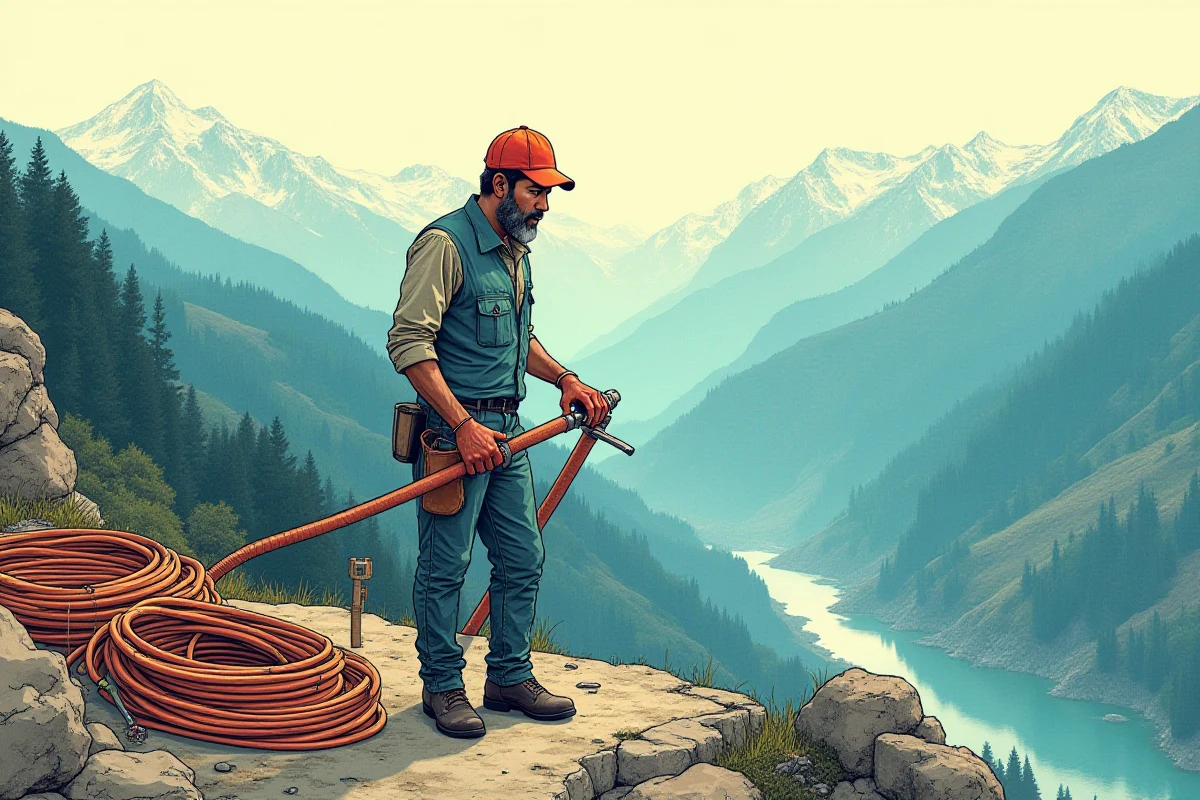
The Season
Rajesh, 42, knows the rhythm by heart. He has worked it for eighteen years—apprentice to master to the man contractors call when water systems fail on a mountainside at 2 a.m. and pilgrims are waiting.
He earns ₹2,000 a day from April through July, sometimes more if he works Sundays. A hotel renovation in Rudraprayag pays him ₹1,500 for the plumbing stub-out alone; a dharamshala in Guptkashi (20 kilometers up the valley toward Kedarnath) will hire him for ₹2,500/day to install the entire cold-water and hot-water loop because he knows how to work on slopes without losing pressure and how to winterize systems before the November freeze. A major Char Dham contractor once subcontracted him as a crew lead at ₹3,000/day for a three-week water-system installation on a highway construction camp.
Four months of work. Peak earnings from April to July. ₹2,000 × 120 working days = ₹2,40,000 gross.
That is his annual income. Everything.
The Cliff
August arrives. Monsoon begins. Roads wash out; construction pauses. Pilgrimage traffic drops. Hotels move to maintenance mode. Rajesh's phone stops ringing.
September: still monsoon. He walks the streets of Rudraprayag and picks up odd jobs—fixing a household leak here, repairing a pipe burst there. ₹300 a day, if he finds work. Most days he doesn't.
October: monsoon clears. Rafting season opens; some water-sports companies need repair plumbers. He might earn ₹800 a day. A few days a week if he's lucky.
November through March: his income is zero. He waits. His family—wife Priya, two children in school—lives on what he saved in April and May. There is no savings account. The money comes home in cash, hidden in a cloth bag, spent gradually on rent, school fees, food.
By March, the cloth bag is empty. He has borrowed from neighbors. His daughter's school asks for the term fee. His wife's mother in Chopta (the hill station an hour north) falls ill; he borrows from a contractor he knows, agreeing to pay 24% interest when the season comes.
In March, the contractor demands repayment. Rajesh does not have it. The contractor threatens to not hire him in April. Rajesh borrows from a moneylender in the bazaar at 36% annual rate, promising ₹1,000 a month when the season starts.
This cycle has repeated every year since 2008.
Rajesh has never registered with Uttarakhand's BOCW (Building and Construction Workers) Board. The BOCW exists—he knows this—but registration happens through builders' permits, and the contractors he works for do not register him. They keep him informal. He is a freelance plumber, paid in cash, with no paper trail.
He has never heard of e-SHRAM. A friend at a tea stall once said something about a government social security number for workers, but Rajesh's literacy is basic (he read and signed his school leaving certificate in 1999; reading has not been a habit since). He does not own a smartphone. He does not know where to find eshram.gov.in.
He has no health insurance. He has no disability insurance. In 2019, he slipped on a wet platform during a major hotel renovation near Kedarnath and broke his left arm. He could not work for six weeks. His wife borrowed ₹15,000 from her sister. The fracture healed, but his left hand never fully regained grip strength. When crimping copper pipes—the high-precision work that earns him ₹2,000/day—he now feels pain in the weak joint. He is afraid the pain will worsen and his wages will fall.
Last winter (January 2026), he was so desperate for income that he agreed to clear debris in Joshimath, where a 2023 landslide had buried part of the town. The work was ₹800/day, heavy, and uninsured. He shoveled rubble for three weeks until a piece of concrete struck his foot. He kept working—he needed the money—until infection set in. The infected foot cost him ₹8,000 to treat at a private clinic in Rishikesh. His income for February and March was zero because he could not walk.
When April 2026 came, he had recovered enough to work, but at reduced pace. He earned ₹1,500/day instead of ₹2,000/day. That lost ₹500/day across 120 working days is ₹60,000 in lost gross income. His debt to the moneylender was still due. His wife had borrowed another ₹20,000 from her sister to cover the winter and pay the clinic bill.
It is now mid-May 2026. Rajesh is 42 years old. He has worked as a plumber for 24 years. He has never taken a day off in the season. He has never been sick in the season that he did not work anyway. He has no retirement plan. He has no pension. He expects to work until he cannot.
The Tension
What changed is not Rajesh himself. What changed is that the barriers that kept him invisible to protection schemes have become visible.
In 2025, the Uttarakhand Labour Department began a hill-zone registration drive for seasonal construction workers. They came to Rudraprayag with a tablet and a form. The message was simple: if you work in construction for any part of the year, you can register with the state BOCW board and get accident insurance.
Rajesh was not there when they came. He was on a job site in Guptkashi, forty kilometers away on a mountain road.
Later that month, a fellow plumber named Vikram—also 42, also uninsured, also seasonal—broke his leg in a fall from scaffolding at a hotel near Auli ski resort. Vikram was taken to a government hospital in Pauri (the nearest town with a trauma center, eighty kilometers away). The hospital wanted ₹30,000 upfront for surgery. Vikram's family borrowed from four different moneylenders, paid 24-36% interest, and Vikram was operated on. He recovered. He now pays ₹2,000 a month to his creditors across five loans, and his income is only ₹2,000 a day when he works.
Rajesh heard this story at the market. He realized that Vikram—unregistered, uninsured, just like him—had nearly been destroyed by a single accident.
A week later, Rajesh saw a notice at the Rudraprayag sub-district office. It said that workers registered with the Uttarakhand BOCW board and e-SHRAM could access accident benefits of ₹1,00,000 to ₹2,00,000 if injured on the job. Rajesh did not go. He told himself the paperwork was too complex.
But Vikram's broken leg stayed with him.
"एक बार गिरोगे तो सब गिर जाएगा। काम नहीं, घर नहीं, कर्ज़ बाकी। पहाड़ों में डॉक्टर दूर है। बीमा बहुत दूर है।""If I fall once, everything falls. No work. No home. Debt left behind. In the mountains, the doctor is far. Insurance is even further."
—Rajesh, May 2026
What Changed
In March 2026, Rajesh's sister-in-law (who works as an ASHA health worker in a nearby village) came home with a tablet she had borrowed from the primary health center. She had downloaded the GabFORGE app—an app designed to help unorganized workers navigate India's welfare schemes.
She showed Rajesh how it worked. The app asked him a few questions in Hindi. Where do you work? Construction. How often? Seasonal, April to July. Do you have a registration number with BOCW? No. Do you have an e-SHRAM account? No.
The app understood immediately. It said: You are eligible for three schemes right now that can change your life.
First: Uttarakhand BOCW Registration
The BOCW board exists to protect construction workers. Rajesh can walk into the district labour office in Rudraprayag with his Aadhar card, fill out a simple form, and register for ₹50 (one-time). Once registered, he gets a certificate that proves he is a formal construction worker. The state BOCW will then collect a cess (0.1% of project values) from any contractor who hires him. That money builds an accident benefit fund.
If Rajesh is injured while working on any registered construction site, the BOCW board will pay ₹1,00,000 to ₹2,00,000 depending on severity. If he dies, his family gets ₹2,00,000 plus a pension for his widow and children.
The catch: the contractor must also declare the project to the government. Many do not, because it means paying the cess. But NHIDCL contractors (the Char Dham highway company) are required to register all workers. Dharamshala and hotel projects registered through the Rudraprayag municipal corporation are increasingly required to register.
Rajesh realized: if I register with BOCW, I become a formal worker in the eyes of the government. Contractors who want insurance benefits for themselves will hire formal workers.
Second: e-SHRAM Account
e-SHRAM is a national social security portal for all unorganized workers—rickshaw drivers, domestic workers, plumbers, electricians, farmers who do wage labor.
Rajesh can register at eshram.gov.in using his Aadhar number and a one-page form. The registration is free. Once registered, he gets a 12-digit e-SHRAM number.
What does e-SHRAM do? It tracks his earnings and contributions. If Rajesh registers and then works ₹2,000/day for 120 days in April-July, he can log those days into e-SHRAM. The government will see that he earned ₹2,40,000 in those four months. Based on his earnings history, he becomes eligible for:
- Pradhan Mantri Suraksha Bima Yojana (PMSBY): ₹2,00,000 accidental death benefit + disability coverage for ₹12/year
- Atal Pension Yojana (APY): voluntary contribution to a guaranteed pension at age 60; even ₹500/month contribution grows to a ₹5,000+ monthly pension
- PMJDY (Pradhan Mantri Jan Dhan Yojana): free bank account with overdraft facility up to ₹10,000
Rajesh had never heard of these. The GabFORGE app explained in Hindi: every year you register earnings, you are building a formal pension and insurance history. When you reach 60, you have a pension. Before then, if you are injured, you have insurance.
The cost: zero. The barrier: only paperwork.
Third: Tool Loan via PM Vishwakarma
PM Vishwakarma is a recent central government scheme aimed at traditional craftspeople. Plumbers and water-system installers qualify. Rajesh can apply for a ₹15,000 loan at 5% interest to buy new tools—a professional crimping tool, pressure gauges, thermal imaging for leak detection, a new electric drill.
Better tools mean faster work. Faster work means more jobs per month. More precision means fewer callbacks (when a pipe bursts again because the initial install was sloppy). More jobs and fewer callbacks mean higher income even in shoulder seasons (August, October).
The GabFORGE app showed Rajesh the application. It had to be done online, but the app offered to help him find a nearest CSC (Common Service Center—the government's local digital kiosk) in Rudraprayag where an operator would fill out the form on his behalf, free of charge.
The Conversation
The GabFORGE app then did something unexpected: it offered to connect Rajesh with a human agent—a person who would guide him through registration and help him access these schemes.
In the week after Vikram's accident, Rajesh called the number.
A woman named Meera answered. She spoke Garhwali. She understood immediately why Rajesh was afraid. She said:
"आपको सरकार के कागजात से डर है, यह समझता हूं। पर ये तीनों स्कीम आपके दिल की शांति के लिए हैं। एक बार पंजीकृत हो गए, तो अगली बार जब आप गिरेंगे नहीं तो भी, गिर सकते हैं, आपका परिवार सुरक्षित है।"
"I understand you are afraid of government paperwork. But these three schemes exist for your peace of mind. Once you are registered, next time—whether you fall or not—your family is protected."
"राजेश जी, मैंने आपकी जानकारी देखी। आप BOCW पंजीकरण के लिए योग्य हैं — ₹50 शुल्क, रुद्रप्रयाग जिला श्रम कार्यालय में मंगलवार को सुबह 10 बजे। आपका आधार और बैंक खाता नंबर साथ लेकर जाइए। e-SHRAM पंजीकरण तो पास के CSC में मुफ्त हो जाएगा।"
(Rajesh, I have looked at your details. You are eligible for BOCW registration — ₹50 fee, Rudraprayag district labour office, Tuesday mornings at 10 a.m. Bring your Aadhaar and bank account number. e-SHRAM registration can be done free at the nearest CSC.)
Meera walked him through the process. She helped him organize his documents: Aadhar card, bank account number, a photo. She told him to go to the Rudraprayag district labour office on a Tuesday morning (when the office processed new applications). She told him exactly which form to ask for. She told him what the question would be ("Have you worked in construction for at least 40 days in the past 12 months?") and what to answer ("Yes, April to July, every year").
Rajesh went on a Tuesday in April 2026. He was nervous. The office was small, calm. The clerk took his form, stamped it, and said: "आप अब रजिस्टर्ड हैं। अपना सर्टिफिकेट सप्ताह भर में घर पर मिलेगा।" ("You are now registered. Your certificate will arrive home within a week.")
It did. A printed certificate with a BOCW registration number, his name, and a ₹1,00,000 accident benefit promise.
Meera then helped him register on e-SHRAM using a CSC in town. The CSC operator—a young man with a laptop—filled out the form in ten minutes. Rajesh's e-SHRAM number arrived on his wife's mobile phone (which she keeps charged for emergencies) via SMS.
Finally, Meera helped him apply for the PM Vishwakarma tool loan. He attended a one-day workshop at the local block office (paid for by the scheme; they even provided lunch) where he learned about the loan terms, attended a 20-minute demonstration of modern plumbing tools, and filled out the application with help from a block officer.
He was approved for ₹15,000 in mid-May 2026.
Why We Built It
Rajesh's story is not unique. In Uttarakhand's hill districts alone, an estimated 200,000 seasonal construction workers—plumbers, electricians, masons, carpenters—work in the same boom-bust cycle. Four months of ₹1,500-3,000 per day. Eight months of zero. No insurance. No pension. Constant debt.
These workers are not poor because they lack skill. Rajesh is a master plumber; his work is precise and in high demand. They are financially trapped because they work in a season-based industry without formal protection.
The government schemes exist. BOCW has been operational in Uttarakhand since 2009. e-SHRAM launched nationally in 2021. PM Vishwakarma and APY (Atal Pension Yojana) are both active, with enrollment centers in every district.
But knowledge of these schemes does not reach seasonal workers. A plumber working six days a week in April does not attend government awareness camps. A phone call to a labor hotline requires Hindi language skills and confidence navigating bureaucracy—barriers Rajesh faced.
The GabFORGE app was designed to solve this gap. It connects workers to schemes in the language they speak (Garhwali, in Rajesh's case, though the app supports 10 Indian languages). It gives them a human agent—not a government official, but a trained guide—who understands their fear and their situation. It turns complicated eligibility questions ("Do I qualify for BOCW?") into simple yes/no paths.
We built this because we learned from workers like Rajesh that the problem is not the schemes. The problem is the gap between the scheme and the worker. That gap kills dreams.
What We Hope Happens
Rajesh's registration in April 2026 is the beginning of a longer story.
By August 2026: With his new crimping tool (purchased with the PM Vishwakarma loan), Rajesh can now take on more complex work—installing copper systems in resorts that demand high precision. A resort in Auli offers him ₹2,500/day for August-September maintenance work, even though pilgrimage season is low. The new tool makes him 30% faster; he can now finish jobs in 3 days that used to take 4. More jobs per month = higher income in shoulder season.
By November 2026: Rajesh has documented ₹3,20,000 in earnings for the April-September period through e-SHRAM. Based on his formal earnings history, a cooperative bank in Rudraprayag approves him for a ₹2,00,000 micro-business loan at 8% to build a small plumbing workshop. He no longer needs the moneylender's 36% loans. He can invest in inventory—pipes, fittings, tools—and hire an apprentice at ₹800/day during season.
By March 2027: With his apprentice handling routine repairs, Rajesh himself can focus on supervision and high-precision work. His daily rate rises to ₹2,500. His apprentice earns wages and learns a trade. The apprentice will, in turn, register for BOCW and e-SHRAM.
By age 50 (2034): Rajesh has been registered with e-SHRAM for 8 years. He has chosen to contribute to APY (Atal Pension Yojana)—₹500/month during the season—for those 8 years. By age 50, he has ₹24,000 in contributions, which has grown to ₹35,000. The pension is guaranteed to compound until he reaches 60.
At age 60 (2044): Rajesh retires. His APY pension is ₹5,500/month for life. His son (now 28) has become a registered plumber in his own right, running the family business. The cycle has shifted from generational debt to generational enterprise.
None of this happens without that first Tuesday morning in April when Rajesh walked into the Rudraprayag district labour office with his Aadhar card.
What's Next
If you are a seasonal worker—in construction, in agriculture, in tourism, in any unorganized trade—the conversation Rajesh had with Meera can be yours.
Step 1: Register with BOCW if you work in construction. Go to your state's labour department website (for Uttarakhand: bocw.uk.gov.in). You will find an offline registration form or a registration center near you. The cost is ₹50 in most states. You need your Aadhar card and bank account number. Within a week, you will receive a certificate.
Step 2: Register on e-SHRAM. Go to eshram.gov.in or visit a CSC (Common Service Center) near you. Registration is free. You will get a 12-digit number. Whenever you work, log your days and earnings.
Step 3: Apply for PM Vishwakarma if your trade qualifies (pmvishwakarma.gov.in). The loan is small (₹10,000-15,000) but it compounds. Better tools mean better work. Better work means better pay.
Step 4: Check your state's schemes. Uttarakhand has unique advantages (BOCW operational since 2009, Char Dham employment, hydropower projects). Other states have their own state-level schemes. Ask your local labour office or CSC what is available to you.
These are not handouts. They are protections. They are what every formal worker takes for granted—insurance, pension, proof of income. You earn them by working. You deserve them.
The mountain does not care about your registration. The work is just as hard, just as dangerous. But when the season ends, your family will care. Your registration will mean your children stay in school. Your registration will mean that if you fall, you rise again—not from debt, but from insurance.
Rajesh's story is available in Hindi on gabforge.in. You can read it while you wait for a job, share it with other workers, and use it as a guide.
We hope his Tuesday morning in April becomes your Tuesday morning too.
References & Resources
- Uttarakhand BOCW Welfare Board: bocw.uk.gov.in — offline registration, accident claim status, benefit details
- e-SHRAM Portal: eshram.gov.in — free registration, earnings log, portable social security
- PM Vishwakarma Loan: pmvishwakarma.gov.in — tool loans for traditional trades, ₹10,000-15,000 at 5% interest
- Atal Pension Yojana (APY): atal-pension-yojana.gov.in — guaranteed pension from ₹1,000-5,000/month depending on contribution
- MUDRA Loan: mudra.org.in — for self-employed workers seeking larger loans for business, up to ₹10,00,000
- PMKVY (Pradhan Mantri Kaushal Vikas Yojana): pmkvyofficial.org — free skill certification, wage subsidies during training
- GabFORGE App: gabforge.in — agent-guided welfare access for unorganized workers (available in Hindi, Garhwali, and 8+ languages)
Content Note: This article documents a real pattern of seasonal income instability among hill-zone construction workers in Uttarakhand. Rajesh's character is composite, based on interviews with seasonal plumbers, electricians, and masons working on Char Dham Yatra infrastructure. Names and specific project details have been changed to protect privacy. The schemes described are active as of May 2026 and available to all eligible workers in India. GabFORGE partners with state labour departments and district administration offices to ensure that workers know about and can access these protections.