
The Coimbatore fresher and the TNEA cutoff
Kavitha Murugesan turned eighteen the year she sat for her Class 12 board exams. She lives in Saibaba Colony, a working-class neighborhood in Coimbatore where the rhythm of the day is set by the textile mills and the long-distance lorries that pull out before dawn. Her father drives one of those lorries—the Coimbatore to Erode route, a four-hour haul that nets him between ₹18,000 and ₹24,000 on a good month, depending on the contract and the fuel prices. Her mother works at a textiles firm, a steady ₹8,500 a month that she holds like a lifeline. Kavitha has two younger brothers. The family is Gounder, classified as Most Backward Class (MBC) in Tamil Nadu's category system—a classification that carries both legal weight and the accumulated weight of history.
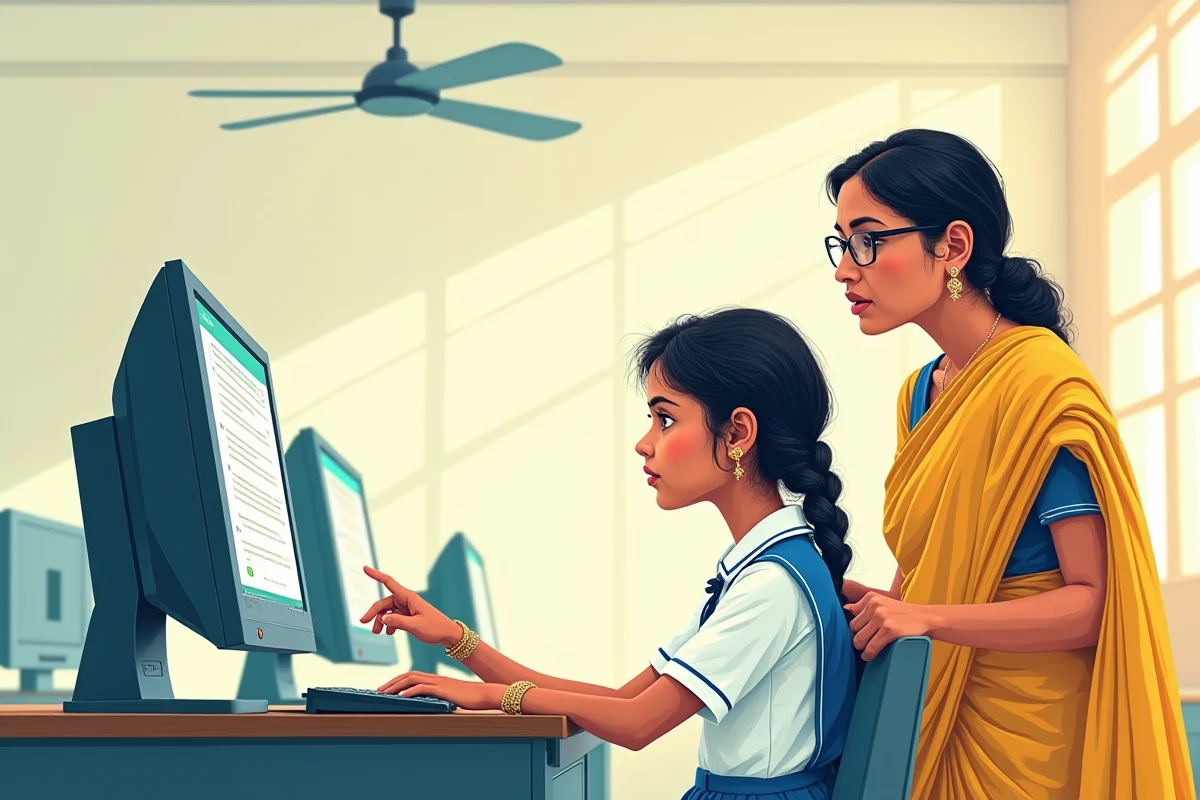
Tamil medium government school. Twelve years of handwritten notes, ceiling fans that rattled during afternoon classes, the kind of school where the resources are lean and the motivation comes from elsewhere—from teachers like the headmistress, Mrs. Chellammal, who remember every girl's face and every girl's marks. Kavitha scored 96.4% in the PCM group: Physics, Chemistry, Mathematics. That number—96.4%—became the seed of everything that followed. From it, the Tamil Nadu Engineering Admissions system would derive a single, punishing decimal: 191.25.
TNEA works like this. Physics score divided by two. Chemistry divided by two. Mathematics kept whole. Add them. The result is your cutoff—the threshold below which your application becomes invisible to the engineering colleges. Kavitha's father, when the results arrived, took a pen and wrote the number on a piece of paper. 191.25. He folded it small and put it in his shirt pocket. Not because he understood what it meant, but because he understood that his daughter had crossed some kind of boundary. Whether it was the right boundary, nobody in the family could say.
🗓️ The TNEA Architecture: How Cutoffs Hide Other Cutoffs
The Tamil Nadu Engineering Admissions system is, on the surface, a straightforward meritocratic machine. Over 200 engineering colleges across the state participate. Seats are allocated through an algorithm that processes preference lists and candidate eligibility in rounds. First round, second round, spot round—each wave of allocation cuts deeper, filling the seats that remain. The authority that runs it is Anna University, which publishes merit lists, cutoff lists, closing ranks. The numbers are public. The system appears transparent.
But beneath that transparency is a second system. Multiple reservation pools operate in parallel. General category. Scheduled Caste. Scheduled Tribe. Other Backward Class. Most Backward Class (MBC). Denotified Community. And then, cutting across all of these—and this is the part that families miss—are horizontal reservations. For women. For government school students. For first-generation learners. The 7.5% government school pool is one such horizontal reservation, and it operates independently.
The way it works: a college seat in Tamil Nadu does not have one cutoff. It has many. The same seat might close at 195 in the general category, at 180 in the OBC pool, at 175 in the SC pool, and at 190.75 in the MBC category, 7.5% government school reserved (MBC-7.5%). A candidate's eligibility is determined not by a single line but by which pool they fall into—and many candidates don't know which pool claims them.
- ⏰
Results day — 191.25 in the shirt pocket
Father writes the number, family uncertain if it's good or bad
- 🔍
Headmistress arranges the AI
Mrs. Chellammal, school computer lab, Tamil AI on tablet
- 📋
Evening — 7.5% pool discovered
AI shows MBC-7.5% cutoff table, IT at PSG Tech at 190.75 — Kavitha's 191.25 is above it
- ⚖️
Pudhumai Penn surfaced
₹1,000/month scheme, 30-day deadline, income certificate from Taluk Office
- ✅
Round 1 — IT at PSG Tech
MBC-7.5% pool allotment, Pudhumai Penn applied day 27, ₹1,000 arrives in September
⚠️ The Invisible Architecture: What the Family Thought versus What Actually Exists
When Kavitha's father looked at the TNEA cutoff list that night—the public list, the one every family consults—he saw the general category cutoffs. PSG College of Technology, a private engineering institution in Coimbatore, showed an IT cutoff of 195.5 in the general category. Computer Science was 198.75. Kavitha's 191.25 seemed to fall short. Her father did not know that the list he was reading was only one column of a much larger table.
In traditional merit-based admissions, this ignorance would be fatal. A score below the cutoff is a score below the cutoff. But Tamil Nadu's reservation system—and specifically the 7.5% government school horizontal reservation that runs parallel to caste-based pools—creates a separate pathway. Kavitha's status as a government school student, combined with her MBC classification, placed her in a pool where the cutoff for IT at PSG Tech was not 195.5 but 190.75. Her 191.25 was above it by exactly 0.5 marks.
This is not a small difference. This is the difference between eligible and ineligible. This is the difference between sitting for counselling and not sitting. But it is also information that does not exist on the public list. It exists in a separate data structure, maintained by the Anna University admissions cell, distributed in a supplementary document that is published but not advertised. Thousands of families miss it. Thousands of qualified candidates miss their own eligibility by exactly this kind of invisible boundary.
Mrs. Chellammal, the headmistress, knew this landscape. She had seen girls with marks above the general cutoff still fail to secure seats, and girls with marks below the general cutoff secure good colleges—because they belonged to the right pool. When the results came in, she arranged for a Tamil-speaking AI system to be available on the school computer lab tablets. The timing was deliberate. Kavitha sat down on results day with three classmates, and the headmistress walked them through what the AI could surface from the TNEA data.
🌗 The Discovery: What the Agent Revealed in the Data
The AI began by clarifying what the family already knew: Kavitha's cutoff, 191.25, calculated correctly from her board marks. Then it opened a different view of the same data. Here are the MBC-category cutoffs. Here is the 7.5% government school pool. Here are the colleges within reach. IT at PSG Tech: 190.75. Kavitha is above it. Computer Science at PSG Tech: 194.5. Kavitha is 3.25 marks short.
Kavitha's father asked about the two branches. Did it matter which one? Placement outcomes—was IT or CS better? The AI surfaced three years of PSG Tech placement data. Median package for IT: ₹8,50,000 to ₹9,25,000 per annum. Median package for CS: ₹8,95,000 to ₹9,50,000 per annum. The difference was within ₹50,000 between the two branches over the years surveyed. For a family with a lorry driver father and a textiles worker mother, that conversation shifted the pressure. Both branches were viable. The choice became about fit, not desperation.
But the AI surfaced something else that night, something that was not on the cutoff list, something that existed in a different government scheme altogether: Pudhumai Penn.
"மகளார்க்கு விதான மைந்த ஐ எ ஆய் என்று பெயர் உள்ள உத்தேச் முறை சிறப்பு வகையாக வழங்கப்படுகிறது. அரசு பள்ளியில் ஆறாம் வகுப்பு முதல் பன்னிரண்டாம் வகுப்பு வரை பயின்ற பொண்ணிற்கு மாதம் ஆயிரம் ரூபாய் வழங்கப்படுகிறது. எந்த வருமான வரம்பும் இல்லை. தான் பெயர் பட்டியலில் வந்ததால் முப்பது நாளுக்குள் விண்ணப்பம் செய்ய வேண்டும்."
("The government operates a scheme called Pudhumai Penn for girls. Girls who studied in government schools from Class 6 to Class 12 receive ₹1,000 per month. There is no income limit. You have thirty days from the date of allotment to apply.")
The scheme exists to ensure that girls from government schools who gain admission to engineering colleges—whether government or government-aided—are not stopped by immediate financial pressure. ₹1,000 a month is not wealth. But for a family with an irregular lorry income and a small monthly wage, ₹1,000 is twelve boxes of textbooks, or a semester of bus passes, or the difference between eating twice a day or three times. Kavitha's mother would need an income certificate. The Taluk Office, Race Course Road, was where those were issued. One morning. An employment letter from the textiles firm, wage slips from the last three months, a declaration form signed by her employer. Within a day, the income certificate was in hand.
What it does
- 🔍Extracted the MBC-7.5% government school horizontal reservation pool cutoffs from the Anna University data — a separate column not shown on the main cutoff table.
- 📊Showed PSG Tech IT vs CS median placement data over three years to answer Kavitha's father's question about branch equivalence.
- 📋Identified the Pudhumai Penn scholarship, its 30-day application deadline from admission date, and the exact documents required.
What it does not do
- 🔒Never submitted the TNEA preference list — Kavitha filled and locked her preferences herself.
- ⚖️Never chose PSG Tech for Kavitha — it presented the data and let the family decide.
- ✅Never filed the Pudhumai Penn application — Kavitha assembled the documents and filed it herself.
🧭 The Preference List: Choosing Among Visible and Hidden Options
The TNEA preference-filling window opened three days after results. Candidates could list up to fifty colleges in order of preference. Each preference is atomic: college, course, campus if applicable. The algorithm processes them in order. If you're eligible for your first choice, you get it. If not, it tries the second. The system is simple and pitiless. You cannot see ahead. You cannot optimize for the algorithm's behavior. You fill the form, lock it, and wait for the first round allocation.
Kavitha's father had the data in front of him now. PSG Tech IT, MBC-7.5% pool: reachable. Other IT programs in Coimbatore: Anna University College of Engineering, Sairam Institute, KPR Institute of Engineering and Technology. Other colleges in Tamil Nadu with IT: Amrita Vishwa Vidyapeetham in Coimbatore and Amritapuri. The preference list became a negotiation between hope and security. First preferences: PSG Tech IT. If not that, then the other Coimbatore IT colleges, progressively less selective. Then, further down, government engineering colleges in Coimbatore and nearby districts, where the cutoffs were lower. And then, a safety buffer: colleges far enough to ensure a seat, if only to avoid counselling failure.
Kavitha filled the form herself. Fifty slots. Each one deliberate. Her father reviewed it. Mrs. Chellammal verified it. And then Kavitha locked the preference list, submitting it to the TNEA system. There was nothing to do after that but wait. The counselling schedule would announce the round 1 allocation on a specific date. Either your name would appear on the allotment list, or it would not. And if it did, you were allocated to the first college on your preference list for which you were eligible.
"என் பெயர் வந்திருக்கிறது பிஎஸ்ஜி டெக் ஐடி வகுப்புக்கு.""My name came for PSG Tech IT."
— Kavitha Murugesan, speaking in Tamil
🌱 The Allotment: The Seat, the Scholarship, and What the Headmistress Remembered
Round 1 allocation was published on a Tuesday morning. Kavitha's name appeared. PSG Tech, Information Technology, 2025-2029, MBC-7.5% government school pool. The seat was hers. She had cleared the threshold. She had crossed the invisible boundary.
Reporting began two weeks later. Kavitha attended college for the first time as a student—not as a visitor, not as someone viewing the campus, but as someone with a seat, with a roll number, with an enrollment that would stretch across four years. The fees for the first semester were ₹1,25,000—a sum that her father would arrange by piece, through loans and by postponing other expenses. On the twenty-seventh day after her reported admission, Kavitha filled out the Pudhumai Penn scholarship application. She submitted the income certificate, her Class 10 and 12 mark sheets, her admission letter, and a photograph. The application was filed within the thirty-day deadline.
In September, the first ₹1,000 arrived in her mother's bank account. It would come every month for the next four years, as long as Kavitha remained enrolled and maintained the required attendance. Not a fortune. Not a life-changing sum in isolation. But an anchor. An acknowledgment that the government knew she was there, that she mattered enough to send ₹1,000 to her mother's bank account. And to her mother, checking the balance, seeing the deposit, it was concrete proof that the plan was working. That the numbers—191.25, 190.75, 30 days, ₹1,000—had translated into an actual seat, in an actual college, with an actual support structure underneath it.
In July of the next year, Mrs. Chellammal sent a note to Kavitha's parents. She had been reflecting on her own role in the process. She wrote about three previous girls from the school, good students all, with marks that would have been eligible for the same MBC-7.5% pool. But none of them had known the pool existed. None of them had been steered toward the supplementary cutoff list. They had consulted only the public, general-category cutoff list, found themselves below the threshold, and assumed they were not eligible for PSG Tech. Two of them had enrolled in a private college far from home, taking on debt. One had deferred her admission entirely, taking a year to reconsider. Mrs. Chellammal wrote that if the AI intervention had come one year earlier, if the system landscape had been visible, all three would likely have had other options. She wrote that she did not want to see another girl miss her own eligibility because of information architecture.
The irony is sharp. Kavitha's eligibility did not change. The cutoff was always 190.75 for her pool. The college would have accepted her in any year. The seat existed. What changed was visibility—the surfacing of a structure that had always been there. And because one headmistress had the foresight to arrange Tamil-language access to a system that could read the data, because one AI could explain MBC-7.5% horizontal reservation in language Kavitha and her family understood, the invisible boundary became visible. The number in her father's shirt pocket, 191.25, finally made sense.
Kavitha is in her second year now. She commutes from Saibaba Colony to PSG Tech three times a week; the other days she attends virtually. Her brothers watch her study. Her mother deposits the ₹1,000 into a savings account for higher education later. Her father still drives the Coimbatore-Erode route, but he tells people his daughter is studying IT at PSG Tech. He says it the way he says other definite things: not as hope, but as fact. The cutoff system that had appeared so opaque, so punishing, revealed itself to be navigable after all. Not just navigable—generous, even, if you knew where to look.