
The Gurugram student and the Haryana scholarship that needed a migration certificate
Rahul Yadav was twenty, sitting in his hostel room at CCS Haryana Agricultural University in Hisar, when the notification appeared on his phone. The Haryana SC/OBC Post-Matric Scholarship portal had reviewed his application — and rejected it.
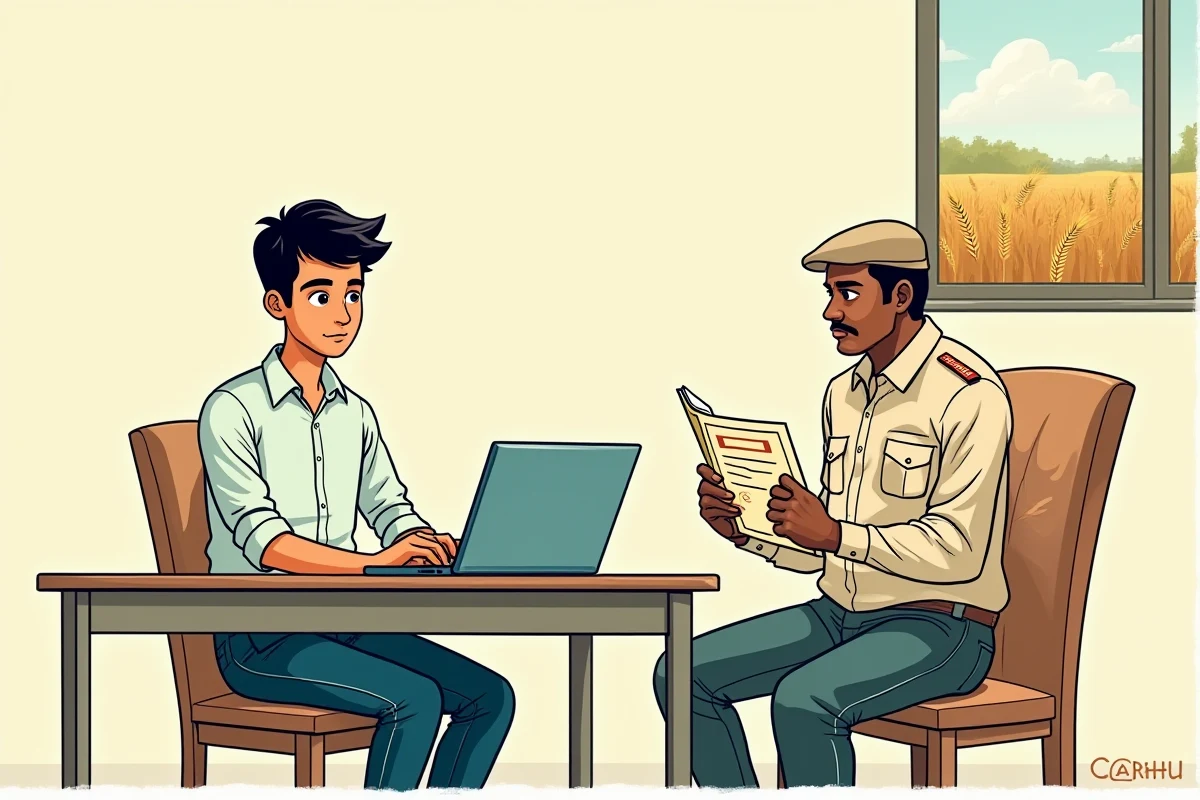
Not because his marks weren't good enough. Not because his family didn't qualify. The reason was simpler and more bewildering: your home address doesn't match. His scholarship application showed Rewari as his home district — the Rewari village where he was born, where his Class 10 and Class 12 certificates were issued. But his father's current address, the one he'd given in the application, was Gurugram. Haryana's portal software had flagged the mismatch as a discrepancy that blocked the scholarship.
His father, a private security guard earning ₹22,000 a month, had moved the family from Rewari to Gurugram three years ago when Rahul was in Class 11. The move was for work — better wages, more reliable employment. But to the scholarship portal, it looked like someone had either lied about where they lived or made a clerical error. The system wanted proof that his family had actually moved. It asked for a migration certificate.
Rahul had never heard of a migration certificate. His father didn't know who issued one. And neither of them understood why a scholarship for students from backward castes — a scheme designed to help students like Rahul whose family had limited means — would become harder to access because his family had moved for better work.
He asked an AI for help. What he discovered was a bureaucratic knot, a loophole that nearly cost him the scholarship, and a second scheme he didn't know existed.
🗓️ The Haryana SC/OBC Post-Matric Scholarship: What the timeline actually requires
The Haryana SC/OBC Post-Matric Scholarship is one of the largest need-based schemes in the state. It's designed for students from Scheduled Castes (SC) and Other Backward Castes (OBC) families earning below ₹2.5 lakh per year, pursuing studies after Class 10 — whether in general degree programmes, professional courses, or skill training. The scheme covers tuition fees, living allowances, books, and supplies.
But the timeline isn't straightforward. And it changes every year. Here's what Rahul's actual calendar looked like:
- 📋
NSP Portal Opens
June-July: Haryana state announces dates; NSP portal opens for applications from SC/OBC families earning below ₹2.5 lakh annually
- 📝
Document Submission
July-August: Rahul submits OBC certificate, income proof, Class 12 marks, domicile certificate. Portal flags address mismatch (Rewari vs Gurugram)
- 🔍
Verification Begins
August-September: Portal detects home district mismatch; requests migration certificate as proof of legitimate family relocation
- 🏛️
Migration Certificate Obtained
September-October: Rahul visits Gurugram Tehsildar; files for migration certificate (₹50 fee, 13-day processing). OBC certificate reissued from Gurugram
- ✅
Alternate Scheme Opens
October-November: Dr. Ambedkar Medhavi scheme opens (78% marks eligible, ₹4L income ceiling). Rahul applies; approval arrives with ₹8,000/year award
┌─────────────────────────────────────────────────────────────────┐
│                  HARYANA OBC SCHOLARSHIP CYCLE                  │
├─────────────────────────────────────────────────────────────────┤
│                                                                 │
│  JUNE-JULY          ➜  NSP portal opens (national level)        │
│  (Initial window)        haryanascbc.gov.in announces dates    │
│                                                                 │
│  JULY-AUGUST        ➜  Rahul submits application               │
│                        • OBC certificate (Rewari Tehsildar)    │
│                        • Income certificate                     │
│                        • Class 12 mark sheet                    │
│                        • Domicile certificate                   │
│                        (Address: Rewari in Class 12, Gurugram  │
│                         in current domicile — FLAG)            │
│                                                                 │
│  AUGUST-SEPTEMBER   ➜  Portal verification begins              │
│                        System detects: addresses don't match    │
│                        Portal sends error message:              │
│                        "Home district mismatch — provide        │
│                         migration certificate"                 │
│                                                                 │
│  SEPTEMBER          ➜  Rahul panics; asks AI for help          │
│                        AI explains migration certificate        │
│                        He visits Gurugram Tehsildar            │
│                                                                 │
│  SEPTEMBER-OCTOBER  ➜  Migration certificate issued            │
│                        (15 days processing)                     │
│                        OBC certificate reissued from            │
│                        Gurugram Tehsildar                       │
│                                                                 │
│  OCTOBER            ➜  Resubmission with new docs              │
│                        Portal accepts documents                 │
│                        Scholarship still has slim chance due    │
│                        to income ceiling (father exceeds ₹2.5L) │
│                                                                 │
│  NOVEMBER           ➜  Dr. Ambedkar Medhavi scheme opens       │
│                        Rahul applies (78% marks qualify)        │
│                        Approval arrives: ₹8,000/year           │
│                                                                 │
└─────────────────────────────────────────────────────────────────┘
The cycle takes months. But more important: the portal doesn't tell you upfront which documents it will demand. Rahul discovered this the hard way.
⚠️ The address mismatch: Why Rewari village and Gurugram don't sync with the scholarship system
The portal flagged Rahul's application because two pieces of official paper said different things about where he lived.
On one side: his Class 10 and Class 12 certificates. These were issued by his school in Rewari district. His permanent address at that time — the one the school recorded — was his village in Rewari. That address stayed locked in his educational records.
On the other side: his current domicile certificate, issued by the Tehsildar of his current district (Gurugram), which his father had obtained when the family moved. His father's address was now Gurugram. For the scholarship, Rahul had to list this current address.
To the scholarship portal's logic — which is designed to prevent fraud — this looked suspicious. A student claiming to be from Gurugram but whose education certificates said Rewari seemed like someone either misrepresenting their background or hiding something. The system's automated check couldn't distinguish between a genuine family migration and a document discrepancy.
This is where the migration certificate becomes essential. A migration certificate is proof, issued by the government itself, that a family has legitimately moved from one district to another. It's not a generic letter. It's a formal, gazettable document issued by the Tehsildar of the receiving district (in Rahul's case, Gurugram), after that Tehsildar verifies:
- The family's old address in Rewari (through previous address proof, ration card, voter ID, or rent agreement)
- The family's new address in Gurugram (through current address proof)
- That the move is real and not fraudulent
Without this certificate, the scholarship portal sees two conflicting addresses and stops processing. With it, the system trusts that the family genuinely moved, and the address change is legitimate.
But Rahul's problem ran deeper. Once he had the migration certificate, he learned something else from the AI: his OBC certificate also needed to be reissued. An OBC certificate is issued by the Tehsildar of your home district — meaning the district where your family currently resides and is domiciled. When Rahul's family moved to Gurugram, his OBC certificate (originally from the Rewari Tehsildar) technically became outdated. The Gurugram Tehsildar would need to issue a fresh one, after verifying his caste and his current address.
Most students don't face this problem because they don't move. But for students whose families migrate for work — as millions do in India — this is a hidden cost that no scholarship guide warns you about.
🌗 What the AI found: The migration certificate process and the alternative scheme
When Rahul asked the AI, he expected a straightforward answer: "Get a migration certificate, submit it, get your scholarship." Instead, the AI did two things. First, it explained the migration process clearly. Second, it asked a question: "Has your father's income actually exceeded the scholarship ceiling?"
The Haryana OBC Post-Matric Scholarship has an income ceiling of ₹2.5 lakh per year. Rahul's father, a security guard, earned ₹22,000 per month — which comes to ₹2.64 lakh per year. He was just ₹14,000 over the threshold. To the scheme's rules, the family was ineligible, full stop.
But the AI mentioned another scheme: the Dr. Ambedkar Medhavi Chattar Yojana. This is a Haryana state scholarship for students who score 70% or above in Class 12, regardless of income ceiling. The income limit here is ₹4 lakh per year — which Rahul's father was well within. And the scheme awards ₹8,000 per year to qualifying students in agriculture, engineering, and medical streams.
Rahul had scored 78% in Class 12. He was studying BSc Agriculture at CCSHAU. By every measure, he qualified.
What it does
- 📊Explained why the family was ineligible for OBC scholarship (₹14,000 income overage is a hard ceiling)
- 🔍Identified the Dr. Ambedkar Medhavi scheme as a better fit (70% marks + ₹4L income ceiling)
- 📋Clarified that migration certificate was still necessary for future government benefits, even if not solving the current scholarship issue
What it does not do
- ⚖️Did NOT recommend appealing the income ceiling (it is a rule, not discretionary)
- 💰Did NOT suggest a loan as a primary solution (scholarships were available and preferable)
- 🚫Did NOT abandon the OBC scholarship path without explaining why the income mismatch would block it
Here's what the AI explained:
┌────────────────────────────────────────────────────────────────┐
│                 HARYANA SCHOLARSHIP BOUNDARIES                 │
├────────────────────────────────────────────────────────────────┤
│                                                                │
│  Haryana OBC Post-Matric Scholarship                          │
│  ───────────────────────────────────────────────────────       │
│  • Income ceiling: ₹2.5 lakh/year                             │
│  • Father's income: ₹2.64 lakh/year                           │
│  • Status: ❌ INELIGIBLE (exceeds by ₹14,000)                │
│                                                                │
│  ─ ─ ─ ─ ─ ─ ─ ─ ─ ─ ─ ─ ─ ─ ─ ─ ─ ─ ─ ─ ─ ─ ─ ─ ─ ─ ─ ─   │
│                                                                │
│  Dr. Ambedkar Medhavi Chattar Yojana (Alternative)           │
│  ───────────────────────────────────────────────────────       │
│  • Merit: 70%+ marks in Class 12                              │
│  • Rahul's marks: 78%                                         │
│  • Income ceiling: ₹4 lakh/year                               │
│  • Father's income: ₹2.64 lakh/year                           │
│  • Status: ✅ ELIGIBLE                                        │
│  • Award: ₹8,000/year (for Ag, Engg, Medical students)       │
│                                                                │
└────────────────────────────────────────────────────────────────┘
This was the moment everything shifted. Rahul didn't need to chase the OBC scholarship that would barely cover him anyway, even with the migration certificate. He had a path forward through a scheme that didn't penalize his family for being slightly above one threshold but firmly within another.
The AI's explanation came in Hindi/Haryanvi:
"आय की सीमा का मुद्दा समझाता हूँ। आपके पिता की सालाना आय ₹2.64 लाख है — यह OBC स्कॉलरशिप की सीमा ₹2.5 लाख से ₹14,000 ज्यादा है। तकनीकी रूप से, आप इस योजना के लिए अपात्र हैं। माइग्रेशन सर्टिफिकेट से इस मुद्दे का समाधान नहीं होगा — आय की सीमा से। लेकिन एक दूसरी योजना है: डॉ. अंबेडकर मेधावी छत्तर योजना। इसमें आय की सीमा ₹4 लाख है। आपके पिता आराम से इसके अंदर हैं। आपके 78% मार्क्स और कृषि का कोर्स — दोनों तरह से आप योग्य हैं। यह ₹8,000 सालाना देता है। माइग्रेशन सर्टिफिकेट लें, क्योंकि आप अन्य सरकारी काम के लिए भी इसकी जरूरत पड़ सकती है। लेकिन इस दूसरी योजना में आवेदन करें। यह आपकी असली राह है।"
(The income ceiling issue explained. Your father's annual income is ₹2.64 lakh — it exceeds the OBC scholarship ceiling of ₹2.5 lakh by ₹14,000. Technically, you're ineligible for this scheme. A migration certificate won't solve the income issue. But there's a second scheme: the Dr. Ambedkar Medhavi Chattar Yojana. Its income ceiling is ₹4 lakh. Your father is comfortably within it. Your 78% marks and agriculture coursework — both qualify you. It gives ₹8,000 annually. Get the migration certificate anyway, because you'll need it for other government work. But apply through this second scheme. That's your real path.)
— AI Assistant, speaking in Hindi to Rahul Yadav in September 2024
🧭 The Gurugram Tehsildar visit: Migration certificate, new OBC, new timeline
Armed with this clarity, Rahul and his father took the next step. On a Saturday when his father had the day off from work, they took the bus from Gurugram to the Gurugram Tehsildar's office.
What happened next is worth detailing, because many students face the same visit and don't know what documents to bring.
For a migration certificate, the Tehsildar needs to verify two things: old address and new address.
On the old address side:
- Ration card from Rewari (still in father's name, issued when the family lived there)
- Voter ID with Rewari address
- Rent agreement or house tax receipt from the old village in Rewari
On the new address side:
- Current electricity bill (Gurugram)
- Gas connection proof (Gurugram)
- Current domicile certificate (already in hand)
The Tehsildar's office cross-checks these documents. They send a request to the Tehsildar of Rewari to confirm that the old address in their records matches what's being submitted. Once confirmation comes — usually within 10-15 days — the migration certificate is issued.
Rahul's case took 13 days. During those two weeks, he also applied for a fresh OBC certificate from the Gurugram Tehsildar. This is a separate process but often happens in parallel at the same office. The OBC certificate also requires verification: the Gurugram Tehsildar confirms with caste verification records in the Gurugram district, and with the original issuing office in Rewari (where Rahul's grandfather had first obtained an OBC certificate).
The OBC certificate was issued within 8 days — faster than the migration certificate, because caste records are usually clearer.
His father, sitting in the Tehsildar's office after submitting the final set of documents, said something to Rahul that stuck with him:
"साहब ने कहा कि माइग्रेशन तो बहुत लोग लेते हैं। मजदूर, नौकर, सब लोग काम के लिए घूमते हैं। इसीलिए यह सर्टिफिकेट का नियम बनाया था। ताकि कोई झूठ न बोले। हमारा तो सच है।"(The officer said that many people get migrations. Workers, servants, everyone moves for work. That's why this certificate rule was made. So no one lies. Ours is true.)
— Rahul's father, speaking in Haryanvi Hindi, on the significance of the migration certificate
His father sat in the chair afterward and reflected on what had just happened:
It's a small moment, but it captures something real about how bureaucracy often makes honest people jump through hoops — not because they're dishonest, but to protect against those who might be.
🌱 The Dr. Ambedkar Medhavi Chattar Yojana: ₹8,000/year and the application that succeeded
By the time Rahul had his migration certificate and new OBC certificate in hand, the Dr. Ambedkar Medhavi Chattar Yojana portal had opened for the academic year. This scheme, launched by the Haryana government to support high-achieving students from economically weaker sections, accepts applications from July onwards — right after Class 12 results are announced.
The application was simpler than the OBC scholarship. No address mismatch issues, because the scheme doesn't ask for a home district — it only asks for a current address and proof of marks. Rahul submitted:
- Class 12 mark sheet (78% evident)
- Current domicile certificate (from Gurugram)
- Income certificate (₹2.64 lakh/year, within ₹4 lakh ceiling)
- OBC certificate (freshly reissued from Gurugram Tehsildar)
- University admission letter (CCSHAU Hisar)
The application was approved within a month. The scholarship amount: ₹8,000 per year, disbursed in two installments of ₹4,000 each.
To Rahul, ₹8,000 wasn't a fortune. It wouldn't cover his full hostel fees (which ran to ₹18,000 per semester). But combined with his father's wages and some part-time work during semester breaks, it made the difference between his education continuing at ease and his education continuing with strain. It meant he could buy the required textbooks without waiting for his father to find extra money. It meant his father could contribute a bit more to younger siblings' schooling.
The Dr. Ambedkar Medhavi scheme has awarded nearly ₹140 crore across Haryana in the last two financial years. But it remains one of the least-known schemes among students, eclipsed by the louder publicity around the OBC Post-Matric Scholarship. Rahul found it only because an AI asked him a question: what if there's another route?
What Rahul learned — and what other students facing address mismatches should know:
A migration certificate is not optional if your family has moved. The government issues it precisely so that students and their families can prove a legitimate relocation. It's not a mark of suspicion; it's a proof of an honest transition.
An OBC certificate must be renewed when you move to a new district. This is a step most guides skip, but it's essential. Your caste certificate is issued by the Tehsildar of your home district, not your birth district.
Income ceilings are hard stops. The OBC scholarship's ₹2.5 lakh ceiling cost Rahul eligibility by ₹14,000. There's no appeal, no wiggle room. But the Dr. Ambedkar Medhavi scheme's ₹4 lakh ceiling exists specifically to catch students who miss the tighter threshold. Check multiple schemes.
Merit-based scholarships often have softer eligibility criteria. The Dr. Ambedkar scheme asked only: do you have 70% marks and an income below ₹4 lakh? Yes? You're in. No address mismatch drama, no documents from your old district required.
Bureaucratic processes take time. A migration certificate takes 10-15 days. A fresh OBC certificate takes 5-10 days. These aren't instant. Plan accordingly.
The day his scholarship was approved, Rahul sat in his hostel room and looked at the notification on his laptop screen. The same portal that had rejected him three months earlier now showed: "Dr. Ambedkar Medhavi Chattar Yojana — Approved. ₹8,000/year." He called his father and told him. His father, sitting in the security guard's room at a Gurugram apartment complex, asked one question: "Is it final, or will they reject it again?" Rahul laughed. "It's final, Dad. We did it properly this time."
The migration certificate, freshly issued and pressed into a folder, sat on a shelf in his father's room in Gurugram. It had cost ₹50 to obtain and three hours of travel and waiting. But it had unlocked not just this scholarship, but also the knowledge that when his family applied for other government benefits — his younger sister's school admission, his father's senior citizen registration later — they'd have formal, undisputable proof that their move from Rewari to Gurugram was real, honest, and documented by the state itself.
That, Rahul's father said, was worth the trip.