
The Lucknow student and the UP scholarship portal dropdown that had two too many OBC options
Ananya Verma sat in front of her laptop in the evening, the glow of the screen reflecting in her eyes as she scrolled through the rejection notice from the UP scholarship portal. Nineteen years old, first year of her B.A. Political Science at Lucknow University, and suddenly the small scholarship that could have eased her family's burden seemed out of reach. The portal had rejected her application with a single line: "OBC category mismatch. Application cannot be processed."
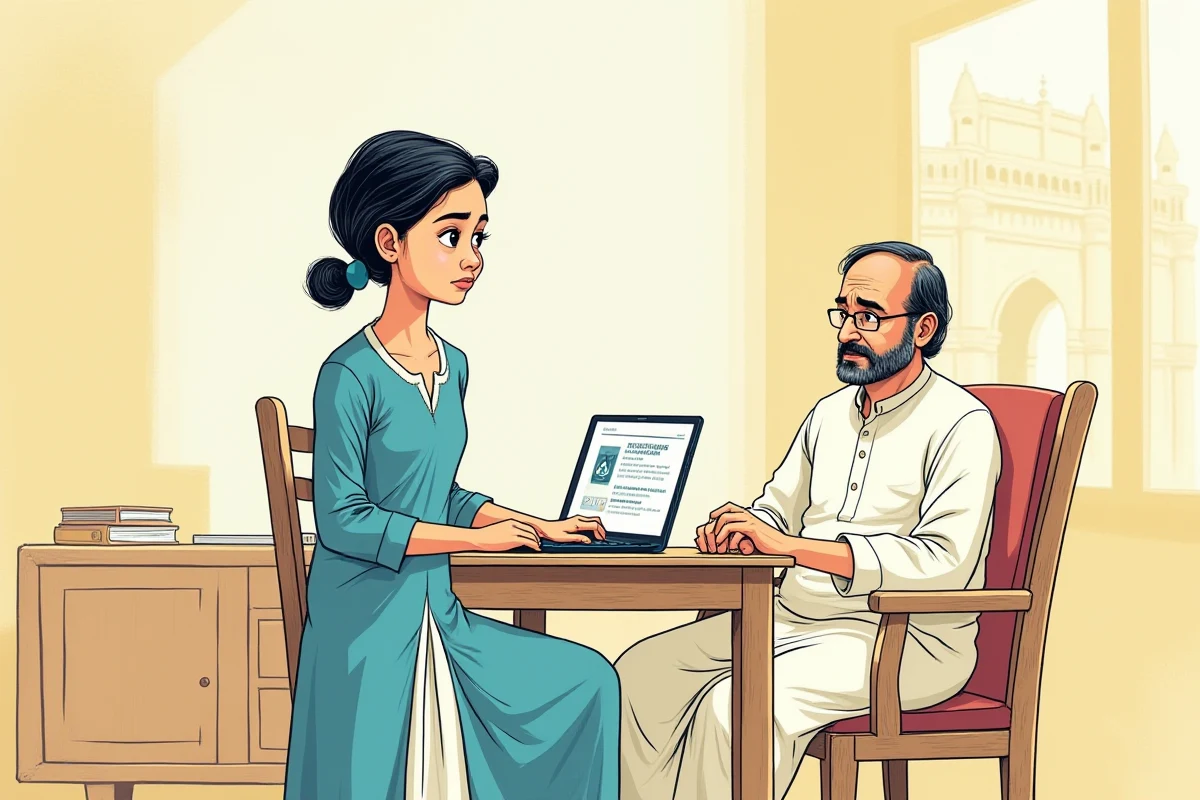
Her father, a government school teacher in his forties, stood beside her chair, reading the same lines over and over. They had filled out the form carefully—or so they thought. Every field checked, every document uploaded, every requirement met. But there was something in that dropdown menu that had caught them off guard, something that neither of them had understood clearly enough to get right on the first try.
The dropdown had asked for her OBC subcategory. Ananya, belonging to the Kurmi community, had selected "OBC-2" because she simply didn't know that Kurmi was classified as "OBC-1" in Uttar Pradesh's official OBC list. It was a technical distinction, buried in government documents most students never see. But that small mistake had locked her out of the scholarship she needed.
What she didn't yet know was that this wasn't permanent. There was a correction window. There was a helpdesk number. There was a path forward—and an AI would help her find it.
🗓️ Understanding the UP Post-Matric Scholarship System and Portal
The Uttar Pradesh Post-Matric Scholarship scheme is one of India's most significant scholarship programmes for economically disadvantaged students from OBC, SC, and ST categories. Launched under the Scheduled Castes and Scheduled Tribes (Prevention of Atrocities) Act and OBC welfare provisions, it supports thousands of students pursuing degrees and diplomas every year.
The portal through which all applications flow—scholarships.up.gov.in—is the official gateway. It's where students from across the state submit their applications, upload documents, and track their status. The portal has become so central to the process that many students and parents assume it's infallible. They trust that once submitted, the data is locked in, permanent, unchangeable.
For Ananya, this assumption became the source of her panic.
The UP Post-Matric Scholarship has a clear timeline. Applications typically open in August and September when students have completed their admission to colleges. The portal remains open for submission until October. Once October closes, the portal enters what many believe to be a final assessment phase. No more edits. No more changes. The applications are sent to district scholarship authorities and the state office for verification.
But here's what most students don't know: the portal opens again in November and December for a correction window. This isn't widely advertised. It's a safety net designed specifically for students who made minor errors—selecting the wrong category, entering a wrong mobile number, uploading a slightly cut-off document photo. The correction window is the state's acknowledgment that the first submission phase is prone to human error.
- 📝
September: Application Submitted
Ananya selects OBC-2 in the dropdown without verifying her community's actual classification. Portal accepts the form without validation.
- ❌
October-November: Verification Flagged
District authorities cross-check Ananya's community (Kurmi) against UP's OBC list. Kurmi is classified as OBC-1, not OBC-2. Automatic rejection email sent.
- 🔍
AI Reveals Correction Window
AI assistant explains the November-December correction window and provides the helpdesk number: 1800-180-5131.
- 📞
Helpdesk Call — Reference Number Issued
Father calls helpdesk. Confirms OBC-1 status. Helpdesk issues correction reference number: UP-KORR-2024-0067432.
- ✅
Portal Correction + Fast-Track Approval
Ananya logs in with reference number, changes OBC-2 to OBC-1. Application marked for priority review. Approved within 72 hours.
Timeline: From Portal Rejection to Scholarship Approval
- August-September: Application portal opens. Students register and begin filling forms.
- Late September-Early October: Final submission deadline. Ananya submits her form with the OBC-2 selection error.
- October-Early November: District authorities begin verifications. Ananya's application is flagged for OBC category mismatch during database matching.
- November: Portal rejection email arrives. Ananya and her father panic.
- Mid-November: AI guidance reveals the November-December correction window and helpdesk number. They contact 1800-180-5131.
- Late November: Helpdesk issues correction reference number. Ananya logs in during the correction window and changes OBC-2 to OBC-1.
- December-January: Corrected application moves through final verification.
- February: Scholarship approved. ₹12,000 transferred to her bank account.
⚠️ The OBC-1 vs OBC-2 Distinction in UP and the Locked Portal Problem
Uttar Pradesh's OBC classification is more complex than most other states. While many states have a single "OBC" category, UP divides Other Backward Classes into two subcategories: OBC-1 and OBC-2.
This distinction is based on historical and economic criteria. OBC-1 communities are those classified under the Mandal Commission and listed in the Central OBC List, as well as communities recognized by the UP government as more economically backward. OBC-2 communities are those classified under the Advanced Backward Classes (ABC) category in UP—communities that the state recognizes but that fall outside the central list.
OBC-1 in Uttar Pradesh includes:
- Yadav
- Ahir / Herder communities
- Mali
- Kumhar (Potter)
- Kurmi (the category Ananya belongs to)
- Nai (Barber)
- Teli (Oil presser)
- Maurya
- Baniya
- Sonar (Goldsmith)
- Lohaar (Blacksmith)
- And 40+ other recognized backward communities
OBC-2 (Advanced Backward Classes) in Uttar Pradesh includes:
- Communities recognized by the state but not in the central list
- Typically communities with slightly better economic status or fewer welfare provisions
The distinction matters because different schemes have different eligibility criteria. Some scholarships are available to both OBC-1 and OBC-2. But the UP Post-Matric Scholarship has a specific allocation structure where OBC-1 students are the primary beneficiaries, and the scholarship amount is ₹12,000 per year for degree-level studies at colleges.
When Ananya selected "OBC-2" in the dropdown, the portal initially accepted her form. Why? Because the dropdown doesn't have a validation system that cross-references community names against the actual OBC list. It simply allows students to select a category. The validation happens later, when district authorities manually verify applications against government records.
This is where the problem emerged. The state's OBC list clearly showed that Kurmi is classified as OBC-1. The district authority running the verification flagged the mismatch: "Application submitted as OBC-2, but applicant community (Kurmi) is registered as OBC-1."
The portal, once closed after October, didn't allow any edits. No error correction. No second chance during the regular submission window. Ananya's rejection email was automatic—a system message that gave no indication that a fix was possible.
This is where frustration often stops student stories. Many students receive a rejection and assume it's permanent. They might try reapplying the next year, losing an entire academic year of scholarship support. Some don't reapply at all, assuming they're ineligible for some reason.
Ananya's family, however, didn't stop there. They asked an AI system for guidance.
🌗 Finding the Path Forward: Correction Windows, Abhyudaya Coaching, and the Helpdesk
What it does
- 🔄OBC subcategory corrections (OBC-1 ↔ OBC-2)
- 📝Typos in names, addresses, mobile numbers, email
- 📄Missing document uploads during correction window
- 🏦Bank account number corrections
What it does not do
- 🚫Cannot change college or university after submission
- 🚫Cannot change course or degree program
- 🚫Cannot change caste category entirely (e.g., OBC → SC)
- 🚫Cannot change personal information like date of birth
The AI's response to Ananya's situation was immediate. Yes, the portal had rejected her application. Yes, the regular submission window was closed. But no, this wasn't the end.
The AI outlined three things:
First, the November-December correction window. While most students don't know about it, the UP scholarship portal reopens in November specifically to allow corrections. The window is typically open from mid-November to mid-December. During this period, students who received rejections or who made minor errors can log back in, make edits, and resubmit their applications for reconsideration. The corrected applications are then fast-tracked through verification, usually completed by early January.
Second, the helpdesk number: 1800-180-5131. This is the official helpline for the Uttar Pradesh Scholarship and Fee Reimbursement Board. It's an underused resource. Many students don't know it exists. But the helpdesk has the authority to issue correction reference numbers even outside the regular correction window—for cases where the error is clearly documented and unambiguous. An OBC category selection error, when the applicant's actual community is verifiable, is exactly the kind of error the helpdesk can fast-track.
Third, the AI mentioned the CM Abhyudaya Yojana, a separate but related scheme. Ananya had expressed interest in UPSC preparation. The CM Abhyudaya Yojana offers free coaching for government exams (including UPSC, UPPSC, and other competitive exams) to OBC, SC, and ST students in Uttar Pradesh. The coaching is provided by the state's various coaching centers and universities. It's merit-based, but any eligible OBC student can apply. Combined with the Post-Matric Scholarship, this could provide both financial support and the coaching necessary for competitive exam preparation.
AI's guidance in Hindi (Devanagari):
"आपकी स्थिति स्पष्ट है। आप कुर्मी समुदाय से हैं, जो उत्तर प्रदेश की आधिकारिक सूची में OBC-1 के तहत वर्गीकृत है। आपने आवेदन में OBC-2 का चयन किया, जो एक सरल त्रुटि है। यह त्रुटि स्थायी नहीं है।"
(Your situation is clear. You belong to the Kurmi community, which is classified under OBC-1 in Uttar Pradesh's official list. You selected OBC-2 in the application, which is a simple error. This error is not permanent.)
— AI System, guidance in Hindi
Ananya's error—OBC-1 vs OBC-2—fell squarely in the "can be corrected" category. It was a classification error within the same broader OBC category. The helpdesk and correction window were designed for exactly this scenario.
🧭 Calling the Helpdesk and Getting a Correction Reference Number
Ananya's father made the call on a Tuesday afternoon. The helpdesk at 1800-180-5131 was surprisingly responsive. Instead of the usual government office runaround, he was connected to an official within ten minutes.
He explained the situation: "My daughter applied for the Post-Matric Scholarship. Her community is Kurmi, which is OBC-1. But in the form dropdown, she selected OBC-2 by mistake. The portal rejected it. Can we fix this?"
The official asked for:
- Application ID (visible on the rejection email)
- Date of birth
- Aadhaar number (last 4 digits for verification)
- College name and enrollment number
All of this was available in the application documents. Within fifteen minutes, the official confirmed: yes, Kurmi is indeed classified as OBC-1. Yes, this is a correctable error. Yes, there's a process for it.
The official issued a Correction Reference Number: UP-KORR-2024-0067432. This reference number was the key. It gave Ananya permission to log back in to the portal outside the normal correction window. It flagged her application for priority review once she made the change.
The official also told them: "Go to scholarships.up.gov.in. Log in with your application ID and password. You'll see a 'Special Correction' option at the top of your dashboard. Enter the reference number there. You can then change your OBC category to OBC-1. Submit. The change will be reviewed within 72 hours."
🌱 From Correction to Approval: ₹12,000 Per Year and Abhyudaya Coaching
"जब पापा वापस आए और कहा कि सहायता टीम ने एक संदर्भ संख्या दी है, तो मेरा दिल हल्का हो गया। यह अस्वीकार नहीं था। बस एक गलती थी जिसे ठीक किया जा सकता था। मैं वहाँ बैठी थी, सोच रही थी कि मैं पहले से ही असफल हो गई हूँ। लेकिन सहायता टीम बहुत दयालु थी। उन्होंने हमें OBC-1 और OBC-2 के बीच का अंतर न जानने के लिए मूर्ख महसूस नहीं कराया।"(When Papa came back and told me the helpdesk had given him a reference number, I felt my chest loosen. It wasn't a rejection. It was just a mistake that could be fixed. I was sitting there feeling like I'd already failed. But the helpdesk person was kind. They didn't make us feel stupid for not knowing the difference between OBC-1 and OBC-2.)
— Ananya Verma, speaking in Hindi
Ananya logged in to the portal that evening. She found the "Special Correction" option, entered the reference number, and changed her OBC category from OBC-2 to OBC-1. The portal showed a new status: "Pending - Priority Review."
Seventy-two hours later, the status changed: "Approved."
The scholarship amount for an OBC-1 student pursuing a degree (B.A., B.Sc., B.Com, etc.) at a government or private college in Uttar Pradesh is ₹12,000 per year. This is the Post-Matric Maintenance Scholarship. It covers:
- Part of tuition fees
- Books and stationery
- A living allowance (for students from very low-income families)
The amount is transferred directly to the student's bank account, usually in two instalments: one after admission and one at the end of the academic year.
For Ananya's family—her father on a teacher's salary, her mother managing a small vegetable business—₹12,000 per year was meaningful. It wasn't a full scholarship that covered everything, but it eased the financial pressure.
More importantly, the successful correction opened another door. Now that Ananya was officially registered as an OBC-1 scholarship recipient, she became eligible for the CM Abhyudaya Yojana, the free government exam coaching scheme.
Ananya had been interested in UPSC preparation since her second year of college. Her political science degree was a natural fit, but UPSC coaching in private institutes costs ₹3-5 lakhs per year. Her family couldn't afford it.
The CM Abhyudaya Yojana changed this. The scheme provides free classroom coaching (and increasingly, online coaching as well) for UPSC, UPPSC (Uttar Pradesh Public Service Commission), SSC (Staff Selection Commission), and bank exams to OBC, SC, and ST students in UP. The coaching is provided through:
- State universities (like Lucknow University itself)
- Government coaching centers established under the scheme
- Designated private coaching institutes (in partnership with the state)
Ananya applied to the UPSC coaching center at Lucknow University. She was selected. Starting next month, she would attend two-hour coaching sessions three times a week, absolutely free, while continuing her degree studies.
The correction of a single dropdown field had cascading effects. It wasn't just about ₹12,000. It was about access—to financial support, to exam preparation resources, to a clearer path forward.
The Larger Pattern: Why These Systems Need Students to Know the Rules
Ananya's story reveals a common friction point in India's scholarship system. The rules exist. The money exists. The schemes are designed with student welfare in mind. But the systems assume a level of prior knowledge that most first-generation college students simply don't have.
OBC-1 vs OBC-2 isn't a distinction that comes up in high school. Caste categories are handled at the administrative level—schools and colleges keep records, but they don't necessarily explain the subdivisions to students. A nineteen-year-old from a middle-class family with educated parents might still not know that her community falls into a specific subcategory under a state's OBC list.
The scholarship portal doesn't explain this either. It presents the dropdown without context: "OBC-1" and "OBC-2" appear as neutral options. There's no tool-tip explaining the difference. There's no link to the official OBC list. A student is expected to know, or to guess correctly.
This is where AI systems—and informed guidance—become critical. An AI can pull the UP OBC list, match the applicant's community, explain the distinction, and provide the reference number for the helpdesk. It can also surface the correction window and other schemes that might benefit the student. None of this requires new rules or new money. It just requires making the existing system transparent.
For Ananya, this guidance made the difference between a year of struggle and a year of focused study with financial and academic support.
Practical Takeaways for UP Scholarship Applicants
If you're a student or parent filling out the UP Post-Matric Scholarship form, here's what to know:
Check the OBC classification list before filling the form. Go to the Official UP OBC List or contact your district scholarship office. Know which subcategory—OBC-1 or OBC-2—your community falls under.
The November-December correction window is real. If you made a simple error, don't panic. The portal will reopen. You can correct it then.
Call 1800-180-5131 if you need faster correction. This helpdesk number is underutilized. If your error is clear-cut, they can issue a correction reference number outside the regular window.
₹12,000 per year (OBC-1, degree-level) is the amount for Post-Matric Maintenance. Verify the exact amount for your course and category on scholarships.up.gov.in.
CM Abhyudaya Yojana is separate. Once you're approved for the Post-Matric Scholarship, check your eligibility for free coaching under this scheme. Apply early in your degree.
Keep your application ID, password, and reference numbers safe. You'll need them to log in during the correction window or to communicate with the helpdesk.
Upload clear, legible documents. Photo cutoffs or blurred bank statements can cause rejection. Retake the photos if needed.
Ananya is now in her second year at Lucknow University, attending UPSC coaching sessions at the university, and preparing for her exams with a scholarship that covers part of her education. She still remembers the panic of the rejection email. But she also remembers the moment her father came back with the correction reference number, and the official's voice saying, "This happens. We can fix it."
The system worked. It took guidance, a helpdesk call, and knowing that corrections were possible. But it worked. And for thousands of students like Ananya across Uttar Pradesh, that knowledge—that their mistakes can be corrected, that the money is accessible, that the rules are learnable—can be the difference between staying in college and dropping out.
Resources mentioned in this article:
- UP Scholarship Portal: scholarships.up.gov.in
- UP Scholarship Helpdesk: 1800-180-5131 (toll-free)
- CM Abhyudaya Yojana: Coaching available through Lucknow University and state coaching centers
- Official UP OBC List: Available at district scholarship offices or DOPT website