
The Panaji student and the Goa Board marksheet Portugal needed apostilled
Rina Fernandes opened the acceptance letter from her Portuguese nursing school in May, sitting at the dining table in her Panaji home with the Mandovi river visible through the window. The letter was real. The scholarship was real. But the documents they asked for—apostilled copies of her Class 10 and Class 12 marksheets—felt like a problem she didn't know how to solve.
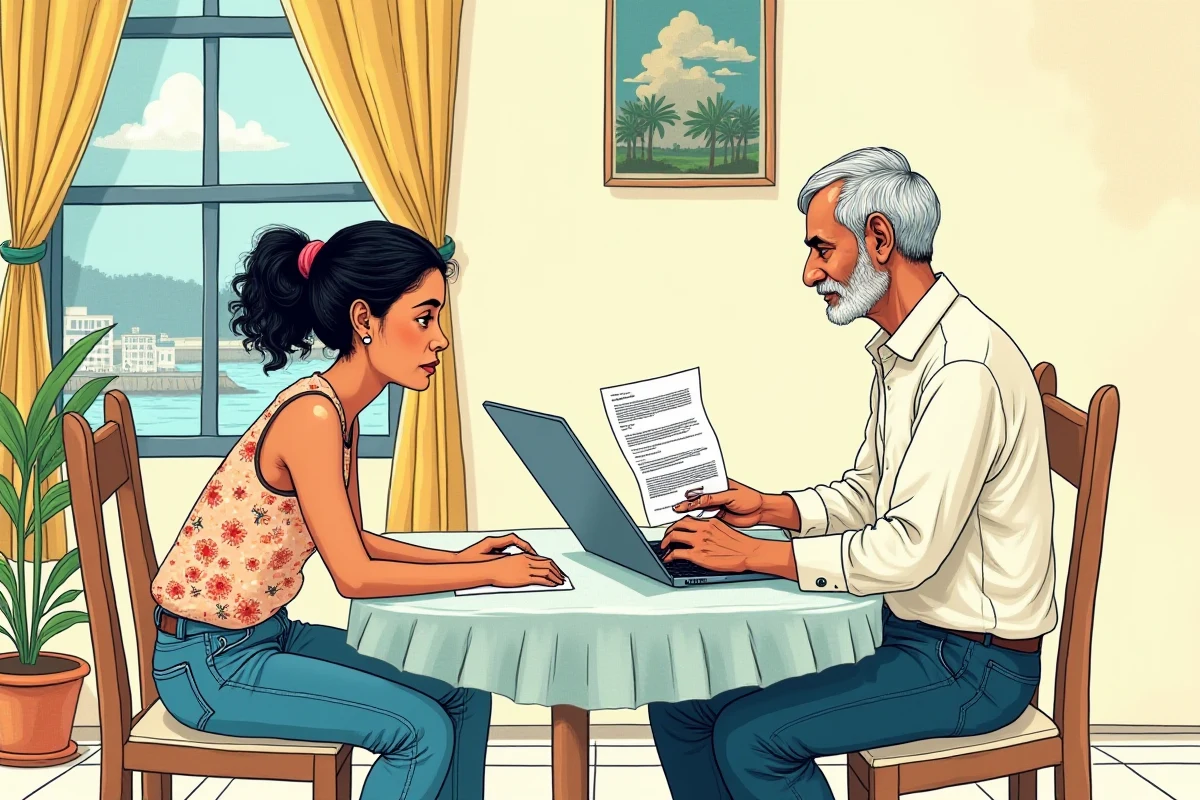
Her father, a retired government clerk in his sixties, knew official documents. But apostille? The Hague Convention? DigiLocker shortcuts that turned weeks into days? These were not words that appeared in his career. Rina pulled up the university's requirements on her laptop: Goa Board marksheets must be apostilled under the Hague Convention and translated into Portuguese.
She had tried the straightforward path first. Rina had photocopies of her marksheets, clear ones made at a local print shop. She assumed they would work. They didn't. The State Education Department rejected them. The MEA apostille office rejected them. Photocopies, she learned, have no legal standing. And worse: she didn't know that the Goa Board of Secondary and Higher Secondary Education (GBSHSE) documents were already on DigiLocker—which meant she could have skipped the physical trip to the education department entirely and uploaded authenticated digital copies straight to the MEA apostille portal.
Instead, Rina spent two weeks finding this out the hard way, then another three weeks waiting for certified copies to arrive from GBSHSE. By the time she held original marksheets in hand, she was tense. But the AI had mapped the full chain—Hague Convention rules, MEA fees, the DigiLocker pathway, the certified translator requirement—and she had a clear route forward. Three weeks later, her documents were apostilled, translated into Portuguese, and accepted by the university.
This is the story of how apostille works, why photocopies fail, and how digital authentication is quietly reshaping how Indian students document their credentials for the world.
🗓️ Understanding the Hague Convention apostille and how it works for Indian students going abroad
An apostille is not a visa. It is not a translation. It is a certification that says: this document is real, it came from a legitimate authority, and you can trust it in another country.
The Hague Convention of 1961—officially the Hague Convention Abolishing the Requirement of Legalization for Foreign Public Documents—created a system where governments could certify documents once, and those documents would be accepted in every other country that signed the convention. Portugal signed it. India signed it. So when Rina's Portuguese university asked for her Indian marksheets to be apostilled, they were asking for a very specific thing: proof from the Indian government that these marksheets were genuine.
Before the Hague Convention, you had to get documents legalized through embassies and multiple layers of certification. The convention cut through that. Now, when an Indian authority apostilles a document, it adds a sealed certificate to the back of the page (or a separate page) that says: This is a true copy. This came from [Official Body]. The date. The seal. Portuguese officials recognize that seal. It is legal proof.
For students like Rina, apostille creates three layers of authentication. First, the document must be a legitimate original or certified copy issued by the authority—in her case, the Goa Board. Second, that document must be taken to the Ministry of External Affairs (MEA), which verifies the authority and stamps the apostille certificate. Third, the apostille itself is entered into a public register that Portuguese authorities can check. Portugal never has to call Goa. They never have to verify anything twice. The Hague Convention handles it.
The Goa Board issues thousands of marksheets every year. The MEA apostilles thousands of documents from every state education department. The system works because it is standardized. But it only works if you follow the rules.
⚠️ The photocopy problem and not knowing about the DigiLocker shortcut
Rina's first mistake was logical. She had clear photocopies of both marksheets. They were issued by a professional print shop. The resolution was good. The text was readable. When you are nineteen and holding a university acceptance letter, clear photocopies feel like they should be enough.
They are not.
The Ministry of External Affairs is explicit: only originals or certified copies issued by the authorized body are acceptable for apostille. A photocopy is a copy of a copy. It has no chain of custody. No one at GBSHSE signed it. No one verified it. In the eyes of a Hague Convention signatory, it is a document with a broken chain of authority. The MEA cannot apostille it. The Portuguese university will not accept it.
Certified copies are different. A certified copy is issued by the authority itself (in this case, the Goa Board). It comes with a stamp that says: This is a true and accurate copy of the original on file. Certified on [date] by [official]. That stamp creates a new chain of custody. The MEA can apostille a certified copy. Portuguese law recognizes it as equivalent to the original.
Getting a certified copy takes time. GBSHSE says two to three weeks. In Rina's case, it was exactly three weeks. She had to submit a written request, include fee payment (₹50 per marksheet for a certified copy in Goa), and wait for the board to process it. Once the physical copies arrived at her home in Panaji, she held a document that the MEA could actually work with.
But there was a shortcut Rina didn't know about.
The Goa Board documents are on DigiLocker (digilocker.gov.in). DigiLocker is a digital vault run by the Ministry of Electronics and Information Technology. Any Indian citizen can access their own documents there: driving licenses, PAN certificates, education credentials. The documents stored in DigiLocker are digitally signed by the issuing authority. The digital signature is cryptographically verified. In the eyes of Indian law, a DigiLocker document is as legally valid as a physical original.
And here is the key: the MEA apostille portal (apostille.gov.in) now accepts DigiLocker-authenticated documents from boards that are part of the DigiLocker system. GBSHSE is. Rina could have logged into DigiLocker, downloaded her digitally signed marksheets, and uploaded them directly to the MEA portal without ever visiting the State Education Department. She would have skipped two to three weeks of waiting.
If she had known this on Day 1, her timeline would have been:
- Day 1-3: Download from DigiLocker, upload to MEA portal.
- Day 4-10: MEA apostille processed (7-10 days).
- Day 11-17: Certified Portuguese translation.
- Day 18: University accepts documents.
Instead, it took three weeks. The difference is the weight of not knowing.
🌗 What the AI read in MEA apostille guidelines and DigiLocker
When Rina finally found help through an AI tutor, the first thing the AI did was read the actual rules. Not assumptions. Not what she thought they should be. The actual rules from the MEA website and the DigiLocker FAQ.
The MEA guidelines (apostille.gov.in) state clearly:
- Apostilles are issued for documents from competent authorities in India.
- The document must be an original or an official certified copy.
- Digital documents that carry a government digital signature are accepted.
- For education boards on DigiLocker, digitally signed copies satisfy the "certified copy" requirement.
- The apostille fee is ₹50 per document.
- Processing time is 7-10 working days under normal circumstances.
The Goa Board is listed on the MEA portal as a competent authority. And the board's documents are accessible through DigiLocker with digital signatures. This means: a DigiLocker-downloaded GBSHSE marksheet can be apostilled without ever requesting a physical certified copy.
The AI walked Rina through the three pathways:
Pathway 1 (the one she took): Request physical certified copies from GBSHSE → wait 2-3 weeks → submit to MEA apostille office → MEA stamps and returns → get certified translation → send to university.
Pathway 2 (the optimal one): Log into DigiLocker with Aadhaar authentication → download digitally signed marksheets → upload to MEA apostille portal → pay ₹50 per document online → receive apostille within 7-10 days → get certified translation → send to university.
Pathway 3 (for those without DigiLocker): Request certified copies from GBSHSE → submit to MEA apostille office in person or by post → wait for processing → collect → get certified translation → send to university.
Rina was on Pathway 1. She could have been on Pathway 2.
What it does
What it does not do
"The apostille is not about what is written inside your marksheet. The university already believes you earned those marks. The apostille is about proving to the Portuguese government that the Goa Board is a real authority and this marksheet is a real document from that authority. Once we have that proof, Portugal trusts it without calling India. That is the entire purpose. But it only works if we start with a real document—either the original, or a copy certified by the Goa Board itself. Photocopies break the chain. And if the Goa Board is on DigiLocker, you can skip the physical request entirely. Log in, download, submit. That is the modern path."
(From the AI's explanation of Hague Convention rules and Indian digital authentication, synthesized from MEA and DigiLocker documentation)
🧭 Getting GBSHSE certified copies and navigating MEA apostille with a Portuguese translator
Once Rina understood the rules, she made a choice. She had already waited a week figuring out what was wrong with her photocopies. Getting physical certified copies would take another two to three weeks, but she wanted to hold originals in hand before submitting to the MEA. It was caution. It was not the fastest path, but it was the path she trusted.
She filled out the GBSHSE certified copy request form and submitted it with payment (₹50 per marksheet) through the Goa Board's online portal. The board confirmed receipt. Then came the hardest part: waiting.
Her father, the retired government clerk, understood bureaucratic timelines. "Three weeks," he told her, "is not the longest we will ever wait." He was right. On Day 21, the certified copies arrived. Rina opened the envelope and felt the weight of official stamps. The Goa Board seal was embossed on both marksheets. This was not a photocopy. This was a document the MEA could apostille.
Rina and her father then drove to the nearest MEA apostille facilitation centre, which in Goa is coordinated through the Regional Passport Office in Panjim. They brought both certified copies, the application form (filled out ahead of time), and ₹100 in cash (₹50 per document). The processing took 15 minutes. The officer examined both marksheets, verified the Goa Board seal, and placed the apostille certificates on each page. The MEA seal, the date, the signature, the Hague Convention reference number. Done.
Rina left with two documents that were now valid in any country that recognized the Hague Convention. Portugal was one of them.
But Portugal required one more thing: translation.
Rina needed a certified translation into Portuguese. This is different from a regular translation. A certified translation comes with a sworn statement from the translator that says: I have accurately and completely translated this document from English to Portuguese. I am a qualified translator registered with [relevant authority]. This is a true and complete translation. Portuguese law requires the translator to include their credentials and sign under oath.
Rina found a certified translator in Panaji with expertise in Portuguese. The cost was ₹3,500 for both documents. The translator provided two certified pages—one for the Class 10 marksheet, one for the Class 12 marksheet—each with a statement of accuracy and the translator's official stamp. This took five days.
"When the certified copies came from the Goa Board, I felt like something real had finally happened. My father said, 'Now we have a document that India will sign for.' The apostille was almost just paperwork after that. But the translation into Portuguese—that was the final step. When I held the Portuguese documents in my hand, it felt real that I was actually going."— Rina Fernandes, speaking in English
By Day 35, Rina had everything: two apostilled marksheets, two certified Portuguese translations, her university acceptance letter, and her passport. She uploaded everything to the university's application portal. The university confirmed receipt within two days. Her admission was finalized. The documents were valid. The path was clear.
But there was one more thing she discovered in the final days: the Goa Post-Matric Scholarship.
🌱 Documents accepted, university confirmed, and the Goa minority scholarship that emerged in the final week
On Day 37, while organizing her final university documents, Rina's father asked her about financial aid. The university had offered a partial scholarship. But he knew Goa had its own scholarship programs for students from minority communities going abroad.
He was right.
The Government of Goa administers a Post-Matric Scholarship for Christian and other minority students who are admitted to higher education outside of India. The scholarship is a one-time grant of ₹20,000, meant to offset some of the travel and initial settlement costs. The eligibility is straightforward: Indian citizenship, Goa domicile (proven through residence or parent residence), admission to a foreign university, and membership in a recognized minority community. Rina's family had been in Goa for three generations. Her father had worked for the Goa government for thirty-five years. She qualified.
The application process was simpler than the apostille had been. A form, proof of admission (the university's acceptance letter), proof of domicile (her father's Goa government ID), and proof of minority status (a community certificate from the local government office). The application went to the Department of Social Welfare. By the time she was preparing to leave for Portugal, the ₹20,000 had been approved and deposited into her bank account.
It was not enough to cover all costs. But it was recognition. It was an investment by the Goa government in students like her who carried both Goan and Portuguese heritage into the world.
When Rina boarded the flight to Lisbon in early July, she carried certified copies of all her apostilled documents, her university acceptance letter, her passport, and her gratitude for a system that—once understood—had worked exactly as promised. The apostille had been the gate. The Hague Convention had been the mechanism. DigiLocker, if she had known about it from Day 1, would have been the shortcut.
But she had learned something more valuable than a shortcut. She had learned that official systems, no matter how confusing they seem, operate on very clear rules. Documents must be certified. Certificates must be signed by authorities. Authorities must be recognized. Countries must agree. And when all of these things align, a piece of paper becomes proof that can travel across continents and be trusted without question.
The Portuguese university did not need to call Goa. The apostille said everything it needed to know.
Key Takeaways for Students Going Abroad
Apostille is required for any official Indian document (marksheets, certificates, character certificates) used in a foreign country that is party to the Hague Convention.
- The document must be an original or an official certified copy. Photocopies are not acceptable.
- If your education board is on DigiLocker, you can download the digitally signed copy and submit it directly to the MEA apostille portal, skipping the physical certified copy request (2–3 week saving).
- The MEA charges ₹50 per document for apostille. Processing time is 7–10 working days.
- After apostille, the document must be translated into the language required by the foreign university (certified translation, ₹3,000–₹5,000 depending on translator and document length).
- Goa offers a ₹20,000 Post-Matric Scholarship for Christian and minority students admitted to foreign universities. Application through the Department of Social Welfare.
- Check the MEA portal (apostille.gov.in) and your education board's official page for current fees, processing times, and accepted document formats.