
The Silvassa student and the DNHDD scholarship that needed a post-merger domicile certificate
Rahul Patel sat in his hostel room in Mumbai, staring at the scholarship portal rejection. His CBSE marks were clean—79% in Commerce. His OBC certificate was valid. His family income was well below ₹2.5 lakh. He'd scored admission to Mumbai University for B.Com. By every measure, he should have qualified for the Dadra and Nagar Haveli and Daman and Diu (DNHDD) UT scholarship. But the portal kept returning a single error: Domicile Certificate of DNHDD not found.
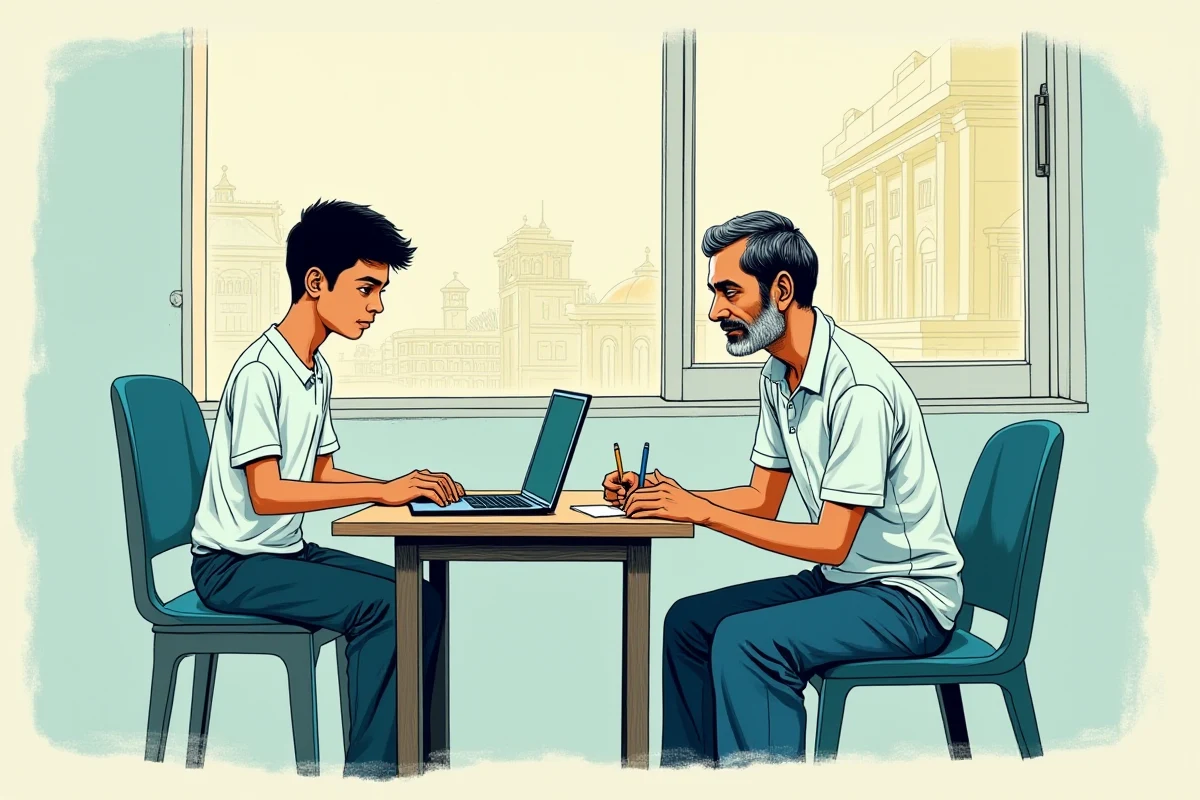
Rahul was born in Silvassa, the capital of Dadra and Nagar Haveli. His family had lived there for eighteen years. His voter ID was issued in Dadra & Nagar Haveli—but that wasn't the problem anymore. The problem was that his voter ID predated 2020, and in January 2020, the Government of India had merged Dadra & Nagar Haveli with Daman & Diu into a single union territory: DNHDD. The old domicile certificate was no longer recognized by the unified DNHDD scholarship portal. The new portal required a unified domicile certificate issued by the District Magistrate's office in Silvassa after the merger.
What looked like a simple missing form was actually a gateway problem rooted in one of India's most recent administrative reorganizations. And Rahul, sitting in a Mumbai hostel with no family history in the capital, had to navigate it alone—until an AI system explained the merger, the process, and the parallel scholarships he could apply for.
This is how a twenty-year-old from a small union territory learned to read bureaucracy six months ahead of schedule, and how his father came to spend eleven days getting a document that didn't exist before January 2020.
🗓️ The DNHDD Scholarship and Why Almost Every Student Leaves the UT
Silvassa has one central landmark that every student knows: the lack of colleges that match the ambition. Dadra and Nagar Haveli and Daman and Diu—a union territory smaller than Goa, with a population of around 600,000—has three government colleges and a handful of private institutions, most of them offering diploma or intermediate courses. For a student who wanted to pursue a three-year B.Com degree at a recognized university, the options were essentially zero. Mumbai was the obvious next step. So was Surat. So was Ahmedabad.
The DNHDD Social Justice & Empowerment Department understood this long before Rahul was born. Almost all OBC, SC, and ST students in the UT were leaving for college. Without a scholarship policy that followed them outside the UT, those students—especially those from families earning below ₹2.5 lakh per year—would simply disappear into low-skill jobs or into the informal workforce.
So the UT designed a Post-Matric Scholarship for OBC students studying outside DNHDD. The amount was modest—₹10,000 per year—but for Rahul's family, it meant a semester's worth of hostel fees. The eligibility criteria were straightforward: CBSE pass with 45% or above, OBC certificate, domicile certificate of DNHDD, annual income below ₹2.5 lakh, admission to a recognized institution outside the UT.
Rahul had everything except one word: the right domicile certificate.
- 📝
CBSE Class 12 (March 2025)
Rahul passes Commerce with 79%; family plans Mumbai University admission
- 🎓
Mumbai University Admission (June 2025)
B.Com seat confirmed; scholarship application begins
- ⚠️
DNHDD Rejection (July 2025)
Portal rejects old pre-merger voter ID—requires unified post-2020 certificate
- 💡
AI Guidance (July 2025)
AI explains 2020 merger and DM office process; recommends NSP parallel route
- ✅
DM Certificate & Approvals (August 2025)
After 11-day DM process, both DNHDD and NSP scholarships approved (₹20,000/year)
⚠️ The 2020 Merger: Old Voter IDs, New Domicile Rules
On January 26, 2020, India's Constitution Day, the Government of India passed a reorganization order that merged two union territories: Dadra and Nagar Haveli (DNH) and Daman and Diu (DD). From that date forward, there was no separate "Dadra & Nagar Haveli." The two UTs became one: Dadra and Nagar Haveli and Daman and Diu, abbreviated DNHDD.
For most residents, the merger was invisible. The same magistrate's office served them. The same government schemes applied. The same schools and hospitals remained. But in the fine print of administrative systems—scholarship portals, domicile verification databases, voter rolls—the old codes persisted.
Rahul's voter ID card, issued before January 2020, still read "Dadra & Nagar Haveli." It was a valid document. It proved his identity. But when he entered it into the DNHDD scholarship portal, the system returned an error. The portal expected a new domicile certificate issued after the merger by the unified DNHDD administration.
This is a common problem for students from UTs with recent reorganizations. The systems hadn't fully synchronized. The voter database still listed the old territory code. The scholarship database recognized only the new code. A student with perfect credentials—OBC status, income below the ceiling, admission to a recognized college—could be stuck for months waiting for a government office to catch up to itself.
Rahul didn't know this when he first saw the rejection. He thought his family's eighteen years of residency in Silvassa, documented in a voter ID and a ration card, would be enough. He didn't know about the merger. He didn't know that the system was looking for a document that was only created after January 2020.
🌗 Finding the Post-Merger Path and the Parallel Option
When Rahul's initial rejection came back, he did what many students do: he panicked and then he scrolled. He found the DNHDD scholarship portal again, read the eligibility section more carefully, and then searched online for "DNHDD domicile certificate process." The search results pointed him to government pages that had been updated for the merger, but the language was bureaucratic and the office locations weren't clear.
That's when he turned to an AI system—one of the newer tools that had been trained on Indian administrative systems, the state-by-state scholarship landscape, and the specific quirks of union territory governance. He asked: "I have a voter ID from Dadra & Nagar Haveli issued in 2015. The DNHDD scholarship portal is rejecting it. What do I do?"
The AI understood the 2020 merger immediately. It explained that Dadra & Nagar Haveli and Daman & Diu had been merged into a single UT, and that new domicile certificates were now issued under the unified DNHDD administration. It pointed Rahul to the District Magistrate's office in Silvassa as the authority that issues these certificates. It also explained the typical timeline: 10 to 12 working days, depending on how quickly the office could cross-reference the old voter roll with the new residential records.
But the AI went further. It mentioned a second scholarship that Rahul hadn't considered: the National Scholarship Portal (NSP) Post-Matric OBC scholarship administered by Mumbai University. The amount was the same—₹10,000 per year—but it didn't require a DNHDD-specific domicile certificate. It required proof of OBC status and income verification, both of which Rahul already had.
The AI's strategy was dual: get the domicile certificate for the DNHDD scholarship because it was the faster route and directly supported UT residents, but also apply for the NSP scholarship as a backup. If one got delayed, the other could sustain him.
What it does
- 🗂️DNHDD scholarship: Requires unified post-merger domicile certificate (10-12 days from DM office)
- 📋NSP scholarship: Requires OBC certificate and income proof (no domicile needed)
- ⚡Both scholarships can be applied for in parallel during the same week
- 💰Both approved simultaneously: ₹20,000/year combined support
What it does not do
- ❌Old pre-merger voter IDs (issued before January 2020) not accepted by DNHDD
- 🚫NSP does not require domicile certificate—different validation system
- ⛔One delayed approval does not prevent the other from being processed
- 📍Student does not need to wait for DNHDD to be approved before filing NSP
BLOCKQUOTE: The AI's Explanation (Gujarati and Hindi)
"DNHDD તે 2020માં બે યુનિયન ટેરિટરીનું મર્જર છે—'Dadra & Nagar Haveli' અને 'Daman & Diu'. તમારું પેલું voter ID તે 2015ની છે, તો તે યુનિફાઈડ સર્ટિફિકેટ નથી. તમને District Magistrate ઑફિસ, Silvassa જવું પડશે અને 'Domicile Certificate of DNHDD' માટે અરજી કરવી પડશે. સામાન્ય રીતે ૧૦-૧૨ દિવસ લાગે છે. તમારા પિતાજીને voter ID, birth certificate, અને જે કોઈ દસ્તાવેજ રેસિડેન્સ સાબિત કરે તે લઈ જવું. મહત્ત્વનું: DNHDD સ્કોલરશિપ એક રૂટ છે, પણ NSP Post-Matric OBC (Mumbai University) પણ તમને મળશે. બંને અરજી કરો."
(In Gujarati: The explanation of the 2020 merger, the need for unified domicile certificate, timeline, and the strategy to apply for both scholarships in parallel)
— AI system guidance, explaining post-merger requirements
"DNHDD वह 2020 में दो यूनियन टेरिटरी का विलय है—'Dadra & Nagar Haveli' और 'Daman & Diu'। आपका पुराना voter ID 2015 का है, इसलिए वह unified certificate नहीं है। आपको District Magistrate Office, Silvassa जाना होगा और 'Domicile Certificate of DNHDD' के लिए आवेदन करना होगा। सामान्यतः 10-12 दिन लगते हैं। आपके पिताजी को voter ID, birth certificate, और कोई भी दस्तावेज़ जो निवास साबित करे, ले जाने चाहिए। महत्वपूर्ण: DNHDD scholarship एक रूट है, लेकिन NSP Post-Matric OBC (Mumbai University) भी आपको मिलेगी। दोनों के लिए आवेदन करो।"
(In Hindi: Same explanation of the merger, domicile process, timeline, and dual scholarship strategy)
🧭 The Father's Journey to the District Magistrate's Office
Rahul's father, Suresh Patel, was a factory supervisor in one of Silvassa's industrial zones. He'd never needed a domicile certificate before—eighteen years of living in the same town had always been invisible to paperwork. But now his son's scholarship depended on it, and the AI had made the process clear enough that Suresh could navigate it.
On July 25, 2025, Suresh took a day off work and walked into the District Magistrate's office in Silvassa with a simple folder: his old voter ID, Rahul's birth certificate, a ration card with both their names, and a letter explaining that he needed a unified DNHDD domicile certificate for his son's scholarship.
The office was bureaucratic but not hostile. The clerk checked the documents, cross-referenced the old Dadra & Nagar Haveli voter roll with the new DNHDD records, and said the certificate would take 10 to 12 working days. "Come back after the second week," the clerk said.
Suresh came back exactly eleven days later, on August 5, 2025. The certificate was ready. It was a single page, embossed with the seal of the District Magistrate, Silvassa, and it bore a crucial line: "This is to certify that Suresh Patel and family are domiciled in Silvassa, Dadra and Nagar Haveli and Daman and Diu (DNHDD) Union Territory as per post-merger records as of January 26, 2020."
Eleven days. That was the actual timeline. Not the worst-case scenario. Not a warning story. Eleven days, and Rahul had what he needed.
Rahul immediately logged back into the DNHDD scholarship portal and resubmitted his application with the new certificate attached. This time there was no rejection. The system processed the application. Three days later, he received an email from the DNHDD Social Justice & Empowerment Department: "Your application has been approved. You will receive ₹10,000 for the academic year 2025-26."
But Rahul didn't stop there. Following the AI's advice about the NSP parallel route, he also applied for the National Scholarship Portal Post-Matric OBC scholarship through Mumbai University. That application went in on the same day as the resubmission. Two weeks later, he received another approval: ₹10,000 from NSP as well.
Two scholarships. Twenty thousand rupees for his first year. Both covering the same year, both renewable if he maintained good grades and stayed within the income ceiling.
"My father had to take a day off work for a piece of paper that proved we'd always lived where we lived. But once we understood what the government was looking for—a unified domicile certificate, not an old voter ID—it felt like the system was actually designed to help. The AI explained the merger. The DM's office did their job."(Speaking in English about the domicile process and scholarship approval)
— Rahul Patel, B.Com, Mumbai University
🌱 What the Scholarship Means: ₹20,000 Per Year and the Cost of Staying in Mumbai
Rahul's situation is instructive not because it's unique, but because it's representative of the invisible friction that union territory students face. Silvassa is a small town. There's no economy of scale for hostels or student housing. A bed in a shared room near Mumbai University costs ₹4,500 to ₹6,000 per month. Add meals, transport, books, and internet, and the first-year cost hovers around ₹80,000 to ₹90,000. His family's annual income is around ₹2.2 lakh, of which his father's salary takes up roughly 85%. His mother does piecework textile dyeing. Every rupee matters.
The DNHDD UT scholarship of ₹10,000 covers the first two months of hostel fees. The NSP scholarship of another ₹10,000 extends that to four months. The remaining eight months still come from his family's savings, from small loans from relatives, and from Rahul's own part-time work as a library assistant at the university.
But those ₹20,000 are not symbolic. They mean his father doesn't have to borrow from the moneylender in Silvassa at 15% interest. They mean his mother doesn't have to pick up extra textile work and skip family meals. They mean Rahul can attend evening classes instead of working a full shift. They mean he has a reasonable chance of passing B.Com with the grades that lead to a job, not just a certificate.
The DNHDD UT scholarship exists because the UT's policymakers understood that students like Rahul were the future of the territory. The NSP scholarship exists for the same reason. Both are renewable annually if income and grades remain stable. Both assume that a student's family will contribute, but they cap the family contribution at a livable percentage.
Rahul's journey—from a rejected application based on a pre-merger voter ID to dual scholarships covering four months of actual costs—reveals a system that works, but only if a student knows where to push. The AI filled that gap. The DM's office filled another gap. And his father's willingness to take time off work and navigate the bureaucracy filled the final gap.
The merger happened in January 2020. It's now 2025. There are thousands of students in DNHDD who still have pre-merger voter IDs and still haven't realized that they need a new domicile certificate. Many have dropped out of college. Many have applied for scholarships they didn't receive. Many have never tried at all, assuming the system was designed to exclude them.
Rahul is twenty. His father is fifty-three. They will probably forget this story by next year, when the renewal application is simpler—the domicile certificate will already be on file. But for four months in 2025, while Silvassa was still catching up to itself, they understood something essential: that the problem wasn't the scholarship or the student's potential. The problem was the bridge between the old world and the new one.
The bridge exists now. It's marked. And if you know to ask the right questions—or if an AI system knows to answer them—you can cross it in eleven days.
Key Takeaways for Union Territory Students
Check the merger status of your UT. If your UT underwent administrative reorganization in the last five years, your old identity documents may not match the new system. Ask an AI system or visit the official UT website.
Visit the District Magistrate's office early. Domicile certificates typically take 10-12 working days. If you're applying for scholarships by a certain deadline, start the DM process at least 3 weeks before the deadline.
Always apply for multiple scholarships. The DNHDD scholarship and NSP are not mutually exclusive. Apply to both. The income ceiling is the same (₹2.5 lakh), and both are designed for the same students.
Portal: dnhdd.gov.in/scholarship for the UT-specific scholarship. For NSP, log in through the scholarship portal of your state/university.
Bring the right documents to the DM office: voter ID, birth certificate, ration card, or any letter from a government institution (school, hospital) that shows your address and residency length.
Contact Points
District Magistrate Office, Silvassa (Domicile Certificates) Address: Collector's Office, Silvassa, DNHDD 396230 Typical processing time: 10-12 working days Documents needed: Voter ID, Birth Certificate, Ration Card, School/Institution letter
DNHDD Social Justice & Empowerment Department Portal: dnhdd.gov.in/scholarship Contact: Toll-free number available on portal Scholarship: Post-Matric OBC (₹10,000/year) Income ceiling: ₹2.5 lakh/year
Mumbai University Scholarship Cell NSP Post-Matric OBC Processed through National Scholarship Portal Amount: ₹10,000/year
Rahul Patel is now in his second year at Mumbai University. Both scholarships were renewed. The 11-day domicile certificate remains in his academic file, a small paper monument to the year the merger finally caught up with him.