
The Gurgaon microbrewery and the Haryana excise licence that nearly expired
Aman Bhatia is thirty-four and runs a place called Tambaa — Hindi for copper, and a nod to the six copper-jacketed fermentation tanks visible through the glass wall behind the bar — in DLF Cyber Hub, Gurgaon. The brewery-restaurant occupies 4,800 square feet: 120 seats, a wood-plank bar running twenty-two feet along the southern wall, an exposed-brick partition between the taproom and the dining section, and a gastropub menu anchored by a dal-makhani naan pizza Aman added semi-ironically in 2023 and cannot now remove because it is the second-best-selling item.
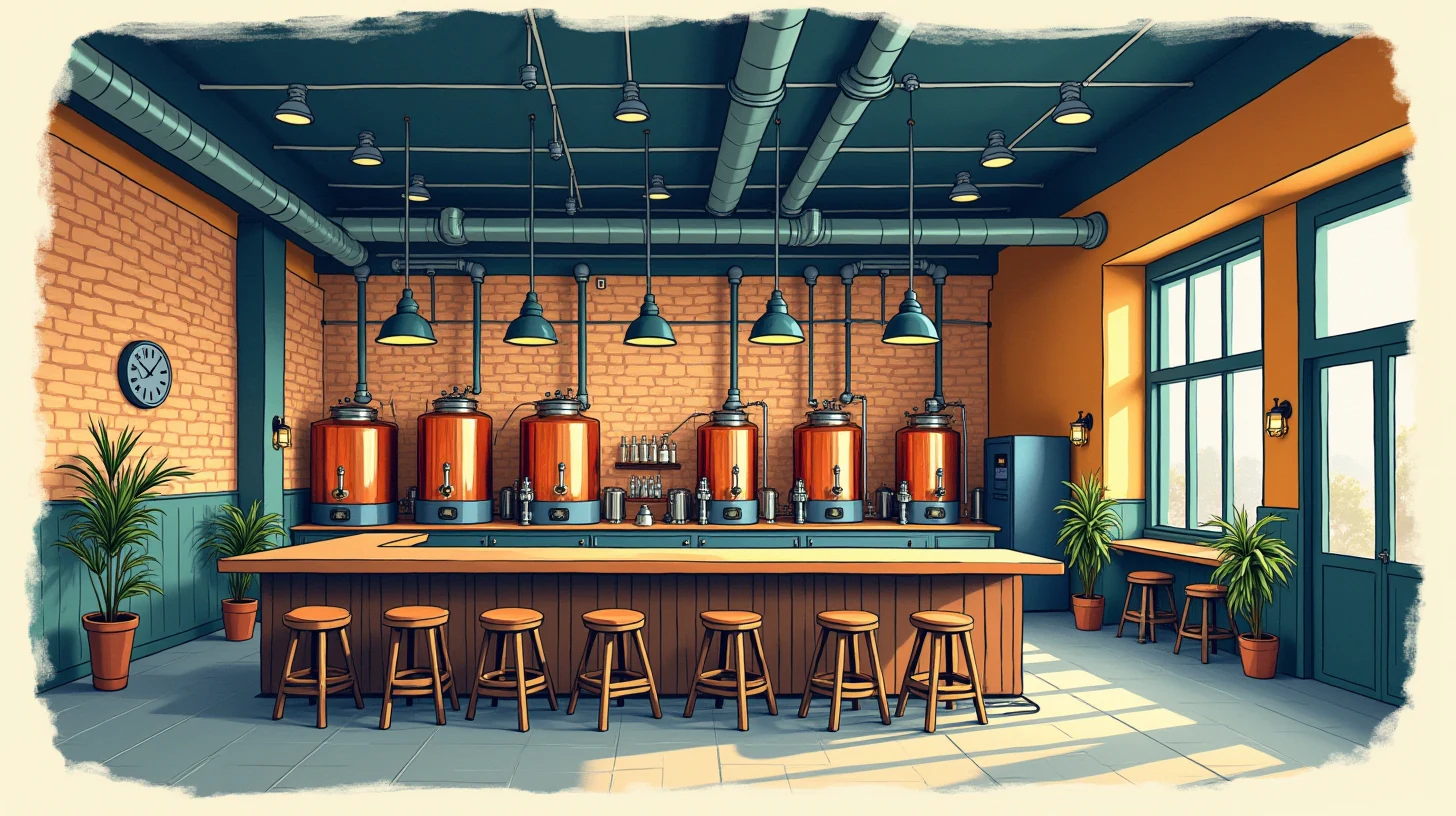
Tambaa has five house beers on tap — a Punjabi wheat ale, a dry-hopped pale ale, a dark lager, a rotating seasonal, and a flagship amber called Chandigarh 47 that head brewer Harpreet, thirty, from Mohali, has been refining across forty-one batch iterations since April 2022. Thirty-five people work there. Payroll is ₹22.5 lakh per month before employer contributions. Monthly revenue runs ₹24–38 lakh depending on season.
The compliance whiteboard in Aman's office listed the L-10F renewal date, FSSAI State licence renewal, fire-safety inspection, quarterly GSTR-3B deadlines, ESI half-yearly returns, and the PF remittance schedule. He had managed it himself for two years, then handed financial compliance to a CA firm in Sector 14. What neither he nor the CA had tracked, in spring 2025, was a Haryana Excise Department amendment that quietly changed what the L-10F required.
🗓️ The annual ritual
The L-10F is Haryana's on-premise microbrewery licence — the category under which any establishment wanting to brew and sell beer within the same premises must operate. The licence is issued by the Haryana Excise and Taxation Department and renewed annually, typically in March ahead of the new excise year beginning in April. At Tambaa's production scale, the annual renewal fee had been ₹5 lakh since 2022. The one-time security deposit at initial grant was ₹2 lakh. Brand registration — a Haryana excise requirement treating each named product as a registered label — had cost ₹15,000 per beer at launch, so Tambaa's five beers had required ₹75,000 in one-time fees. These were known, budgeted numbers.
What the 2025 amendment introduced was a batch-testing mandate. From April 1, 2025, every batch brewed under an L-10F licence had to pass a safety and quality test by a laboratory empanelled with the Haryana State Food and Drug Administration before transferring to the serving taps. The parameters tracked the Bureau of Indian Standards specification for beer: alcohol by volume, bitterness units, microbial count, heavy metals. The empanelled lab nearest Cyber Hub quoted a turnaround of five to seven working days; the actual turnaround Harpreet experienced was nine to twelve.
Tambaa brewed a new batch every twelve to eighteen days. The testing lag created a scheduling bottleneck manageable with advance planning — but not if a batch failed. Batch forty-two of Chandigarh 47, brewed in September 2025, failed its first test. The microbial count was marginally above BIS threshold, attributable to a sanitation lapse on a conditioning hose. The 900-litre batch was disposed of. Raw materials, yeast, hops at ₹1,800 per kilogram from a Delhi importer, carbon dioxide, the lab fee of ₹4,200 — total batch cost: ₹63,000. The tap ran dry for twenty-six days. Two regulars wrote about it on a Gurgaon food blog. The amber came back with batch forty-three, but the lesson about buffer stock and lab-scheduling lead time had cost ₹63,000 in tuition.
⚠️ What very nearly happened
The L-10F renewal for 2025–26 was due in late March. The CA firm handled GST, ESIC, and PF — but not the excise renewal, which required the proprietor's signature on a physical affidavit and a visit to the Haryana Excise and Taxation Department office in Sector 17, Gurgaon. Aman had handled this personally in 2023 and 2024. In 2025 he noted the date on the whiteboard and wrote himself a reminder to call the excise consultant. The call was not made. March 2025 was the month Tambaa's kitchen contractor walked off a tiling job mid-completion, the month Cyber Hub management raised the common-area maintenance charge by 18%, and the month an EPFO field inquiry notice arrived asking for wage-record reconciliation for two October 2024 hires whose UAN numbers had been linked to their previous employers' PF accounts under a different establishment code.
The PF mismatch was administrative, not a contribution failure — the money had been paid. But resolving it required employment contracts and UAN details that took Aman seventeen days to locate. With thirteen days left in the inquiry window, the CA responded in time. The inquiry closed. The renewal date did not.
The Haryana Excise Department's grace period for L-10F lapse is thirty days, after which the licence enters suspension and brewing must cease. On April 18 — eighteen days into the grace window — Harpreet, preparing to move a pale ale batch to conditioning, asked whether the 2025 renewal certificate was on the wall. The laminated 2024 certificate was there. The 2025 certificate was not.
- ⚖️
March 31, 2025 — renewal deadline missed
The annual window passed while Aman managed the contractor walkout, the CAM dispute, and the EPFO inquiry. The excise consultant call was never made.
- 📨
April 18 — lapse discovered, 12 days left
Harpreet's question about the wall certificate revealed the lapse. The excise consultant was called the same evening.
- 🛑
April 19–24 — emergency renewal filing
Affidavit prepared, ₹5 lakh fee paid by RTGS. A late-filing surcharge of ₹37,500 added. Physical visit to Sector 17 on April 23.
- ✅
April 28 — certificate issued, taps clear
The renewed L-10F was collected. Brewing resumed. The nine-day batch-testing buffer had kept the taps running during the gap.
The emergency renewal cost ₹5,37,500. The new batch-testing mandate added approximately ₹10,500 per month in recurring lab fees — two and a half batches per month at ₹4,200 each — that had not existed before April 2025.
🌗 What changed
The PF inquiry was closed, but the ESIC picture was still murky. The CA's half-yearly ESI return for October 2024 to March 2025 showed thirty-three employees. The actual headcount was thirty-five. The sous-chef and bar manager hired in October had been enrolled in ESIC three months late, in January 2025, leaving a contribution gap for October through December. The ESIC portal was showing a shortfall notice.
Aman's operations manager, twenty-nine-year-old Priya, who had joined from a Connaught Place restaurant group in 2023, had spent six weeks trying to navigate the portal's retrospective-correction interface without progress. The help documentation for generating a missed-contribution challan, linking it to employee IP numbers, and filing a rectification at the sub-regional ESIC office in Sector 19 was, in her assessment, non-linear.
Her brother-in-law, who ran a garment export firm in Faridabad, had been using an AI assistant for GST reconciliation. He showed her the product on a weekend visit. She set it up on the office laptop the following Monday.
She typed, in Hindi, without much hope: "हरियाणा में ESIC shortfall को retrospectively कैसे ठीक करें, तीन महीने की gap के लिए?" — How do I fix an ESIC shortfall retrospectively in Haryana, for a three-month gap?
"ESIC portal पर 'Employer Login' में जाकर 'Missed Contribution' section खोलिए। वहाँ October–December 2024 के लिए shortfall challan generate होगा — employee IP numbers डालने होंगे। Payment ESIC के SBI Collect portal से करना है। उसके बाद Gurgaon Sub-Regional Office Sector 19 में Form 5A के साथ rectification letter submit करना होगा — यह online नहीं होता। क्या आपके पास दोनों employees के IP numbers हैं?"
(Go to 'Missed Contribution' under Employer Login on the ESIC portal. A shortfall challan for October–December 2024 will be generated there — you will need the employee IP numbers. Payment goes through ESIC's SBI Collect portal. After that, a rectification letter with Form 5A must be submitted physically at the Gurgaon Sub-Regional Office in Sector 19 — this step cannot be done online. Do you have the IP numbers for both employees?)
She did — in the January enrolment confirmation emails. The challan was generated that afternoon, the payment made the next morning, the rectification letter submitted to Sector 19 three days later. The shortfall notice cleared within two weeks.
L-10F renewal lapse
₹37,500 late surchargeA 7.5% surcharge on the ₹5 lakh annual fee. Had the 30-day grace period been missed entirely, the licence would have entered suspension and a fresh grant — 45–60 days under the Haryana excise calendar — would have been required.
ESIC contribution gap
₹28,440 shortfall + interestThree months of missed contributions for two employees totalled ₹26,200. Interest for belated payment added ₹2,240. One half-day of Priya's time at Sector 19 closed it.
GST food ITC over-claim
₹41,200 credit reversalBeer is outside GST; food is 5% no-ITC. Kitchen maintenance invoices at 18% GST had been incorrectly claimed as ITC. The GSTR-9 reversal cost ₹41,200 in surrendered credit — caught before assessment, so no interest.
The GST problem had surprised Aman most. Beer in India is taxed under state excise plus VAT — in Haryana, levied as a percentage of the ex-brewery price — and sits entirely outside GST. Food at Tambaa is taxable at 5%, but without input-tax credit, as the restaurant has AC premises and falls under the composite scheme for eateries. The 18% GST on kitchen equipment servicing, the dishwasher maintenance contract, and the air-conditioning annual maintenance should never have been claimed as ITC. The CA had continued including these invoices on the reasoning that the expenses were attributable to the food-service operation — understandable, but incorrect: under the 5%-no-ITC scheme, no ITC is permissible regardless of purpose. The GSTR-9 reconciliation surfaced ₹41,200 in credit to be reversed.
"लाइसेंस का रिन्यूअल भूल गया था — इसलिए नहीं कि मैंने ध्यान नहीं दिया, बल्कि इसलिए कि उसी हफ़्ते ठेकेदार गया, CAM का नोटिस आया, PF का नोटिस आया। एक आदमी के हाथ में उतना ही होता है।"— He had forgotten the licence renewal — not from inattention, but because the same week the contractor left, the CAM notice arrived, the PF notice arrived. A person can only hold so much.
🧭 Why we built it
The Sector 29 strip in Gurgaon alone has more than a dozen microbreweries operating under the L-10F and related categories. Every one carries the same compliance stack: the annual excise renewal, the FSSAI State licence (the food kitchen is a separately licensed food business irrespective of the brewery), ESIC and PF obligations once headcount crosses ten and twenty employees respectively, and the GST dual-ledger problem — beer outside GST, food inside it, kitchen assets shared between both streams, maintenance invoices creating ITC-attribution questions that are not obvious even to experienced practitioners.
The 2025 batch-testing amendment added a new layer that most Haryana microbrewery operators learned about not from a government circular but from a Delhi-NCR brewers' WhatsApp group in February, two months before it took effect. The Haryana Excise Department had issued a gazette notification and a postal circular to L-10F holders — but many establishments, like Tambaa, have their correspondence address at the brewery, where the bar receives post at noon on weekdays. Harpreet found the circular in a pile under a catering invoice and a hop importer's bill. He read it, didn't fully parse the compliance implication, placed it on Aman's desk. Aman read the first paragraph, noted it involved lab testing, placed it on the pile he would get to after the contractor situation resolved.
An agent that watches the Haryana Excise gazette, flags the renewal window ninety days out, cross-references the ESIC payroll register against actual headcount monthly, and reads the GSTR-9 draft before the CA submits it — this is not a replacement for Priya or the CA firm or Harpreet's institutional knowledge of forty-one iterations of Chandigarh 47. It is the thing that catches the renewal date when the contractor is walking off the site and three other notices are on the desk. That is the only thing it needs to do. The problem is that this is the thing most reliably crowded out of attention when attention is most stretched.
🌱 What we hope happens
Tambaa is brewing batch forty-seven of Chandigarh 47 this week. The sample went to the lab on Monday. Harpreet is confident — the sanitation protocol on the conditioning hose has been changed, the last four batches came in within the BIS threshold, and the beer is, in his view, better than before the failure. He said this without irony, which is how a brewer who has refined a recipe across forty-seven iterations tends to speak.
The agent now tracks the L-10F renewal date and sends Aman a notification in January — eleven weeks ahead — with a checklist: affidavit requirements, the fee schedule, the excise consultant's contact, and whether any Haryana Excise circular has been issued in the preceding quarter. It cross-references the ESIC payroll register against actual headcount monthly. It reads the GSTR-3B draft and flags the beer-versus-food split before submission.
None of this is complicated. The renewal checklist has not changed in three years. The ESIC cross-reference is arithmetic. The GSTR-3B flag is two conditions. What makes it useful is that it is, unlike Aman, not simultaneously managing a contractor walkout, a CAM dispute, and a PF inquiry. It has no other tabs open.
Ek aadmi ke haath mein utna hi hota hai — a person can only hold so much — is what Aman said to Priya in late April, after the certificate came back from Sector 17. Not an excuse. A description: in a 120-seat gastropub with thirty-five staff, five beers on tap, and a compliance calendar spanning three central and one state department, the thing that falls off the list is always the thing that falls off last — quietly, onto a pile of mail under a catering invoice, to wait until someone asks about the certificate on the wall.
If you run a microbrewery, restaurant, or any licensed food-and-beverage business in Haryana or anywhere in India, the product is free at gabforge.in. We do not enter your portals or file returns without your confirmation. We read the calendar, watch the gazette, and tell you — in your language — what is coming due. The rest is still yours to do.