
The Kolkata Park Street restaurant and the music licence
Mou Chakraborty is forty-three years old and has been running a restaurant on Park Street since she was thirty-six — the year her mother decided the family's reputation for kosha mangsho was a business proposition and not merely a domestic one. Chakraborty's Table occupies the ground floor of a narrow art-deco building three minutes from the Park Street Metro entrance: sixty seats, cane chairs, panelled walls the colour of old ivory, a hand-painted Kalighat Pat above the kitchen pass, and a polished brass bell at the entrance that a customer rings when the food has been particularly good. Every other Saturday, Prashant, a retired schoolteacher and capable guitarist, arrives at half past seven and plays Bengali standards — Rabindra Sangeet, some Nazrul, the older Hemanta Mukherjee numbers the window tables prefer — from a cane chair in the corner.
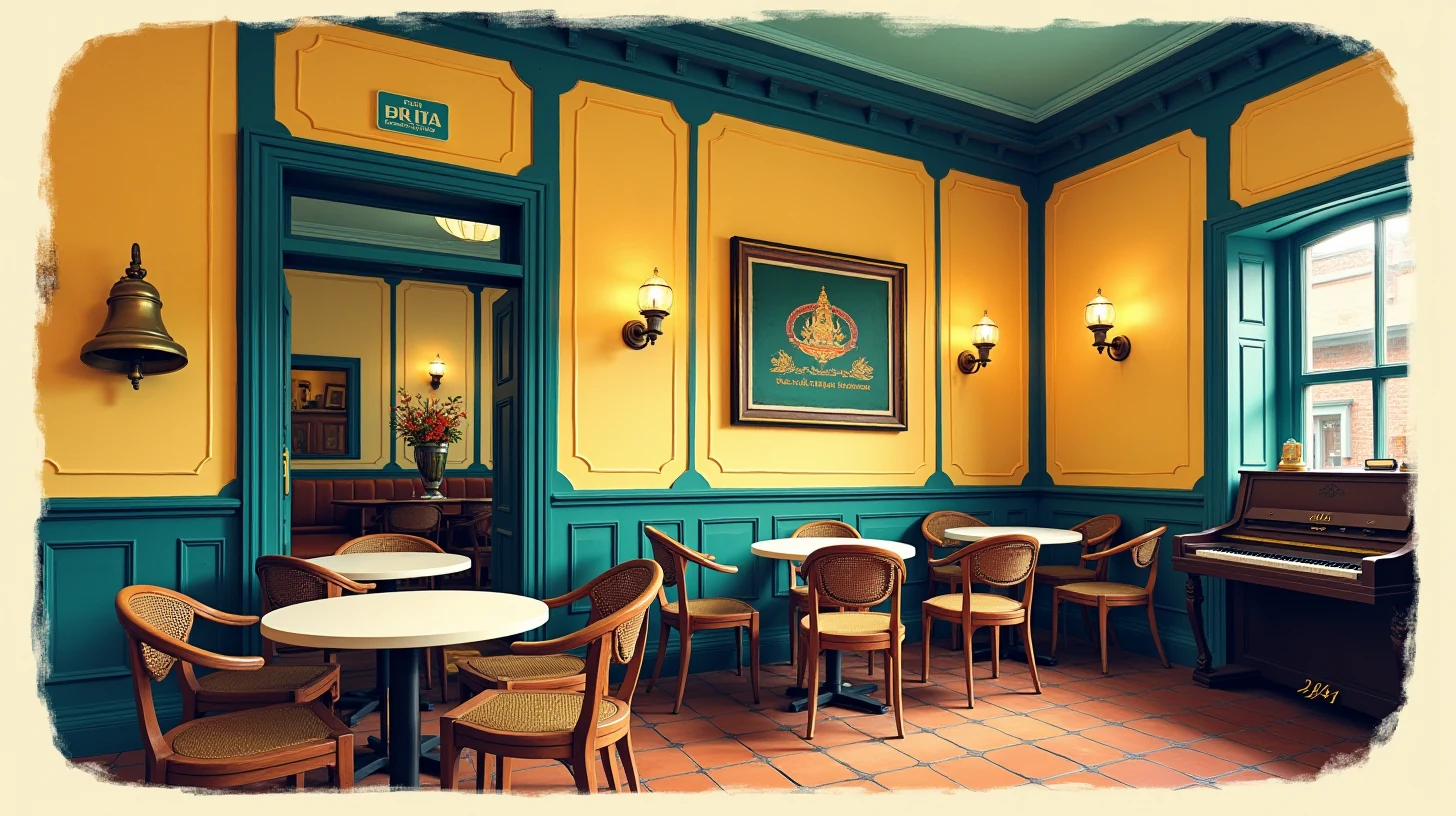
The menu is fixed: kosha mangsho, ilish machher jhol, mishti doi that Mou makes from a culture her mother brought from Krishnanagar. On Saturdays, she also offers a bundled takeaway thali — kosha mangsho or ilish, rice, dal, mishti doi, papad — at ₹420 per pack, which began in the second year after south-Kolkata regulars said the lunch hours did not suit their commute.
The trouble arrived across several weeks in the autumn of 2025, when three separate administrative clocks ran down at roughly the same time.
🗓️ The licences that run quietly until they don't
Chakraborty's Table holds four operating licences. The FSSAI State Licence (number 21524999000 in the FoSCoS format for West Bengal food businesses) had been renewed in 2021 and 2023. The WB Shops and Commercial Establishments Act registration — Form A, prefix KMC-S-CE-2019 — required annual renewal at the Kolkata Municipal Corporation licensing counter on S. N. Banerjee Road. The KMC trade licence, a separate instrument renewed in the name of the premises, was payable by April 15 each year. Mou had managed all three renewals through Arabinda-babu, a filing agent near the licensing counter who charged ₹2,200 per year and had handled the restaurant's paperwork since 2019.
Arabinda-babu had retired in March 2025.
His replacement filed the KMC trade licence renewal in April as expected — but did not know that the West Bengal government had revised the KMC consolidation procedure in December 2024. Restaurants with FSSAI licences now had to submit a notarised FSSAI copy, a GSTR-9 acknowledgement, and a headcount declaration at the time of renewal. The new agent filed the old way, without the additional documents, and the KMC counter issued a provisional acknowledgement: valid for sixty days pending document submission, after which it would lapse to invalid. The acknowledgement looked, to the untrained eye, identical to a completed renewal. Mou filed it in the manila folder behind the register.
The FSSAI licence had its own clock. Renewed in October 2023 for two years, it expired in October 2025. The renewal window had opened in August. It was now November.
- ⚖️
December 2024 — KMC consolidation procedure changes
West Bengal revises KMC renewal: FSSAI copy, GSTR-9 acknowledgement, and headcount declaration now required. Arabinda-babu has retired; new agent is unaware.
- 📋
April 2025 — KMC renewal filed provisionally
New agent files without the additional documents. KMC issues a provisional acknowledgement: valid sixty days pending submission. Mou files it without noticing the provisional stamp.
- 🛑
October 2025 — FSSAI State Licence expires
Two-year term ends. Renewal window opened in August; Mou had the FoSCoS SMS but had not acted. Compounding penalty begins: ₹100/day (days 1–15), ₹200/day thereafter.
- ⚠️
November 2025 — Three problems converge
FSSAI lapsed (45 days, penalty running). KMC trade licence lapsed to invalid. PPL and IPRS music performance licences never obtained. WB AAR thali GST base incorrect since 2024.
⚠️ What very nearly happened
The music question was the one Mou had never thought about at all.
Prashant had been coming every other Saturday since 2022 — ₹3,500 per evening, acoustic guitar, two and a half hours of Rabindranath, Nazrul, and the Uttam Kumar film songs the window tables preferred. Every piece was a cover of a copyrighted work. Under the Copyright Act, 1957, a venue presenting live music needs a licence from the relevant Performing Rights Organisations: Phonographic Performance Limited (PPL) for sound recordings and the Indian Performing Rights Society (IPRS) for the underlying musical works. A 60-seat restaurant falls under IPRS Tariff Code RT/L/01 and PPL Tariff Schedule R-1. Combined annual fee: approximately ₹18,400.
Mou had never heard of PPL or IPRS. Neither had Prashant, who had played in Kolkata restaurants for decades without being asked to show a certificate. The obligation falls on the venue, not the performer. The risk had accumulated invisibly for three years.
The GST angle was equally invisible. The West Bengal GST Authority for Advance Rulings had issued a ruling in 2024 — Application No. 08/WBAAR/2024 — on whether a restaurant's bundled takeaway thali constitutes a restaurant service (5% GST) or packaged food (12% on some components). The WB AAR held that where food is prepared to order, packed in restaurant-branded containers, and priced from the restaurant menu, it takes the character of a restaurant service at 5%, with no input tax credit, and components are not assessed separately. Mou's 5% rate was correct. What was incorrect was her accountant treating the mishti doi as an exempt dairy item, computing GST on only part of the ₹420 price. Undercomputed GST: approximately ₹4 per thali. Across forty Saturdays of roughly 280 bundles each, the shortfall was ₹44,800 — not recoverable as credit, and due.
FSSAI State Licence lapse
₹18,300 to restore45-day penalty: ₹15,300. Renewal fee: ₹3,000. Total: ₹18,300. Penalty would have exceeded ₹40,000 in three more months.
PPL + IPRS music licence
₹18,400/year prospectiveThree years unlicensed. PPL and IPRS rarely pursue retroactive claims at this scale; Mou obtained both licences going forward at the combined annual rate.
WB AAR thali GST correction
₹44,800 payable40 Saturdays × 280 bundles × ₹4 undercomputed GST. Voluntary GSTR-9 rectification; no penalty assessed.
🌗 What changed
Mou's younger brother Soumya had been urging her since 2023 to use an AI assistant for compliance. She had resisted — the restaurant's paperwork was what she paid a filing agent to handle. It was Soumya's wife Rima, a commercial lawyer, who changed the conversation.
Rima came for dinner in October 2025 and, over mishti doi, asked whether the KMC renewal had gone through cleanly under the new procedure. Mou said she assumed so. Rima asked to see the acknowledgement, looked at it for forty seconds, and said, in Bengali, with the particular calm of someone who has delivered unwelcome news before: "এটা provisional। Sixty days চলে গেছে। তোমার trade licence এখন invalid।" — This is provisional. Sixty days have passed. Your trade licence is now invalid.
That Sunday, Soumya installed the agent on the counter tablet, fed it the KMC acknowledgement, the FSSAI renewal history from FoSCoS, the GST return summaries for 2024-25, and the ESIC register, and asked it to tell Mou, in Bengali, what required attention.
The response arrived in three minutes. Mou read it standing at the counter after the lunch rush, a cup of tea going cold beside her.
"মউদি, চারটে বিষয় আছে — সবচেয়ে জরুরি আগে। এক: FSSAI State Licence October 2025-এ expire হয়ে গেছে, compounding penalty চলছে — foscos.fssai.gov.in-এ এখনই renewal করতে হবে, আর এক সপ্তাহ দেরিতে ₹1,400 বাড়বে। দুই: KMC trade licence provisional — notarised FSSAI copy, GSTR-9 acknowledgement, headcount declaration S. N. Banerjee Road counter-এ জমা দিতে হবে। তিন: PPL এবং IPRS music licence নেই — IPRS RT/L/01 এবং PPL Schedule R-1 দরকার। চার: WB AAR ruling 08/WBAAR/2024 অনুযায়ী thali GST base ভুল — GST portal-এ voluntary rectification দরকার।"
(Mou-di, four things — most urgent first. One: FSSAI licence expired October 2025, compounding penalty running — renew on FoSCoS immediately, one more week adds ₹1,400. Two: KMC trade licence is provisional — notarised FSSAI copy, GSTR-9 acknowledgement, and headcount declaration needed at S. N. Banerjee Road counter. Three: no PPL or IPRS music licence — IPRS RT/L/01 and PPL Schedule R-1 required. Four: per WB AAR ruling 08/WBAAR/2024, the thali GST base is wrong — voluntary rectification needed on the GST portal.)
Mou sat down. She had not been told, in one place, that she had four simultaneous compliance problems since the restaurant opened. She said nothing for a moment. Then she called Soumya.
The FSSAI renewal was filed that evening via FoSCoS. The compounding penalty at forty-five days came to ₹15,300; the renewal fee was ₹3,000. Total: ₹18,300. "এটা আমার ভুল।" — This was my fault. — she said, and moved on.
The KMC documents took three days to compile — notarised FSSAI copy from a notary on Mirza Ghalib Street, GSTR-9 acknowledgement from the accountant — and were submitted to the S. N. Banerjee Road counter on the fourth day. The KMC officer told Mou she was the seventh restaurant that week with this particular correction. The trade licence was restored.
The PPL and IPRS licences were obtained through each society's online process, combined fee ₹18,400. Mou told Prashant that evening that the restaurant now had the correct licences. He said he had not known either. The bell rang four times that night.
"তিন বছর Prashant গান গেয়েছে, আর আমি জানতামই না যে licence লাগে। এটা আমার অজ্ঞতা না — এটা একটা system যেটা কেউ তোমাকে বলে না।"— Three years Prashant played, and I didn't even know a licence was required. This isn't my ignorance — it's a system that nobody tells you about.
The GST correction was filed as a voluntary rectification. The ₹44,800 was paid with the annual return, along with the accountant's additional fee. No penalty was assessed. The GST portal acknowledgement came through on a Wednesday evening; Mou read it on the counter tablet and told Soumya it was done.
🧭 Why we built it
The PPL and IPRS tariff schedules are publicly available. The IPRS Tariff Code RT/L/01 has not changed dramatically in five years. And yet walk into a Park Street restaurant on a Saturday evening and ask the owner whether they hold a current PPL and IPRS performance licence — the answer, in the overwhelming majority of cases, is a blank look and a question about what PPL stands for.
This is not dishonesty. It is because the obligation lives in a licensing society's tariff schedule, not in any government registration process a restaurant owner routinely encounters. The Shops Act renewal does not ask about music licences. The FSSAI renewal does not. The KMC trade licence does not. The GST registration does not. A restaurant can be fully compliant across every government registration and have no idea the music licence exists. Mou had been, in all the ways she was asked to be compliant, compliant.
The WB AAR ruling problem is different: it involves money already remitted, but remitted on an incorrect base. The AAR rulings database is a public resource, but it is a legal document repository, not a notification service. A restaurant owner whose accountant computed the GST base using pre-AAR assumptions has no way of knowing the relevant ruling exists unless someone reads the database and matches the fact pattern to the business. For most single-location restaurant owners in Kolkata, that person does not exist.
What it does
- 🔍Reads renewal acknowledgements, GST returns, ESIC registers, and licensing documents; flags gaps in status, validity, or computation.
- 🗂️Cross-references AAR rulings and tariff codes against the restaurant's seat count and activity profile.
- 📞Reminds the owner of renewal windows before the lapse date, in Bengali, not after the penalty clock starts.
What it does not do
- 🔒Never enters portal credentials, never submits forms, never authorises payments.
- 💳Never decides what to pay or file — surfaces the issue, the owner and accountant respond.
- ✅Never certifies compliance — identifies what is visible in the documents provided, nothing beyond.
🌱 What we hope happens
Chakraborty's Table is now, for the first time since Arabinda-babu retired, fully in order. The FSSAI licence is valid. The KMC trade licence is restored. The PPL and IPRS certificates are framed — Mou's idea — on the wall beside the Kalighat Pat. The GST rectification has been acknowledged. Prashant continues to play on Saturdays. The bell rings.
What Mou said to Rima, a week after the last form was filed: "আগে সব মাথায় রাখতে হতো — এখন machine মাথায় রাখে, আমি রান্নাঘরে থাকি।" — Before, I had to hold it all in my head. Now the machine holds it, and I stay in the kitchen.
That is not quite the whole truth. She still had to act — call the accountant, take the folder to S. N. Banerjee Road, pay the ₹18,300 FSSAI penalty. The agent did not solve the problems. It surfaced them, in Bengali, before they became worse: the FSSAI penalty at another three months would have passed ₹40,000; the invalid KMC trade licence, caught by a municipal inspector, carries a fine of up to ₹10,000 and potential suspension; and the music licence exposure, had a PPL or IPRS representative conducted a survey visit, could have meant three years of back-fees.
None of those things happened. Rima asked to see the acknowledgement over mishti doi; Soumya installed the agent on the counter tablet; four problems invisible for months were named, in one language, on one screen, in three minutes. Whether that is rescue or simply the minimum administrative awareness a functioning business requires is a question Mou does not find particularly interesting. The kosha mangsho has been good for seven years. The bell continues to ring.
If you run a restaurant or food business in West Bengal — or anywhere in India — the product is free at gabforge.in. We work in Bengali, and in eleven other Indian languages. We read the documents with you and stay quiet about everything else.