
The Srinagar Wazwan restaurant and the SRO 360 GST legacy
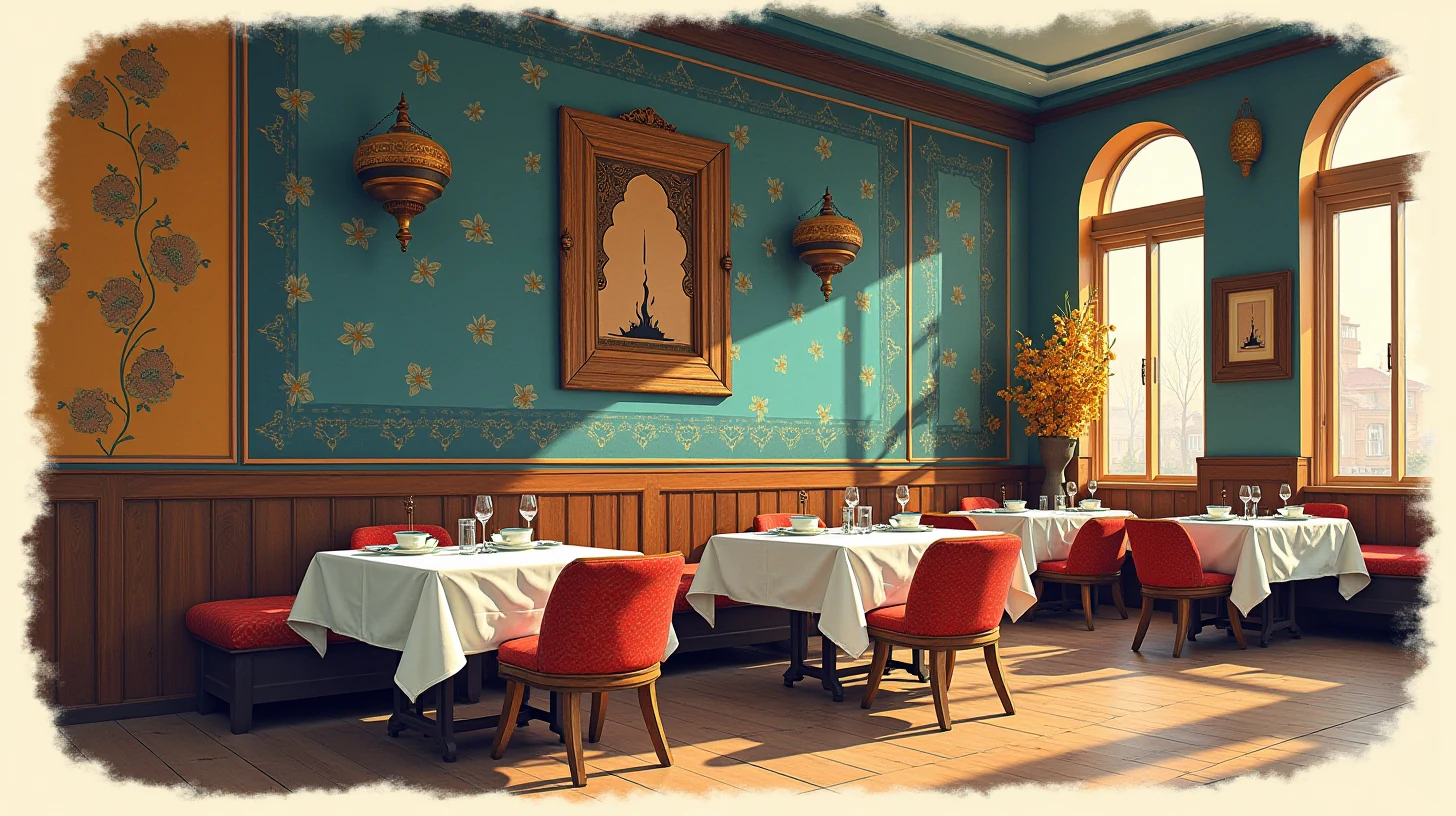
Mehmood Peer is forty-four years old, third generation of his family to run a Wazwan restaurant near Dal Gate in Srinagar. His grandfather had begun with a modest shikara-side eatery in the 1960s; his father had expanded it into a proper building, added walnut-wood carved panels and copper serving vessels from the craftsmen of the old city, and established the traaem service — the formal presentation of a full Wazwan spread on a single shared copper plate — as the restaurant's defining offering. By 2017, when Mehmood inherited the operation, the restaurant had seventy seats, a loyal clientele drawn from wedding parties and government circuit guests, and a name — Dastarkhan-e-Peer — that his father had painted above the entrance in deep blue and gold, visible from the Residency Road corner.
Twelve people work the restaurant: three cooks under a senior waza named Ghulam Qadir, four serving staff, a cashier, a dishwasher, two procurement people who cover the Residency Road market and the Friday vegetable market near Maisuma, and a part-time bookkeeper named Sajid who comes on the first and fifteenth of each month. Monthly revenue in peak summer runs between ₹9 lakh and ₹11.5 lakh; in winter, ₹3.5 lakh to ₹4.5 lakh. The restaurant has never been on Zomato. Mehmood says this with a deliberate quiet.
The trouble arrived not as a single notice but as two separate threads that, when pulled simultaneously in the winter of 2025-26, turned out to be the same knot.
🗓️ The annual ritual
Under the Goods and Services Tax regime, Mehmood's restaurant is registered in Jammu & Kashmir as a regular taxable person. His annual turnover — consistently between ₹75 lakh and ₹90 lakh in recent years — places him in the bracket requiring GSTR-1 monthly filings, GSTR-3B monthly tax payments, and an annual GSTR-9 and GSTR-9C reconciliation. The GSTR-9C is the audited reconciliation statement: it compares the turnover declared in the GST returns with the turnover reflected in the audited financial accounts, and requires a chartered accountant's certification if the turnover crosses ₹5 crore. Mehmood's turnover is well under that threshold, so the GSTR-9C, in his case, is self-certified. Sajid prepares the data. Mehmood reviews it. It has, in most years, been straightforward.
What was not straightforward was a legacy entry that had been sitting, unresolved, in the J&K commercial tax department's records since 2018.
Before July 2017, when the GST regime was introduced nationally, Jammu & Kashmir operated under its own tax framework. As a state with special constitutional status at the time, J&K did not immediately adopt the central GST framework. It passed its own State Goods and Services Tax Act in July 2017 — the J&K SGST Act — and operated its GST administration through the state commercial tax department. The department, in turn, had its own notification system: Statutory Rules Orders, or SROs. SRO 360 of 2017 was one such notification, dealing with GST registration and assessment procedures specific to J&K. Its implications for existing value-added-tax (VAT) registrations, and the migration path for businesses like Mehmood's, were communicated via the state tax department's circulars — circulars that Sajid had, in 2017 and 2018, read partially and filed in a folder that he could locate but not, in 2025, fully reconstruct.
After August 2019, when J&K's special constitutional status was reorganized and the state was divided into two union territories, the J&K SGST administration was progressively merged into the central GST framework. Legacy assessments — those from the SRO-era — were in principle transferred, closed, or superseded. In practice, a small category of them remained in an administrative limbo: neither formally closed by the state system nor picked up cleanly by the central system. Mehmood's 2018 assessment, which had questioned a VAT-era transitional input tax credit claim worth ₹1,14,000, was one of these.
- ⚖️
July 2017 — J&K adopts its own SGST Act
While the rest of India moves to central GST, J&K passes its own State GST Act and issues SROs governing registration, assessment, and transition credit. SRO 360 governs GST registration procedures for existing VAT registrants migrating to the new regime.
- 📋
2018 — SRO-era transitional credit assessment
The J&K commercial tax department raises a query on Mehmood's transitional input tax credit claim of ₹1,14,000 filed in TRAN-1. The query is logged, a response is submitted, but the assessment is neither closed nor formally acknowledged. Sajid files the correspondence and considers the matter pending.
- ⚖️
August 2019 — J&K reorganized into two UTs
J&K's special status is revoked. The state tax department's pending assessments are notionally transferred to the central GST authority. Many are closed by a blanket administrative order. A small category of TRAN-1 disputes, including Mehmood's, remains unresolved in the transitional records.
- 📨
November 2025 — Legacy assessment surfaces in GSTR-9C
When Mehmood's GSTR-9C reconciliation for FY 2024-25 is prepared, a mismatch appears: the central GST system reflects an unresolved input tax credit demand of ₹1,14,000 from the legacy assessment. The reconciliation cannot be certified without addressing it.
The second thread was newer and, in a way, more technically interesting. It concerned the classification of the Wazwan traaem service itself.
⚠️ What very nearly happened
In November 2025, Sajid was preparing the GSTR-9C reconciliation for financial year 2024-25. He noticed, in the portal's tax liability ledger, a demand entry dated 2023: a query from the Srinagar GST Circle office asking Mehmood to clarify the tax classification of his traaem service. The query had been issued to his GSTIN via the portal's notice-and-reply mechanism. Sajid had not seen it. It had been delivered digitally, to a portal inbox that neither Sajid nor Mehmood checked regularly — they both relied on Sajid's SMS alerts for routine filing reminders, and the portal notice system worked on a separate notification channel.
The classification question was this: was the traaem service — a full Wazwan spread of rista, tabakh maaz, gushtaba, yakhni, and rice, served together on a single copper plate for a fixed price of ₹1,800 per person — a composite supply under Section 8 of the CGST Act, or a set of individually taxable food items billed as a menu?
The distinction matters because GST rates on restaurant services are not uniform. A restaurant not serving liquor and not in a hotel with a declared tariff above ₹7,500 per night pays GST at 5% under the composite scheme (or under the regular scheme, depending on registration). But if individual dishes are classified separately — if the rice is treated as a standalone supply and the tabakh maaz as another — different HSN codes and potentially different rates may apply. The GST department's query suggested that the tabakh maaz (a lamb ribs preparation) might attract the 12% food-product rate applicable to processed meat, and that the rice component might be classified differently from the curry items. If the department's interpretation prevailed, Mehmood's effective GST rate on a ₹1,800 traaem would shift from 5% to a blended rate approaching 9-10%, retroactively applicable for two years. The retrospective liability, calculated over two years of traaem covers served, came to approximately ₹4.8 lakh.
Layered on top of this was the legacy SRO 360 demand of ₹1,14,000. Neither entry could be set aside independently — both had to be resolved before the GSTR-9C could be certified and filed.
Sajid read the combined exposure and told Mehmood, on a cold December morning in the restaurant's office behind the cashier counter: the total demand, if both entries were accepted without contest, was ₹5,94,000. Mehmood said nothing for a long moment. Then he said he needed tea, and he needed someone who understood this better than either of them did.
Department's view: multiple supply
Effective ~9–10% GSTTabakh maaz classified under HSN 1602 (processed meat) at 12%. Rice separately classified. Blended rate on ₹1,800 traaem cover exceeds 5%. Retrospective demand: ₹4.8 lakh for two years.
Mehmood's position: composite supply
5% GST (restaurant service)The traaem is a restaurant service — a single supply with a single price, consumed on the premises. The principal supply is the restaurant service (SAC 996331), not any individual food item. The 5% rate applies to the whole service.
Supported response filed
₹1,800 traaem → SAC 996331 at 5%A classified written reply citing CBIC circular 164/20/2021-GST on composite restaurant supplies and the Supreme Court's precedent in case law on principal-supply doctrine. The legacy SRO 360 demand addressed separately with documentation of the 2018 TRAN-1 response.
🌗 What changed
A relative of Mehmood's — a younger cousin named Tariq, who worked in trade finance in Delhi and came home to Srinagar for the winter — had been using an AI assistant for his own documentation work. He brought his tablet to the restaurant one evening in late December, after the last guests had left and the copper traaem vessels had been stacked and washed, and sat with Mehmood and Sajid at the corner table near the kangri brazier.
Tariq opened the agent and let Mehmood describe the situation in his own words: the old SRO 360 assessment query from 2018, the newer classification dispute, the GSTR-9C block, the combined demand figure.
Mehmood typed, in Urdu, slowly: "ہمارے ریستوران میں ترائم ایک قیمت پر پیش ہوتا ہے — ایک خدمت ہے، الگ الگ پکوان نہیں۔ یہ ایک مجموعی سپلائی ہے یا نہیں؟" — In our restaurant, the traaem is served at one price — it is a service, not separate dishes. Is this a composite supply or not?
"جی ہاں — CGST Act کی دفعہ 8 کے تحت، جہاں ایک قیمت پر متعدد اشیاء ایک ساتھ فراہم کی جائیں، اور سب سے اہم رسد ریستوران خدمت ہو، تو یہ مجموعی سپلائی ہے۔ آپ کا SAC کوڈ 996331 ہے — ریستوران سروس — اور GST کی شرح 5٪ ہے، بشرطیکہ آپ کمپوزیشن اسکیم پر نہ ہوں۔ CBIC سرکلر 164/20/2021-GST اس کی تصدیق کرتا ہے۔"
(Yes — under Section 8 of the CGST Act, where multiple items are supplied together at a single price and the principal supply is a restaurant service, it is a composite supply. Your SAC code is 996331 — restaurant service — and the GST rate is 5%, provided you are not on the composition scheme. CBIC Circular 164/20/2021-GST confirms this.)
The agent then pulled up the specific CBIC circular on composite restaurant supplies. The circular, issued in 2021, had specifically addressed the situation where a restaurant offers a fixed-price meal — thali, traaem, buffet — with multiple components: it confirmed that the supply must be treated as a single composite supply under the restaurant service SAC code, with the 5% rate applying to the whole. Individual dish components could not be disaggregated and taxed separately.
This was exactly the ground Mehmood needed. The agent walked Sajid through drafting a formal reply to the GST Circle's notice: citing Section 8, the CBIC circular by number and date, and two GST Authority for Advance Rulings decisions from other states where multi-course fixed-price restaurant meals had been classified as composite supplies. The reply also noted that Mehmood's traaem price was a single line item on every bill, that no separate prices were ever charged for individual dishes, and that the service included serving staff, copper traaem presentation, and the experience of the restaurant — all of which are integral to a restaurant service and inseparable from the food components.
On the SRO 360 legacy matter, the agent identified what Sajid had not been able to articulate: the 2018 assessment had never been formally converted into a demand order under the J&K SGST Act. The query had been a pre-assessment notice — a request for documents. Mehmood had submitted documents. No demand order had followed before the 2019 reorganization. Under the transition provisions of the J&K Reorganization Act, pending pre-assessment queries that had not matured into demand orders were notionally superseded. Mehmood's ₹1,14,000 entry in the central GST ledger was a data-migration artifact, not an active demand. The appropriate response was a written request to the Srinagar GST Circle office to close the entry, supported by the 2018 correspondence and the fact that no demand order had been issued in the intervening seven years.
"میں نے سوچا تھا کہ یہ ٹیکس کا مسئلہ میرے قابو سے باہر ہے۔ لیکن قانون میں الفاظ تھے جو میرے حق میں بولتے تھے — مجھے صرف انہیں ڈھونڈنا تھا۔"— I thought this tax matter was beyond my control. But the law had words that spoke in my favour — I only had to find them.
Sajid filed the composite-supply reply on the GST portal's notice-response interface on January 14th, 2026. The legacy SRO 360 closure request was submitted in writing to the Srinagar GST Circle office at Jehangir Chowk on January 17th, with a copy of the 2018 correspondence and a brief legal note summarising the transition provision argument.
The GST Circle replied on February 28th. The composite-supply classification was accepted: the department withdrew its reclassification query, confirming that the traaem service fell under SAC 996331 at 5%. The retrospective demand of ₹4.8 lakh was extinguished. The SRO 360 legacy entry was marked for administrative closure, pending a formal review that the officer said would take four to six weeks but would not affect Mehmood's GSTR-9C filing in the meantime. Sajid certified and filed the GSTR-9C on March 5th, with a disclosure note on the pending legacy closure.
On the J&K Shops and Establishments Act front, the agent had also flagged, during the same December session, that Mehmood's shop establishment certificate had not been renewed since 2022. The certificate, issued under the J&K Shops and Commercial Establishments Act, requires annual renewal for establishments with five or more employees. With twelve staff, Mehmood's restaurant had been out of compliance for three years. The renewal, processed through the J&K Labour Department's online portal in January 2026, cost ₹4,500 in fees and a minimal penalty for late renewal.
🧭 Why we built it
Mehmood's story has a layer most restaurant compliance articles do not: the J&K jurisdictional history. Standard GST software assumes a nationally uniform migration, but J&K's was a two-stage process — first to the state's own SGST framework in 2017, then to central GST after the 2019 reorganization. Businesses registered before 2017 carry a migration trail that is, for most accountants outside the valley, opaque. Pre-assessment queries that were never converted to demand orders before August 2019 exist in a legal limbo: neither live liability nor formally closed. Distinguishing the two requires reading the J&K Reorganization Act's transition provisions, not the standard GST compliance guides written for the rest of India.
The composite-supply problem, by contrast, is universal. The Wazwan traaem is structurally identical, for GST classification purposes, to a Tamil Nadu saapadu thali or a Rajasthani dal baati churma thali served at a fixed price. The answer — composite supply, SAC 996331, 5% — is settled law since the 2021 CBIC circular. But the restaurant operators who need this answer most are precisely those not reading CBIC circulars: seventy-seat dine-in operations with a bookkeeper who comes twice a month.
What it does
- 🔍Identified the CBIC Circular 164/20/2021-GST as the controlling authority on composite restaurant supplies and extracted the relevant paragraph.
- ⚖️Located the J&K Reorganization Act transition provision that superseded pre-assessment queries not converted to demand orders before August 2019.
- 🗂️Drafted the composite-supply classification reply and the SRO 360 legacy closure request in language suitable for GST portal submission and physical submission to the Circle office.
- 📞Identified the lapsed J&K Shops and Establishments Act certificate and confirmed the renewal portal and applicable fee schedule.
What it does not do
- 🔒Never logged into the GST portal on Mehmood's behalf — all submissions were made by Sajid after reviewing the drafted text.
- 💳Never determined whether the SRO 360 closure would be accepted — it surfaced the legal argument and confirmed it was supportable; the outcome was the Circle office's decision.
- ✅Never confirmed the GSTR-9C was correct — the certification was Sajid's responsibility, and the agent explicitly noted that a chartered accountant review was advisable given the pending legacy entry.
Srinagar alone has well over 800 registered food establishments, and many carry migration-era entries in the GST system that neither operators nor accountants have fully resolved. Some are phantom demands — data artefacts, not live liabilities. Some are genuine pending matters. The gap between what standard compliance software offers and what a J&K restaurant operator actually needs is, in that narrow but consequential zone, quite large.
🌱 What we hope happens
The GSTR-9C is filed. The composite-supply dispute is closed. The SRO 360 legacy entry is moving toward administrative closure. The J&K Shops and Establishments certificate is renewed. The ₹5,94,000 ghost demand has been reduced to ₹4,500 in renewal fees and Sajid's extra hours in January.
Tariq went back to Delhi in February. Before leaving, he showed Mehmood how to forward GST portal notices to the agent for a first read — a small discipline, the equivalent of opening mail the day it arrives rather than when a cousin happens to visit. Mehmood said he would try.
The Wazwan will continue as it has been served: copper traaem, rista first, then tabakh maaz, then gushtaba, the sequence Ghulam Qadir learned from the waza before him. The price on the menu remains ₹1,800 per head. The GST on that ₹1,800 is 5%, as the law says, as the circular confirms, as the Circle office has now accepted in writing.
What the agent made possible was not cleverness. It was access to administrative law — the CBIC circular, the transition provisions, the SAC code structure — that is publicly available but, for a restaurant owner at Dal Gate with twelve staff and a bookkeeper who comes twice a month, effectively unreachable without someone who can find the right page and read the relevant paragraph aloud.
Yeh meri dukan hai, mera khandaan ka kaam hai — This is my shop, my family's work, Mehmood said, on the evening before Tariq left, looking at the walnut panels his father had installed. He was not speaking about the GST. But the statement holds for both.