
The Faridabad SME CA and the GST reconciliation trap
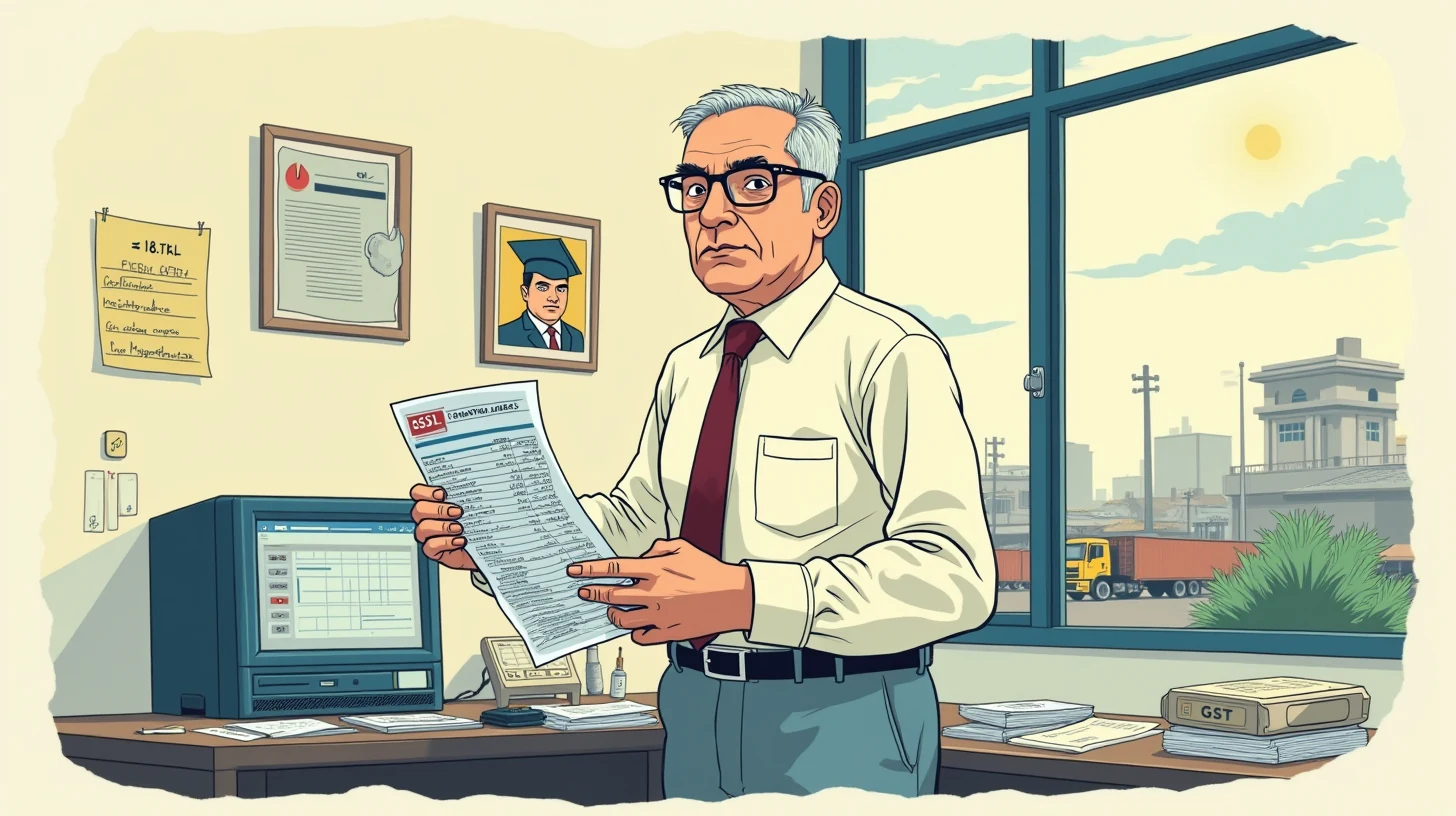
💼 Rajesh Sharma, 52 — Faridabad CA with eleven years specialising in GST compliance for small manufacturing units. In March 2026, a ₹18.7 lakh ITC mismatch notice arrived for one of his clients. The penalty would reach ₹5.2 lakhs. The client had built a shop. He had customers. He could not absorb this blow. Rajesh sat in his office and understood that he had four hours to identify the root cause or the client would face financial destruction.
🚨 The problem
GST reconciliation creates a crisis when a supplier's filed GSTR-1 does not match what the buyer received and claimed as Input Tax Credit. Small manufacturers often have minimal systems—invoices filed late, payments made in cash, and supplier documentation scattered. When a mismatch surfaces, it is not a question of whether the buyer cheated; it is a question of whether the system can reconstruct what actually happened. Rajesh's client had a ₹18,74,000 ITC claim flagged as mismatched. Only ₹56,100 had been verified against supplier GSTR-1 filings. The remainder—₹18,17,900—was unmatched. The GST officer demanded an explanation or a full reversal with penalty and interest. The amount was 19% of the client's annual revenue. The shortfall plus interest and penalty would be approximately ₹35 lakhs. A person reading that notice would see only a wall.
🚀 How GabFORGE helped
On March 15, Rajesh's daughter-in-law called and mentioned an AI agent that parsed documents and verified cross-portal data. Rajesh, skeptical of automation, asked for the link. He opened gabforge.ai and typed Dharmendra's situation in Hindi: a GST mismatch, a supplier with suspended registration, four invoices, ₹17.98 lakhs. The agent responded in minutes, identifying that Hindustan Fasteners' GST registration had been suspended on January 15—and all four invoices were dated after that. Under GST rules, you cannot claim ITC on invoices from a suspended supplier. This was not a due diligence failure; it was the supplier's liability. The agent recommended downloading the suspension certificate from the GST portal and framing the response to the officer as "buyer exercising reasonable care, supplier-side failure." Rajesh filed an amended GSTR-3B reversing the ₹17.98 lakhs. He downloaded the Hindustan Fasteners suspension certificate and attached it to the response with documentation of the three corrected invoices. The officer responded within four weeks with a revised notice: penalty of ₹2,10,000 instead of ₹5,20,000. Scaled for the fact that Rajprakash had exercised reasonable care. The unit could absorb it. ₹3.1 lakhs in penalty reduction flowed directly from identifying the root cause in ninety seconds.
🇮🇳 Why this matters
Faridabad's HSIIDC industrial estate hosts nearly three thousand small manufacturing units. By conservative estimate, one-tenth of them—three hundred units—face a GST reconciliation notice or mismatch claim in any given year. Each notice creates a crisis for the owner and, if unresolved, a compliance failure for the chartered accountant. The crisis is not the mismatch itself; it is the intersection of three systems: the GST portal's automated flagging, the small manufacturer's incomplete record-keeping, and the accountant's inability to query three government portals simultaneously. An agent that can surface the root cause in ninety seconds is not replacing the accountant's judgment; it is buying back the afternoon that the accountant would have spent in administrative sorting.
A GST notice reframed from buyer-fault to supplier-side-failure in minutes.