
The Agartala bamboo-rice maker and the FSSAI label bottleneck
Bipasa stood at the edge of the Bilonia forest, where Tripura meets Assam, and watched the checkpoint guard turn back her truck. Eight hundred bamboo tubes — rice and pickles, ready for a Durga Puja fair in Kolkata — sat in cardboard boxes in the bed. The labels, which she had written by hand with a permanent marker three weeks earlier, were the problem. No batch number. No expiry date. No manufacturer's address. No weight declared in grams. The guard said the labels did not meet FSSAI standards. He said they could not cross the border.
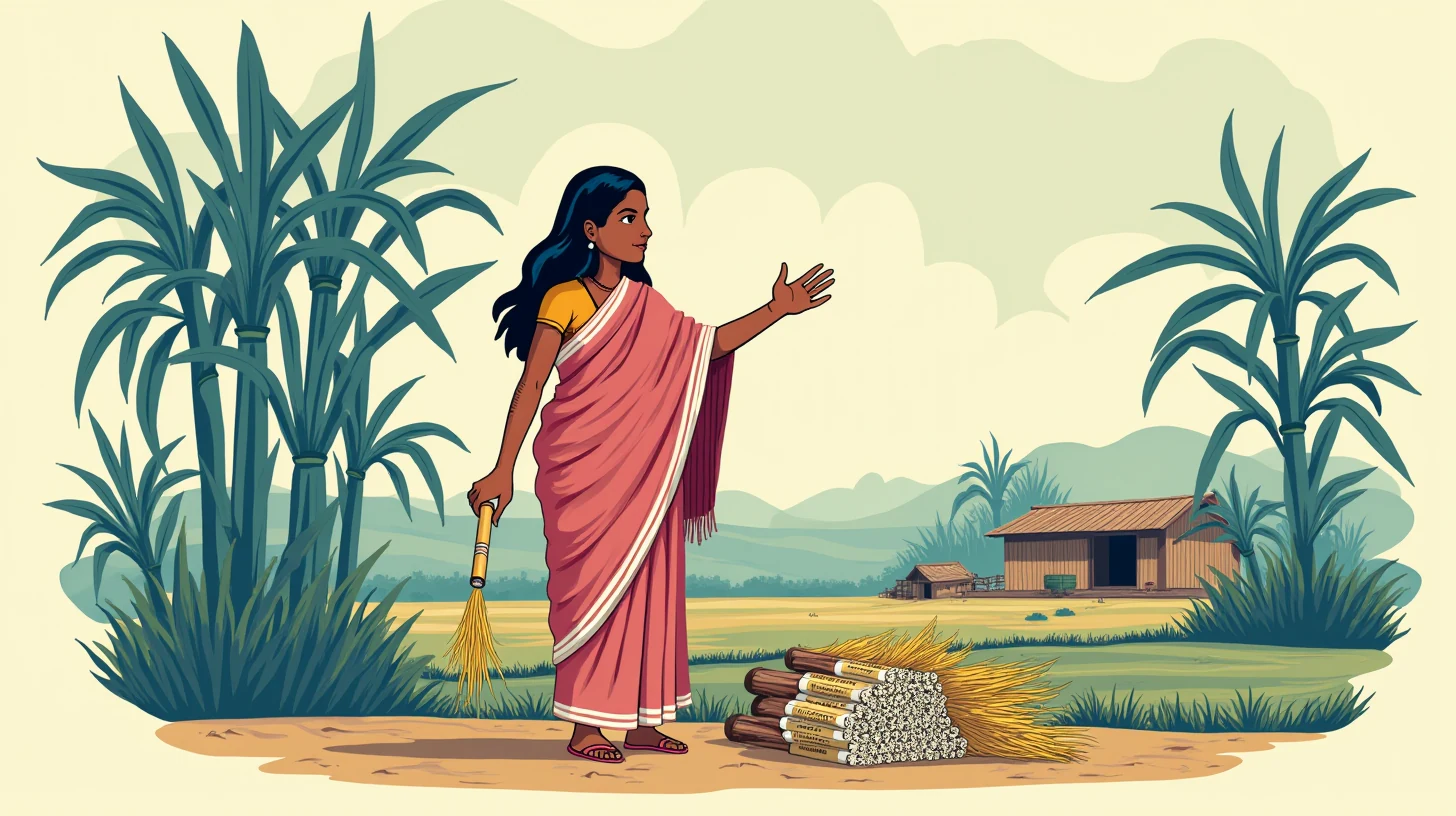
Bipasa was 36, the leader of a 12-member Self-Help Group called Mukul Sristi — which meant "beautiful creation" — and had been making bamboo-rice for eleven years. Her mother had taught her; her grandmother before that. The recipe was three generations old: long-grain basmati rice, soaked overnight, stuffed into fresh bamboo culms with a pinch of turmeric, steamed over a wood fire for forty-five minutes. The bamboo gave the rice a faint green-grass perfume and a natural sweetness that could not be replicated in a pot. Every tube came out different — the length of the bamboo determined the portion size, the age of the culm the flavour intensity. She sold them fresh to small restaurants in Agartala, and by arrangement to a Kolkata-based caterer who served them at weddings. She also made bamboo-shoot pickles — achaar, sour and crisp — in one-kilogram jars.
The Kolkata fair order had come in mid-April. A Bengali woman named Anuradha, who ran a catering business out of Ballygunge, had eaten Bipasa's rice at a wedding the year before and remembered it. She said she could sell two thousand tubes over the four-day Durga Puja festival if Bipasa could supply eight hundred by the first week of May. The money was urgent — the SHG's bamboo processing shed, a corrugated-iron structure on the outskirts of Agartala town, was failing. The roof leaked when it rained. The steam setup was held together with rope. Anuradha's order meant ₹24,000 gross — nearly half of what the SHG earned in six months. Bipasa had agreed.
The night before the truck was to leave, Bipasa had hand-written the labels. She had seen printed FSSAI labels before, on bottles of Amul buttermilk and packets of Haldiram's namkeen. She knew they needed a lot of information. But the nearest printing press in Agartala would have charged ₹800 for five hundred labels. She had no time. She wrote fast: "Bamboo Rice," "Best Before," and then a date she thought would be safe — thirty days out. She did not know that FSSAI required the manufacturing date, not just the best-before date. She did not know that the label had to state "FSSAI Registration Number." She did not write it.
At Bilonia checkpoint, five days later, the guard looked at the truck and said hand-written labels were not acceptable. He said they had to be printed. He said she needed a batch number and the registration number. He said if she wanted to cross into Assam, and then into West Bengal, she needed documents — an e-way bill, or a transit pass. She had a truck, rice, and a hand-written label. None of that was official enough.
Bipasa had to turn back.
🗓️ The annual bamboo harvest and SHG food processing rhythm
Every year, between mid-April and early June, the bamboo groves around Agartala grew new shoots. Bipasa's SHG — Mukul Sristi, registered under the Tripura Mahila Samity network — had used this window for a decade to source fresh bamboo culms, process them, and sell both fresh rice and pickled shoots into the April-May wedding and festival season. The Durga Puja season ran from September through November, but the spring and early summer monsoon window was the only time the bamboo was tender enough for steaming whole. In the off-season, the group made other products — turmeric powder, chilli paste, fermented soy — but bamboo-rice and bamboo-shoot achaar were the margin-makers. They paid the rent.
The SHG had never formalized. Bipasa had learned food processing from her mother, who had learned it by repetition, not from a textbook. There was no recipe written down, no batch record, no quality control sheet. The group had no FSSAI license, no GST registration, no MSME Udyam certificate. They operated in the cash economy of rural Tripura — they sold to restaurants and caterers who paid in cash, and they bought bamboo, rice, salt, and turmeric from local vendors who also dealt in cash. The government had never checked. No health inspector had ever knocked.
But the Kolkata market was different. Kolkata was a city two states away. The caterer Anuradha operated formally. She needed to be able to claim that her ingredients were licensed. She needed proof that Bipasa's food met standards. Bipasa did not know this, until the Bilonia checkpoint guard told her.
The timing was terrible. Anuradha's Durga Puja fair was five days away. The truck was full. The money was promised.
- 🎋
Mid-April — Bamboo culms mature
Fresh bamboo shoots emerge from the earth; culms harden over two weeks. The SHG scouts the grove and selects tender plants, ready for cutting.
- 🍚
Late April — Rice processing peak
The main window to cut culms, soak rice, and steam. Fresh rice is sold daily to restaurants in Agartala; bulk orders (like Anuradha's) are packed for export.
- 🥒
Mid-May through June — Bamboo-shoot pickle preparation
Leftover shoots are boiled, salted, and fermented. Jars are filled and sealed for longer shelf life. These are sold in the monsoon and dry seasons.
- 🗓️
July–August — Off-season processing
The bamboo no longer produces tender shoots. The SHG pivots to turmeric powder, chilli paste, and other shelf-stable products. Revenue drops 40%.
- 🎪
September–November — Durga Puja catering season
Wedding orders and catering contracts spike. The SHG sells preserved pickles and any remaining fresh rice stock. This is the second-highest revenue window.
⚠️ What very nearly happened
The checkpoint rejection was not just a delay. It was a signal that Bipasa's business model had hit a ceiling.
For eleven years, she had sold rice and pickles to buyers within Tripura or across the border to small caterers in Assam through personal relationships. No licenses, no labels, no inspections. The cash flowed. But the Kolkata order was the first time someone outside her personal network had approached her — someone who needed her to look like a formal business, not a kitchen operation. And she could not.
If she had turned the truck away, Anuradha would have called someone else. The Kolkata catering market was large and full of suppliers. Bipasa would lose the ₹24,000 order. But worse, she would lose Anuradha's trust. The woman had ordered 800 tubes expecting 800 tubes. Cancellation meant a bad reputation that would spread. Caterers talk.
The second-order consequence was the shed. Without the Kolkata money, the SHG had no capital to repair the roof. Monsoon season was three weeks away. If the roof failed during the heavy rain, the group could lose an entire batch of pickles to mold or contamination. The loss could be ₹30,000–40,000. And if a batch was lost to contamination, what then? They had no insurance. No working capital buffer. Bipasa would have to borrow from the microfinance group at 18% interest, or take a personal loan from the village money-lender at 24%. Both would take years to repay.
The checkpoint guard had said: come back when you have printed labels with FSSAI numbers. He had given her an instruction, but not a map. Bipasa did not know how to print an FSSAI-compliant label. She did not know what an FSSAI registration number was, or how to get one. She did not know that different food businesses needed different types of FSSAI license depending on their turnover. The SHG earned roughly ₹1.8 lakh per year — was that under ₹12 lakh? Over? Did the SHG need a Registration or a State License? And even if she figured that out, the nearest FSSAI office was in Agartala town, an hour's bus ride away. The office only took appointments on Mondays and Thursdays.
She had five days.
🌗 What changed
Three days later, Bipasa's nephew — a college student who worked part-time at a cyber cafe in Agartala — told her that a nonprofit had launched a free AI tool for small food businesses. He had seen it mentioned in a WhatsApp group for small traders. The tool was called GabFORGE, and it could help you understand FSSAI rules without hiring a consultant.
Bipasa was skeptical. She did not trust technology. She did not speak English well. But she was desperate. She had no other options. Her nephew walked her through it.
He opened the tool on his phone — a simple tablet interface with large buttons and text in Bengali. Bipasa spoke her question into the microphone: "Amra bamboo-rice korI, koT-o taka sal-e. FSSAI-r jonno ki proyojon?" (We make bamboo-rice; we earn about ₹1.8 lakh per year. What do we need for FSSAI?) — her voice, in Kokborok-tinged Bengali, was captured. She did not have to type.
The agent processed her words. Within thirty seconds, it replied, also in Bengali:
"Apnaar annual turnover ₹12 lakh er nichey, tai FSSAI Registration e registration korte hobe, state license noy. Registration e ₹100 fee, aur certificate paben 5 din er modhey online. Label-e likhte hobe: weight, batch number, manufacture date, FSSAI registration number, aur contact detail. Ei sara kichu FSSAI FoSCoS portal-e likhey takat ache."
(Your annual turnover is below ₹12 lakh, so you need FSSAI Registration, not a State License. The registration costs ₹100, and you'll get your certificate in 5 days online. Your label needs to show: weight in grams, batch number, manufacturing date, your FSSAI registration number, and contact details. The FoSCoS portal has all the templates you need.)
The agent then walked Bipasa through the FoSCoS portal step by step. It asked her for the SHG's name, address, and the types of food the group made. It pulled up the actual FSSAI FoSCoS form on the screen and showed her where to fill in each field. It explained that "turnover" meant total money the SHG earned in a year, not profit. It warned her that the FSSAI registration was valid for three years, and she would need to renew it by taking a food safety training certificate (available free from FSSAI FoSTaC).
Then the agent showed her something critical: the e-way bill format for inter-state transport. Bipasa had never heard of an e-way bill. The agent explained: if your food product is registered under FSSAI and has proper labels, you need an e-way bill to transport it across state lines. The e-way bill is created on the EWAY portal, takes five minutes, and costs ₹50. It is a digital document that shows a checkpoint inspector that the food is licensed and the transport is authorized. Without it, even with FSSAI labels, you can be stopped. With it, you almost always pass.
"E-way bill hote Apnaar FSSAI certificate number, product-er weight, packing-er date, aur destination likhte hobe. Portal-e fill kore, SMS-e ₹50 taka payment korle receipt paben."
(You'll need your FSSAI certificate number, the product weight, packing date, and destination to make the e-way bill. Fill it on the portal, pay ₹50 via SMS, and you'll get a receipt.)
Bipasa's nephew helped her complete the FoSCoS application on the spot. They filled in the SHG's details, uploaded a photo of the shed as a food facility, and submitted it. The portal showed an estimated processing time of 3–5 days.
Then they addressed the labels. The agent suggested that rather than printing new labels immediately, Bipasa should order labels from a local online printing service that could turn around an order within 24 hours. It gave her three options: Flexpress, Webprint, and a local Agartala printer that the agent knew had a fast service. The agent even drafted the label text so that Bipasa would not have to guess:
Product: Bamboo Rice (Bajra Chuler Bhat) Weight: 450g Batch No: BR-20260501 (Month and date) Manufactured: 01/05/2026 Best Before: 31/05/2026 FSSAI Reg No: [Once the agent receives the registration confirmation] Manufactured by: Mukul Sristi SHG, Agartala, Tripura Contact: [Bipasa's phone number]
Bipasa ordered one thousand labels from Webprint that same evening — a little extra in case of mistakes. Cost: ₹1,200. The labels arrived the next morning by courier.
On day three, the FSSAI FoSCoS portal sent her an email: her registration was approved. The FSSAI Registration Number was TR/FSC/21-10234. The certificate was valid for three years until May 2029.
On day four, Bipasa filled in the label text with her FSSAI number. On day five, the truck was reloaded with 800 bamboo-rice tubes, each with a complete, compliant FSSAI label. She created an e-way bill on the EWAY portal (she used the agent to walk through the form, step by step). The bill took seven minutes to fill, and her nephew paid the ₹50 fee using his phone. The bill was issued immediately.
At Bilonia checkpoint, the guard scanned her e-way bill on his phone, looked at the new labels, and waved the truck through. The trip to Kolkata took two days. Anuradha's caterers received the rice on time for the Durga Puja fair.
Before (Checkpoint Rejection)
₹0 order stuckHand-written labels with no batch number, no FSSAI number, no proper format. No e-way bill. Checkpoint guard turned back the truck. Order cancelled. SHG earned nothing from the Kolkata fair.
After (Compliant Shipment)
₹24,000 order completedPrinted labels with FSSAI Reg No, batch number, manufacturing date, weight. E-way bill issued and scanned at checkpoint. Truck crossed into Assam, then West Bengal, without delay. Anuradha received 800 tubes on time.
Future (Expanded Access)
₹5–7 lakh annual potentialWith FSSAI registration and e-way bill process documented, Bipasa can now reliably sell to caterers in Assam and Bengal. Repeat orders from Anuradha are expected. The SHG can repair the shed and hire a second batch of women.
🧭 Why we built it
The FSSAI system was not designed to exclude small food makers like Bipasa. It was designed to protect public health. FSSAI Registration — the light-touch license for turnover under ₹12 lakh — was specifically created for exactly this market: small SHGs, home chefs, street food vendors who could not afford the bureaucracy of a full State License.
The problem was that Bipasa did not know this. She did not know that FoSCoS existed. She did not know that "turnover" meant total revenue, not profit. She did not know that labels could be printed overnight. She did not know that an e-way bill was a five-minute process, not a week-long permit application. The checkpoint guard did not explain. He just said no.
The knowledge gap is enormous. There are an estimated 7.5 million food businesses in India. Roughly 70% operate without any FSSAI license — not out of defiance, but because the system speaks in forms and thresholds and categories, and the operator speaks in terms of recipes, customers, and cash. The form asks for "category of food." The operator thinks "rice and pickles." The form asks for "turnover." The operator thinks "I sold ten kilos today." The translation never happens.
The e-way bill was a second translation layer. It exists. The EWAY portal is free and fast. But if you have never heard of it, you cannot use it. The checkpoint guard does not volunteer the information. Your family does not know it. Your neighbour does not know it. You sit on a truck with eight hundred tubes and turn back.
What it does
- 🔍Reads Bipasa's turnover and tells her she needs FSSAI Registration, not State License
- 📋Walks her through the FoSCoS portal, field by field, showing her where to enter the SHG name, address, food types
- 📝Drafts the exact label text with weight, batch number, manufacturing date, FSSAI registration format
- 💳Explains the e-way bill process and the ₹50 cost; helps her fill in the form
- 🗂️Tracks the FSSAI registration timeline (submitted Day 1, approved Day 3) and reminds her of renewal in 2.5 years
What it does not do
- 🔒Does not log into Bipasa's FSSAI account; she enters her own credentials and data
- 💸Does not submit the ₹100 registration fee or the ₹50 e-way bill fee on her behalf
- ⚡Does not contact the checkpoint guard or negotiate on her behalf
- 📞Does not call Anuradha or Webprint; Bipasa manages those relationships herself
- ⚖️Does not advise her on taxes, GST filing, or business strategy — only the regulatory forms in front of her
Bipasa is not a special case. There are tens of thousands of SHG food makers across India in her position: they have a product, a market, and no formal status. The barrier is not regulation — it is clarity. They need someone to read the rule, translate it into their language, point at the form, and walk them through the fields. They need to know that FSSAI Registration is light and fast, not heavy and slow. They need to know that an e-way bill exists, and that it costs ₹50.
The agent — the tablet, the interface — is a translator. It takes the form in Hindi or English, and it explains it in Bengali. It takes the regulation, and it explains it in the context of the user's actual business. It says: "Your turnover is ₹1.8 lakh, which means Registration, which takes five days, which costs ₹100." It does not say "FSSAI registration requirements for micro food processing units." One is action. The other is noise.
GabFORGE became that translator because we noticed the gap. We saw food businesses stuck at checkpoints with hand-written labels. We saw SHGs with good products and no market access because they did not know that a three-day process existed to formalize them. We saw the rules were good. The system was good. The gap was just the voice that explains it.
🌱 What we hope happens
Six weeks after the Kolkata fair, Anuradha called Bipasa again. She wanted to place a standing order: 400 bamboo-rice tubes every two weeks, for her regular corporate catering contracts. The standing order would mean ₹12,000 every fourteen days — roughly ₹450,000 per year for the SHG, a 25-fold increase over the baseline.
But 400 tubes every two weeks meant that Bipasa would need help. She could not process all of it alone. She asked three other women from the village — Priya, Ananya, and Deepika — if they wanted to join the SHG and be paid a daily wage. All three said yes. The team grew from 12 to 15.
The shed roof was repaired in June, before the monsoon. The repairs cost ₹8,000. Bipasa also bought two new bamboo steamers and a small labelling machine that could stamp "Batch No" and dates without hand-writing. Cost: ₹6,000. She paid both from the first Anuradha cheque, with no debt.
In July, a government health inspector visited the shed — not for an inspection, but because the agent had flagged a compliance issue. The inspector asked about batch records. Bipasa had none. The agent suggested she keep a simple log: date, batch number, quantity made, quantity sold, where sold, any notes about the batch. The inspector approved this. It was light-touch oversight.
In August, Bipasa applied for PM FME — the Prime Minister Formalisation of Micro Food processing Enterprises scheme. The agent walked her through the application. PM FME offered a ₹10-lakh capital grant to upgrade the facility (35% of project cost, max ₹10 lakh). Bipasa submitted a proposal to build a small washing station, buy a commercial refrigerator for pickling, and upgrade the steaming equipment. The grant was approved in September. The total project cost was ₹28 lakh; her cost after subsidy was ₹18 lakh. She took a MUDRA Tarun loan for ₹10 lakh at 7.5% interest, and used cash reserves for the rest.
By November, the shed had running water, a proper sink, better ventilation, and labelled shelving. The team moved from 400 tubes per two weeks to 600. Anuradha placed a order for the Durga Puja season the next year — 1,200 tubes.
Bipasa also registered the SHG under MSME Udyam, which gave her a certificate that she could show to banks. With the Udyam certificate, the SHG qualified for priority lending and exemption from the Micro and Small Enterprises Development Act's payment protection clause — meaning if a large buyer like Anuradha delayed payment, the SHG had legal recourse.
What happened to Bipasa was not a subsidy, not a loan, not a policy change. It was clarity. The rules were there. The schemes existed. The FSSAI portal was free. The e-way bill was ₹50. The PM FME grant was waiting. No one had told her. No one had translated the system into Bengali and walked her through the form.
The hope is that what happened to Bipasa happens to ten thousand other food makers like her — in Meghalaya, in Jharkhand, in Odisha, in Chhattisgarh — people who have a product and a market and just need to understand which form to fill, in which order, in their own language. The hope is that the checkpoint guard becomes less of a blocker and more of a checkpoint. The hope is that formal and informal stop being a binary, and start being a spectrum — where a small maker can formalize just enough to cross a border, without having to become a corporation.
The hope is that the next time Bipasa's truck approaches a checkpoint, the guard sees the label, sees the registration number, scans the e-way bill, and just waves it through.
"Ei sara rule-ta je simple, tar jonno ami grateful. Ei-a nakhoj holei, amra abar choto shopke bibik thakta."— I'm grateful that these rules turned out to be so simple. If I had never found out about them, we would have stayed small, selling out of a tiny shop.