
His food stall sat on communal Khasi tribal land. Licenses required individual land ownership.
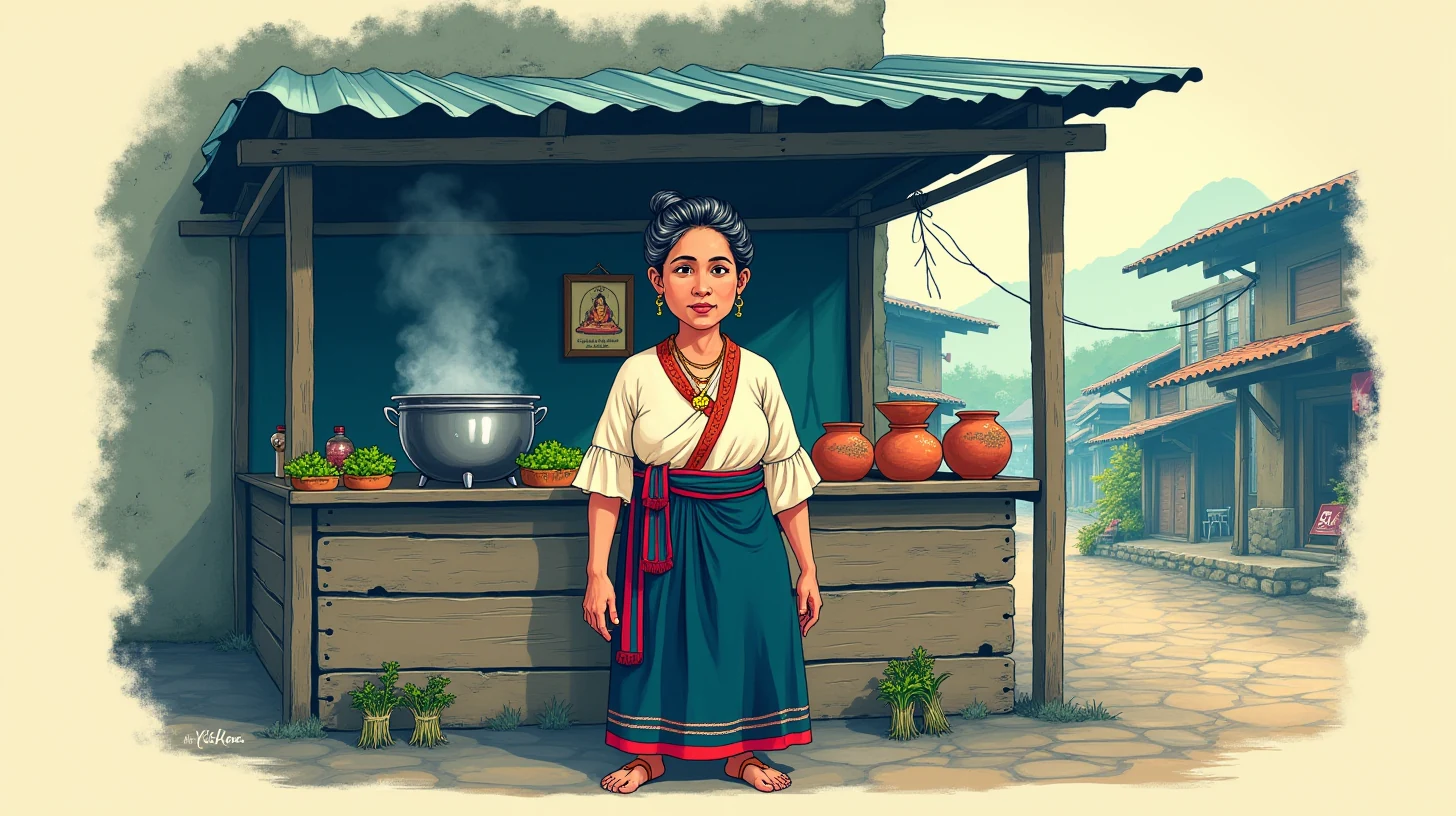
🍖 Khongmen, 48, runs a jadoh (traditional Khasi rice and pork dish) stall in Shillong, Meghalaya, on communal tribal land managed by the Khasi matrilineal clan. FSSAI licensing requires "proof of land ownership." But communal land is collectively owned by the clan, not individually by him. He had no individual title—only the clan's occupancy rights. Municipal authorities and FSSAI rejected his application because he couldn't produce land ownership proof. The stall was informal, yet licensing was technically impossible. 📋
🚨 The problem
Many tribal and communal-land areas (Meghalaya, Nagaland, Northeast India) have collective land ownership, not individual titles. Food businesses operating on communal land face a gap: regulatory systems (FSSAI, municipal) assume individual ownership, requiring title deeds or lease agreements. Communal land has neither—it has clan authority certification. The operator cannot satisfy the "ownership proof" requirement without surrendering communal rights or fraudulently claiming individual title.
🚀 How GabFORGE helped
Khongmen's daughter, who studied public administration, identified the clan-authority solution. The agent mapped the communal-land licensing:
- 🔍 Identified the tribal governance framework. Clarified that Khasi clan authority is the legitimate "owner" of communal land. An occupancy certificate from the clan is equivalent to a lease/use-right for licensing purposes.
- 📋 Structured the authority bridge. Agent drafted a letter to Khasi clan (Syiem Shnong) requesting an "Occupancy Certificate for Food Business Operations" stating that Khongmen has the clan's authorization to operate the stall.
- 📞 Coordinated with municipal and FSSAI. Agent submitted both the clan occupancy certificate and FSSAI application together, arguing that clan authority's certificate satisfied the "ownership proof" requirement in the context of tribal land governance.
Clan issued occupancy certificate. FSSAI accepted it as valid proof. ✅ Jadoh stall licensed. Khongmen registered as MSME with clan-authority occupancy noted.
🇮🇳 Why this matters
Northeast India and tribal zones have significant food businesses operating on communal land. Regulatory systems designed for individual ownership create invisible barriers. When authorities accept clan/community certificates as valid proof of occupancy rights, licensing becomes possible without destroying communal governance. The agent surfaces this bridge, enabling tribal food businesses to formalize while preserving land rights.
The long version has Khongmen's family history on the communal land, the licensing rejection, and the clan authority's occupancy certificate that bridged the gap.