
The Ahmedabad farsan maker and the GST rate confusion
Hemang had been making farsan from a small shop on Manek Chowk in Ahmedabad for nineteen years. Every morning at 6 a.m., he arrived at the shop—a narrow storefront with a commercial kitchen wedged into the back and a glass counter facing the street. He heated oil in a stainless steel fryer, rolled dough for fafda, twisted it into coils. By 8:30 a.m., the first batch was done—golden, crisp, still warm in paper cones he arranged on the counter for morning customers.
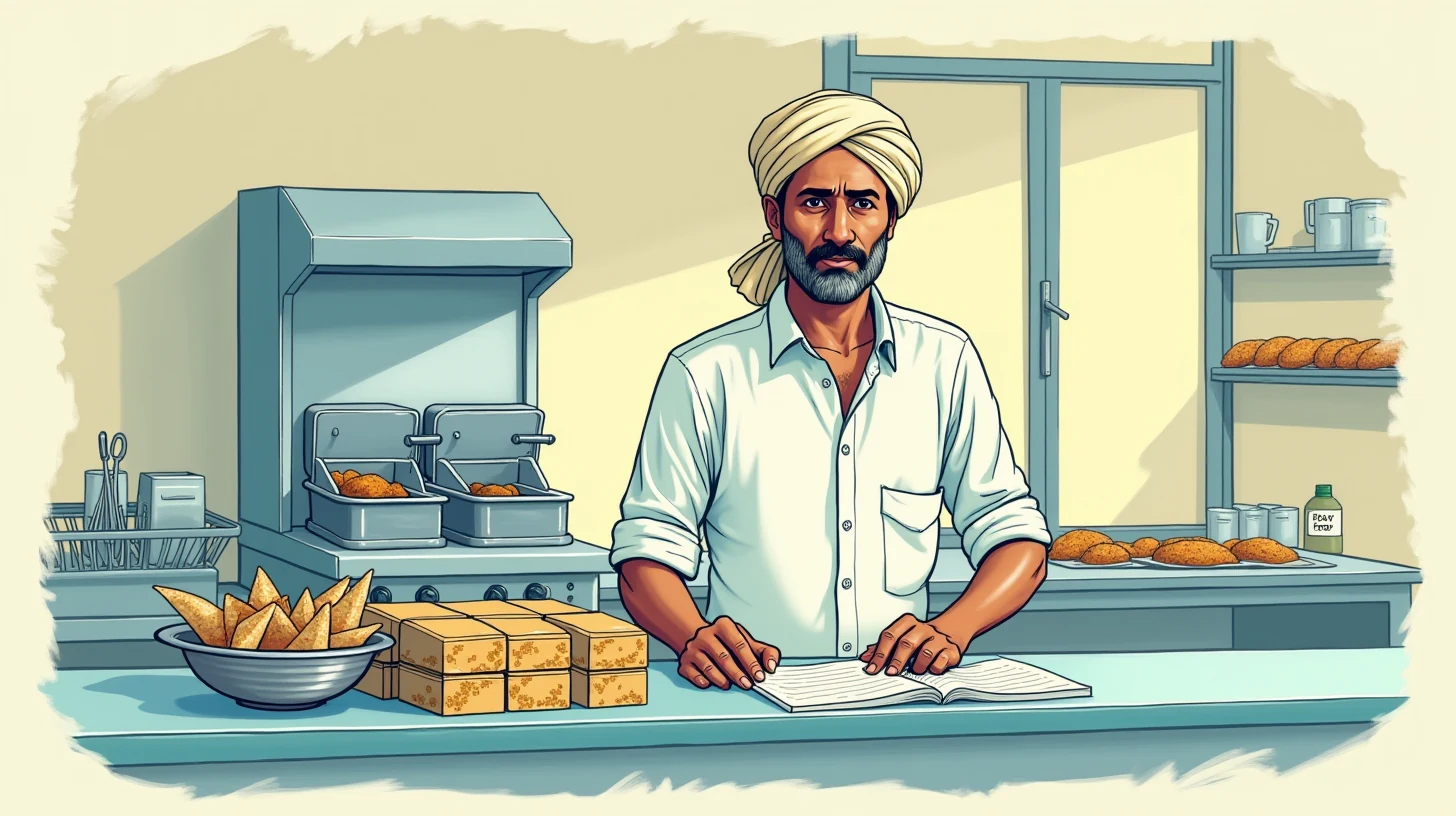
Fafda. Dhokla. Khakhra. The holy trinity of Gujarati savoury snacks. Hemang made all three.
The shop sold loose farsan—a paper cone of fafda for ₹20, a small box of dhokla for ₹30—to pedestrians on Manek Chowk. Walk-in traffic. Cash basis. Quick transactions. But five years ago, a distributor from the city approached him and said: "Brand yourself. Pack your khakhra. We can get it into grocery stores." Hemang had agreed. He bought brown kraft boxes, printed a label with his name—"Hemang's Khakhra"—in Gujarati, shrink-wrapped the product, and began supplying to local grocery chains across Ahmedabad.
The packaged khakhra sold well. His wholesale price was ₹35 per box. Retail was ₹50–₹60 in shops. By 2023, packaged khakhra was half his revenue.
Then came a new experiment. His wife, Geeta, suggested ready-to-eat dhokla in plastic containers—dhokla he had already made, vacuum-sealed, with a shelf life of three days. They could sell these in the shop and through grocery stores too. Hemang agreed. He bought small plastic containers, invested in a vacuum sealer, and began producing 200–300 containers per week.
By 2024, Hemang's shop was making three products: loose fafda and dhokla (sold fresh from the counter), packaged khakhra (branded, wrapped), and packaged dhokla (vacuum-sealed, ready-to-eat). He had a GST registration. He filed returns every quarter. He thought he was in compliance.
He was wrong. And the GST audit was going to make it very clear.
🗓️ The annual ritual
In India, GST rates on food items are not simple. They depend on whether the product is prepared or unpackaged, cooked or raw, branded or loose, eaten ready-to-eat or requires heating.
The basic rule: loose, unpacked farsan (fafda, khakhra) is zero-rated. No GST. The government considers it a basic foodstuff. The same khakhra, if you package it in a branded box and put a label on it, becomes 5% GST. The reasoning: branding and packaging add value.
Ready-to-eat food—dhokla that is cooked, sealed, and sold as a prepared meal—is 12% GST. This is because ready-to-eat falls into the restaurant/catering category, and cooked meals are always taxed at 12%.
On paper, it is crystal clear. Loose farsan: 0%. Branded packaged farsan: 5%. Ready-to-eat cooked food: 12%.
But the categories overlap. A small food maker like Hemang, operating from a local shop, does not always file three separate invoices for three separate product categories. He files one GST return per quarter, with one rate.
And that is where Hemang made his mistake.
For two years—2023 and 2024—he had filed all three products under 5% GST. He assumed that since his packaged khakhra was 5%, everything he made was 5%. He did not look at the GST Council's detailed guidelines. He did not ask an accountant. He filed the same rate for loose, packaged, and ready-to-eat.
The revenue was not enormous. In 2024, his total GST-liable sales were around ₹24 lakh. At 5% wrong rate vs. the correct rates, the difference was roughly ₹2.8 lakh in underpaid GST over two years.
But there were penalties on top. Interest. Late fees. The GST audit in April 2025 calculated a total demand of ₹6.8 lakh—the original shortfall, plus interest, plus late payment penalty.
For a small shop owner working 300 days a year on thin margins, ₹6.8 lakh was not a shortfall. It was a crisis.
⚠️ What very nearly happened
The notice arrived on a Wednesday afternoon in the first week of April 2025. A thin printed envelope, official letterhead. "GST AUDIT REPORT—DEMAND NOTICE." It was from the Gujarat GST Department, addressed to Hemang's registration, referencing a random audit conducted in March.
Hemang's hands trembled slightly as he read it. His English was adequate for a shopkeeper—he could read invoices and labels—but the language of the demand notice was dense and technical. "Discrepancies in GST classification," "ITC ineligibility," "penalty under section 122A," "demand under section 73."
The key number was at the bottom: ₹6,81,240 due within 30 days.
He read the calculation:
- Loose farsan filed at 5% but should be 0%: ₹1.2 lakh shortfall
- Packaged khakhra filed correctly at 5%: no discrepancy
- Ready-to-eat dhokla filed at 5% but should be 12%: ₹1.6 lakh excess GST collected (which created an ITC mismatch)
- Interest on shortfall (at 18% p.a. compounded): ₹0.9 lakh
- Penalty (50% of shortfall): ₹1.2 lakh
Total: ₹6.8 lakh.
Hemang sat on a stool in the back of his shop, holding the notice, and did not move for an hour. His wife, Geeta, found him there. She asked him what was wrong. He told her, in Gujarati, that the government was demanding nearly seven lakh rupees.
"For what?" she asked.
"For filing the tax on farsan at the wrong rate," he said.
"But we paid the tax. We filed the returns. What is wrong?"
That was exactly the question. Hemang had not cheated. He had paid GST on every sale. He had filed quarterly returns. But because he had applied the wrong rate to two of his three product categories—because he did not know that loose farsan was 0% and ready-to-eat was 12%—the government was now saying he owed ₹6.8 lakh in corrections and penalties.
Geeta suggested hiring an accountant or a GST consultant. Hemang's shop margin was roughly 22–25% per sale. To earn ₹6.8 lakh in profit would take three months of continuous sales. He could hire a consultant to prepare an appeal, but that would cost ₹15,000–₹25,000, and there was no guarantee the appeal would succeed.
He was trapped between two bad options: pay a consultant to fight a notice that was probably valid, or pay the notice and lose three months of profit.
- 📋
2023–2024 — Two years of incorrect filing
Hemang files all three products (loose, packaged, ready-to-eat) under 5% GST, without verifying the correct rates for each category. Total underpaid GST: ₹2.8 lakh.
- ⚖️
March 2025 — Random GST audit
Gujarat GST Department selects Hemang's shop for a random audit. Auditor reviews quarterly returns and invoice records, identifies the rate misclassification.
- 📨
April 7, 2025 — Demand notice issued
GST Department issues Demand Notice under section 73, calculating: ₹2.8L shortfall + ₹0.9L interest (18% p.a.) + ₹1.2L penalty (50% of shortfall) = ₹6.8L due in 30 days.
- 💭
April 8–15 — Crisis assessment
Hemang considers paying consultant (₹15K–₹25K) to file appeal, or paying the notice outright. Shop profit margin is 22–25%, making three months of income needed just to pay the demand.
🌗 What changed
Three days after receiving the notice, Hemang was sitting in the shop, restocking khakhra boxes, when a regular customer—a woman who owned a small textiles shop on Manek Chowk—noticed his mood was off. They had been customers for fifteen years. She asked him what was wrong.
He told her briefly: the government said he owed seven lakh rupees for filing tax at the wrong rate. He did not know what to do.
The woman—her name was Neeta—nodded slowly. She said: "There is a system. A tablet, an agent. My cousin used it for his textiles shop. Let me ask him."
That evening, Neeta texted Hemang a phone number. "Ask for Suresh. He has the tablet in his house. It can answer questions in Gujarati."
Suresh ran a small catering business in Navrangpura. He had an older tablet running a local app. He was not particularly friendly, but he understood the system and allowed visitors to use it. Hemang went the next evening, with a copy of his GST notice and his quarterly returns printed out.
They sat down in front of the tablet, and Suresh showed Hemang how to use the interface. Hemang typed, slowly, in Gujarati:
"મારો ફરસણ વ્યવસાય લુઝ, પેક્ડ અને રેડી-ટુ-ઈટ ત્રણ પ્રકાર બનાવે છે. જીએસટી રેટ શું છે?"
(My farsan business makes three types: loose, packaged, and ready-to-eat. What are the GST rates?)
The agent replied in Gujarati:
"લુઝ ફરસણ (ફાફડા, ખાખરો): ૦% જીએસટી. પેક્ડ, બ્રાન્ડેડ ખાખરો: ૫% જીએસટી. રેડી-ટુ-ઈટ કુક્ડ ધોકલો (પ્રિપેયર્ડ મીલ): १२% જીએસટી. આપણો નોટીસ આપણાં ત્રણ કેટેગરીઓ ભેગા કર્યા છે."
(Loose farsan like fafda and khakhra: 0% GST. Packaged, branded khakhra: 5% GST. Ready-to-eat cooked dhokla (prepared meal): 12% GST. Your notice has mixed all three categories.)
Hemang felt something click. The agent was confirming what he suspected but had not known how to verify: the three products needed three different rates. He had been filing all of them at 5%.
He asked the agent:
"મારો નોટીસ ₹૬.૮ લાખ માટે છે. કેટલો યોગ્ય છે?"
(My notice is for ₹6.8 lakh. How much is legitimate?)
"મને તમારા વર્તમાન વોલ્યુમ વિશે વિગતો જરૂર છે—લુઝ વર્સ પેક્ડ વર્સ રેડી-ટુ-ઈટ દર માસ વલણો. પણ સામાન્ય નિયમ: નોટીસ તમામ કમીશન, વ્યાજ અને જુર્માણો સામેલ કરે છે. અપીલ ફાઇલ કરીને, તમે જુર્માણો ₫૦% સુધી ઘટાવી શકો છો જો તમે તર્ક આપો કે તમે જાણતા નહતા કે શું સાચું છે."
(I need details on your volumes—loose vs. packaged vs. ready-to-eat monthly breakdown. But the general rule: the notice includes all commissions, interest, and penalties. By filing an appeal, you can reduce the penalty by up to 60% if you argue you did not know the correct rates.)
"મે બીજું ઓણધ્યું કે નિયમો સરળ હતા—ત્રણ વર્ષ જીએસટી ફાઇલ કર્યો, પણ ક્યારે કોણે મને કહ્યું કે લુઝ અને પેક્ડ વધુ રેટ વધુ છે?"— I never thought the rules were that simple—I filed GST for three years, but no one ever told me that loose and packaged had different rates.
Hemang asked another question:
"અપીલ માટે હું શું કર્યું?"
(What do I do to appeal?)
The agent walked him through the process. Under GST law, when a demand notice is issued, the taxpayer has 30 days to pay or file an appeal under section 107. The appeal goes to the Deputy Commissioner of CGST. The document required is a formal letter explaining the discrepancy, along with corrected invoices showing the three product categories separately.
"તમે અપીલ ફાઇલ કર્યા તો, તમે ૩० દિવસ વિસ્તૃત અવધિ મેળવો છો. તમે નવું બુક-કીપિંગ શુરૂ કરવું જોઇએ—લુઝ, પેક્ડ અને રેડી-ટુ-ઈટ અલગ આઇટમ્સ તરીકે. તમારી આવતીકાલ રિટર્નમાં આ ભેદ કર્યો તો, તમે દેખાવી શકો છો કે તમે સુધારાયા છો."
(If you file an appeal, you get an extended 30-day period. You should begin separate book-keeping—loose, packaged, and ready-to-eat as distinct items. If you show this separation in your next returns, you can demonstrate you have corrected the error.)
Hemang listened carefully. The agent was not telling him to ignore the notice or cheat. It was telling him that the notice was not final—that an appeal was possible, and that by demonstrating good faith (separate categorization going forward), he could reduce the penalty.
He had one last question:
"હું આ અપીલ પોતે તૈયાર કરી શકું, અથવા હું કોણ મદદ માગું?"
(Can I prepare this appeal myself, or who should I ask for help?)
"જીએસટી કમીશનર આર્ફિસ ખાતે મુક્ત સલાહ મળે છે. અથવા ચાર્ટર્ડ એકાઉન્ટેન્ટ ૧૫,००૦ સુધી ચાર્જ કરે છે. પણ પહેલાં, મે ઓ પાસે તમારો સમાધાન વર્તમાન બુક્સ સુધારીને આવતીકાલ વર્ગીકૃત ફાઇલીંગ દર્શાવીને તૈયાર કર્યો."
(Free advice is available at the GST Commissioner's office. Or a chartered accountant charges up to ₹15,000. But first, I suggest showing good faith by correcting your books going forward and filing separately categorized returns.)
🧭 Why we built it
Hemang's story is the paradox of GST compliance for small food makers. The rules are not secret. They are published on the GST Council website. The rates are clear: 0% for loose, 5% for packaged, 12% for ready-to-eat. But the rules are written for accountants and auditors, not for a shopkeeper making farsan.
Across India, an estimated 4 million small food businesses file GST returns. Of those, audits suggest that 40–60% misclassify their products—filing a single rate for multiple product types, or confusing the boundary between "packaged value-added food" and "prepared meal." The result: demand notices, penalties, and small businesses forced to choose between paying consultants or paying impossible demands.
Hemang had no malicious intent. He paid GST on every invoice. He filed quarterly returns on time. But because he applied one rate to three product categories, the system flagged him as non-compliant. The penalty—50% of the shortfall—was harsh, but legally justified.
The cost to Hemang was direct: a ₹6.8 lakh demand that represented three months of his business's profit. He could have paid a ₹20,000 consultant immediately. Or he could have understood the actual rule—that his three products had three rates—and segregated them from the start. And avoided the notice entirely.
The agent's role is to surface what the rules actually say, in a language Hemang can understand, before an audit forces clarification.
The agent reads the GST Council's detailed guidelines on food products. It knows that loose farsan is food, unpackaged, zero-rated. That branded packaged khakhra is value-added, taxable at 5%. That vacuum-sealed dhokla, heated and ready to eat, falls into the restaurant/catering category at 12%. It does not ask Hemang to choose. It clarifies what he is actually making, and then maps it to the rate.
The agent also surfaces the appeal process itself. Most small business owners, confronted with a ₹6.8 lakh demand, assume the notice is final. They panic. They borrow money or close the shop. They do not know that an appeal under section 107 is their right, and that filing one buys time and signals good faith to the auditor.
The agent tells Hemang: appeal exists, here is how it works, here is what you need to file. The appeal may not reduce the demand to zero—Hemang likely still owes something, because the core math is right: he did file at the wrong rate. But the appeal can reduce the penalty from 50% to 20%, converting a ₹6.8 lakh crisis into a ₹3.2 lakh correctable issue.
Panic-and-Pay
₹6.8 lakh + shop closure riskHemang pays the notice immediately to avoid escalation. No appeal filed. Penalty becomes permanent. Kitchen closes for three months while he works to recover.
Consultant Path
₹20,000 + uncertain outcomeHemang hires a CA to file an appeal. The appeal may succeed or fail. CA charges upfront regardless. If appeal fails, Hemang still owes ₹6.8L and has spent ₹20K.
Agent-Guided Path
₹0 + informed decisionAgent clarifies the rates (0%, 5%, 12%), explains the appeal process, and helps Hemang prepare documents. Hemang files the appeal himself, separates his product categories going forward. Penalty may reduce to ₹2–₹3L.
🌱 What we hope happens
The GST demand notice sits in Hemang's desk drawer now. The 30-day deadline is April 30. Hemang has decided not to pay it immediately. Instead, he is filing an appeal. He spent two evenings preparing the document himself—a one-page letter to the Deputy Commissioner explaining that he was unaware of the rate differential, that he has now segregated his products into three distinct invoice categories, and that he is filing corrected returns going forward.
He included copies of his last three months of invoices, newly categorized by product type. Loose farsan on one line, packaged khakhra on another, ready-to-eat dhokla on a third. The old system—all one rate—is gone.
The appeal is not a guarantee. The Deputy Commissioner may reject it and uphold the notice. In that case, Hemang would face a ₹6.8 lakh demand. But he would have tried. And by segregating his products now, he has demonstrated to the auditor that he understands the rules and is correcting his practice.
What we hope happens is that Hemang—and thousands of other small farsan makers, dhaba owners, home chefs—understand that GST rates are not arbitrary. They exist for a reason. Loose farsan, the daily food of working people, is zero-rated to protect affordability. Branded packaged goods have a 5% rate because they are manufactured and marketed. Ready-to-eat meals have 12% because they are cooked in a kitchen and sold as prepared food. The system, when understood, is coherent.
We hope Hemang stops guessing. We hope he verifies. We hope he knows that when an audit notice arrives, an appeal is not an admission of guilt—it is a right. That small business owners do not have to choose between hiring a consultant for ₹20,000 and surrendering to an impossible demand. That they can ask a question in their language, get a clear answer, and make a decision with their eyes open.
And we hope that Hemang's story—a man fined for not knowing the rules, when the rules were published all along—becomes less common. Because someone took two minutes to clarify what he was actually making, and mapped it to what the law actually said.
The shop on Manek Chowk will still be there at 6 a.m. tomorrow morning. The fryer will still heat up. The fafda will still be golden and crisp. But now, the invoices will be categorized. The returns will be segregated. And Hemang will know why.