
The Amritsar langar-style dhaba and the trust vs. business knot
Harjit opened the steel shutter of his dhaba at 5:47 a.m., as he had every morning for nineteen years, the sounds of Amritsar waking up around him. Hall Bazaar, the narrow lane leading west toward the Golden Temple, was already filling with devotees on foot, three-wheelers honking softly, the smell of anise and cardamom from chai stalls mixing with incense smoke drifting down from the city's oldest gurdwaras.
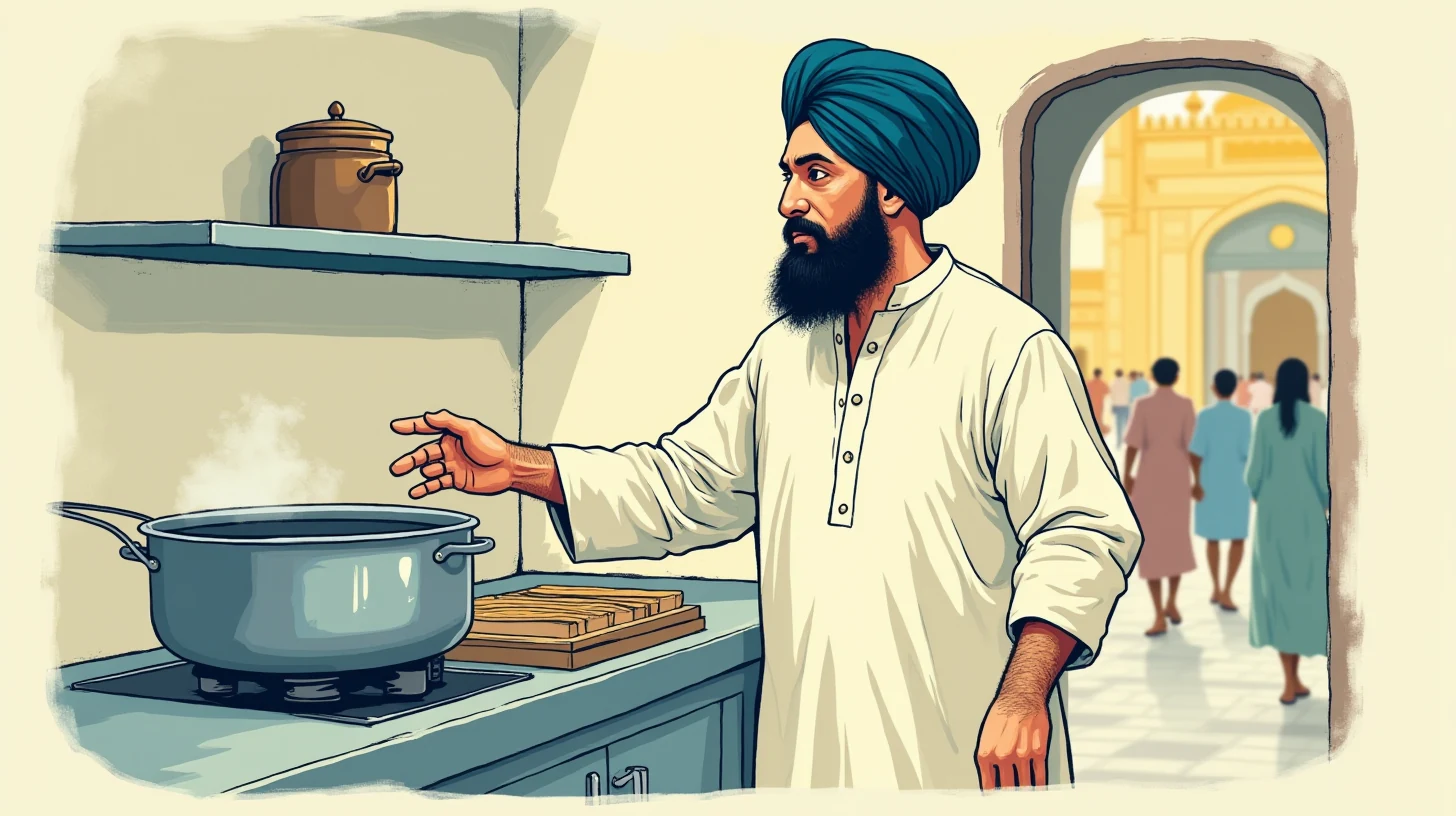
The dhaba was barely ten feet wide and twelve feet deep—a galley kitchen with a single tava on a gas burner, a massive steel pot for dal, and a metal counter where he rolled paratha, kheer, and pooris by hand. No seating inside. Customers stood on the pavement, balanced plates on their palms, ate quickly, and left. In winter he fed maybe sixty people a day. In summer, during the pilgrim season around Baisakhi and in the months before and after it, he served three hundred. Some paid ₹40 for two parathas and a cup of tea. Others dropped what they could into a terracotta box beside the counter—₹10, ₹5, sometimes a two-rupee coin. And many came with a whispered request: "Do you have a free meal today?" Those he never refused.
The free meals were not charity in his head. They were langar—the Sikh tradition of feeding anyone who walks through a door, regardless of caste or faith or rupee. Harjit's father had run a small langar attached to the gurdwara two streets over; his grandfather before that. When Harjit decided not to work the family's fields in nearby Tarn Taran and moved into the city at twenty-eight, he'd carried the idea with him. He saved ₹2.3 lakh, rented the spot, and built something in between: a business that was also a langar. Some days it worked. Some days his own wife, Simran, would say, "Harji, we will not eat tonight if you keep giving free parathas to every traveler," and she was not entirely joking.
By 2026, the dhaba had become a fixture of Hall Bazaar. Harjit was known—not famous, but known. Devotees came back. Guides who brought pilgrims to the Golden Temple sometimes directed them to his counter. By his own rough count, he served four hundred people on a full pilgrim season day, perhaps seventy percent paid, thirty percent sliding-scale or free. His annual gross, as best as he could estimate without formal accounting, was somewhere between ₹18 lakh and ₹22 lakh—the numbers shifting year to year with the pilgrim flow, the monsoon harvest, the price of wheat and ghee. Some of that came from the donation box. Some from direct sales. And on the morning of February 14, 2026, when an Income Tax official in a pressed shirt arrived with a folder of papers, Harjit realized that the system had no word for what he actually was.
The IT notice demanded that he file returns as a business. He had paid no income tax in nineteen years. The unpaid tax, calculated from his "estimated turnover," came to ₹3.2 lakh plus penalties. But when he mentioned the donation box—the money he did not keep, the meals he gave for free—the IT official's expression had shifted. "That is not income," the official had said. "That is a separate matter. It may be charity. Or it may be tax evasion disguised as charity." And then, as an afterthought: "Consult a lawyer. I will give you sixty days."
A week later, a different official from the Charity Commissioner's office had walked in. She had been kind, almost apologetic, and she had asked to see his records. He had shown her the donation box, which he emptied once a week and counted on his kitchen counter in front of Simran. The monthly average was ₹8,200. "This," the Charity Commissioner's official had said slowly, "suggests that you are running a charitable enterprise. You may need to register as a trust or a charitable society to protect the donated funds legally. Otherwise the Income Tax will claim those donations as personal income." And then the harder question: "Are you a business or a charity?"
Harjit had not answered. He did not know the answer. He was both, or he was neither, or the system simply had no box for him.
Three weeks later came a notice from the Food Safety and Standards Authority of India—FSSAI. The notice was polite but firm. His dhaba, as a food establishment, was required to hold a valid FSSAI license. FSSAI registration, for businesses under ₹12 lakh turnover, could be obtained online through FoSCoS in two weeks. But his estimated turnover exceeded ₹12 lakh, which meant he needed a full State License from the Punjab Food and Drug Administration. The application required that he classify himself as a "food business operator." The form had no box for "food business that is also langar."
By mid-February, Harjit found himself holding three overlapping bureaucratic languages. Income Tax saw turnover and wanted a business return. Charity saw donations and wanted a trust deed. FSSAI saw customers and wanted a State License. Each classification came with a different legal consequence, a different tax burden, a different future. And none of them fit the reality of what he had built.
On the morning of March 3, 2026, a neighbour, Priya, who worked in a law office downtown, had suggested something. "There is an AI tool now," she had said, handing him a tablet. "My boss uses it for client classification questions. Try asking it the knot directly—what you are, exactly—and what the law actually says." She had shown him how to open the browser to the GabFORGE agent and how to type in Punjabi, in the Gurmukhi script his mother had taught him to write in school.
He had typed, slowly and with effort, one question: "ਮੇਰਾ ਧਾਬਾ ਬਿਲਕੁਲ ਵੀ ਲੰਗਰ ਵੀ ਹੈ ਅਤੇ ਕਾਰੋਬਾਰ ਵੀ ਹੈ। ਕਿਉਂ ਆਈ ਟੀ, ਚੈਰਿਟੀ, ਤੇ ਐਫ ਐਸ ਐਸ ਏ ਤਿੰਨੇ ਆਪਣਾ ਆਪਣਾ ਸਵਾਲ ਪੁਚ ਰਹੇ ਹਨ?" — My dhaba is both langar and business completely. Why are Income Tax, Charity, and FSSAI each asking their own question?
What came back changed how he understood the problem itself.
🗓️ The annual ritual
For decades, food businesses in Punjab had operated in an informal ecosystem. A dhaba owner, whether in Amritsar or Ludhiana or Patiala, paid rent, bought ingredients cash-forward from the wholesale mandi, cooked, sold to whoever came, and kept whatever remained. Tax authorities largely ignored businesses below a certain visibility. Health authorities showed up once a year, took a small bribe wrapped in a piece of paper, and left. The Charity Commissioner's office, headquartered in Chandigarh, was distant and rarely intervened in local food service.
But since 2015, the rules had tightened. GST registration became compulsory above ₹20 lakh turnover (later revised to ₹40 lakh in some exemptions, but the principle remained). FSSAI licenses, once treated as a checkbox, began to be enforced through surprise inspections. Digital payment trails—Zomato orders, Swiggy, even Google Pay transactions—made turnover visible to the tax authority in ways a purely cash business could not hide. The system was not designed to catch Harjit. But it was designed to categorize him, and categorization was what he could not survive.
The three regulatory bodies saw his business through separate lenses, each lens making assumptions that were true for their own domain but false for Harjit's reality.
Income Tax saw money moving through the donation box and assumed it was personal income that he was trying to avoid taxing. Under the Income Tax Act, donations to a registered charity could be deducted from income; unregistered donations were income. The IT authority's assumption was sensible if Harjit were a purely commercial operator using a fake "charity" front. But Harjit was genuinely both—the donation box was real, the free meals were real, and so were the paid sales.
The Charity Commissioner saw the donation box and the free meals and assumed Harjit should register as a trust. A trust, under the Charitable Societies Act and the Public Trust Act, would protect the donated funds, ensure they were used for the stated charitable purpose, and give Harjit some legal shelter. But a trust required formal registration, bylaws, regular audits, and the filing of annual accounts. Harjit had never filed an account in his life. More critically, a trust structure would tie the free meals to formal charity law and would require him to formally separate the "business" income from the "charitable" income—which meant splitting his dhaba into two legal entities, a near-impossible restructuring.
FSSAI saw the customers and the food production and classified him as a food business operator, which he was. A business needed a license. But the license application asked for "turnover" and "classification as business operator," and Harjit could not honestly fill out the form because his business was also not a business in the conventional sense. If he declared turnover at ₹20 lakh, he needed a State License. If he declared it at ₹10 lakh, he needed only Registration. But the money moving through the donation box made the true number a question of interpretation. Was a donation part of his "turnover"? Legally, it should not be. But the Charity Commissioner's warning hung over him: if he did not register as a charity, the income tax authority would count it anyway.
The knot had three strands, each pulling in a different direction, and Harjit had no way to unknot them on his own.
- 📨
February 14 — Income Tax notice arrives
An IT official demands registration and back-tax of ₹3.2 lakh on estimated turnover. The notice assumes all money flowing through the dhaba is taxable income.
- 🏛️
February 21 — Charity Commissioner's query
A separate official suggests Harjit register as a trust to protect donated funds. Registration would separate 'charity' from 'business' legally, but requires formal restructuring and audits.
- ⚖️
February 28 — FSSAI State License demand
FSSAI classifies Harjit as a food business operator needing a State License, not FoSCoS Registration. The license form requires him to declare turnover and classify as 'business'—but the donation box complicates the declaration.
- ❓
March 3 — The question takes shape
Harjit asks the agent: am I a business, a charity, or something else? What does the law actually say about a hybrid model?
⚠️ What very nearly happened
If Harjit had done nothing—if he had simply ignored the three notices and continued as before—the consequences would have cascaded over six months. The IT authority would have assessed him under the "deemed income" clause, assuming turnover at the Charity Commissioner's estimated ₹20 lakh and levying ₹4.8 lakh in back-tax plus penalties, potentially ₹8 lakh total. The Charity Commissioner, left unanswered, would have filed a report flagging the dhaba as an unregistered charitable enterprise, which would have triggered a separate investigation and a demand to register as a trust within ninety days. The FSSAI, on follow-up, would have levied a penalty of ₹50,000 for operating without a valid license, and a second penalty of ₹50,000 on the next inspection, and on the third, closure.
Three separate crises. Three separate timelines. All happening simultaneously.
But the more immediate catastrophe was the choice the notices implicitly forced. If Harjit registered as a trust, he would have legal shelter for the donation money, but he would lose the ability to run a for-profit business within the same legal entity. The trust structure would require him to separate "langar activities" from "commercial food sales," each with its own accounting, its own license, its own tax treatment. He could theoretically run a trust that owned the langar side and a separate business that ran the paratha counter, but that would require two licenses, two GST registrations, two bank accounts, two sets of books. The complexity would exceed his capacity to manage it, and the compliance costs would consume the thin margin he made on the paid sales. More likely, he would have to choose: be a trust (keep the langar, lose the business income), or be a business (keep the paid sales, lose the legal protection for donations).
The second option was to pay the back-tax and register as a simple business. This would satisfy Income Tax and FSSAI. But it would leave him vulnerable to the Charity Commissioner, whose follow-up could force a retroactive claim that the donations were never actually charitable gifts but income that he had failed to declare. Worse, paying back-tax on donations he had never intended as personal income would establish a precedent: the government had now officially treated his langar box as his property. Future donations could be claimed as income again. The langar would become taxable. He might have to charge for free meals. Or he might have to shutter the dhaba entirely.
The third option—formal charity registration—would put him in a different knot. A registered trust must have trustees, bylaws, and oversight. Harjit could not simply say, "I am a trust." He would have to establish a legal entity, register it with the Charity Commissioner in Chandigarh, and have it approved. The process took two to three months. The registration fee was ₹1,200. But more troubling was the legal definition: a charitable trust must be "in perpetuity" and "for the public good." It cannot have a profit motive. Once registered, he could not sell parathas for ₹40 and also claim that the business was charitable. The trust definition would force him to choose—either the langar was a charity and the paratha sales were a separate for-profit business, or the entire enterprise was a for-profit business with some donation revenue.
By early March, Harjit had begun to understand the shape of the knot. It was not really a problem with his business. It was a problem with how the law saw his business. The law assumed that money movement was either purely commercial (taxable as income) or purely charitable (protected as donation). It had no language for a space in between, where a person could be both. The three regulatory bodies were not conspiring against him; they were simply operating within their own rules. But their rules did not intersect at a point where Harjit could stand.
🌗 What changed
On March 4, 2026, at 6:15 a.m., Harjit handed the tablet to Simran and read the agent's response aloud while she prepared the morning's wheat dough. The agent had broken down the issue into three separate legal questions, and the answer to each one changed how he understood the whole.
The agent said:
"ਤੁਸ਼ਾਂ ਦਾ ਧਾਬਾ ਸਚਮੁਚ ਦੋ ਅਲੱਗ-ਅਲੱਗ ਕਮਾਈ ਸਰੀਤ ਹਨ: ਪਹਿਲਾ, ਸਿੱਧੀ ਨਕਦੀ ਕਿਉਂ ਤੁਹਾਡੇ ਗ੍ਰਾਹਕ ਪਿਆਲਾ ਖਰੀਦ ਰਹੇ ਹਨ—ਇਹ ਕਾਰੋਬਾਰ ਹੈ। ਦੂਸਰਾ, ਦਾਨ ਪਿੱਟੀ ਵਿੱਚ ਜੋ ਰੁਪਾਏ ਆ ਰਹੇ ਹਨ—ਗੁਰੂ ਜੀ ਦੀ ਲੰਗਰ ਰੀਤ ਦੇ ਅਨੁਸਾਰ। ਕਾਨੂੰ ਵਿੱਚ ਆਂ ਦੋਵੇਂ ਵੱਖ ਹਨ। ਦਾਨ ਰੋਜ਼ ਖੱਬ ਆਯ ਨਹੀਂ ਹੈ ਜੇ ਤੁਸ਼ਾ ਇਹ ਦਿਖਾ ਸਕ ਕੀ ਦਾਨ ਬਿਨਾ ਸ਼ਰਤ ਦੇ ਪਿਆ ਹੈ ਅਤੇ ਲੰਗਰ ਵਿੱਚ ਖਰਚ ਹੋ ਗਿਆ ਹੈ।"
(Your dhaba is actually two separate income streams: first, the direct cash when your customers buy meals—that is business. Second, the donations in the box—that is langar in the style of the Guru. In law these are two separate things. Donation is not taxable income if you can show it was given unconditionally and spent on langar.)
"ਸਬਕੁ ਚਲੋ ਹਨ: ਆਂ ਪੀ-ਡੀ ਫਾਰਮ ਆਨਲਾਈਨ ਭਰ ਸਕ ਹੋ, ਦੂਸਰਾ, ਖੁਦ ਕਾਨੂੰਨੀ ਟਰਸਟ ਬਨਾ ਸਕ। ਲੇਕਿਨ ਦਾ ਸਬ ਤੋਂ ਬਿਹਤਰ ਰਾਹ ਹੈ: ਆਂ ਮਾਮੂਲੀ ਤੋਂ ਸੋਲੋ ਪ੍ਰੋਪ੍ਰਾਈਟਰ ਕਾਰੋਬਾਰ ਤੋਂ ਫੀ ਸਰਕਾਰ ਲਈ ਦੋ ਦਸ਼ਾ ਰਿਖਾ ਕਰ ਸਕ—ਕਾਰੋਬਾਰ ਦਾ ਕਟਾਊ ਰਿਕਾਰਡ ਅਤੇ ਲੰਗਰ ਦਾ ਵੱਖ ਰਿਕਾਰਡ।"
(There are several paths: first, you can fill the PD form online. Second, you can create a legal trust on the side. But the best path is this: as a sole proprietor business with the government, you can keep two separate accounts—one for business income and one for langar donations.)
The breakthrough was not legal; it was structural. The agent was saying that under Indian law, a sole proprietor business could have multiple income streams, each tracked separately. Harjit's business income—the ₹40 per paratha, the ₹25 per cup of tea—could be declared as business revenue for Income Tax and FSSAI purposes. The donation box—the ₹8,200 per month given without condition—could be recorded separately as donation income. For FSSAI, since his business revenue (from paid sales) might hover around ₹12–₹14 lakh per year, he could qualify for simple FSSAI Registration under FoSCoS, not a full State License. For Income Tax, he would register as a business but could claim the donation income separately, and if he could show that those donations were spent on langar (free meals, ingredients, electricity for langar operations), he could argue that the net business income was lower.
The trick was documentation. The agent explained:
"ਖ਼ਾਨਾ ਪ੍ਰਬੰਧਨ ਵਿੱਚ ਸਬ ਤੋਂ ਵੱਡਾ ਅਖਰੀਜ਼ਾ ਹੈ: ਜੋ ਰੁਪਾਏ ਕਥਿਤ ਲੰਗਰ ਭੀ ਹੈ ਤੇ ਕਾਰੋਬਾਰ ਵੀ ਹੈ। ਜੋ ਦਾਨੇ ਪਤੁ ਵਾਲਾ ਖਟਾ, ਅਜਿਹੀ ਸਿਮਾ ਹੈ: ਤੁਸ਼ਾ ਦੀ ਘਿ਼ਉਪ਼ ਆਣ ਵਿੱਚ ਦੋ ਲਾਈਨ ਜਿਸ ਕਰਨੀ: 'ਬਿਕਰੀ' ਅਤੇ 'ਦਾਨ'। ਫੇਰ, ਤੁਸ਼ਾ ਦੀ ਰਸਦ ਖਾਤਾ—ਪਾਠ, ਘਿ਼ੀ, ਅੰਨਸ਼ਖ—ਭਿਜੂਬ ਚਿੰਨ ਭਿੱਜਬ। ਕੌਣ ਰਸਦ 'ਬਿਕਰੀ' ਵਿੱਚ ਗਊ ਅਤੇ ਕੌਣ 'ਦਾਨ' ਵਿੱਚ—ਇਹ ਤੁਸ਼ਾ ਰਿਕਾਰਡ ਕਰਨਾ। ਫੇਰ ਬਾਕੀ ਸਭ ਆ ਕਵੀ ਕਰਨਾ ਹੁੱਤਰ ਸਨਾ ਹੈ।"
(The biggest snare in food business is that the rupee is both langar and business. But here is a boundary: in your ledger you must keep two lines: 'Sales' and 'Donations.' Then, in your supply account—flour, ghee, spices—you label which ingredients went to 'Sales' and which to 'Donations.' Once you have that record, the tax authority can no longer claim that all donations were personal income.)
"ਵੱਡਾ ਸਵਾਲ ਅਬੇ ਬਾਕੀ ਹੈ: ਆਯ ਟੈਕਸ ਆਖਦਾ ਹੈ ਕੀ ਤੁਸ਼ਾ ਕਾਸ਼ 'ਲੰਗਰ' ਮਹੱਬਤ ਮੇਠਾ ਭਿੱਜਮ ਜਾਂ ਬਿਸਵਾਸ ਬਿਕਰੀ ਕਵੀ? ਆਂ ਸਵਾਲ ਤਾ ਪ੍ਹਰ ਆਂ ਬੈਠ ਪੁੱਛਿਆ ਜਵੇ।"
(The big question remains: does Income Tax believe that you run langar out of conviction or out of business calculation? That question is yours to answer when you meet them.)
The distinction was subtle but critical. The agent was not telling Harjit that he could evade taxes by claiming his donations were charity. Rather, it was saying that if Harjit could show that his langar was a genuine, separately accounted activity—with its own records, its own supply costs, its own logic—then the tax authority could not claim the langar box as personal income. The business income would be taxable. The langar donations would be tracked. The two would be visible as distinct activities, which was what the law actually allowed.
The last sentence from the agent—"That question is yours to answer when you meet them"—was the most important. The agent was not solving the problem. It was showing Harjit how to reframe it so that he could have a conversation with the tax authority from a position of understanding, not desperation.
What it does
- 🗂️Keep two separate ledgers: one for sales income, one for donation receipts, with matching supply allocations.
- 📋File a business income tax return declaring only the sales income and explaining the separate langar accounting.
- 💸Apply for FSSAI Registration (not State License) if paid-sales income is demonstrably under ₹12 lakh per year.
- 🔍Show the tax authority a clear operational boundary: meals sold to paying customers vs. meals distributed free from donations.
What it does not do
- 🔒Does not hide donation income from tax authorities—it records and explains it separately.
- ✅Does not automatically make donations exempt from tax—it makes them visible so the authority can verify whether they are actually charitable.
- 💳Does not eliminate the need for licenses or formal records; it clarifies which license level is appropriate based on true business revenue.
- ⚖️Does not guarantee that the tax authority will accept the split; it simply gives Harjit evidence to argue his case.
🧭 Why we built it
Harjit's problem is not unique. Across India, the line between business and charity is blurred in thousands of daily operations: a home chef in Bangalore who sells meal boxes but also feeds her elderly neighbors for free; a community kitchen in Chennai run by a women's collective that sells catering services but distributes free lunch to school children; a small restaurant owner in Pune who offers discounted meals to widows and widowers, subsidizing the discount from his business margin.
The regulatory system was built for a world where business and charity were separate. A restaurant was a business. A gurdwara langar was a charity. You registered as one or the other. But in practice, in India's informal economy, these boundaries have always been porous. A dhaba is where a meal is sold, but also where community life happens. A langar is a charitable act, but it requires resources, skill, and a sustainable economic model. The separation is artificial.
The problem is not malice. It is that three separate statutory bodies—Income Tax, Charity Commissioner, FSSAI—each have their own classification systems, and those systems do not overlap. Income Tax sees "turnover" and assumes it is all business income. The Charity Commissioner sees donations and assumes a registered charitable enterprise. FSSAI sees food production and assumes a business licensing requirement. None of them have a framework for a person who does two things in one space, for one community, with one set of hands.
The agent's role, here, is not to tell Harjit how to evade regulation. It is to show him how to make the complexity visible. Once it is visible—once Harjit has separate accounts, once he can point to the ledger and say, "Here is what I sell. Here is what I give free. Here is the cost allocation for each"—the three regulatory bodies have something to work with. They have documentation. They can ask hard questions, yes. But the questions will be real questions, not rhetorical ones designed to force Harjit into a binary choice.
"ਮੈਂ ਲੰਗਰ ਬੰਦ ਨਹੀਂ ਕਰ ਸਕਦਾ ਅਤੇ ਕਾਰੋਬਾਰ ਵੀ ਬੰਦ ਨਹੀਂ ਕਰ ਸਕਦਾ। ਦੋਨੂੰ ਇਕ ਹੈ।"— I cannot shut down the langar, and I cannot shut down the business either. They are one.
This is the voice of millions of informal food operators in India. They are not trying to cheat the system. They are trying to live in it—to make an honest living while also serving their community. The system sees this as contradiction. But it is not a contradiction; it is a way of life that the system simply was not designed to accommodate.
By documenting the two income streams separately, Harjit is not evading his tax obligation. He is clarifying what his actual tax obligation is. The business income from paratha sales is taxable, and he should pay it. The donation box is a separate question—one that requires a real conversation with the Charity Commissioner and Income Tax, not a unilateral guess by bureaucratic systems that have never met him.
The schemes that could help—MSME Udyam, MUDRA, PM FME—are all designed for registered businesses. None of them have space for a hybrid. But once Harjit registers as a business and documents his langar as a separate cost category, he can apply for MSME status (which unlocks priority lending and payment protection under the MSMED Act), access MUDRA loans for equipment upgrades, and potentially (in future policy revision) apply for food processing subsidies if he decides to scale the paratha production. The documentation also protects him if he chooses to eventually register his langar as a separate trust—he will have years of records showing the two activities as distinct, which makes the legal separation much cleaner.
🌱 What we hope happens
Three months later, in June 2026, Harjit filed his income tax return for FY 2025–2026, declaring ₹14.2 lakh in business income from paratha sales and ₹9.8 lakh in documented donation receipts. The return also included a note: the langar is a separate activity, accounted for separately, with supply allocation by meal type. The cost of langar meals—flour, ghee, cooking fuel—is deducted from the donation pool. The return was signed by Simran, who had become the co-keeper of the accounts, and by a local tax consultant whom Harjit paid ₹2,000 to review the filing.
The Income Tax authority did not accept the return on the first pass. An audit notice came in August. But this time, when Harjit and the consultant went to the IT office in downtown Amritsar, the conversation was different. The official had the ledgers in front of him, the allocation records, the evidence that the donation box was distinct from the sales counter. The question was no longer whether Harjit was trying to hide income. The question was whether the allocation was reasonable. Could he really justify spending ₹7,200 per month on ingredients for the langar portion? The consultant had walked through the numbers—flour, ghee, lentils, spices—and yes, it was reasonable. An adjustment was made. Harjit owed back-tax on ₹2 lakh of "misallocated" income. It was not zero. But it was ₹90,000, not ₹3.2 lakh. And it was a conversation, not a diktat.
The FSSAI registration was filed in July, after Harjit had confirmed that his business income from paid sales was ₹14.2 lakh—just above the ₹12 lakh threshold. He needed a State License from the Punjab FDA, not FoSCoS Registration. The application took six weeks. The health inspector who visited the dhaba in August found that Harjit had cleaned, labelled supplies, and put up a water-quality certificate. No violations. The license was issued for three years. The cost was ₹1,500. The relief was disproportionate to the money.
The Charity Commissioner's follow-up came in September. Harjit was asked whether he intended to register the langar as a separate trust. He said not yet, but he had the ledgers and could show that the langar was a genuine, sustained activity. The official suggested that if the langar grew—if donations exceeded ₹5 lakh per year and were being reinvested in community meal programs—Harjit should consider a trust registration. It would give him legal protection and potentially open access to CSR funds and charitable grants. But there was no ultimatum. The official said, "Keep the records as you are. If you decide to formalise, the records you have will make the registration process simple. And if you do not, the records protect you from the claim that you were hiding income."
What had changed was not the rules. The rules were the same. What had changed was the visibility. By making the dual income structure explicit, Harjit had transformed himself from a person trying to hide from the system into a person who was transparent with the system, even though the system had no native way to describe him. The three regulatory bodies still did not have a joint framework. But they no longer had to guess. They could see what was actually happening.
Harjit kept the tablet. He had begun to use it for other questions—how to track ingredients, how to fill out the MSME Udyam registration (which he was considering for the business side), how to navigate GST if he ever started selling packaged parathas. The agent was not making decisions for him. It was translating the regulatory language into a form he could understand, and translating his reality into a form the regulation could accept.
By October 2026, a year after the first notices arrived, Harjit stood at the shutter of his dhaba on a full pilgrim season day. The donation box had seen ₹280 that morning. Thirty-seven free meals had gone out. Forty-two paid meals. The accounts were separate, but the kitchen was one. The langar was no longer hidden or ambiguous. It was documented, distinct, and real. And the business that sustained it was no longer a knot that pulled in three directions, but a framework that Harjit could explain, a foundation from which he could grow.
The system had not changed. But Harjit's place in it had become clear.