
The Hyderabad biryani house owner and the GHMC renewal scatter
Ismail's Hyderabadi biryani house occupies a narrow shopfront on Laad Bazaar in Charminar, Hyderabad, squeezed between a spice merchant and a silk sari weaver. The kitchen is visible from the street—a wood-fired handi sits on a traditional raised clay stove, and the smell of slow-cooked mutton, basmati rice, and crushed mint draws the lunch crowd at half past twelve every day. The restaurant is sixty seats, a mix of low tables and cushioned benches, the walls lined with old photographs of Hyderabad and a framed family tree going back to his grandfather.
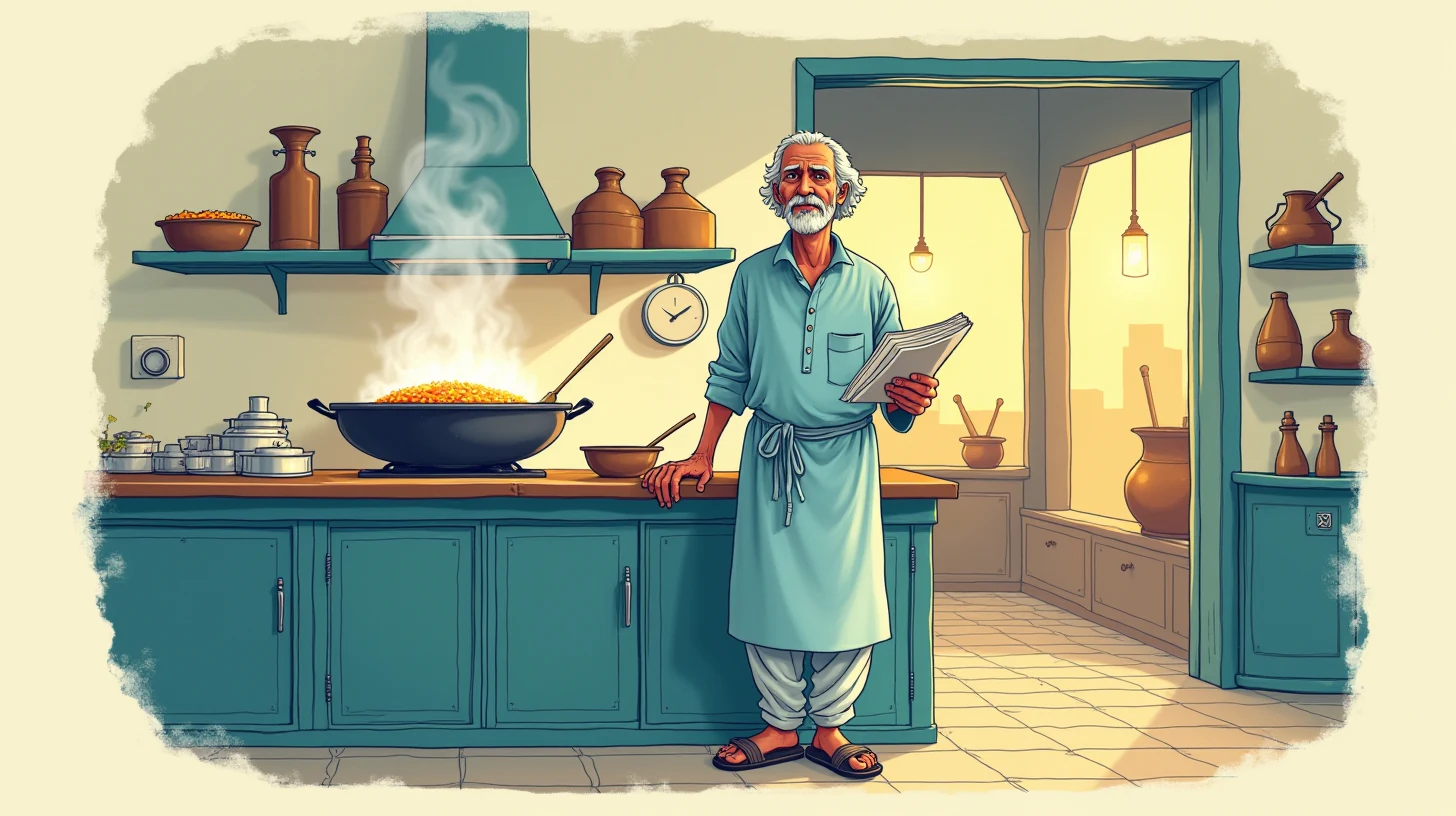
Ismail is forty-five. He has run this restaurant for twenty-three years, took it over from his father in 2001, and his grandfather opened the first shop in 1952 in the same Old City location. He does not think of himself as a businessman—he thinks of himself as a keeper of a recipe, a scheduler of kitchen staff, a counter of daily cash, a man who knows that customers come at fixed hours and the biryani must be ready on time. He counts the license renewals the same way he counts the days between dinner service and lunch service: as an interruption to the actual work.
On the 15th of March 2026, the GHMC food safety officer arrived without warning. She carried a file, a handheld device for making photographic notes, and a clipboard. She asked for the trade license. Ismail walked to the back office, where he kept his documents in a metal box beneath the counter. He pulled out the FSSAI license. It was still valid—renewed the previous August. He pulled out the fire NOC. Valid. He pulled out the GST certificate. Valid. But when he looked for the GHMC trade license, the one that says "Food Establishment License," he found that it had expired on the 17th of February.
The officer fined him ₹11,000 on the spot. She said the premises would be sealed in seven days unless the renewal was submitted, with a formal apology letter, to the GHMC health office at Bahadurpura. The fine was not the worst part. The threat of sealing was. In seven days, if the license was not renewed, the restaurant would shut—no income, no hope of recovering the fine.
Ismail had been renewing licenses for two decades. But this particular year, he had conflated the GHMC renewal date (17th February) with the FSSAI State License renewal date (10th August), and he was tracking the August date. The two documents look similar. They renew on different dates. They are issued by different authorities with different websites.
The core problem was this: Ismail's restaurant held seven separate licenses, and each one renewed on a different date, with different authorities, and through different online portals.
🗓️ The annual ritual
In Hyderabad, a food establishment holds at least seven licenses. The GHMC trade license, issued by the Greater Hyderabad Municipal Corporation. The FSSAI State License, issued by the Food Safety and Standards Authority of India at the state office in Hyderabad. The fire NOC, issued by the Telangana Fire Services. The PCB (Pollution Control Board) consent, issued by the Telangana State Pollution Control Board. The GST registration, registered with the Central Tax Authority. The Shops & Establishments Act license, issued by the State Labour Department. And a municipal eating-house license, sometimes issued separately by GHMC ward officers.
In Ismail's case, the seven licenses were:
- GHMC Trade License (Food Establishment) — Valid for two years. Renewed 17th February 2024. Next due: 17th February 2026. Cost: ₹500 to ₹2,000 depending on seating capacity. Issued and renewed through the GHMC online portal (https://ghmc.gov.in).
- FSSAI State License — Valid for one to five years. Last renewed 10th August 2022. Next due: 10th August 2025. Cost: ₹2,000 to ₹5,000. Issued through the online FSSAI portal in Hyderabad.
- Fire NOC — Valid for one year. Renewed 3rd May annually. Cost: ₹400 to ₹800. Issued by Telangana Fire Services at the local fire station in the Charminar ward.
- PCB Consent to Operate — Valid for five years. Last renewed 12th June 2019. Next due: 12th June 2024. Cost: ₹2,500 to ₹5,000. Issued by the Telangana Pollution Control Board.
- GST Registration — No expiry, but requires annual return filing (GSTR-1, GSTR-3B, GSTR-9). Last filed: March 2025. Filed through the GST online portal.
- Shops & Establishments Act License — Valid for one year. Renewed 30th September annually. Cost: ₹200 to ₹500. Issued by the State Labour Department, Hyderabad.
- Municipal Eating House License — Valid for two years. Last renewed 17th February 2024 (same date as GHMC trade license, but a separate document). Cost: included in GHMC trade license fee.
None of these renewal dates align. The GHMC renews in February. The FSSAI renews in August. The fire NOC renews in May. The PCB renews in June. The Shops & Establishments renews in September. Tracking manually is impossible for a man who starts work at 6 a.m. and closes the restaurant at 11 p.m.
For twenty-three years, Ismail had written the renewal dates on a small pocket calendar each year and carried it in his shirt pocket. But in 2025, he had moved to a digital calendar on his phone, and he had manually entered only the dates he remembered—the FSSAI (because it is the most visible and branded) and the fire NOC (because the fire officer comes to inspect). He had missed the GHMC renewal date entirely.
⚠️ What very nearly happened
The fine was ₹11,000. But the cost of sealing would have been catastrophic. If the premises had been sealed, the restaurant would have been closed for at minimum thirty days—the time required to file the renewal, wait for inspection, and obtain the new license.
In thirty days, Ismail would have lost ₹3,60,000 in gross revenue (₹12,000 per day average, 60-seat restaurant, two seatings at lunch, one at dinner, 30 days). His staff of eight—one head cook, one assistant cook, one prep hand, one cleaning hand, two front-of-house servers, one cashier, one errand hand—would have gone unpaid for thirty days. His suppliers (the meat merchant at Begum Bazaar, the rice wholesaler in Osman Nagar, the vegetable vendor at Charminar market) would not have been paid their standing dues, which would have threatened his credit for future orders. And the reputation damage—"biryani house sealed by health department"—would have lingered on Google reviews and Zomato.
Sealing would have cost him not ₹11,000 but ₹5,00,000 or more in direct and indirect losses.
This is not theoretical. A restaurant owner in Jubilee Hills had been sealed for a missed PCB renewal in 2024. The closure lasted forty-five days. When the restaurant reopened, the lunch crowd had shifted to competitors, and it took six months to recover. The owner eventually sold the business to a relative and took a job managing a hotel kitchen instead.
So when the GHMC officer gave Ismail the seven-day deadline, he understood that he was not facing a fine. He was facing the possibility of losing a family business that had been in his name for twenty-three years.
🌗 What changed
The next morning, his nephew Arjun—who works in IT and lives in Bangalore but visits Hyderabad once a month—was in the restaurant for breakfast. Ismail told him about the fine and the sealing threat. Arjun listened, and then he pulled out his tablet and opened a browser.
"Let me show you something," Arjun said. "There is an agent—software—that can track all seven licenses in one place."
Ismail was skeptical. He had used a computer before. The GST portal was confusing. The FSSAI portal required passwords. He did not trust online systems to hold his business-critical information. But Arjun persisted, and by mid-morning, Arjun had registered Ismail on the tablet and shown him how to input the seven license details.
The agent asked a series of simple questions in Telugu and Urdu:
- What is the name of the restaurant?
- How many seats?
- What is the FSSAI license number?
- What is the GHMC trade license number?
- When did the FSSAI license last renew?
- When did the GHMC license last renew?
- When did the fire NOC last renew?
- When did the PCB consent last renew?
Ismail answered each question, reading from his metal box of documents. The agent took the answers and began to cross-reference them against public records—pulling up the GHMC database, checking the FSSAI registry, verifying the fire NOC against the Telangana Fire Services database.
Within a few hours, the agent had produced a unified renewal calendar in Telugu. All seven renewal dates were laid out, color-coded by month, with 60-day alerts, 30-day alerts, and 7-day alerts flagged. The GHMC trade license (February 17th). The FSSAI State License (August 10th). The fire NOC (May 3rd). The PCB consent (June 12th). The Shops & Establishments (September 30th). The GST annual return (March 31st). All visible in one place.
Arjun spoke to the agent in Telugu while Ismail listened:
"میجانی، اب سب لائسنسس کی تاریخیں ایک جگہ ہیں۔ GHMC فروری میں آتا ہے، FSSAI اگست میں۔ اگلی بار آپ کسی کو بھی نہیں بھولیں گے۔"
(Now all the license dates are in one place. GHMC comes in February, FSSAI in August. Next time you won't forget any of them.)
The agent then offered to help with the immediate crisis. It said:
"GHMC کی رिنیول کے لیے آن لائن درخواست ڈالی جا سکتی ہے۔ مجھے اپنا لائسنس نمبر دیں۔ میں GHMC پورٹل پر اپ ڈیٹ چیک کروں گا۔"
(The GHMC renewal can be submitted online. Give me your license number. I will check the update status on the GHMC portal.)
The agent walked through the renewal process for the GHMC trade license—which forms to file, which documents to upload, how to pay the ₹800 renewal fee, where to submit the apology letter. It generated a draft of the apology letter in Telugu:
"سب سے معزز صاحب، میں نے گہمسی ٹریڈ لائسنس کی تجدید میں تاخیر کا معافی مانگتا ہوں۔ اب میں فوری طور پر تجدید کر رہا ہوں۔"
(Respected Sir, I apologize for the delay in renewing the GHMC trade license. I am now renewing it immediately.)
Arjun helped Ismail file the renewal application that same afternoon. The agent tracked the status through the GHMC portal and sent a confirmation message when the application was received. Within five days, a renewal officer from GHMC visited the restaurant, inspected it, confirmed that it met food safety standards, and issued a new trade license.
The fine remained. Ismail paid the ₹11,000. But the sealing was averted.
- ⚖️
March 15 — GHMC inspection, fine issued
Food safety officer conducts unannounced inspection. Trade license expired Feb 17. Fine: ₹11,000. Sealing deadline: March 22 (seven days).
- 📱
March 16 — Agent input, license data cross-checked
Arjun shows Ismail the agent. Ismail inputs all seven license numbers and renewal dates. Agent cross-references against GHMC, FSSAI, fire services databases.
- 📋
March 16–17 — Unified calendar and renewal guidance
Agent produces a single renewal calendar in Telugu, with all seven license dates, alerts, and renewal instructions for each.
- 📨
March 17 — Application filed, apology letter drafted
Agent walks through GHMC renewal process, drafts apology letter, generates fee payment instructions. Ismail files online same day.
- ✅
March 20 — Inspection passed, new license issued
GHMC officer visits, verifies compliance, issues new trade license. Sealing threat withdrawn. Fine still owed but premises secure.
"میرے والد نے یہ ریستوران کھولا تھا۔ میں نے اسے چلایا۔ میں نہیں چاہتا کہ میری غفلت سے یہ بند ہو جائے۔ لیکن ایک شخص کیسے سات تاریخیں یاد رکھ سکتا ہے؟"— My father opened this restaurant. I have run it. I did not want my carelessness to close it. But how can one person remember seven dates?
🧭 Why we built it
The problem Ismail faced is not unique to him. It is structural.
India's food regulatory system is layered across six authorities—municipal, state, central, and special-purpose boards. Each authority has a separate online portal, separate login credentials, separate renewal dates, and separate penalties for non-compliance. There is no inter-agency communication. When GHMC renews a food license, the system does not notify FSSAI. When FSSAI renews, the system does not notify PCB. Each operator must maintain their own master calendar.
This is workable for a restaurant owner with a dedicated compliance person (salaries start at ₹30,000/month in Hyderabad). But for a small restaurant owner like Ismail—running a single establishment with no staff whose only job is paperwork—the calendar becomes an impossible task. The math is simple: seven licenses, seven different dates, seven different portals, zero integration. The expected value of a missed renewal is high (sealing threat, ₹2 lakh in lost revenue) and the cost of prevention is low (₹200/month for a dedicated tracking service), but the knowledge barrier prevents adoption. Ismail did not know such a service existed until Arjun showed him.
The regulatory intent is sound—GHMC wants safe food, FSSAI wants proper certification, fire services want safe egress, pollution board wants waste disposal standards. But the compliance path is fragmented. It forces the operator to become a compliance clerk, or pay a middleman to do it. A restaurant in Bengaluru was paying a compliance consultant ₹3,000 per month just to send renewal reminders and file on time. The consultant cost more than the licenses themselves.
What it does
- 🔍Cross-checks all seven license numbers and dates against public government registries (GHMC, FSSAI, fire, PCB).
- 📅Builds a unified renewal calendar, mapped to each license's actual due date and relevant authority.
- 📱Sends 60-day, 30-day, and 7-day renewal alerts, with specific instructions for filing each license.
- 📋Drafts apology letters, fee payment instructions, and application forms in the operator's language (Telugu, Urdu, etc.).
- 📞Tracks application status by checking government portals and sends confirmation when renewal is approved.
What it does not do
- 🔒Never enters the operator's credentials into government portals. The operator retains full control of every submission.
- ✍️Never submits an application without the operator's explicit confirmation and signature.
- ⚖️Never waives a fine, appeals a penalty, or negotiates with government on the operator's behalf. The operator remains accountable.
For Ismail, the value is immediate: he no longer has to maintain seven separate calendars. The agent maintains one. He gets alerts. He never misses a date. The sealing threat recedes. And the ₹11,000 fine, while painful, is a one-time lesson, not a repeating disaster.
But the systemic value is larger. If every small restaurant owner in Hyderabad had access to this kind of unified tracking, the compliance rate would rise, the revenue burden on operators would fall, and the regulators' job would become easier—more restaurants would be fully licensed, inspection cycles could be more predictable, and closures due to bureaucratic oversight would nearly disappear.
🌱 What we hope happens
Ismail now carries a tablet in the kitchen, the same one Arjun set up for him. The renewal calendar is visible on the home screen. Three months before each license renewal, an alert appears in Telugu: "GHMC trade license renews in 90 days. Prepare documents now." Two months before: another alert. One month before: another. One week before: "File today. Here is the form. Here is the fee. Here is the application portal."
Ismail has not missed a renewal since March. The FSSAI alert came in June—he filed in July, before the August renewal date. The fire NOC alert came in March—he filed in April, before the May deadline. The rhythm has become automatic. He no longer conflates the FSSAI renewal with the GHMC renewal. He does not lie awake thinking about sealed premises.
His cousin in Bangalore runs a cloud kitchen with Swiggy. That cousin has eleven renewal dates spread across six different aggregator platforms and two state licensing agencies. The agent is now tracking those too. His cousin has not missed a deadline in four months.
The hope is quiet and incremental: that Indian food operators stop living in fear of an unannounced closure due to a missed date. That the regulatory system becomes a transparent, trackable set of milestones, not a moving target. That a man can run a 23-year-old family restaurant and focus on the biryani, not on licenses.
The larger architecture does not change. The GHMC still issues its own license on its own date. The FSSAI still issues theirs. The system remains fragmented. But by making the fragmentation visible—by creating a single, language-native calendar that knows when each license renews and alerts the operator accordingly—the compliance burden shrinks dramatically. And for a restaurant owner who is not a compliance clerk, that is everything.
On the afternoon we spoke, Ismail was in the kitchen preparing for the evening service. The handi was warming. The onions were caramelizing. The meat was soaking in yogurt and spices. He pulled out the tablet and showed the calendar: the fire NOC alert (14 days until renewal), the PCB alert (18 months until renewal), the GST annual return alert (47 days). All in one place. All in Telugu.
"This," he said, tapping the calendar, "is what I should have had twenty-three years ago. But at least I have it now."