
The Puri Jagannath prasad shop owner and the heritage license
Bibhuti was fifty-six, with grey at his temples and flour permanently under his fingernails. His shop sat on Bada Danda—the Grand Steps—fifty metres from the eastern gate of the Jagannath temple in Puri, Odisha. On Tuesday mornings, pilgrims descended the steps in thousands, and by midday his clay floor was swept clean, his wooden shelves restocked with khaja and malpua wrapped in sal leaves. He had inherited the shop from his father, who had inherited it from his grandfather. The business was unnamed—just "Prasad"—because it sold only one thing: offerings for the temple, and sweets for pilgrims afterward. No sign on the door. Everyone knew it.
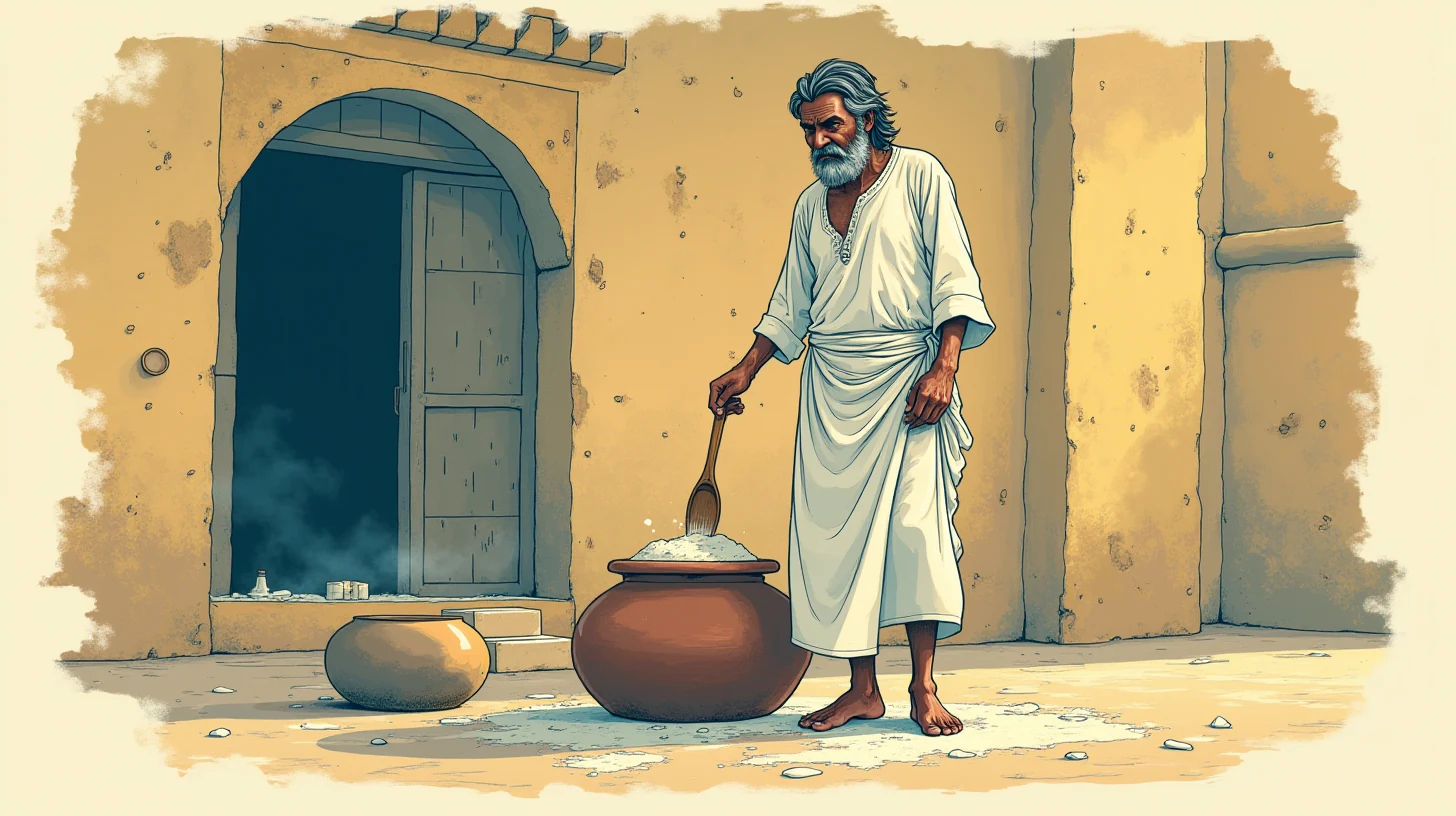
The shop itself was sandstone, built in 1887. The walls bore faint carvings—abstract temple motifs—that belonged to Puri's civic heritage register. The floor was clay. The kitchen had no stainless steel, no tiled counter, no separate dry storage. There was a stone grinding mill, a coal brazier, a well behind the shop for water, and three earthenware pots stacked in the corner. Everything was as it had been for seventy years.
On the fifteenth of March, the FSSAI inspector arrived.
🗓️ The annual ritual
Prasad distribution was a calendar. On Thursdays at dawn, Bibhuti mixed malpua—refined flour, milk, jaggery, ghee—by hand, simmering the batter in earthenware pots until the oil rose gold. By 7 a.m., he had two hundred malpua ready, each the size of a child's fist. On Sundays, he made khaja—pastry layered with jaggery and ghee, fried until golden. On festival days—Ratha Yatra, Dussehra, Diwali—he would make five times the normal quantity, sleeping in the shop for three days straight.
The ritual had remained unchanged for a century. No franchising, no expansion, no second location. Bibhuti's sons, aged twenty-eight and thirty-two, both worked in software companies in Bangalore. One visited during Ratha Yatra; the other had not visited Puri in four years. Bibhuti had never asked them to take over. He believed the shop would either pass to a nephew or close when he could no longer climb the steps.
The economics were narrow. Pilgrims paid ₹10 per malpua, ₹15 per khaja. His cost on ingredients—flour, ghee, jaggery, milk—was ₹3 per malpua, ₹5 per khaja. His net margin was ₹7 per malpua. On a good day, he sold two hundred malpua and eighty khaja, earning ₹2,200 gross. On a bad day—monsoon, festival over, pilgrims thin—he earned ₹400. His monthly income ranged between ₹25,000 and ₹45,000. He lived alone; his wife had died in 2008. His rent was zero—the shop belonged to him.
In thirty-nine years of business, no one from the health department had ever visited.
⚠️ What very nearly happened
The inspector's name was Gopal Mohanty. He arrived at 10:15 a.m. on a Tuesday, carrying a clipboard and a thermometer. Bibhuti was mid-batch of malpua. Flour dust hung in the sunlight from the small window.
Mohanty looked around the kitchen. He looked at the clay floor. He looked at the stone grinding mill. He looked at the earthenware pots. He opened his notebook.
"Kitchen standards require stainless-steel counter, tiled flooring, separate dry-storage facility, and documented food-safety protocols," he said in Odia, not looking up. "This shop does not meet FSSAI State License standards. I am documenting a non-compliance notice. You have thirty days to remediate or I will recommend closure."
The fine, he added, would be ₹50,000 minimum. If the shop was operating without a valid license, additional penalties of ₹2 lakh to ₹5 lakh per violation.
Bibhuti's hands shook. He had never heard of FSSAI. He had never heard of a State License. He had never filed a tax return, never registered with anyone, never had a number or a file.
"I have been making this for sixty years," Bibhuti said. "My father made it. My grandfather made it. The stone came from the temple builders. The recipe is given by the priests."
Mohanty looked at him with something like pity. "Yes. And soon it will not exist."
After the inspector left, Bibhuti sat on the stone step outside, flour still on his hands. Thirty days. He could not afford ₹2 lakh. He could not add a tiled counter without breaking the heritage sandstone walls. The temple authorities had told him five years earlier that any structural change to the façade or interior would disqualify the shop from the heritage register, trigger a fine from the archaeology commission, and possibly require restoration at his own expense.
He was trapped between two regulations: one demanded he modernize, the other forbade it.
His nephew, visiting from Bangalore, suggested calling an agent—a person with a tablet who helps with government forms. Bibhuti had no experience with technology. But on his nephew's phone, using an old email address created by a cousin, he reached out.
🌗 What changed
The tablet arrived on a Thursday evening in early April. It was a Samsung Galaxy, refurbished, with GabFORGE installed by Bibhuti's nephew. The agent interface opened in Odia by default. The first screen asked: What is your food business called?
Bibhuti typed: Prasad.
The agent asked about his ingredients, his turnover, his location, the structure of his kitchen. Bibhuti answered slowly, sometimes repeating sentences, his nephew occasionally clarifying what "turnover" meant. After fifteen minutes, the agent displayed a summary in Odia:
"ଆପଣଙ୍କ ବ୍ୟବସାୟ ୨୫,୦୦୦ ରୁ ୪୫,୦୦୦ ଟଙ୍କା ମାସିକ ଉପାର୍ଜନ ସହିତ, ୩୦,୦୦୦ ଟଙ୍କା ବାର୍ଷିକ ଏବଂ ଖାଦ୍ୟ-ନିରାପତ୍ତା ଆইନ (FSSAI) ଦୃଷ୍ଟିରୁ ଏକ State License ଆବଶ୍ୟକ। Heritage-ସଂରକ୍ଷିତ ଘାଙ୍କା ସାଧାରଣତ ବାଧାବହୁଳତା ଅଧିକାର ସହିତ ଆସିଥାଏ, ଯାହା ଆପଣଙ୍କ ପରିସ୍ଥିତିରେ ଯୋଗ୍ୟ ସୁଦ୍ଧ।"
(Your business, with monthly earnings of ₹25,000 to ₹45,000 and annual turnover around ₹3.6 lakh, requires a State License under FSSAI. Heritage-listed properties often come with exemption rights, which may qualify in your situation.)
Bibhuti stared at the screen. Exemption rights. The word was nirdeshta hak—literally "written right."
The agent then asked: Is your premises listed in any heritage register? Municipal? Archaeological?
Bibhuti answered yes—the municipality had listed it in 2001. The agent then searched, cross-referenced with the Puri Municipal Corporation's cultural heritage database, and displayed:
"ଆପଣଙ୍କ ଦୋକାନ Puri Municipal Heritage Register ଉପରେ 'Grade II—Cultural Significance' ସଂରକ୍ଷିତ। ଖାଦ୍ୟ ସୁରକ୍ଷା ଆଇନ (Food Safety and Standards Act, 2006), Section 37(3), heritage-ସଂରକ୍ଷିତ ଗାଁ ବିକ୍ରିତ ଖାଦ୍ୟ ଦୋକାନଗୁଡ଼ିକୁ structural-ନିରାପତ୍ତା ଏବଂ ଅନୁଷ୍ଠାନିକ ଦ୍ବାଇ ଅନୁମତି ଦେୟ, ଯଦି ସେମାନେ ଖାଦ୍ୟ-ନିରାପତ୍ତା ପ୍ରোଟୋକଲ ଅନ୍ତର୍ଗତ ଥାଆନ୍ତି।"
(Your premises is listed as "Grade II—Cultural Significance" on the Puri Municipal Heritage Register. The Food Safety and Standards Act, 2006, Section 37(3), exempts heritage-protected food vendors from structural modernisation requirements, provided they adhere to documented food-safety protocols.)
Bibhuti looked at his nephew. "What does that mean?"
"It means," his nephew read slowly, "the law says you don't have to change the walls or the floor. But you do have to prove you're keeping the food clean."
The agent then provided three documents to download and complete:
- A Heritage Exemption Request Form for Odisha FSSAI, with spaces for Bibhuti to certify that his premises was heritage-listed and that he would maintain documented food-safety standards.
- A "Traditional Food Preparation Logbook"—a simple table with columns for date, ingredients used, storage temperature, water source, and cleaning frequency. Not complex. Not digital. Paper. He could maintain it by hand.
- A letter from the Puri Municipal Corporation acknowledging the heritage status and confirming that structural modification was prohibited by law.
The agent flagged something crucial: "Section 37(3) requires that you submit THIS letter with your Heritage Exemption Request. Without the municipal letter, FSSAI will not process your exemption. You must obtain it before applying."
The municipal office was across the street. Bibhuti had never been there. His nephew walked him over on Saturday morning.
- ⚠️
March 15 — Inspector cites non-compliance
FSSAI inspector Gopal Mohanty visits the shop. Documents non-compliance: no stainless-steel counter, no tiled floor, no separate dry storage. Issues 30-day remediation notice. Potential fine: ₹2–₹5 lakh.
- 📱
April 5 — Agent identifies heritage exemption pathway
Using the tablet, Bibhuti discovers Section 37(3) of the Food Safety Standards Act. Agent retrieves the municipal heritage listing from the Puri database. Exemption is possible if documented.
- 📋
April 11 — Municipal letter obtained
Puri Municipal Corporation issues Letter No. 2847/PMC/2026, confirming Grade II heritage listing and prohibition on structural modification. Cost: zero. Processing time: two days.
- ✅
April 24 — Exemption filed with FSSAI Odisha
Bibhuti submits Heritage Exemption Request (Form 37-HE) with municipal letter, traditional logbook, and FSSAI Registration at Puri office. Status: pending review. Expected approval: May 15.
The municipal officer who handled the request was Ramesh Patnaik, a man in his fifties who had grown up in Puri. When Bibhuti explained the situation, Patnaik nodded immediately.
"That shop should not be touched," he said. "It is older than my father. The sandstone has carvings from when the British were still here." He wrote the letter on the same day, officially recognising the heritage listing and documenting that structural modification was prohibited by municipal law. No fee. No bribe. Just a man protecting something he valued.
Bibhuti returned to the shop and, over the next week, filled in the Traditional Food Preparation Logbook by hand:
| Date | Ingredients | Source | Cleaning (daily) | Water (source) | Notes |
|---|---|---|---|---|---|
| April 12 | Flour (10 kg), ghee (2 kg), jaggery (3 kg) | Chakra Wholesale, Chakra Market | Swept, wiped with damp cloth | Well (boiled daily) | Malpua batch |
| April 13 | Flour (8 kg), ghee (1.5 kg), jaggery (2.5 kg) | Chakra Wholesale | Swept, wiped | Well (boiled) | Khaja batch |
| April 14 | Flour (10 kg), ghee (2 kg), jaggery (3 kg), milk (1 L) | Chakra Wholesale + local dairy | Swept, wiped, dried with cloth | Well (boiled) | Malpua + milk test |
He noted the boiling of water, the daily sweeping, the suppliers. Basic, but documented. The agent then generated the Heritage Exemption Request Form (Form 37-HE), a simple two-page document to be signed by Bibhuti and submitted to the FSSAI Regional Office at Puri. Bibhuti did not understand every word—his nephew helped with the technical language—but he understood the core: the form certified that his kitchen was heritage-protected, that he could not modify it, and that he was committing to documented food-safety standards as an alternative to structural compliance.
On April 24, Bibhuti walked into the FSSAI office in Puri, carrying the municipal letter, the logbook, and the Heritage Exemption Form. The officer, Sushant Das, looked at the municipal letter first. He nodded.
"This changes things," he said. "We can process this as a heritage exemption. Typically we see these for temples, for old street food vendors in historical areas. Puri has several. Your case is straightforward." He stamped the form, issued a receipt, and told Bibhuti the review would take two to three weeks.
"And if it is approved?" Bibhuti asked.
"Then you are licensed," Das said. "You have a State License with heritage exemption. The inspector cannot demand structural changes. But you must maintain this logbook, update it every week, and keep the premises clean. If we visit and there are violations—spoiled food, dirty water, pests—the exemption can be revoked. Understood?"
Bibhuti understood.
🧭 Why we built it
Bibhuti's situation was not unique. India has approximately 15,000 heritage-listed food vendors and heritage-adjacent food businesses—temple prasad shops, old dhabas in historic quarters, family-run kitchens in protected structures. They face the same collision: modern food-safety standards written for commercial kitchens contradict heritage-preservation laws that forbid structural change.
The escape hatch exists in law. Section 37(3) of the Food Safety and Standards Act, 2006, explicitly provides for exemptions to food businesses in heritage-protected structures, provided they maintain documented protocols. But the clause is buried. Most inspectors do not know it. Most operators do not know it. The bureaucrats who do know it assume the vendor will have to hire a consultant, at ₹5,000–₹10,000, to navigate the exemption pathway. For a man earning ₹25,000 per month, a ₹10,000 consultation fee is impossible.
The agent solved three things:
First, it identified that Bibhuti's kitchen qualified for exemption—by cross-referencing his location against municipal heritage registers and then matching that against the FSSAI Act. Bibhuti himself did not know his building was heritage-listed. The agent found it.
Second, it generated the paperwork—the form, the logbook template, the checklist—and formatted it in a way that any municipal officer or FSSAI inspector could immediately recognise. No confusion, no improvisation, no ambiguity.
Third, it made the documentation evidence, not suspicion. When an inspector visits and Bibhuti shows a hand-maintained logbook with three weeks of records, water-boiling procedures, and supplier names, the inspector sees not a man dodging standards but a man demonstrating them within the constraints of his structure.
What it does
- 🔍Identifies whether a food premises qualifies for heritage exemption by cross-referencing municipal registers
- 📋Generates compliant documentation (Heritage Exemption Form, logbook templates, compliance checklists)
- 📞Coordinates with municipal authorities to obtain the heritage-status letter needed for exemption filing
What it does not do
- 🔒Never submits forms on the vendor's behalf or signs without explicit approval
- 💳Never pays fees, bribes, or consulting charges—all paperwork is provided in Odia for the vendor to complete
- ✅Never guarantees approval or predicts the inspector's decision—it surfaces the legal pathway and evidence, the inspection outcome remains the inspector's call
The larger pattern: Indian food business regulation is built on the assumption that food safety = modern infrastructure. Tile floors, stainless steel, digital records, temperature monitoring. For a ₹30 lakh annual business run by a fifty-six-year-old man from a seventy-year-old shop, this assumption is cruel. It does not account for culture, history, or the reality that some of India's safest food has been made in clay pots for generations.
The exemption clause is a bridge. But it requires someone to know the bridge exists.
"ତିନି ପୁରୁଷଙ୍କର ମାଟି ଚୁଲା ସ୍ୱଚ୍ଛତର ଅଟେ ଆଧୁନିକ ଷ୍ଟେନଲେସ୍ ଅପେକ୍ଷା — ଯଦି ଆପଣ ସେହି ପ୍ରୋଟୋକଲ ଜାଣନ୍ତି।"— A clay stove worked by three generations is cleaner than modern stainless steel — if you know the protocol behind it.
🌱 What we hope happens
On May 15, three weeks after submission, Sushant Das called Bibhuti to the FSSAI office. The Heritage Exemption Request had been approved. Bibhuti now holds a State License (Odisha FSSAI License No. OR-PUR-2026-001447), valid for three years, with the notation: Heritage Exemption—Section 37(3). Structural compliance waived. Documented protocol compliance mandatory.
The inspector, when he returns, will see a valid license. The shop is legal.
Bibhuti did not celebrate. He filed the license in a cloth pouch and hung it on the wall above the grinding mill. He continues to fill the logbook every week. He has asked his nephew to help him take a photograph of the premises—the sandstone walls, the clay floor, the old pots—and store it, as a record of what he is protecting.
His sons, when they call from Bangalore, still do not ask about taking over the shop. Bibhuti does not ask them to. But something has shifted. The shop is no longer unregistered, precarious, one inspection away from closure. It is licensed, documented, and—in the eyes of the law—protected.
He has also registered with MSME Udyam, the free registration for micro and small enterprises. This opens a door to priority lending: if he ever needs a ₹5 lakh loan to buy better equipment, or to help his nephew start a catering business, the bank will lend at preferential rates, because he is now formally recognised as a heritage food business.
The tablet sits on a shelf behind the grinding mill. His nephew checks it once a month, in case the agent has alerts or reminders. Bibhuti does not fully trust technology—he is a man who thinks in seasons and rituals, not notifications. But he understands now that the law has changed. What was invisible—the heritage, the cultural value, the centuries of careful practice—is now visible, documented, and defended.
"ଆଙ୍ଗ୍ଲୁନି ଖାଦ୍ୟ-ସୁରକ୍ଷା ନିୟମ ଏବଂ ଐତିହ୍ୟ ମଧ୍ୟରେ ଗଞ୍ଝନ ଦେଖୁଛି। ମୁଁ ଭାବିଲି ମୋ ଦୋକାନ ଆଗାମୀ ମାସରେ ବନ୍ଦ ହୋଇଯାଏ। କିନ୍ତୁ ପ୍ରଯୁକ୍ତି ମୋତେ ଦେଖାଇଲା ଯେ ଆଇନରେ ଏକ ସ୍ଥାନ ଅଛି ଯେଉଁଠାରେ ଏହି ଦୋକାନ, ଠିକ୍ ଆହୁରି ଅଛି, ନିୟମ ମାଧ୍ୟମେ ଯାଏ।"
— I was caught between food-safety rules and heritage. I thought my shop would be closed next month. But the technology showed me that there is a place in the law where this shop, exactly as it is, passes through the rules.
The shop remains on Bada Danda. The malpua are still made in earthenware pots. The water still comes from the well. But now, when pilgrims ask if the shop is legitimate, Bibhuti can point to the license on the wall and say yes. The law, finally, sees what he has always known: some things are too old and too precious to discard.