
The Ranchi tribal honey collective and the FSSAI labelling wall
Sushila sat on a low wooden stool in the front room of her single-storey clay house in Khunti, Jharkhand, turning a glass jar of honey toward the afternoon light. The jar caught amber and gold. Twenty-two members of the Munda tribal community had spent six months collecting this—wild honey from the sal and mahua forests that frame the villages of Khunti district, around 45 kilometres west of Ranchi city. They climbed cliffs in the monsoon, calmed bees with smoke and mud, and carried the raw combs in cloth bags back down the rock face. Then they boiled it, filtered it through cloth, and bottled it in the glass jars that Sushila had bought from a supplier in Ranchi for ₹12 per empty jar.
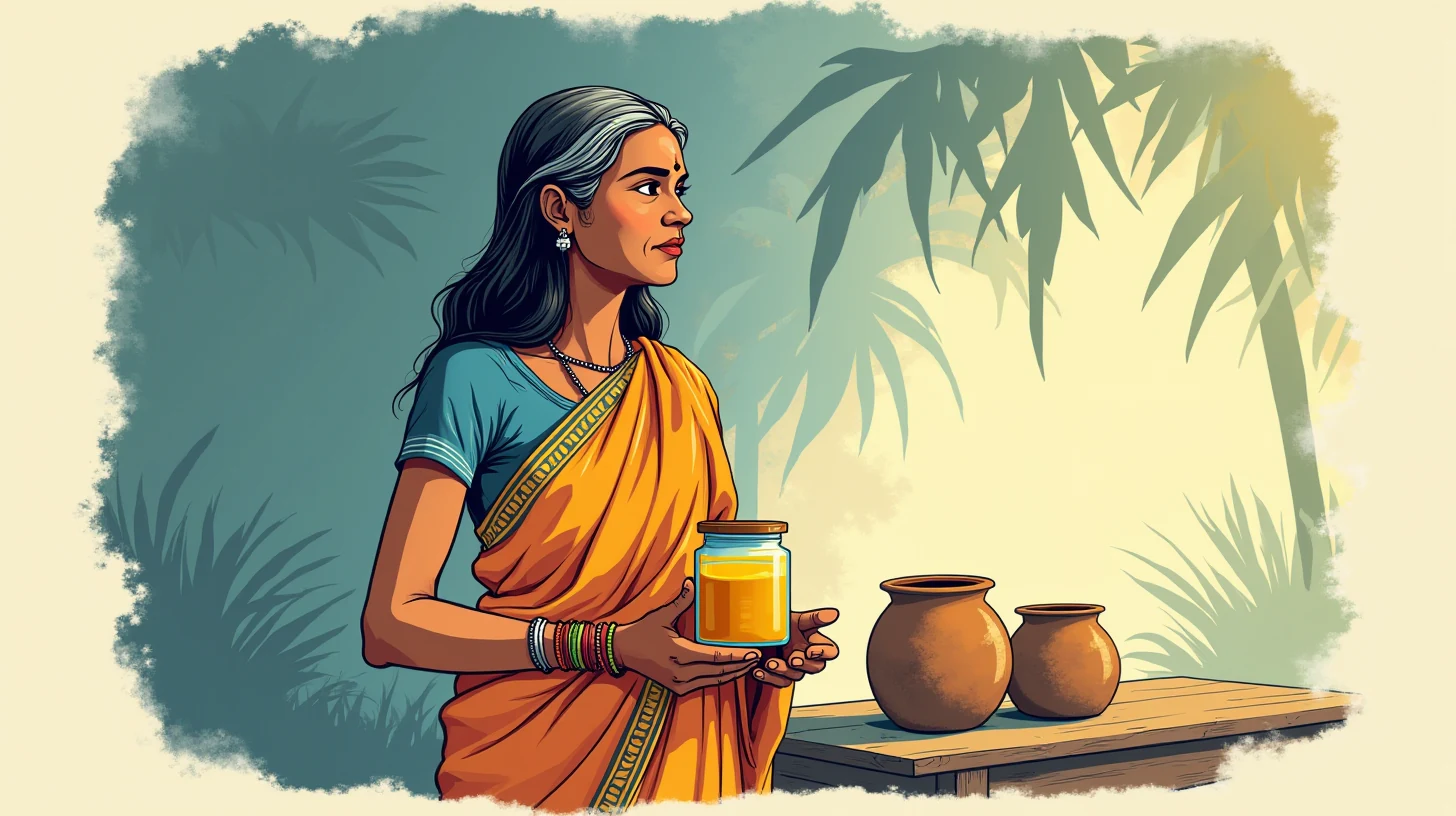
The consignment was 200 kilograms, bottled across 200 jars. Each jar was labelled by hand—Sushila and two others had spent four days writing "Munda forest honey" in black marker on white sticker labels, affixing them by hand. The stack of jars sat now in three wooden crates in the back room, untouched for three weeks. Sushila had negotiated with Spencer's, the supermarket chain at Ranchi Central, to stock the honey at ₹600 per jar. The buyer had visited the hut in April, tasted the honey, and agreed. They were to deliver in early May.
But in the second week of May, Spencer's sent a message. The consignment was rejected. The labels, they said, did not meet FSSAI requirements. There was no nutrition panel. There was no batch code. There was no AGMARK certification. There was no manufacturing date. The jar needed to be labelled by a certified facility. Until then, they could not sell it.
Sushila had felt her stomach drop. That ₹13,200—200 jars at ₹66 cost to produce (glass, honey, labour, transport to Ranchi)—was the year's income for the collective. They had spent six months working the forest for these 200 jars. No retail channel in Ranchi city would buy honey without those labels. The wholesale honey dealers in Ranchi market would take it for ₹300 per jar, raw, unlabelled, untraced—cutting her margin in half. And she had promised the 22 members a payout by June.
That evening, she sat in her front room, the phone her son had given her three years ago resting on the table beside her. The honey jars gleamed in the back room. The year's collection was at risk.
🗓️ The seasonal rhythm
The Khunti forest honey season runs from December to June. The bees are active in the Sal forests during these months, and the wild honey matures in the honeycomb. The Munda community has been collecting forest honey for generations—it is woven into the seasonal economy. In December, after the harvest is in, the men and women of Khunti move into the forest in small groups. They know the cliff faces where the bees cluster. They know the timing of the monsoon and the smell of the wind that tells them when to climb.
Sushila had become the coordinator of the honey collective five years earlier, after her husband died. She was 36 then, with two grown children and a reputation in the village for clear thinking. The 22 members—seventeen women and five men—brought their honey to her house after each collection. She cleaned it, filtered it, and decided what to do with it. For three years, she sold it to the honey dealers in Ranchi market. The dealers paid ₹200–₹250 per kilogram for raw, unfiltered honey. The collective made about ₹40,000 per season.
Then, in 2024, a young woman from a nearby village, Priya, who had completed a diploma in food science through a correspondence course, had visited Sushila's house. She had tasted the honey and said: "This is good. You could sell this for ₹600 per jar in Ranchi if you had the proper labels." She had shown Sushila pictures of honey jars from other villages—Uttarakhand forest honey, Apis Himalaya honey, Pitambari honey—all with printed labels with nutrition panels, batch codes, manufacturing dates, and AGMARK logos. Sushila had felt something shift. If she could bottle and label the honey properly, the collective could earn ₹300 per jar instead of ₹250 per kilogram. That was nearly three times the income.
She had started small. In early 2025, she spent ₹8,000 buying 150 glass jars and cheap white sticker labels. She filled them with honey and labelled them by hand. The handwriting was neat, but the label was simple: "Munda forest honey" in Hindi and English. She had taken three jars to a small general store in Ranchi's Doranda neighbourhood. The owner had liked the honey but said, "The label is too simple. I need to see it has FSSAI approval. My customers will ask." She had tried three other shops with the same result.
Then, in April 2025, Spencer's had called. A buyer had visited a neighbourhood grocery and tried the honey. He had liked it enough to visit Sushila's house in Khunti. He was young, about thirty, and he had said: "The honey is excellent. We can sell this. Get us 200 jars by May 15th." Sushila had felt hope. She had assembled the collective, and they had worked faster that season, collecting an extra 50 kilograms of honey to have enough for 200 jars. She had hand-labelled every jar with care.
But the hand-written labels were not enough.
- 🍯
December 2024 — January 2025: Forest collection begins
The 22-member Munda collective climbs into the Sal forests around Khunti and collects wild honeycomb. Sushila coordinates the collection schedule and the cleaning process at her house.
- 🏠
February 2025: First bottling experiment
Sushila buys 150 glass jars and white sticker labels for ₹8,000. She and two women hand-fill and label every jar with 'Munda forest honey' in marker. Three jars are taken to Ranchi shops—all rejected for lacking FSSAI certification.
- 📞
April 2025: Spencer's buyer visits
A Spencer's representative tastes the honey at a small shop, visits Sushila's house in Khunti, and agrees to stock 200 jars at ₹600 per jar if delivered by May 15th. Sushila mobilises the full collective.
- 🏺
April–May 2025: Production sprint
The collective collects an additional 50 kilograms of honey to reach 200 jars. Sushila and two others spend four days hand-labelling each jar with 'Munda forest honey' stickers at cost of ₹13,200 total (₹66 per jar for honey, glass, label, labour).
- 🛑
May 12, 2025: Spencer's rejection
Spencer's says the labels do not meet FSSAI requirements: no nutrition panel, no batch code, no manufacturing date, no AGMARK mark. The consignment is rejected. The collective's year's income sits in crates in Sushila's back room.
⚠️ What very nearly happened
If Sushila had accepted the wholesale dealer's offer—₹300 per jar for the 200 jars, ₹60,000 total instead of the planned ₹120,000—the immediate crisis would be averted. The jars would be cleared in a week. The collective would be paid. The dealers are informal; they do not care about FSSAI labels. They buy honey as raw material, strip the jars, and sell the honey in bulk to larger processors in Mumbai and Delhi.
But this path closes every door forward. A wholesale dealer pays the same price whether the honey is pure or mixed with cheaper oils. There is no incentive to invest in quality. The ₹13,200 cost is sunk. The collective makes ₹240 per jar for honey that took six months and physical risk to collect. And they can never enter the retail market themselves.
The alternative was worse: the jars sit unsold, the collective grows restless, and by August someone loses faith. The informal cash economy does not wait. One of the members might approach a different honey dealer. Another might sell their share of the collective honey separately. The coordination falls apart. The next season, Sushila finds herself coordinating ten members instead of twenty-two.
But there was also a third path, and it was the path that kept Sushila awake at night in late May: she could try to meet the FSSAI requirements. If she could get the labels right, Spencer's would take the honey. And if Spencer's would take it, others would follow. The retail price—₹600 per jar, ₹120,000 for the batch—would change everything for the collective.
The problem was that Sushila did not know what "meeting FSSAI requirements" actually meant. The phrase had become a wall. The FSSAI is a real government agency in Delhi. The requirements are real. But they exist in a universe of documents, portals, and certifications that are not visible to a woman with a tenth-grade education, no formal business registration, no phone number for a government office, and no experience navigating online systems.
She knew that the label needed to say things. But she did not know what things, or in what order, or where to get them certified, or how long it would take, or how much it would cost.
🌗 What changed
In the last week of May, Sushila's son, Arjun, who works as a driver in Ranchi and has a smartphone, mentioned to a woman at a tea stall that his mother's honey had been rejected by Spencer's. The woman said her nephew had recently used something called "the agent"—a tablet application that helps with government forms. The nephew ran a small restaurant and had used it to register for FSSAI. She gave Arjun a phone number.
Arjun visited his mother on Sunday, May 26th, and set up the tablet in her front room. It took him ten minutes to show her how to open the application. The interface was in Hindi. There was a section marked "Food Business Compliance."
Sushila typed: "We make honey and need to sell it in shops. What do we need?"
The agent asked three questions: Where is the honey from? How much do you make per year? Have you registered with any government agency?
Sushila answered: Forest around Khunti. About 240 kilograms per year. No registration.
The agent displayed a summary:
"आप FSSAI पंजीकरण के लिए योग्य हैं क्योंकि आपका वार्षिक कारोबार ₹12 लाख से कम है। आप FoSCoS पोर्टल पर जाएं और अपने शहद का विवरण देंगे। तीन सप्ताह में प्रमाणपत्र मिलेगा।"
(You are eligible for FSSAI registration because your annual turnover is below ₹12 lakh. Go to the FoSCoS portal, provide details about your honey, and you will receive a certificate in three weeks.)
Sushila felt a small opening. A portal. A timeline. A certificate.
The agent continued:
"लेकिन 'शुद्ध शहद' (Pure Honey) कहने के लिए आपको AGMARK प्रमाणन की जरूरत होगी। AGMARK के लिए आपके शहद का परीक्षण एक लैब में होना चाहिए। कीमत ₹800–₹1,500 है।"
(But to label it as "Pure Honey," you will need AGMARK certification. Your honey will need to be tested in a government lab. The cost is ₹800–₹1,500.)
AGMARK was new to Sushila. The agent explained that AGMARK is the Agricultural Mark—a government certification that proves the honey meets quality standards: no additives, proper moisture content, no bacteria. Once she had AGMARK, the label could say "AGMARK certified" and "Pure honey," which would open more retail channels.
The agent said:
"आपके ₹200 जार के लिए एक बैच कोड चाहिए। आप एक QR कोड लगा सकती हैं जो उस बैच की जानकारी दिखाता है। मैं आपको FSSAI के नियम बताता हूँ।"
(For your 200 jars, you need a batch code. You can add a QR code that shows the information for that batch. Let me tell you the FSSAI rules.)
Over the next thirty minutes, the agent walked Sushila through the FSSAI labelling requirements for honey:
Mandatory on the label:
- The name of the product: "Pure Honey" or "Honey" (in the local script and English)
- Net quantity: "500 ml" or "500 grams" (or whatever the jar volume is)
- FSSAI registration number (once obtained)
- Manufacturer's name and address
- Date of manufacture and best-before date (minimum 2 years shelf life for honey)
- Batch/lot code (for traceability)
- Ingredients: "100% Honey" or list any additives
- Nutritional information per 100 grams: energy (kcal), carbohydrates, protein, fat
- Warning if applicable: "Not for infants under 12 months"
- A QR code linking to the batch details (optional but recommended)
If claiming "pure honey" or "AGMARK":
- The AGMARK logo (once certified)
- The lab test certificate number
Sushila began to see the structure. It was not magic. It was a set of things that had to be printed on the jar. She asked the agent: "How much will it cost to print new labels with all these things?"
The agent said: "₹3–₹8 per label if you print 200 copies at a printing shop in Ranchi. But first, you need the FSSAI registration number and the AGMARK certification. Then you can design the label and send it to the printer."
Hand-written label (rejected by Spencer's)
₹0 per jarSushila's current label: 'Munda forest honey' in black marker on white sticker. No FSSAI number, no batch code, no manufacturing date, no nutrition panel. Spencer's cannot sell this without legal risk.
FSSAI-compliant printed label
₹4–₹6 per jarPrinted label with FSSAI registration number, AGMARK logo (if certified), batch code, manufacturing date, best-before date, nutrition panel, QR code. Meets all legal requirements. Retail-ready.
Premium AGMARK label
₹5–₹7 per jarSame as above, but with AGMARK certification mark. Allows 'Pure Honey' and 'AGMARK Certified' claims. Opens access to premium retail chains and online platforms. Commands ₹600–₹800 per jar.
🧭 Why we built it
The FSSAI labelling requirement exists for a real reason. Honey is one of the most adulterated foods in India. Sellers mix honey with cheaper syrups, palm oil, and glucose to increase volume and cut costs. A consumer buying honey from an unlabelled jar has no way to know what is inside. Thirty percent of honey sold in India's informal markets is not pure honey. FSSAI requires labels so that consumers can trace the product back to the manufacturer and know that it has been tested.
But this requirement is written for formal food companies with printing facilities, lab access, and accounting departments. A Munda woman in Khunti coordinating a forest honey collective does not have any of these things. The rule is correct—but it is built for a world that does not include her.
When Sushila looks at the FSSAI requirements, she does not see "food safety." She sees a wall. She sees ₹1,500 for AGMARK testing, ₹2,000 for a batch of new labels, ₹5,000 for an FSSAI registration (if a middleman helps), ₹1,000 for a QR code generator. The upfront cost is ₹9,500 before she can sell a single jar to Spencer's. That is more than half the profit margin on the 200-jar batch.
The agent's role is not to remove the wall. It is to make the wall visible—to show Sushila exactly what the steps are, where to go, what it costs, and how long it takes. Uncertainty is the enemy. Once she knows the path, she can choose: Is it worth ₹9,500 upfront to unlock ₹120,000 in retail sales? Or should she sell to the wholesale dealer for ₹60,000 today?
The agent also finds the subsidies that she qualifies for. Sushila's collective is a micro food enterprise with annual turnover below ₹12 lakh. She qualifies for PM FME (Pradhan Mantri Formalization of Micro Food Enterprises), which provides up to ₹10 lakh in capital subsidy at 35% of the project cost. If she registers as a micro-enterprise under MSME Udyam, she becomes eligible for this subsidy. The subsidy can cover the AGMARK testing, the label printing, and even equipment for a small bottling unit.
"अगर आप MSME Udyam पर पंजीकृत हों, तो PM FME के लिए आवेदन कर सकती हैं। सरकार ₹3.5 लाख तक का सहायता दे सकती है एक शहद प्रसंस्करण यूनिट के लिए। आपके ₹9,500 खर्च का एक बड़ा हिस्सा कवर हो सकता है।"
(If you register on MSME Udyam, you can apply for PM FME. The government can provide up to ₹3.5 lakh in subsidy for a honey processing unit. A large portion of your ₹9,500 cost can be covered.)
Sushila had not known this. She had thought the money had to come from the collective or from a moneylender. The agent was showing her that the government had already allocated money for women like her. She just had to navigate the portals to reach it.
"सरकार का पैसा मेरे जैसी औरतों के लिए है, लेकिन हम उसे नहीं जानते। हर बार हम अपना पैसा देते हैं।"— The government's money is for women like me, but we don't know about it. Every time we pay from our own pockets.
🌱 What we hope happens
By July 2025, Sushila will have filed for FSSAI registration through FoSCoS. The portal is online, and the process takes three weeks if all the documents are in order. She will use the tablet to fill out the form, taking photos of the honey containers and the collective members with her phone to prove the business is real.
By August, she will have taken honey samples to the AGMARK testing centre in Ranchi—it is part of the Department of Agriculture & Cooperatives office, 12 kilometres from her house. The test costs ₹1,000 and takes seven days. Once she has the AGMARK certificate, she will know that the honey is pure and can claim it on the label.
By September, she will design a new label. She will use the tablet to create a template—the agent has links to free label design tools—and take it to a printing shop in Ranchi. The new labels will cost ₹6 per unit for a batch of 200. The QR code will link to a webpage showing the batch code and manufacturing date.
By October—six months after the Spencer's rejection—the 200 jars will be labelled and ready for retail. Spencer's will take them. And if Spencer's takes them, the Modern Bazaar in Ram Nagar will take them. The small shops in Ranchi's Doranda and Lalpur neighbourhoods will take them. By the end of 2025, the collective's honey could be in ten retail locations in Ranchi.
But something deeper will have changed: Sushila will have moved the collective from informal to formal. She will have an FSSAI registration number. She will have government certification for the quality of her product. She will have MSME status, which means she can access priority lending from a bank. The next season, instead of 200 jars, she might produce 500 jars—bottled in a small unit rented near the market, labels printed by a professional printer. The collective's income could double.
The agent cannot make this happen. The tablet cannot walk into the AGMARK lab or negotiate with Spencer's. The agent's role is smaller and more precise: it translates. It turns "FSSAI labelling requirements" into a series of forms, portals, and timelines. It surfaces the PM FME subsidy and the MSME registration that unlock capital. It maps the path from informal craft to formal retail.
The path is still long. The cost is still real. But for the first time, Sushila can see it. And that is the moment when a tribal woman coordinating a forest honey collective in Jharkhand becomes an entrepreneur.