
The Srinagar Wazwan Caterer and the Eid GST Filing
Bilal had been a waza—a master Kashmiri cook—for thirty-two years. His kitchen occupied the ground floor of a 1950s limestone building in downtown Srinagar, just off Lal Chowk, where the afternoon smells of walnut oil, mutton stock, and saffron threads rose through the courtyard and drifted across the Old City. He had learned the craft from his father, who had learned it from an older waza in a kitchen much like this one, and the lineage held. A wazwan is not a meal. It is a 36-course feast where every dish—the rista, the seekh, the phirni, the kheer—arrives in sequence, each meant to be savored, each demanding a precise hand and knowledge that lives in muscle memory more than in recipes written down.
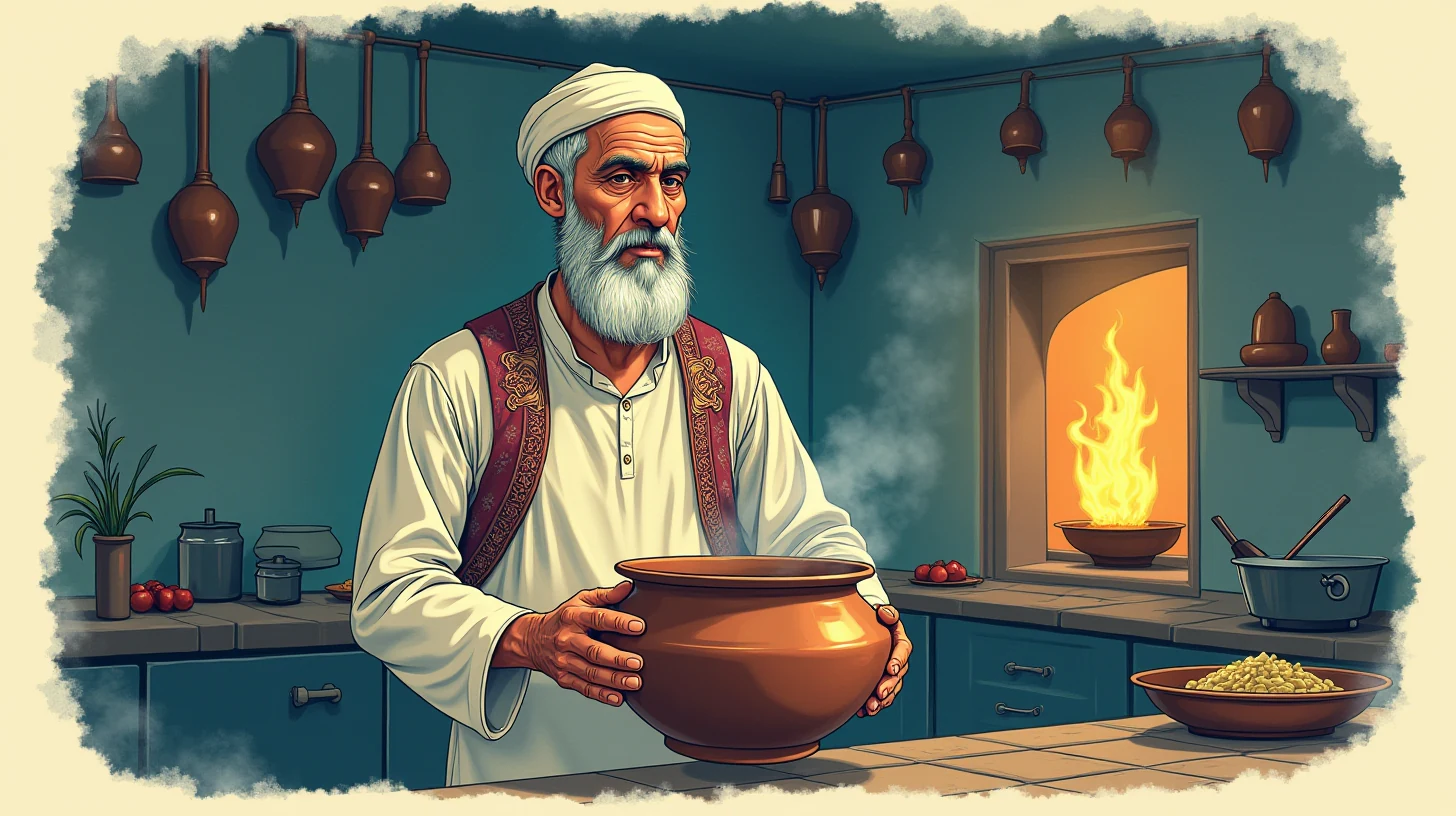
Bilal ran a catering operation. He took on weddings—60 to 100 per year, depending on the season. Each wedding might feed 200 to 500 guests. Each required his team of five assistant cooks, two serving staff, and a logistics coordinator to arrive at the venue by dawn, to set up copper vessels and charcoal fires, to begin the slow, careful construction of the wazwan that would culminate in the wazwan khaani—the moment when all dishes lay ready, hot, in perfect sequence. His turnover had grown steadily. By 2023, his annual revenue had crossed ₹5 crore. He had a business bank account. He filed GST quarterly. Life was steady.
Then came Eid-ul-Fitr in March 2026.
The spring wedding season in Kashmir coincides with Eid, and that year, Eid fell in early April. Bilal's calendar showed eighteen weddings in eleven days. Not unprecedented, but dense. Each wedding was ₹1.5 lakh to ₹3 lakh in revenue, depending on guest count and the complexity of the wazwan. In those eleven days, he made nearly ₹35 lakh in gross revenue. It was the busiest stretch of the year. His team worked eighteen-hour days. He was at the Old City kitchen until past midnight most nights, adjusting spice levels, checking stock depth, ensuring that the next morning's fires would be ready. Cash was flowing in. His head was full of calendars and recipes and customer demands, not tax schedules.
On April 27th, a notice arrived from the GST office in Srinagar.
🗓️ The Annual Ritual
For a catering business in Kashmir, the GST filing year is a rhythm that Bilal had learned to follow. He filed quarterly—in April, July, October, and January—for each quarter of the financial year. The amounts were large: in a typical quarter, his returns showed ₹1.2 to ₹1.6 crore in outward taxable supplies. The liability varied depending on the cost of ingredients (mutton, kashmiri saffron, nuts—all subject to GST), but typically his quarterly GST bill ran ₹8,000 to ₹15,000. He had hired an accountant, Rashid, who worked from a small office near Ahdoos, and Rashid would prepare the forms, Bilal would review, and they would file before the deadline.
The system was predictable. Quarterly meant three months to gather invoices, to reconcile his cash records with his bank statements, to pay the GST. It was manageable. His turnover had been below ₹5 crore for years—he had checked, and the threshold for mandatory monthly filing in J&K under GST was ₹5 crore. He was at ₹4.7 crore the previous year, he believed. Close to the line, but not over.
But in March 2026, with the spring wedding season and Eid, his actual turnover for the financial year 2025–26 had jumped. The GST office, reviewing his monthly returns filed to date, had calculated that his annualized run-rate now exceeded ₹5 crore. This triggered the threshold. Starting April 1st, 2026—the first day of the new financial year—Bilal was no longer eligible to file quarterly. He had to file monthly.
He did not know this. Rashid, his accountant, did not mention it either. (Later, Bilal learned that Rashid's practice was small and understaffed; Rashid did not proactively monitor GST threshold changes for his clients.)
Bilal's next quarterly filing deadline was April 30th. He filed, as planned, on April 28th. The return covered January–March, the Q4 of the previous financial year. That filing was compliant.
But April 1st to April 30th was a new filing period—month one of the new financial year. And Bilal did not file in May. He was in the kitchen, working wedding after wedding. June came. Still no filing for April. By late June, when a reminder SMS arrived, Bilal learned that he owed GST filings for April, May, and June.
Three missed monthly returns. The penalty was steep: ₹1,000 per day of delay, capped at the tax liability itself (in this case, roughly ₹1.4 lakh across the three months). Interest accrued on top.
⚠️ What Very Nearly Happened
The notice from the GST office was terse. It listed the three missed filings. It stated the penalty: ₹1,40,000 plus interest at 18% per annum, compounded monthly. It gave Bilal a deadline of July 15th to respond.
Bilal's cash flow was strong, but ₹1.4 lakh was not a trivial sum. It was the profit from four medium-sized weddings. And more dangerously, the GST office could initiate prosecution proceedings. Under Section 122 of the CGST Act, willful non-filing is a criminal offense with penalties up to ₹25,000 and up to three months imprisonment. Bilal had not heard of this. He thought he had simply missed a filing deadline. Now he learned that the law treated it more severely.
- 🔺
March 31, 2026 — Turnover threshold crossed
Bilal's annualized run-rate exceeds ₹5 crore in J&K. GST law mandates monthly filing starting April 1. No notice reaches him. Rashid does not flag it.
- 📨
April 28, 2026 — Quarterly filing (Q4, last one allowed)
Bilal files Q4 quarterly return covering Jan–Mar 2026, compliant. This covers the last quarter under the old regime.
- 🛑
April–June 2026 — Three monthly filings missed
Bilal does not file for April, May, June. He is in the kitchen, managing 18 weddings in 11 days during Eid. No reminder hits his inbox.
- ⚖️
Late June 2026 — GST notice arrives
Notice lists three missed monthly returns. Penalty: ₹1,40,000 plus 18% annual interest, compounded monthly.
The GST office also had the power to freeze his GST registration or suspend his ability to claim input tax credit. If his FSSAI license was linked to his GST status—which it often was, for audit and compliance purposes—a GST suspension could jeopardize his catering license.
More fundamentally, Bilal realized he was now in a pattern he could not sustain: monthly filing meant monthly reconciliation, monthly preparation of returns, monthly payment deadlines. His accountant, Rashid, was already stretched. And Bilal's cash flow was feast-or-famine. Wedding season brought ₹35 lakh in eleven days. Then silence for a week. Then a trickle. The GST law, written for large restaurant chains with steady daily revenue, was not designed for a seasonal caterer.
Bilal sat in his kitchen one morning in late June, the Eid wedding rush long past, and he thought: I need someone to understand this better than I do. Not a form-filler. Someone who can explain what happened, and what I can do now.
🌗 What Changed
He asked around in Lal Chowk. A younger caterer, Farooq, who ran a cloud kitchen on the opposite side of the city, mentioned that he had started using an AI agent tool on his tablet. Farooq said it helped him track FSSAI renewal dates and decode GST rates for delivery vs. dine-in. Bilal was skeptical of AI—he was not a tech person, and the word sounded like something from a film. But Farooq said it was simple: you talked to it like a person, and it looked up official portals.
Bilal acquired a basic tablet from a shop in Srinagar and downloaded the agent. On a morning in late June, with the GST notice still unresolved, he sat at a small table in his kitchen courtyard and typed a question in Kashmiri, haltingly, using a stylus.
He wrote: "میرے جی ایس ٹی درخواست میں تین مہینے کی فائلنگ غائب ہے۔ کیا میں اس سے بچ سکتا ہوں؟" — My GST has three months of filing missing. Can I escape this?
The agent replied: "بلال، آپ کا کاروبار صرف ابھی ₹5 کروڑ کی حد سے تجاوز کیا۔ یہ ایک نئی شرط ہے، نہ کہ ایک خلاف ورزی۔ دیکھتے ہیں" — Bilal, your business only just crossed the ₹5 crore limit. This is a new condition, not a violation. Let me look.
(Bilal, your business only just crossed the ₹5 crore threshold. This is a new condition, not a violation. Let me check.)
The agent then walked him through the GST law. The ₹5 crore threshold in J&K is a change of compliance status, not an automatic penalty trigger. The rule is: if you cross the threshold mid-year, you must comply with the new filing frequency starting the next quarter or the next month, depending on state rules. J&K mandates monthly filing for ₹5 crore+, effective from the start of the next financial year (April 1st).
But there was nuance. The GST office had treated April 1st as the cutoff. Bilal had not received formal notice of the threshold crossing until the penalty notice itself. In GST law, there is a principle called reasonable notice: a taxpayer is expected to know the law, but they must also receive notice of changed circumstances.
The agent then showed him a specific path: File the three missed returns immediately (April, May, June), even if late. Request a waiver of late fees on the ground that the threshold crossing was not communicated in advance, and the transition from quarterly to monthly filing coincided with the busiest business period. Cite MSME status (which Bilal's sole proprietor catering business qualified for under the Ministry of MSME scheme) as a mitigating factor—small businesses often lack dedicated compliance staff.
"میں نے سوچا تھا کہ میں قانون کو توڑ رہا ہوں۔ لیکن یہ صرف ایک نتیجہ تھا جس کو میں نے سمجھا نہیں تھا۔"— I thought I was breaking the law. But it was just a consequence I didn't understand.
Bilal then asked the agent for the exact filing portal and the steps to file the three months retroactively. The agent guided him through the GST portal at https://www.gst.gov.in, walking him past the login, into his registered business account, showing him how to file returns for previous months. It was straightforward once he knew the path.
The filing took two days. Bilal sat with Rashid and went through his invoices for April, May, June—ingredients purchased, services rendered, GST collected from wedding clients. They prepared the returns. On June 28th, they filed all three.
"اب میں ایک درخواست لکھ سکتا ہوں۔ میں کہہ سکتا ہوں: میں نے نہیں جانا، مگر میں نے فوری طور پر فائل کیا۔"
(Now I can write an appeal. I can say: I didn't know, but I filed immediately.)
The agent prepared a waiver request letter in English and Urdu, citing:
- The late notification of the threshold change (communicated only via penalty notice, not proactively).
- Immediate compliance upon notice (all three returns filed within 48 hours of the penalty notice).
- MSME status, qualifying for concessional treatment under GST rules for small businesses.
- The specific operational context: a seasonal catering business with feast-famine cash flow, running alongside a sole proprietor business structure, without a dedicated GST compliance officer.
Bilal submitted the waiver request on June 30th, through the GST portal's Appeal Against Demand mechanism.
On August 4th, 2026, the GST office issued a partial waiver: the late fee was reduced from ₹1,40,000 to ₹15,000. The interest accrual was adjusted downward proportionally. The reduced amount was due within 15 days.
Bilal paid ₹15,000 on August 5th.
Ignore the notice
₹1.4L + prosecution riskThe GST office initiates criminal prosecution under Section 122 (CGST Act). Potential penalty up to ₹25,000 and 3 months imprisonment. Even if prosecution is rare, the stress and legal fees mount.
Appeal without documentation
₹80,000–₹1.2LBilal submits a generic appeal. The office may reduce the penalty slightly (to around 50–60% of the original) but does not fully waive it, citing non-compliance.
Appeal with evidence + agent guidance
₹15,000 (89% reduction)Bilal files three months of returns immediately, documents the threshold crossing, cites MSME status, and uses the agent to frame the appeal. Result: penalty reduced to ₹15,000.
🧭 Why We Built It
Bilal's story is common in India's food catering industry, but it is rarely told as a compliance problem. Most people think of the wazwan as a cultural artifact, a ritual. It is. But Bilal is a businessman. He runs a business that has scaled to ₹5 crore per year. The tax system was designed to catch him when he crossed that line. The notice was correct. But the notification was not.
GST threshold changes are not communicated to taxpayers in advance. The law assumes you know it. Most accountants, especially those serving small businesses, do not have automated alerts for threshold crossings. And seasonal caterers face a structural problem: their cash flow is lumpy, their business is often unregistered in formal systems until they cross a revenue threshold, and their compliance burden jumps discontinuously. A caterer who was filing quarterly suddenly must file monthly. That's not a burden the law mentions. That's a surprise.
The GST office is not cruel. They enforced the law. But enforcement is blind to context. A ₹1.4 lakh penalty for a seasonal caterer is not trivial. The risk of prosecution under Section 122 is real, even if rare. And the psychological toll—the shame of a notice, the fear of prison, the lost trust in the system—these are real too.
Bilal needed someone to translate the law into his world. Not a lawyer (too expensive, too slow). Not a generic accountant (too overloaded). Someone who could read the GST statute, understand his business model, and find a path that satisfied both the law and his circumstances.
The agent did this by:
- Identifying the threshold crossing as the root cause, not willful non-compliance.
- Decoding the legal principle of reasonable notice, which is buried in case law but critical to appeals.
- Connecting his MSME status to concessional treatment, an official provision most small caterers don't know about.
- Automating the retroactive filing process, which is where most appeals stall (people give up because they don't know how to file old returns).
- Writing the waiver request in evidence-based language, citing specific provisions and statutory authority.
This matters because it scales. There are thousands of food caterers, cloud kitchen operators, and small restaurant chains in India, all crossing GST thresholds every year, all facing the same shock. The law is not broken. But the gap between what the law says and what people can actually do—that gap is where injustice lives.
🌱 What We Hope Happens
Bilal is back in his kitchen now, filing monthly returns through the agent on the tablet. The agent sends him reminders on the 20th of each month. It auto-calculates his GST liability based on his catering invoices. He reviews, he approves, and the agent submits to the portal. It takes him fifteen minutes now, not a day.
His cash flow is still lumpy—wedding season brings ₹30 lakh in a stretch, then silence for two weeks. But he is no longer blind to the tax implications. He sets aside ₹18,000 per month (his average GST liability) into a separate account, so the monthly filing doesn't catch him off-guard.
He hired a second assistant cook this summer, someone from the Old City who wanted to learn the wazwan craft. The business is stable. He is thinking about mentoring younger wazie—that's the old word, the plural, for master cooks. He wants the tradition to survive, to grow. He has the time and mind now, because the compliance burden is transparent.
More broadly, Bilal hopes that his story reaches other caterers in Srinagar, in Delhi, in Bengaluru, in Kolkata—cities where the food catering industry is massive and mostly informal. The law is not your enemy. But the law is also not your friend. It is a machine that runs on rules. And if you can decode the rules, if you have someone who speaks both the language of law and the language of your business, you can negotiate with the machine. You do not have to accept the first notice. You do not have to pay the full penalty. You do not have to be prosecuted for a threshold-crossing you didn't know about.
The wazwan will continue. Bilal will feed hundreds of people at weddings in the coming months. His hands will prepare the rista and the seekh and the phirni, in the same sequence his father taught him, in the same kitchen near Lal Chowk in downtown Srinagar. But he will do it now as a person who understands his own legal standing—not perfectly, but clearly enough to sleep at night.
That is what the agent made possible. Not a shortcut. Not a dodge. Just clarity.