
Chandigarh Graduate and the UT SSSC Domicile Border
Harpreet Singh, twenty-four years old, lives on the upper floor of a rented two-room house in Sector 43, Chandigarh. His father is a retired Punjab police constable who draws a modest pension; his mother works as a part-time aanganwadi helper. Harpreet passed his BA degree from Punjab University's Chandigarh campus three years ago — Political Science and History — and since graduation has worked two jobs to pay rent and hold a modest savings buffer: morning shifts at a coaching institute in Sector 17, afternoons tutoring neighbourhood children in English and Punjabi. He lives in Chandigarh his whole life, has no relatives in any other state, owns no property, and his Aadhaar and voter card both list Sector 43 as his permanent address.
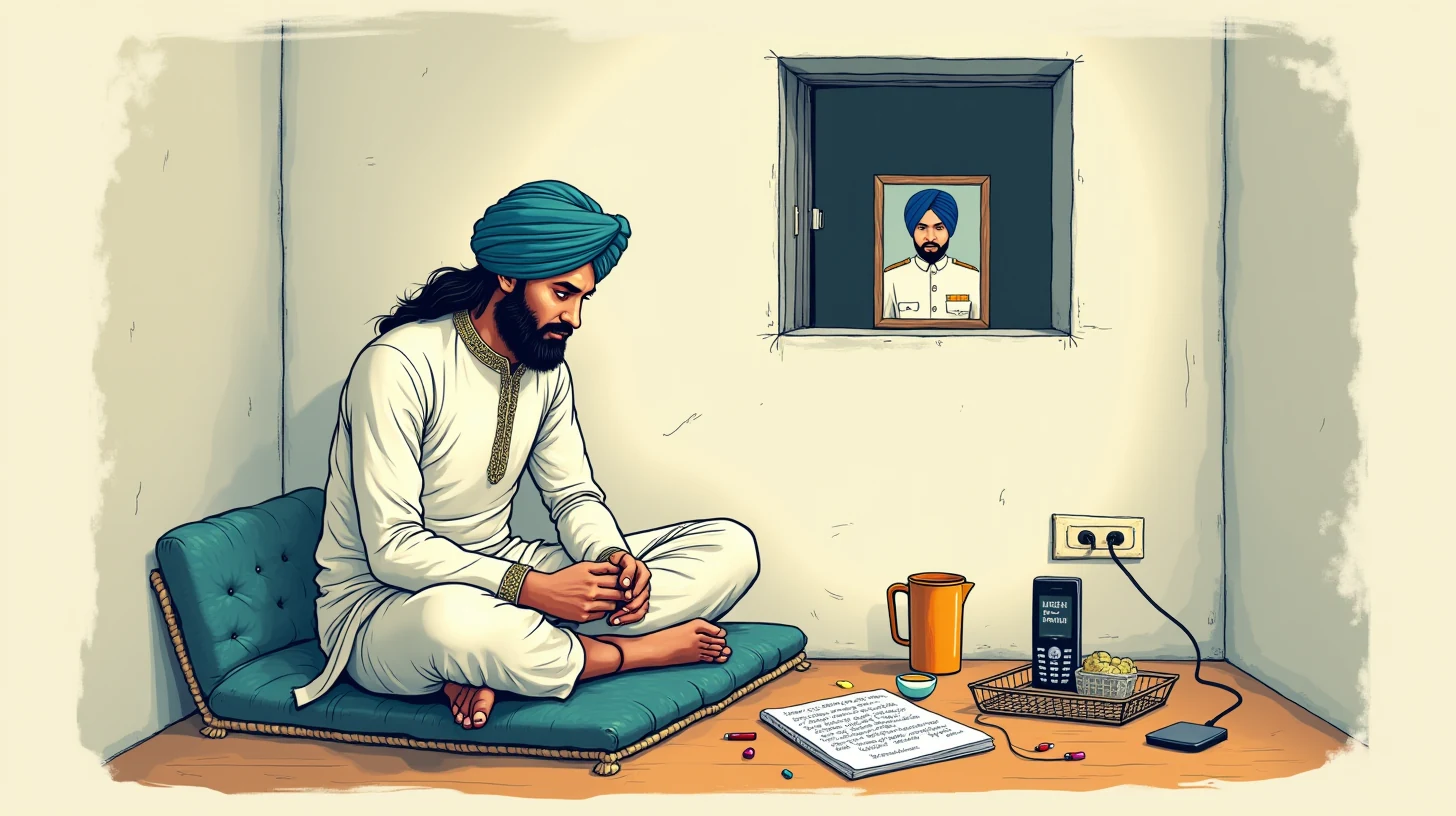
In March 2026, Harpreet saw a notification for Chandigarh SSSC (Subordinate Service Selection Commission) clerk positions under the High Court of Punjab and Haryana — ninety-seven positions, permanent government job, salary scale, health insurance, pension at sixty. The eligibility criteria listed a requirement: "Bonafide resident of Chandigarh UT, certified by an Area Welfare Officer." Harpreet downloaded the application form, filled it out carefully, scanned his marksheet, his Aadhaar, and his voter ID, and submitted it to the portal. For three weeks, his application remained in the "under review" status. Then, in mid-April, he received an email with a single line: "Application rejected. Domicile certificate not valid for this sector. Reapply with updated AWO certificate."
He sat in the coaching institute's staff room, phone in hand, reading the line again and again. Updated AWO certificate. He had provided no AWO certificate at all — the form had only asked for Aadhaar and voter ID as proof of residence. Harpreet called the SSSC helpline. The voice on the other end read him the same criterion from the notification but could not tell him which Area Welfare Officer's office covered his sector, or what address Harpreet needed to provide to "update" the certificate, or even what the certificate would cost.
That evening, he walked to the nearest government office he could find: the Sector 43 Municipal Corporation ward office. The clerk there, a woman in her fifties, told him, "Beta, your address is Chandigarh, but the electricity bill might be in Mohali MC's name. Check with them. AWO? I don't know whose jurisdiction this is. Try the Revenue Department."
Harpreet had stumbled into a bureaucratic gap — a no-man's land between two administrative boundaries, where the system demanded proof of belonging to a place, but the place itself could not clearly belong to any single verifying authority.
🗓️ The UT Recruitment Cycle
Chandigarh SSSC notifications appear two or three times a year, usually released in February, April, or July. The SSSC website (https://sssc.gov.in) publishes a notice board with vacancy alerts, and candidates have thirty to forty days to apply before the deadline closes. Harpreet had applied within the deadline; the process seemed straightforward until the rejection arrived. The portal does not, at the application stage, explain which documents are "valid" — it simply asks for identity proof and then, after submission, rejects applicants retroactively with a vague reason.
Chandigarh UT has separate domicile rules from Punjab state. The UT domicile requires evidence of continuous residence within Chandigarh administration boundaries for at least three years. For employment in government posts, most notifications demand a certificate signed by an Area Welfare Officer or a Taluk-level Revenue Officer attesting to the bonafide residency of the applicant. The rule exists to ensure that UT residents are prioritized for UT jobs — a policy that, in theory, protects people born and raised in the city from competition from applicants claiming multiple-state affiliations.
But the UT's administration is older than its clear geographic mapping. Sectors have been added, boundaries redrawn, municipal zones expanded. The High Court of Punjab and Haryana sits in Chandigarh, yet part of Chandigarh is administered by Mohali MC (Municipal Corporation). Harpreet's house sits at the boundary. His address in all official documents reads "Sector 43, Chandigarh" — but the property tax may be under Mohali; the water meter might reference Mohali; the electricity bill, in an old format, might show neither. And in that ambiguity, the SSSC system locks him out.
- 📨
March 28, 2026: Notification Posted
SSSC releases clerk vacancy notice. 97 posts, Chandigarh UT. Notification online at sssc.gov.in. Bonafide domicile certificate required.
- 📋
April 3, 2026: Harpreet Applies
Uploads Aadhaar, voter ID, marksheet to portal. Form asks for identity only, no AWO certificate field. Portal accepts submission within the deadline.
- ⏰
April 18, 2026: Rejection Email Arrives
SSSC system sends automated rejection: ''Domicile certificate not valid for this sector. Reapply with updated AWO certificate.'' No reason given. No contact for revision.
- 🔍
April 20–May 5, 2026: Search for AWO Office
Harpreet calls SSSC helpline (no answer after 15 minutes), visits municipal ward office, asks neighbours, checks Chandigarh administration portal. No one can confirm which AWO office covers Sector 43.
⚠️ The Jurisdiction Maze
Harpreet''s first instinct was to find the Area Welfare Officer''s office. He knew that Chandigarh was divided into several zones for administrative purposes — he had seen names like "South Zone," "East Zone," "West Zone" mentioned in local notices. He also knew that some of Chandigarh''s geography overlapped with neighbouring Mohali, Panchkula, and Punjab territory, particularly in the outer sectors that expanded after the city''s master plan was updated.
The Chandigarh Administration e-Services portal (https://eservices.chd.gov.in) lists various services including domicile and bonafide certificates, but when Harpreet navigated to the certificate section, the instructions referred him to his "Taluk office" without naming which Taluk he belonged to. Chandigarh has administrative divisions called "Taluk" — there is Chandigarh Central, Chandigarh East, and Chandigarh West — but Sector 43 is not explicitly mapped to any of them in the online portal. A paper form he eventually found at a government kiosk listed three separate offices where bonafide certificates could be applied for; none of the form headers clearly showed coverage areas.
The Mohali Municipal Corporation, meanwhile, maintains its own website and helpline. When Harpreet called, they confirmed that some property records in Sector 43 are registered under Mohali MC for tax collection purposes — a remnant of older municipal boundary classifications. The Mohali office suggested he check with the "Chandigarh Secretariat, Land and Property Department." That office referred him back to the Revenue Department under the Chandigarh Administration.
Meanwhile, the SSSC portal''s next cycle of notifications would be released in July. The current clerk vacancy cycle was closing, and Harpreet had missed the deadline for revision. A notification he found in the small print of the SSSC website stated that "once rejected, an application cannot be resubmitted to the same vacancy." He would have to wait for the next cycle in July, and reapply with a valid domicile certificate — but he still did not know how to obtain one or which office to approach.
"Chandigarh vich rehna ta rehnda a, par 'Chandigarh da' hona da matlab kya hai? Sarkaar kehendi a—AWO ne certificate dena, par AWO kaun si ne?"— We live in Chandigarh, but what does it mean to be "of" Chandigarh? The government says an AWO must sign the certificate, but which AWO?
🌗 The Agent Arrives
In late April, Harpreet''s younger cousin Priya visited for a week. Priya works for a fintech startup in Bengaluru and has used various government portals to file taxes, check UAN status, and apply for benefits. When Harpreet showed her the rejection email and described his frustration, she asked a direct question: "Have you verified which office is actually responsible for Sector 43? Governments don''t hide this — they just make it hard to find."
That evening, Priya helped Harpreet navigate the Chandigarh Administration''s organizational chart on the official website, cross-reference it with the Revenue Department email directory, and draft a clear email to the "Area Welfare Officer, South Zone, Chandigarh Administration" explaining his situation: born and raised in Sector 43, degree from Chandigarh university, father a retired Punjab police constable, current address on Aadhaar and voter card, seeking domicile certificate for SSSC clerk exam. Harpreet also asked for clarification: if his house is within Mohali MC boundaries for one utility, does that disqualify him from UT domicile?
Three days later, he received a phone call from the Revenue Department. The caller, a young officer, explained that domicile is determined by residency documented through official ID — Aadhaar and voter card — not utility bills. The boundary confusion between Chandigarh and Mohali was administrative and historical, not legal. As long as Harpreet''s Aadhaar and voter ID both listed a Chandigarh sector, he was a bonafide Chandigarh resident. The officer gave him a direct instruction: "Bring your Aadhaar, voter card, and a self-declaration to the South Zone office. I will prepare the certificate myself. No fees, two hours."
Harpreet made the journey to the South Zone office the following Monday. He brought originals and photocopies of his Aadhaar and voter card, wrote a brief self-declaration on plain paper with his name, address, date of birth, and reason for the certificate ("for SSSC clerk examination"), and met with the officer. The officer verified the documents against his office records, photocopied both sides of both documents, and prepared a certificate on official letterhead:
"This is to certify that Harpreet Singh, age 24, is a bonafide resident of Sector 43, Chandigarh, and has been residing in this Union Territory continuously for his entire life. He is eligible for employment in government posts reserved for UT domicile candidates."
The certificate was signed by the officer, stamped with the Revenue Department seal, and dated. Harpreet walked out in an hour and a half.
"Sarkaar de kol jaane se pehle, sochna padda—koun sa AWO? Koun sa Taluk? Sector 43 vich rehna, par Chandigarh vich 'hona' da matlab kya hai? Fir Priya ne kaha, pehla verification karo—which office, which form. Fir mail likho. Direct hona. Sarkaar respond karti a jab tum clear hovo."
(Before going to the government office, I had to understand the structure—which AWO? Which Taluk? Living in Sector 43 means you live here, but does it mean you "belong" to Chandigarh officially? Then Priya said, first verify the right office and the right form. Then write a clear email. Government responds when you know what you''re asking for.)
🧭 Why the System Fails First-Generation Graduates
Harpreet''s struggle is not unique to Chandigarh, but the UT''s boundary ambiguity makes it sharper than in most states. The problem is structural: a government notification demands proof of "domicile," but the process to obtain that proof is not described in the notification itself. The SSSC portal rejects applications for invalid certificates without defining what "valid" means. The Revenue Department website does not list coverage areas for each AWO office. And crucially, many government offices do not proactively contact applicants to clarify — they reject and move on.
For a first-generation graduate like Harpreet, who has never navigated certificate systems, who does not have a father or uncle who worked in government, the rejection email appears final. The word "reapply" suggests he did something wrong, not that the system was unclear. He does not think to call the helpline; if he does, and the helpline cannot help, he assumes that means the helpline is busy, not that it is also understaffed and underfunded. He does not think to draft an email to the Revenue Department because he has never done it before. He assumes that certificate-seeking requires a formal office visit with specific papers that he does not yet have.
Thousands of graduates across Chandigarh, Punjab, and other Indian cities face similar walls: domicile rejections for living in a "border area," OBC certificate applications stuck because the caste-validation office is in a different district, EPFO-UAN registration blocked because their name does not match their degree certificate by a single surname variant. Each barrier is designed to verify legitimacy; cumulatively, they create a verification trap where the burden of proof shifts invisibly from the government to the applicant, and the applicant must reverse-engineer the requirements through trial and error.
What the Notification Says
Vague''Bonafide resident certificate required.'' No details on where to get it, who signs it, or what documents prove bonafide residency.
What the Portal Asks
MinimalIdentity proof (Aadhaar, voter ID). No explicit field for a separate ''domicile certificate''; applicant assumes identity is sufficient.
What the Rejection Reveals
RetroactiveCertificate requirement emerges only after rejection. Portal doesn''t explain which certificate, from which office, signed by which officer, or why the previous identity proof was invalid.
🌱 The Quiet Close
Harpreet reapplied for the SSSC clerk vacancy in July 2026 with his new domicile certificate. He submitted the same application form as before, but this time, he attached a scanned copy of the certificate signed by the Revenue Department officer. His application remained "under review" for two weeks, and then the portal changed his status to "selected for examination." He will sit for the written exam in September.
What happens after the exam — whether he passes, whether he is selected, whether he eventually becomes a clerk in the subordinate court — is beyond this story. But something has shifted. Harpreet now knows that bureaucracy is not a single gate that either opens or closes, but a structure with multiple doors, many of them hidden. He knows that a rejection email is not a permanent closure, but a signal that he has missed a step — and that the step, once found, is often simpler than the fear around it.
He also knows that thousands of other graduates are still waiting in that fear, submitting applications to online portals, reading rejection emails in government staff rooms, and not knowing whether to try again or give up. They do not have a cousin in Bengaluru who has navigated digital bureaucracy. They do not have the time to visit offices during working hours, or the confidence to draft an email to a government department. They are not behind; the system is simply not designed to guide them.
The National Career Service portal (https://www.ncs.gov.in) offers another path: government job listings that do not always require UT-specific domicile, sector-neutral career counselling, and SMS alerts sent directly to a phone. But NCS is less visible in Chandigarh than SSSC notifications, and the pathway through NCS feels less urgent — there is no specific deadline, no single exam to prepare for, no sense of immediate opportunity. Harpreet will still check NCS when he opens his phone, but he checks SSSC first. The anxiety of the boundary, once named, does not disappear — it simply recedes into a kind of waiting, which is itself a form of work.