
Lakshmi Devi and the name mismatch: Aadhaar says Lakshmi; degree says Lakshmi Devi
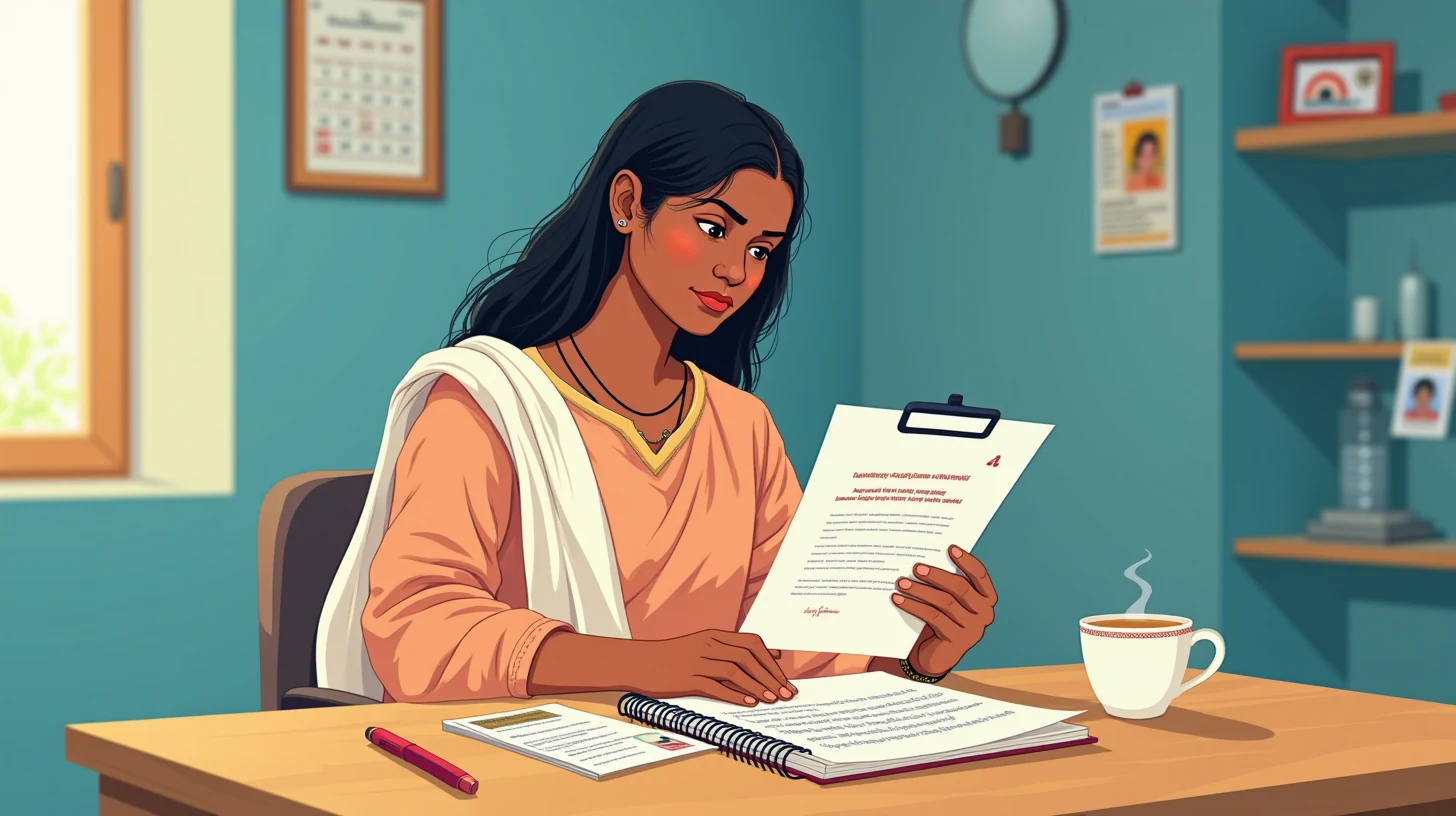
🎓 Lakshmi Devi, 24, a B.Ed graduate from a government college in Krishna district—the only daughter of a retired school peon and a homemaker—filled out her APDSC application with focus. She had passed the AP TET on her first attempt. She had saved ₹500 from three tutoring shifts to pay the application fee. Then the portal returned a single error: "Name mismatch detected. Please verify your documents and resubmit." Her Aadhaar card listed "Lakshmi." Her degree said "Lakshmi Devi." To her, it was one name—the full name her college had used, her teachers had called, her family knew her by. To the portal's automated verification system, it was a discrepancy. An unresolved flag. A reason to lock her application pending indefinitely.
🚨 The problem
Government systems do not synchronize names. Aadhaar enrollment happens at post offices through agents who write down what's spoken or what appears on a birth certificate—sometimes abbreviated names, sometimes full names. Schools record names as their admissions offices dictate. Colleges inherit whatever the school records show. State employment exchanges capture names from whatever form the applicant filled first. The APDSC portal is one of the few that tries to unify them—and when it finds variation, the applicant is assumed to be at fault.
🚀 How GabFORGE helped
Her cousin Sree, visiting from Hyderabad and working in tech, spent an hour reading the APDSC FAQ looking for a clarification process.
- 🔍 Located the hidden form. Sree found a document titled "Certificate Verification Guidelines" that mentioned, in passing, that "name variations due to document issuance by different authorities may be clarified through a notarized affidavit."
- 💬 Extracted the process. The agent discovered that APDSC had a "Grievance / Clarification" section with a separate form—not mentioned in the main portal or helpline, but present if you scrolled deep enough into the recruitment guidelines.
- 📞 Drafted the submission. The agent provided an email template to the APDSC clarification desk with Lakshmi's application ID, the specific documents flagged, and supporting proof (her TET hall ticket, university mark sheet, all naming her as "Lakshmi Devi").
✅ By May 14, Lakshmi had submitted her clarification form with her degree certificate, Aadhaar scan, and TET documents proving the state had accepted her full name. The email confirmation arrived within an hour: "Your clarification has been received and forwarded to the document verification team. Processing time is 3–7 working days." She did not know if it would work. The email was automated. But for the first time, she was no longer trapped in a loop. The path, however unclear, existed.
🇮🇳 Why this matters
Name mismatches catch thousands of first-generation applicants each year. The collision happens because government systems evolved separately and were never designed to communicate. A student whose mother registered them at birth with an abbreviated name, whose school recorded a fuller version, whose college kept that version, and whose Aadhaar was enrolled later as yet another variant—is suddenly treated as suspect when applying for a competitive exam. The mismatch is administrative, not fraudulent. But the system assumes fraud until you prove otherwise. And the burden of proof falls entirely on the applicant.
The long version shows the 11-day window collapsing, the moment Lakshmi realized the form existed (buried across two government websites), and the quiet persistence of waiting for a response while her father sat beside her making chai.