
Thiruvananthapuram Graduate and the Kerala PSC OTP Lock
Anjali Nair was twenty-four, with a BA in Economics from Kerala University still smelling of fresh bindery glue in her cloth folder. She lived in a single room in Peroorkada, a cluster of rental tenements just northeast of Thiruvananthapuram's main junction, where the air smelled of coconut oil frying and auto-exhaust. Her mother, Lakshmi Nair, worked six days a week as an Anganwadi worker in the municipal crèche three kilometers away—a job that paid twelve thousand rupees monthly, sometimes delayed by three weeks. Anjali had turned down a private BPO offer in Bangalore to stay home and sit for the Kerala Public Service Commission examinations instead. A government job would mean pension, medical leave, a stable salary that could help her mother retire in fifteen years. The PSC exams were the only sane path forward for someone with her class marks and no network.
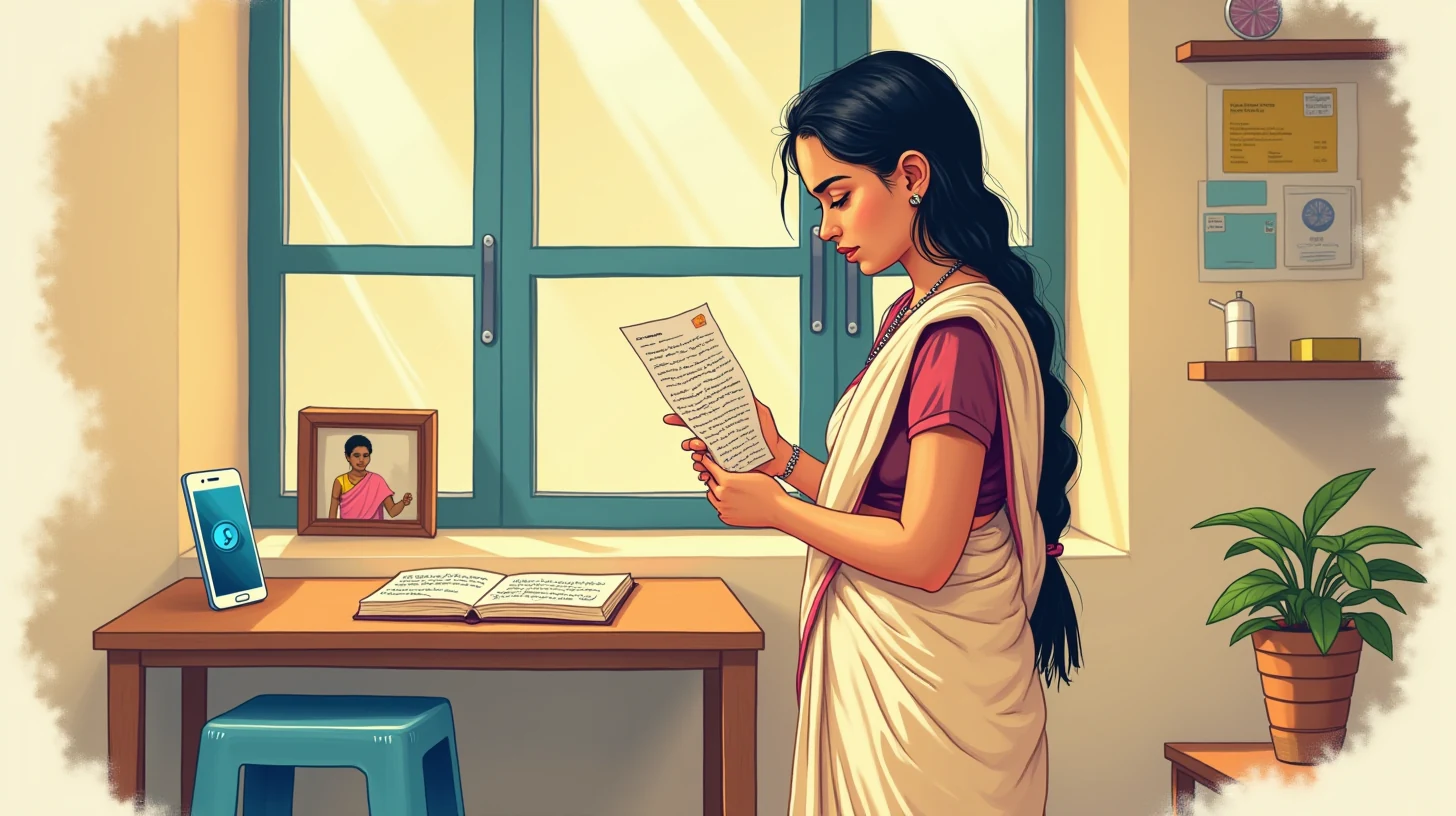
She had created her Kerala PSC One Time Registration profile on the Thulasi portal in March 2025, typing her mother's mobile number into the "Registered Mobile" field because her own phone—a second-hand Nokia from 2019—frequently lost signal in the room. The registration sat quietly for four months. Then, in late May, her mother''s phone was stolen from the auto-rickshaw stand outside the Anganwadi office. A quick snatch, a common enough thing in Peroorkada. When Anjali checked her PSC email that evening, she found the notification she had been waiting for: a Group III recruitment notification releasing on May 24, applications closing June 8. Twenty-eight posts. Comptroller, Auditor, Assistant, Clerk. The salary page alone made her pulse quicken.
But the next morning, when she tried to log into her Thulasi profile to update her mother''s lost number to her own phone, the portal stopped her cold. Any change to the registered mobile number required an OTP—a one-time password sent to the old phone. The old phone was gone. The helpline told her the same thing every time she called: visit the district PSC office in person. Only an in-person affidavit, witnessed by an officer, would unlock her profile.
The district PSC office in Thiruvananthapuram had a three-week appointment queue.
🗓️ The Annual Exam Cycle and the Registration Trap
Kerala''s PSC system had been designed around a single, permanent registration. Once you entered your phone number and email on the Thulasi portal, that number became the portal for every exam notification, exam confirmation, OTP delivery, and result announcement for years. The system assumed you would keep your phone. It assumed you lived in a stable situation. It assumed security, continuity, and foresight—luxuries that did not extend to a BA graduate sharing a rented room in Peroorkada.
The calendar itself was punishing. Notifications for Group III posts released irregularly throughout the year, but the major recruitments clustered around May to August, when the academic calendar gave universities space to hold competitive exams. A job seeker had to be registered, ready, and watching the portal every single day. Miss a notification release by a few hours, and the application window was gone in a week. Miss the exam confirmation OTP window—usually forty-eight hours after notification—and you lost your seat even if you had applied.
Anjali had traced the cycle over six months of watching the portal. She had seen the April notification for Group II posts, watched twenty-eight thousand candidates apply, attended one exam, scored sixty-one percent, and then waited in the ranked list. The Group III notification arriving in late May was the next rung up. Fewer posts meant fiercer competition, but also fewer rejections on the basis of merit alone.
Now she had a three-week appointment wait, and five days before applications closed. The mathematics was simple and cruel.
⚠️ The Five-Day Shrinking Window
Anjali''s mother brought home the news of the stolen phone on Sunday morning. By Tuesday, Anjali had called the PSC helpline three times, each call carrying the same answer: visit the district office, fill an affidavit, have a sub-inspector witness it, come back to collect the updated profile printout. The process, the woman on the helpline said, took "a few working days" once you had booked an appointment. The earliest appointment available was June 16.
June 16 was six days after the Group III application window closed.
Anjali sat at the small wooden desk in her room, her old Samsung Galaxy J phone—the one she used for private tutoring clients and WhatsApp messages to her college friends—placed face-down in front of her. Her mother had brought the charge cable to the room that evening. Anjali opened the Thulasi portal on the phone''s browser and read the notification again.
"Group III recruitment. Applications open May 24, 2026. Closing date: June 8, 2026. Exam date: TBA. Shortlist announcement: August 2026."
She opened her notebook, the one with the blue cover where she tracked every PSC notification, every syllabus change, every deadline extension she could find online. She had written "May 24" in thick blue ink the day she saw the notification email arrive. She had highlighted it with a yellow marker. Now the date was May 19, and she had five days to transform a profile locked behind an OTP she could not receive into an open portal where she could submit her application.
Her mother, sitting on the edge of the bed in the room, was quiet. Lakshmi Nair worked in government long enough to know the machinery did not bend. She had seen countless parents come to the Anganwadi looking for exemptions, extensions, deferrals. The answer was always no. The system worked as designed—and the design assumed everyone lived like middle-class government employees, with stable phones, stable addresses, and time to visit offices during working hours.
🌗 A Cousin''s Workaround and the Agent Arrive
On Wednesday evening, Anjali''s younger cousin Vikram, who was doing his engineering degree in Kottayam and spent too much time on Reddit and YouTube, called her on his standard WhatsApp routine check-in. She told him about the phone, the office appointment, the five-day window.
Vikram did what most people in her family would not have thought to do: he asked if she had tried asking an AI chatbot. Not a human helpline—they did not answer questions they were not trained for, Vikram said—but an agent, something that could read the Kerala PSC website and think through the problem sideways. He sent her a link to a search engine that could browse live websites, and suggested she ask it directly about the OTP bypass process, whether there was a helpdesk email that could escalate the request, whether other candidates had documented a faster path.
"Ask the agent if there''s a district office fax line," Vikram said. "Or an email where you can submit a scanned affidavit. Or if someone at your college went through this before. The agent might find something the helpline person doesn''t know, because the agent doesn''t have a script."
Anjali, sitting in her room with her mother''s kitchen chair pulled up to the desk, opened the agent in a new browser tab. The interface was simple: a text field, a send button, and a sidebar showing which websites the agent could access. She typed her question slowly: "I lost my phone and registered the phone number on my Kerala PSC OTR profile with the number that belonged to my mother. Now I can''t update it because the OTP goes to the lost phone. The district office appointment is too late. Is there any way to update the registered phone number without waiting for the office visit?"
The agent churned for eight seconds. Then it returned a structured answer.
🧭 Why This System Fails First-Generation Graduates
The Kerala PSC OTP lock revealed a deep architectural assumption baked into India''s exam portals: that a registered phone number was immutable and that immutability was the portal''s primary security feature. Once you entered it, you could not exit without proving you were the original person—and the only way to prove that was to receive a message on that exact phone. If the phone was gone, you were gone.
This assumption worked fine for candidates whose phones never broke, never got stolen, never fell into rivers or got confiscated by abusive parents or got lost during a migration from one state to another. It worked for middle-class candidates whose families could take a day off work to visit an office. It did not work for anyone whose life was not structured around stability.
Anjali was not alone. In the months following similar cases, the PSC helpline reported handling dozens of calls from candidates in exactly her situation. A phone lost, a profile locked, an appointment queue too long to be useful. Most gave up. A few paid for expedited "agent services" from coaching institutes—people who sat outside the office and helped process paperwork for three thousand rupees. A very small number discovered the Kerala PSC email address and tried to appeal directly to the office, writing letters in Malayalam explaining their situation. Only a handful of those appeals were answered.
The system failure was not malicious; it was simply designed without imagination for precarity. The portal builders had assumed:
- Every registered candidate had a phone that lasted five years
- Every candidate lived within thirty kilometers of a district office
- Every candidate could take time off work to visit that office
- Every candidate read government office announcement boards or emails regularly
- Every candidate knew that helplines had no power to override automated systems
None of these assumptions held for a first-generation graduate in a rented room in Peroorkada. And the portal had no way to know she existed in this precarious state. To the system, she was just another entry in a database, a phone number with an expiration date that had already passed.
The agent, reading through the PSC website and the helpline FAQs, could see the problem clearly: the portal had one escape hatch, and it was designed for rare edge cases. An affidavit submitted in person to the district office, witnessed by the office staff. That was the only mechanism that could break the OTP lock. There was no email escalation, no SMS verification alternative, no temporary password reset that worked without the original phone.
"The system is not designed to fail gracefully," the agent said, speaking as Anjali''s mother sat quietly on the bed. "It''s designed to assume people don''t lose their phones. When they do, it doesn''t have a second mechanism. The office is the fallback, and the office is slow."
Anjali''s mother, Lakshmi, nodded. She had seen the same pattern at the Anganwadi—forms that required signatures in triplicate, certificates that had to be original and not photocopies, phone numbers that changed every year but had to match the old registration. She knew this was not incompetence. It was the price of operating systems at scale without trusting the people inside them.
- 📱
May 19 — Phone Stolen
Anjali''s mother loses her phone at the Anganwadi stand. The phone contains the registered mobile number for Anjali''s Kerala PSC OTR profile.
- 📨
May 20 — First Helpline Call
Anjali calls the PSC helpline. She learns that updating a registered phone number requires an OTP sent to the old number. The old number is unreachable. The only workaround is an in-person office visit.
- ⏰
May 24 — Notification, but No Access
The Group III recruitment notification releases. Anjali can read the email but cannot access her Thulasi profile to apply. The OTP lock prevents her from updating her phone number or submitting an application.
- 🛑
May 24–June 8 — Application Window Open, Profile Locked
For fifteen days, Anjali has access to the notification but not to the portal. She cannot complete the application because the profile will not unlock.
- 📞
June 16 — Earliest Office Appointment (Too Late)
The earliest available appointment to visit the PSC district office is June 16. The application deadline is June 8—eight days earlier.
What Anjali Needs
RealityA way to prove she owns the profile without the original phone. A mechanism that works within 5 days. A path that doesn''t require visiting an office during work hours.
What the PSC Portal Offers
System DesignOTP to the original phone (unreachable). Affidavit in person at the district office. 3-week appointment queue. No email escalation, no SMS callback, no video verification.
The Timing Mismatch
Deadline ImpactGroup III application deadline: June 8. Earliest office appointment: June 16. Window for correction: Zero days. Anjali misses the exam entirely.
"സർക്കാർ ജോലി നെയ്യാന് എന്നാ മന്നാണ്? ഫോണ് നഷ്ടം ആയാല് നീ എവിടെ ഉണ്ട്? സിസ്റ്റം മരിച്ച മനുഷ്യേ നോക്കുന്നതാണ്."— She asked Anjali quietly, sitting on the bed: "When did government work become so cruel? If you lose your phone, do you stop existing? The system looks at a dead person the same way."
The agent spent the next hour reading through every PSC page that mentioned the OTP process, the registration update procedure, and the district office contact list. It found a fax number for the Thiruvananthapuram office: 0471-2445674. It found no email address for expedited requests. It found no precedent of a candidate submitting documentation remotely. It found the phone lines: 0471-2546400, 0471-2546401, 0471-2447201. It found the office hours: 9 AM to 5 PM, closed Sundays and government holidays.
"Here is what I think you should do," the agent said to Anjali. "Call the office tomorrow morning as soon as they open. Ask if you can submit an affidavit by post or email with a scanned copy, certified by a notary near your home. If they say no, ask them to place you on a cancellation list for appointments—people cancel, and you might get called in within three days. If they say the office is fully booked for two weeks, ask them if they will accept a scanned affidavit by email with your Aadhaar and university degree as supporting documents, and offer to follow up in person later."
Anjali wrote these three options in her notebook in blue ink. Her mother read over her shoulder.
"The system does not bend easily," the agent continued. "But the people inside the system sometimes have discretion, especially when you are respectful, specific, and offer them a legal path forward. An affidavit certified by a notary is legally valid. The office may not have processed one remotely before, but they can. Your goal is to make it easy for them to say yes."
"പ്രോതോക്കോൽ അതിലെ അധികാരിക്ക് നിനക്കു എന്ന് പറയാ ധൈര്യം ഉണ്ടോ? നീ ആഗ്രഹിക്കുന്ന കാര്യം സാധ്യമാണ്, പക്ഷെ നിന്റെ പേരിൽ മാത്രം. കാരണം നീ എന്തോ ഭിന്നതരം വ്യക്തിയാണ്."
(The agent spoke with a clarity that came from reading systems without fear: Protocol tells the officer what he can do, not what he can''t. What you need is possible, but only if you ask for it by name. The system was not designed for you—so you have to explain why you still deserve it.)
🌱 The Quiet Argument
Anjali sat in her room for the rest of Wednesday evening, reading through the agent''s findings and the fax number and the phone numbers. Her mother brought her rice and curry at eight o''clock. They did not talk much. Lakshmi Nair had worked in government long enough to know the architecture of these systems. You complied. You took the appointment. You visited the office on the assigned day. You did not call and ask for exceptions. That was for rich people who had lawyers.
But Anjali was reading something different. The agent had found the office hours, the phone numbers, the process flowchart on the PSC website. The affidavit was mentioned in the FAQs as an acceptable form of proof. A certified notary document was legal. The office was not breaking rules by accepting one by email; it was interpreting the rules generously. And tomorrow morning at 9 AM, an officer would sit at a desk in Thiruvananthapuram, drinking tea, and picking up the phone. That officer might say no. Or they might say, "Send the document by email, and we will process it."
The difference between those two answers was the possibility of her life continuing on its planned trajectory. The difference was six months of study time, a successful exam, a ranked list, a government job, and her mother able to retire before her hands became too stiff to knead dough.
Anjali made a list in her notebook:
- Call the office at 9 AM sharp
- Be polite and specific
- Mention the exam deadline
- Ask about the certified affidavit by email
- Ask for a cancellation list
- If they say no, ask to speak to a supervisor
- Write down the name of the person she spoke to
She left the notebook open on the desk and slept. In the morning, she called at 9:17 AM. The officer who answered was named Ramesh. He listened to her story, asked her for her registration number, and asked her to hold while he checked the system. When he came back, he said they could not accept documents by email under normal circumstances, but given the timing and the lost phone, he could make an exception if she submitted a certified affidavit from a notary within Thiruvananthapuram district, along with a scanned copy of her Aadhaar and her university degree. She should email all three documents to [email protected] with the subject line "OTR Phone Number Update — Lost Mobile — Emergency." She should mark it as "Urgent" in the email body. They would process it within five working days.
Anjali thanked him three times. Her mother cried quietly in the background.
The architecture of these systems—the portals, the queues, the OTP locks—is not stupid. It is exactly what you would build if you were designing for people who do not lose their phones, who live near offices, who can take time off work, who know how to make these calls. The system works beautifully for them. For everyone else, it becomes a test of whether you know the hidden pathways, whether you can speak to the person at the desk with enough specificity that they want to help you, whether the right person is having a good day.
Anjali got her phone number updated. She submitted her application for the Group III exam on June 7 at 11 PM, the day before the deadline closed. She did not get the post—she scored sixty-four percent on the exam and ranked forty-third on the merit list, and there were only twenty-eight posts. But she was on the ranked list for another two years. When the next major recruitment came in August, she was first in line.
The agent never submitted anything for her. It did not fill out forms or send emails. It only read the system, found the phone numbers, traced the official paths, and said: here is what is possible. The rest was Anjali''s voice on the phone, her politeness, her specificity, her willingness to call back if the first answer was no. The system had no mercy, but the people inside it had discretion. And discretion, offered to the right person at the right moment, could sometimes move mountains.