
Vijayawada Graduate and the APDSC Name Mismatch: 11 Days to Reclaim the Hall Ticket
Lakshmi Devi sat at her small wooden table in a rented room in Benz Circle, Vijayawada, holding her degree certificate in one hand and her phone in the other. The screen glowed with a message she had read seventeen times: "Name mismatch detected. Please verify your documents and resubmit." It was May 8th. The APDSC exam was 11 days away.
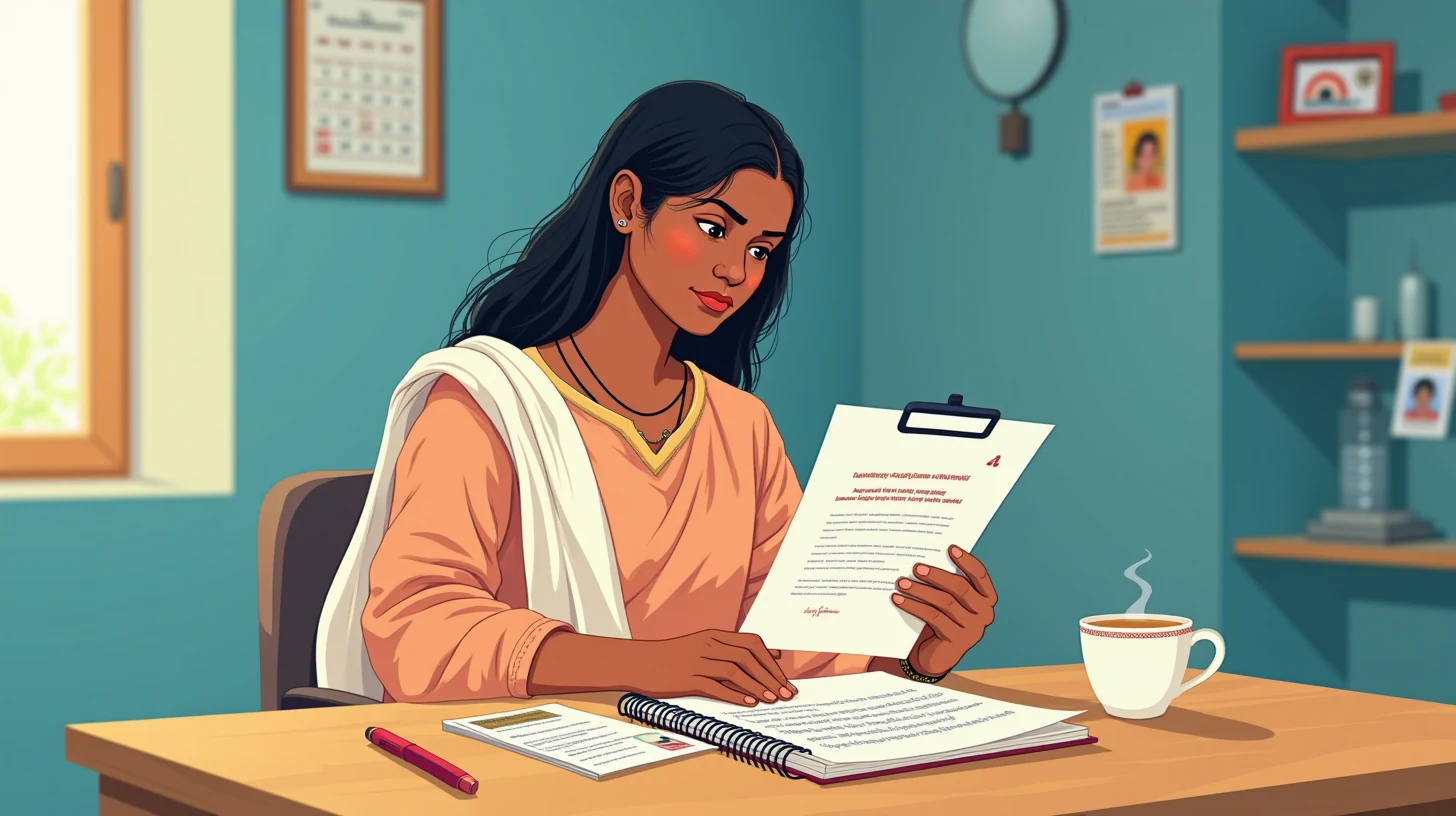
She was 24 years old, a B.Ed graduate from a government college in Krishna district — the only daughter of a retired school peon and a homemaker. Her father had worked thirty-seven years in classrooms that were not his own, and when he retired, he sat in their small home in Vijayawada and waited to hear that Lakshmi had passed the teachers' recruitment test. This was supposed to be the moment. She had cleared the AP TET in her first attempt. She had submitted her APDSC application on time. She had paid the ₹500 registration fee from money saved across three tuition-teaching shifts. Then, at the document verification stage, the portal had locked her out.
The error was small, almost invisible: her Aadhaar card listed her name as "Lakshmi." Her degree certificate said "Lakshmi Devi." To her, it was the same name — the full name used by her college, her teachers, her family. To the APDSC verification algorithm, it was a discrepancy. An unresolved flag. A reason to hold the application pending indefinitely.
She had called the APDSC helpline once. The automated voice told her to submit a clarification document. No human answered. She had no idea what clarification document they meant, or where to send it.
🗓️ The Exam Cycle and the Portal Rhythm
The APDSC — Andhra Pradesh District Selection Committee — runs teacher recruitment on a predictable annual cycle. Applications open in October. The written test happens in March or April. The document verification phase runs through May, a window designed to catch discrepancies before the final merit list is announced.
The cycle assumes that every Aadhaar, every degree, every certificate will align perfectly. It assumes that names are fixed and singular. It assumes that if there is a mismatch, the applicant is either lying or negligent.
In reality, Lakshmi's situation was neither lie nor negligence. Decades of government college paperwork in Andhra Pradesh operate on inconsistent name standards. Some institutions record the full given name — Lakshmi Devi — from school records. Aadhaar enrollment forms, processed through different channels and often filled out by enrollment agents at local post offices, may abbreviate to the first name only. The same person. One name. Two records.
The APDSC portal, built on automated matching logic, treats this as fraud until proven otherwise. The burden of proof falls entirely on Lakshmi. She has no clear pathway to provide it.
- ⏰
October 2025: Notification Release
APDSC announces vacancies for School Assistants, TGT, PGT across Andhra Pradesh; candidates note exam dates and open their registration windows.
- 📋
January–February 2026: Application Window
Candidates complete online applications, upload degree certificates, Aadhaar scans, and domicile proofs; Lakshmi submitted on time.
- 🛑
May 2026: Document Verification Phase (Day 5 of 11)
APDSC portal flags name mismatch automatically; applicant receives rejection email with no instructions on correction process; helpline unreachable.
- ⚖️
June 2026: Merit List (projected)
Final selection announced; Lakshmi''s application still unresolved if mismatch is not addressed.
The APDSC portal, however, does not tell applicants this. It presents the error as a verification failure, not a bureaucratic artifact. And it offers no escalation path beyond "submit a clarification document."
Lakshmi checked the APDSC website daily. No new instructions appeared. The FAQ section mentioned nothing about name variations. She spent ₹50 on an internet cafe to search for examples of other candidates with the same problem — and found only forum posts from 2021 and 2022, most of which ended with unanswered questions.
⚠️ The Deadline Closing In
By May 10th, Lakshmi had written down everything she could think of. In her spiral notebook, she had listed:
- Aadhaar number and name variant
- Degree certificate number and full name
- Her date of birth (the same on both documents)
- The APDSC application ID
- The error message, word for word
Her father had suggested she visit the APDSC office in Vijayawada directly. But APDSC does not operate an in-person counter for verification in district cities. The nearest office was in Hyderabad, a six-hour journey costing ₹600 in bus fare. And even if she went, she had no confirmation they would see her or resolve anything on the same day.
She had called the APDSC helpline again. This time, a voice answered — but only to say: "Submit your documents through the portal. We cannot accept hardcopy submissions." When Lakshmi said the portal would not accept her documents because of the name flag, the voice said nothing. Then the line went silent.
That evening, her father sat across from her at the table and asked what the college had listed on her hall ticket when she took the TET exam. Lakshmi pulled out her old TET hall ticket. It said "Lakshmi Devi." So did her university admit card. So did her mark sheet. The college knew her full name. Why didn't the government?
"వాడు చెప్తాడు, 'తనకు పేరు సరిపోలేది' అని. కానీ నా పేరు సరిపోలేనిది కాదు. నా పేరు ఉంది, రెండు చోట్ల సరిపోలకుండా ఉంది నిర్ణయం కూడా."— "He says the name doesn't match. But my name isn't wrong. My name is there — the problem is that the government has decided it doesn't match itself."
🌗 The Agent Arrives
On May 11th, Lakshmi's younger cousin Sree visited from Hyderabad. Sree worked in a tech startup and was used to navigating government portals — he had recently registered his own startup UDYAM ID and filed a GST return online. He spent an hour reading through the APDSC error message and the portal's fine print.
"Let me show you something," Sree said. He pulled up his own browser and navigated to the NCS — National Career Service — portal. "This is where the state employment exchange data goes. The APDSC has to cross-check your records here. If there's a mismatch, it might be because the state system has your name one way and your Aadhaar another."
Lakshmi had never heard of NCS. She had applied to jobs through Naukri and LinkedIn, but she had never entered the government employment system's records. Sree explained: states maintain their own employment exchanges, and these feed into the national portal. When you register with APDSC, the system doesn't just check your uploaded documents — it tries to match them against state records. If the state employment exchange has "Lakshmi" (first name only) because she or her father registered years ago, the APDSC algorithm sees a conflict.
Sree took out his phone and showed Lakshmi how to access the Andhra Pradesh employment exchange portal through the NCS website. Then he showed her a path she had not seen in the APDSC FAQ: a link to the APDSC's document clarification form, hidden in a subsection titled "Grievance / Clarification."
"This is what they mean," Sree said. "You don't resubmit through the main portal. You fill out a separate form and email it to them. It goes to a different desk — not the automated verification system."
Lakshmi opened the form. It asked for:
- Application ID
- The specific document flagged
- An explanation of the discrepancy
- Supporting documents (her degree certificate, Aadhaar, and a statutory affidavit if needed)
"Do I need an affidavit?" Lakshmi asked.
"Let me check," Sree said. He browsed APDSC's recruitment guidelines again. There was no clear instruction. But he found a document titled "Certificate Verification Guidelines" that mentioned, in passing, that "name variations due to document issuance by different authorities may be clarified through a notarized affidavit if original certificates cannot be verified."
So the process existed, but it was buried. No helpline mentioned it. The FAQ didn't mention it. The applicant received an error message but no direction toward the resolution.
"ఎమ్మెర్రర్ చెప్పిందో, దానిని సరిచేయటానికి రోడ్డు చెప్పలేదు. కానీ రోడ్డు ఉంది — రెండు వెబ్ సైట్ల పైన, మధ్యలో, ఎటువంటి సూచన లేకుండా."
(The error said something was wrong, but gave no instructions on how to fix it. Yet the path exists — buried across two websites, in the middle section, with no signpost.)
🧭 Why This System Fails First-Generation Graduates
Lakshmi's story is not unique. Every year, between 5,000 and 10,000 APDSC applicants face similar name-matching rejections. Most are from rural areas, first-generation college graduates whose parents registered them at birth with abbreviated names, and whose colleges recorded fuller versions based on school records.
The problem cascades through bureaucracy because government systems do not synchronize. Aadhaar is enrolled at post offices, often by agents who write down what the applicant's parent dictates — sometimes just a first name, sometimes a full name. School records come from educational institutions with their own naming conventions. College degrees use whatever the admissions office entered years earlier. State employment exchanges capture names from whatever form the applicant or their father filled out first.
None of these systems talk to each other. The APDSC portal is one of the few that tries to unify them, and when it fails, the applicant is assumed to be at fault.
Aadhaar Database
Lakshmi onlyRegistered at a local post office; enrollment agent wrote down what was spoken. Contains only first name.
College Record (Degree)
Lakshmi DeviSchool transfer certificate listed full name; college admissions office kept it as-is. Degree issued with full name.
APDSC Portal Verification
MISMATCHAlgorithm compares both records, finds a variation, marks as unresolved. No human review until clarification form submitted.
For graduates like Lakshmi, the first challenge is discovering that a path exists. The second is navigating it without an agent — without someone who knows that the APDSC FAQ is incomplete, that there is a clarification form, that notarized affidavits can resolve name variations, and that the whole process can be handled by email and documentation without ever calling a helpline that doesn't answer.
Lakshmi's father, who worked in education his entire life, did not know these details. Her college career counselor had never mentioned APDSC's document clarification process — why would she, if no student had asked her about a name mismatch before? Her mother, who had registered her at birth with the simple name "Lakshmi," had not anticipated that this choice would echo through government portals thirty years later.
She was one of thousands of first-generation graduates facing this every season. Most of them had no one like Sree — no tech-savvy relative who could decode the portals. Some of them gave up. Some of them paid agents ₹2,000 to ₹5,000 to handle the clarification process, turning a bureaucratic inconvenience into a financial barrier.
What it does
- 🔍Verify the APDSC clarification form exists and explain where to find it on the portal
- 📋Explain what a statutory affidavit is and why it may be needed for name variations
- 📞Help compose an email to the APDSC clarification desk with specific details and document references
- 🗂️Identify that the state employment exchange portal may also need updating to prevent future mismatches
What it does not do
- 🔒Never enters the portal, never submits documents on her behalf, never signs affidavits or certificates
- ✅Never decides which documents are necessary or sufficient — always verifies with the official guidelines first
🌱 The Quiet Close
By May 14th, Lakshmi had submitted her clarification form. She had downloaded her degree certificate PDF and her Aadhaar scan. She had written a clear email to the APDSC clarification desk explaining that "Lakshmi" and "Lakshmi Devi" referred to the same person — supporting this with her TET hall ticket (which said Lakshmi Devi), her university mark sheet (Lakshmi Devi), and her date of birth, which matched across all documents.
She did not get an affidavit. Sree had suggested that might not be necessary if she provided the TET documents — which were government-issued and proved that the state had accepted her full name for the teacher eligibility examination. The logic was simple: if the AP TET system had identified her as "Lakshmi Devi" and allowed her to sit the exam, the APDSC system should accept the same identification.
The email confirmation arrived within an hour: "Your clarification has been received and forwarded to the document verification team. Processing time is 3–7 working days."
She still did not know if it would work. The email was automated. No human had reviewed her case yet. But for the first time, she was no longer trapped in a loop. The path, however unclear, existed. And she had walked far enough down it that momentum — and time — could carry her forward.
Lakshmi closed her laptop and made chai. Her father sat beside her in the room, and they did not talk about the exam. They talked about her sister's wedding, and whether the monsoons would come on time, and whether the neighbor's mango tree would flower twice this year like it had last year. These were the things that life continued to be made of, regardless of government portals and name mismatches and deadlines closing in.
The exam was six days away.