
The Coimbatore mother and the name that fit on one certificate but not the other
Kalaivani Selvam walks through the gates of the Ukkadam Industrial Estate every morning at 6:45. The factory whistle blows at 7, and she is at her machine, cutting and folding garment panels. Her hands know the rhythm so well that she can talk during work, which is how she learned about her son's scholarship problem from her colleague Rathi on a Tuesday in April.
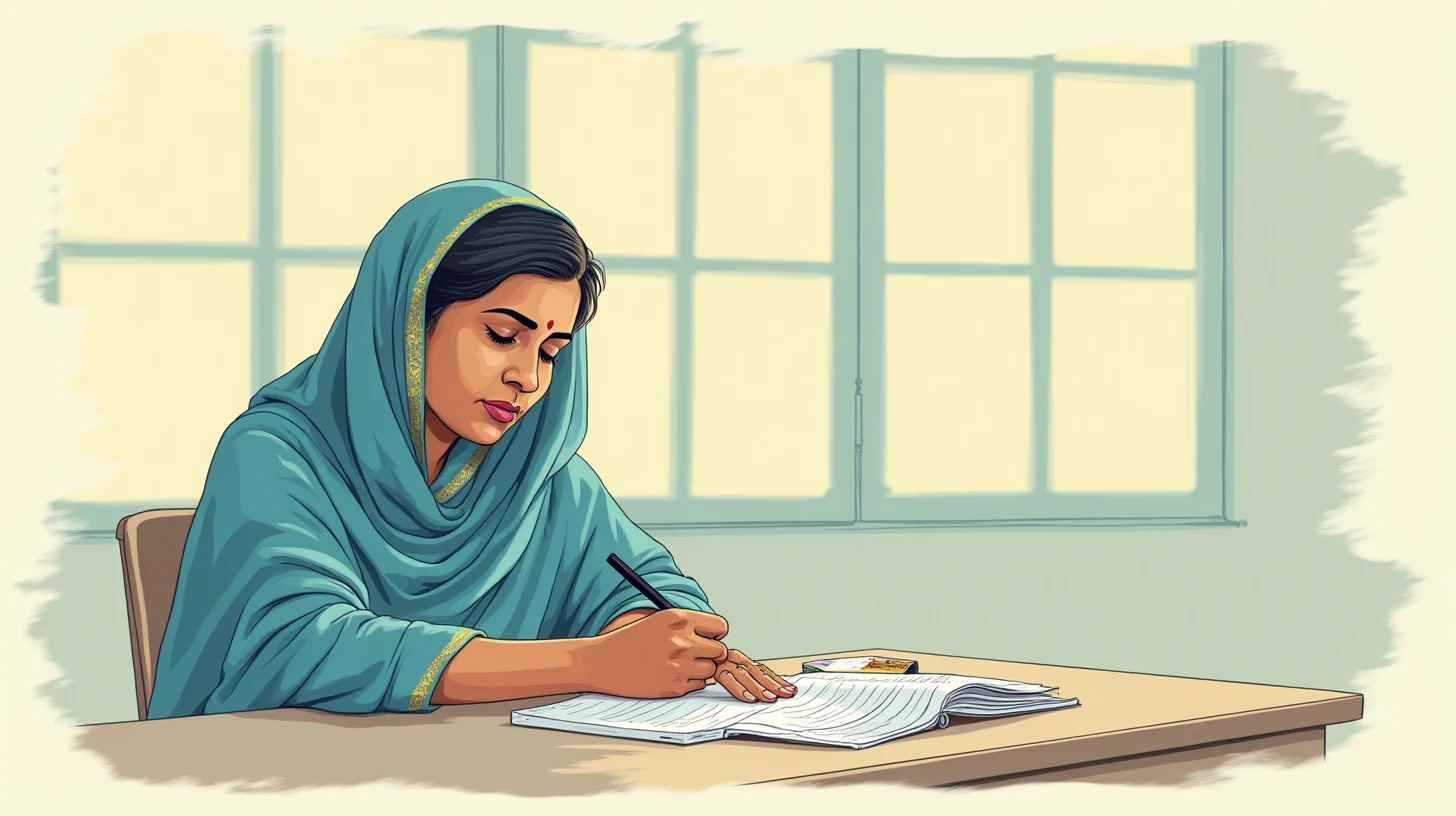
Rathi had faced something similar with her own daughter. Over lunch, she mentioned an agent—someone who knew the Tamil Nadu scholarship system inside out, who could explain things in Tamil. Kalaivani made a note of the contact. That same evening, sitting on her apartment balcony in Ukkadam, she called the agent and explained the situation. Her son, Murugan, was fourteen, in Class 8, and he qualified for the Tamil Nadu Pre-matric OBC scholarship. The family income was ₹68,000 per year. The scholarship was ₹5,000. It mattered.
But there was a problem on the NSP portal.
🗓️ The Name That Lived in Two Places
Murugan's birth certificate, issued in 2010 by Tamil Nadu Civil Registration, carried his name in Tamil script alone: "முருகன்" (Murugan). No surname was recorded. This was common in 2010—many birth registrations in Tamil Nadu documented only the given name.
His school enrollment, however, was different. When Selvam took young Murugan to enroll at Government Middle School Ukkadam, the school recorded the name in English: "Murugan Selvam." It was written in the admission register, the EMIS record (Education Management Information System), and on all school documents. The surname—his father's name—had been added at the moment of enrollment.
Three years later, when Murugan's Aadhaar was generated, the UIDAI system pulled the name from the school records. His Aadhaar card read: "Murugan Selvam."
Now, in April 2026, when Kalaivani logged into the NSP portal and entered Murugan's details, the Aadhaar verification worked fine. But the birth certificate upload triggered an automatic flag: "Name mismatch — birth certificate name does not match Aadhaar."
The system saw "முருகன்" (Tamil, no surname) on the certificate and "Murugan Selvam" (English, with surname) on the Aadhaar. To the algorithm, these were two different people.
"I thought maybe I made a mistake," Kalaivani said later, describing the moment. "I read the fields three times. But it was all there. Same date. Same place. Same everything except the names don't match according to the website."
She filled out the form twice more, hoping the system would accept it. It did not.
⚠️ The Lunch Break Conversation That Changed Things
Rathi's daughter had been rejected by the AP EAMCET entrance exam portal for a similar reason—a surname that appeared in some documents but not others. "I want to tell you something," Rathi said during lunch on Thursday. "Don't just give up on this. There is a person, an agent, who helps parents with these things. She talks in Tamil. She knows how government portals work. My daughter's problem got fixed."
Kalaivani saved the number. That evening, she called.
The agent listened to the story. She asked specific questions: Where was the birth certificate issued? (Tamil Nadu Civil Registration, 2010.) Was the school enrollment in the same name as the Aadhaar? (Yes, "Murugan Selvam.") What did Murugan's current identity documents show? (Aadhaar and school books said "Murugan Selvam.") Had the father enrolled him? (Yes.)
"உங்கள் மகன்களின் பிறப்புச் சான்றிதழ் சரியாகவும் ஆதாரும் சரியாகவும் உள்ளது. NSP போர்টல் இந்த பெயர் வேறுபாட்டை தீர்க்க பள்ளிக்கு ஒரு 'Name Concordance Certificate' கேட்க முடியும். தமிழ்நாட்டு பள்ளிக்கு தலைமை ஆசிரியர் இந்த கடிதத்தை ஒரு அல்லது இரண்டு நாட்களில் வெளியிட முடியும், மற்றும் NSP ஆய்வாளர் அதை ஏற்றுக் கொள்வார்."
(Your son's birth certificate and Aadhaar are both correct. To resolve the NSP name mismatch, you can request the school to issue a Name Concordance Certificate. The school headmaster can issue this letter within one to two days, and the Tamil Nadu NSP coordinator will accept it.)
🌗 Two Routes to One Document
The agent explained that official name discrepancies between government documents can be resolved through what are called "Name Concordance Certificates." This is a formal letter, issued by an institution like a school, that certifies two different name forms refer to the same person.
Route 1: The School Name Concordance Certificate (1–2 days)
The agent described the first option: Kalaivani could visit the Government Middle School Ukkadam and request that the headmaster issue a "Name Concordance Certificate." This letter would state, officially, that:
- The child known as "முருகன்" (Tamil, from birth certificate) is the same person as "Murugan Selvam" (from school enrollment).
- This is certified by the headmaster because the school has enrolled this same child under EMIS registration.
- The certificate carries the school's letterhead and the headmaster's signature and stamp.
"The Tamil Nadu NSP coordinator accepts this letter," the agent said. "It is faster than changing the birth certificate. The NSP portal will take it as proof that the two names are the same person. You submit it with your application."
How fast? One to two days. The school headmaster could issue it after a simple office meeting.
Route 2: Birth Certificate Amendment (15–20 days)
The second route was to formally amend Murugan's birth certificate itself. Tamil Nadu's Civil Registration system operates through the e-district portal. Kalaivani could file an application to add the surname "Selvam" to the birth certificate. The application would be reviewed by the Registrar, and if approved (which it should be, given the school enrollment and Aadhaar as supporting documents), the certificate would be reissued within 15–20 days.
This would solve the problem permanently—the birth certificate itself would then match the Aadhaar.
"But you don't need to do that for the scholarship," the agent said. "The school certificate is enough. And it comes faster."
The agent also explained why this was accepted: Tamil Nadu's NSP system understands that many older birth certificates carry only given names, that school enrollment practices have changed, and that formal certification from a school (an institution that maintains the original enrollment records) is valid proof of name concordance. The state coordinator has accepted these letters for years.
Kalaivani asked if there would be any issue with the NSP portal accepting a letter instead of a corrected birth certificate. The agent explained that the NSP coordinator's office—the human team that reviews applications—makes the final call, not the automated portal. Once a Name Concordance Certificate is included, the application is forwarded to a real person, who will review it. This was the key difference: the portal automation rejects the name mismatch, but the human review accepts the concordance letter.
The Morning at the School
On Friday, April 25, Kalaivani took the morning shift off from the factory. She walked to Government Middle School Ukkadam with Murugan. They carried the birth certificate and Aadhaar card.
The headmaster, a man in his fifties who had been at the school for eight years, listened to the situation. He pulled up Murugan's file in the EMIS system. There it was: "Murugan Selvam, son of Selvam and Kalaivani, enrolled Class 6 in 2022 (transferred from Class 5 at another school)."
"This is straightforward," the headmaster said. He had seen this before—not often, but a few times. He sat at his desk, pulled out official school letterhead, and wrote a formal letter:
"This is to certify that Murugan Selvam, who is currently enrolled in Class 8 at Government Middle School Ukkadam (EMIS No. XXXXXXXX), is the same person as the child bearing the name "முருகன்" (Murugan) as recorded in his birth certificate (Certificate No. XXXXXXX, issued by the Tamil Nadu Civil Registration Department, Coimbatore, dated January 15, 2010). The said child was enrolled in this school on [date], and all school records maintain his enrollment under the name Murugan Selvam, son of Selvam and Kalaivani. This certificate is issued in accordance with the school's authority to maintain and verify EMIS enrollment records."
He signed it, stamped it with the school's official seal, and handed it to Kalaivani.
The entire process took forty minutes.
What the Portal Said, What the Person Knew
Kalaivani uploaded the concordance letter to the NSP application that same Friday evening. She resubmitted the form.
This time, when the automatic validation ran, it still flagged the birth certificate name mismatch—the algorithm had no way to parse the text of the concordance letter. But the application no longer stopped at the automated check. Instead, it moved to the next stage: manual review by a human coordinator at the Tamil Nadu NSP office.
On Monday, April 28, Kalaivani's phone rang. It was the NSP coordinator from the Tamil Nadu scholarship office, calling to confirm a few details. Did Murugan attend Government Middle School Ukkadam? Yes. Did the family income match the declaration? Yes, ₹68,000 per year, as certified by the sarpanch. The coordinator had read the headmaster's letter. "This is clear," she said in Tamil. "The Name Concordance Certificate is sufficient. We accept this."
By Tuesday, April 29, Murugan's application status on the NSP portal had changed to "Approved."
The first disbursement of ₹5,000 arrived in Kalaivani's bank account on May 2.
Kalaivani's reflection (in Tamil and English)"The scholarship is not just money. It is ₹5,000 that I don't have to earn in the factory to pay for Murugan's books and tuition. Two extra shifts I don't have to take. My hands don't hurt that week. And Murugan stays in school without seeing me tired all the time."
"The agent said something that stayed with me. She said: 'The system has many rules. But the person who works in that office, they understand life. They understand that the same person can have the same name written two different ways. The letter from the school tells them: this is real, this is honest. So they will say yes.' And she was right."
Understanding the Boundary: When Documents Disagree
What Kalaivani's case reveals is a real gap in how government document systems connect to each other in India. Birth certificates and Aadhaar cards are issued by different authorities, and they pull information from different sources at different times in a child's life.
In Murugan's case:
- The birth certificate was issued in 2010, when records (especially in rural and smaller-town contexts) often contained only a given name.
- The Aadhaar was issued years later, pulling from school enrollment records, which had modernized their naming practice to include the surname.
- The NSP portal was designed to match exact name strings across these documents.
But the authorities themselves—the Tamil Nadu Registrar's office, the school system, the NSP state coordinator—all have processes to handle these discrepancies. They are not errors. They are transitions in how data is recorded. A Name Concordance Certificate bridges this gap by creating a formal, witnessed statement that says: "Yes, these are the same person, and here's why the names look different."
🧭 What the Agent Knew
When Kalaivani had called the agent for the first time, she was already stressed. The NSP portal had rejected the application. She had checked the documents three times. Everything else was in order—Murugan's OBC status was confirmed, the family income was documented, his school attendance was recorded. But the portal said "no" on the name.
The agent did not tell her that the problem was unsolvable. She did not suggest filling out the form differently or lying about the name. Instead, she explained that the portal and the system are not the same thing. The portal is automated. The system—the actual scholarship office—has people in it who understand that documents change over time, that names are recorded differently in different eras, and that a school's letter can prove what an algorithm cannot.
"The agent explained in Tamil so I understood it," Kalaivani said afterward. "Not in the English that the website uses. In Tamil. She said the headmaster will write a letter, and I will give that letter to the government office, and they will understand. And they did."
This distinction—between a system that appears to say "no" and a system that, when approached correctly, says "yes"—is what the agent provided. Not a workaround. Not a hack. A legitimate, official route that existed but was not visible in the portal's automation.
The other thing the agent provided was speed. If Kalaivani had filed for a birth certificate amendment through the e-district portal, the process would have taken 15–20 days. The scholarship application window would have closed in that time, or Murugan would have had to reapply next year. The Name Concordance Certificate route got the scholarship approved in a week.
🌱 The Scholarship, and What It Meant
₹5,000 is not a large amount in absolute terms. But for a family where two parents work factory shifts and earn ₹68,000 per year combined, it is significant. At the Ukkadam Industrial Estate, the wage per day is about ₹500–₹600. An extra five shifts—that is what ₹5,000 means in terms of hours on the factory floor.
"When I told Murugan that the scholarship was approved, he asked if he could keep going to school," Kalaivani said. "That was the question he asked. As if the scholarship was something that might not happen, and he might have to leave. He is fourteen years old, and that was his question."
Murugan remained in school. His mother took no extra shifts that month. The ₹5,000 went toward his Class 9 tuition and his books.
The Tamil Nadu Pre-matric OBC scholarship is designed for families like Kalaivani's—where the child qualifies (by caste category and income threshold), where the scholarship is small relative to government budgets but large relative to family earning, and where the documentation hurdles are just high enough to stop most applicants who do not have help navigating them.
The agent had navigated one of those hurdles. Not by breaking the system, but by understanding that it operated in layers—a technical layer (the portal) and a human layer (the office)—and knowing where the legitimate path between them lay.
For parents in Tamil Nadu with children eligible for NSP pre-matric BC/OBC scholarships: If you encounter a name mismatch between your child's birth certificate and Aadhaar during NSP application, a Name Concordance Certificate from the school is a valid and faster alternative to amending the birth certificate. Contact your school headmaster with your child's enrollment records and identity documents. The letter should state that the child is enrolled under one name and documented under another, and should be written on school letterhead with the headmaster's signature and seal. Submit this with your NSP application. The state coordinator's office will review it. This process typically takes 1–2 days at the school and is recognized by Tamil Nadu NSP.
The portal may still show an error. That is expected. The human review is what matters.