
The Delhi NCR mother and the DPS nursery form
Priya Malhotra closes her laptop at 8:40 AM on a Tuesday in November 2024, packs her laptop bag with the morning's unfinished reports, and walks to HUDA City Centre metro station. She is a financial analyst at a fund management firm in Cyber City, Gurugram — the kind of work that requires reading dense documents quickly and finding the one clause that changes everything. Her husband Rahul is a product manager in Noida. Their son Arjun is three years old, born September 15, 2021, and has never been to nursery school.
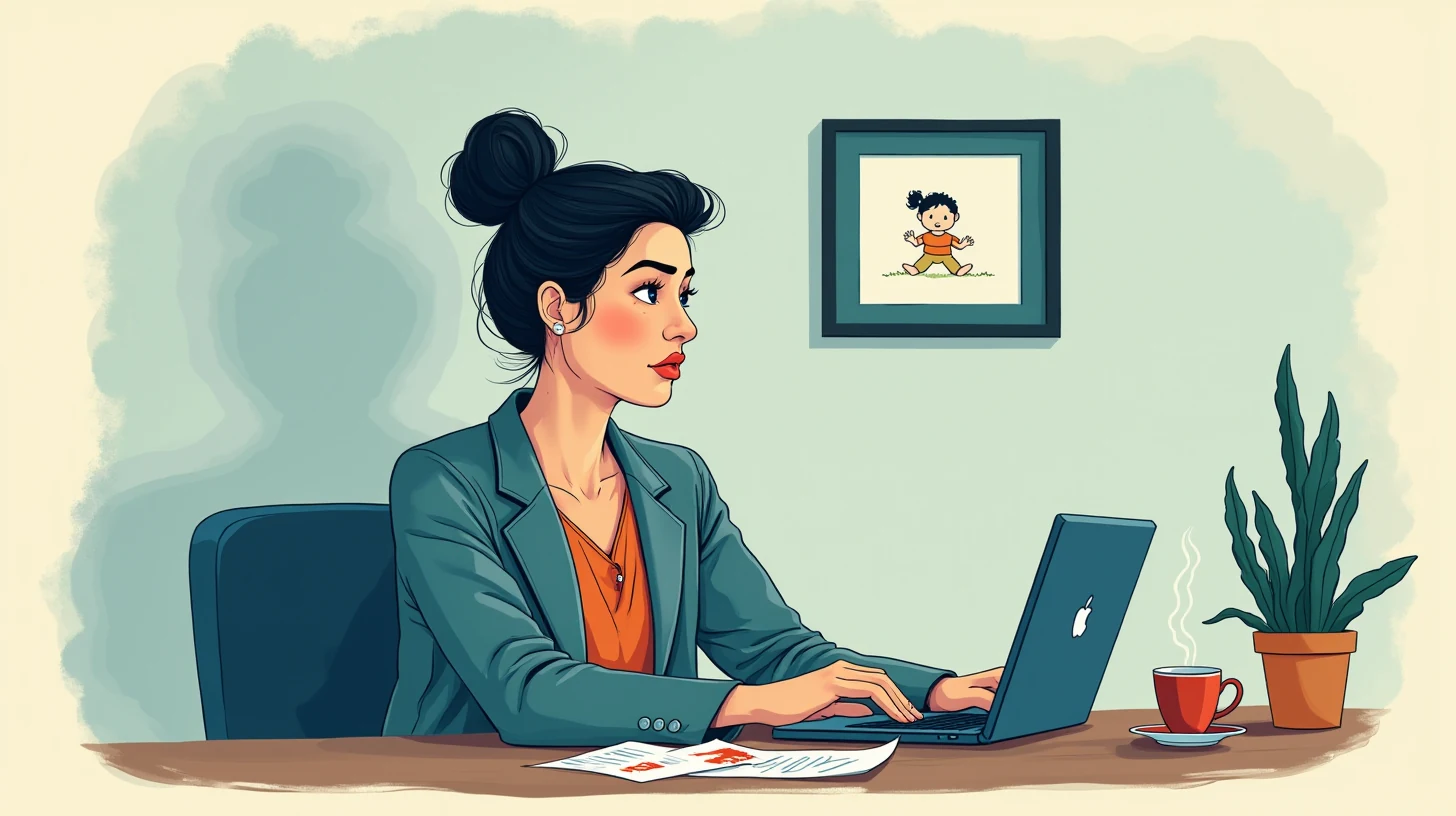
This morning, Priya received the Delhi Department of Education's private school nursery admission calendar. She downloaded it on the metro, read it between Sector 21 and Ambience Mall, and felt a knot tighten in her chest that had nothing to do with the crowd.
Seven schools. Seven admission portals. Thirty-three days. One three-year-old's entire year depends on understanding a system designed by people who assumed she had either done it before or knew someone who had.
Her mother-in-law Savitri, who comes Tuesdays and Thursdays — and who was a teacher for thirty-two years — looked at the calendar over breakfast and said, "Aaj ke zamane mein sab portal ho gaya, par document to wahi purana chaos hai" (Everything is a portal now, but the documents are still the old chaos). Savitri was not wrong.
🗓️ The lottery and its preconditions
Under the Right to Education Act, Delhi's private unaided schools must reserve 25% of nursery seats for students from economically weaker sections (EWS). The Delhi Department of Education sets a unified calendar: applications open November 15, close December 17. The seven schools Priya had shortlisted — DPS RK Puram, DPS Sector 45 Gurugram, Shri Ram Vasant Vihar, Springdales Pusa Road, Heritage Vasant Valley, G.D. Goenka Sector 48, DPS Maruti Kunj — each operated their own digital portal. Each asked for the same documents: birth certificate, Aadhaar, EWS Part B declaration, proof of address. Each system interpreted these documents slightly differently.
DPS Society schools, the oldest and most competitive, used a centralized application interface but let each branch customize the forms. Springdales asked for documents as PDFs. Heritage required them merged into a single file — a requirement hidden in the FAQ below the fold. Shri Ram wanted them as image files. The Department of Education portal, which was meant to centralize this, actually only managed the EWS verification; the school portals handled merit admissions separately.
Priya downloaded all seven schools' guidelines in PDF. Nineteen pages for each school. Combined, one hundred thirty-three pages of fine print, checkboxes, declaration forms, and upload fields. She printed the DPS Gurugram guidelines on Saturday afternoon and started reading.
By Wednesday of that week, she had hit the first problem.
⚠️ What November looked like
- 📋
November 15 — Window opens
The DoE calendar releases private school admission schedule. Priya downloads all seven portals' guidelines. Seven schools, seven document upload systems, all slightly different.
- 🛑
Late November — Birth certificate rejected
Three portals reject Arjun's UP-issued birth certificate without explanation. One school's helpline says it needs a notary countersignature — ₹200, forty-five minutes at a notary near Sector 18.
- 📨
Late November — EWS declaration confusion
The DPS Society Part B form has a pre-checked checkbox implying family income under ₹1 lakh. Unchecking it causes a portal error. Rechecking it generates a confirmation but may mean a false declaration. Priya cannot reach the admission office by phone.
- 🔍
November 28 — Aadhaar date-of-birth mismatch discovered
The DoE portal rejects Arjun's Aadhaar-verified details: UIDAI shows September 14, his actual birth date is September 15. UIDAI correction takes 30 days. The deadline is December 17.
- ⏰
December 17 — Window closes
All seven applications must be complete. Any missing document, any portal error, any unresolved mismatch — the school year is lost.
Arjun was born at a hospital in Greater Noida, UP. His birth certificate was issued by the UP civil registry. When Priya uploaded it to the DPS Sector 45 Gurugram portal, the system rejected it with a red error bar and no explanation. She tried the DPS RK Puram portal. Same error. She tried Springdales. Same.
She called DPS Sector 45's admission office. The voice on the phone said that UP-issued certificates sometimes needed a notary countersignature to be valid across state lines. Priya would need to visit a notary in Sector 18, pay two hundred rupees, wait forty-five minutes, and get the certificate signed. It was a Friday afternoon. The notary closed at 6 PM. She could do it, but she had a client call at 4 PM and had not planned for it.
That same week, she opened the DPS Society Part B EWS declaration form. It was a checkbox — "The family income is below ₹1 lakh per annum." The checkbox was pre-checked.
Priya read the fine print. For the DPS Society nursery, EWS was defined differently in different states. In Delhi, the threshold was ₹1 lakh. In Gurugram, which is technically in Haryana but where DPS Sector 45 operated, the threshold was actually ₹1.5 lakh. The form was generic, meant for all DPS branches, which meant the checkbox had to stay pre-checked for all of them. But Priya, who had read the school-specific guidelines, knew her family income was above ₹1 lakh and below ₹1.5 lakh — she needed to uncheck the box.
When she unchecked it, the portal gave an error: "Please confirm compliance with EWS criteria." When she rechecked it, the portal processed the form but showed a confirmation page saying she had declared the family was EWS. She could not reach the admission office again — the phone line was busy all afternoon.
She did not uncheck it. She did not recheck it. She left the form sitting in draft for three days.
Then came November 28. Priya received a message from the Department of Education portal — the official centralized system for EWS verification. Arjun's Aadhaar-verified details had been rejected. UIDAI, the Unique Identification Authority database, showed his date of birth as September 14. His actual date of birth was September 15. She had registered his birth incorrectly at the hospital, or the hospital had entered it wrong, and the mistake had been coded into his Aadhaar when it was first issued.
Correcting an Aadhaar date of birth took thirty days. The DoE application deadline was December 17. That left her two weeks of buffer, which seemed reasonable until she called UIDAI customer service and learned that the thirty days could be thirty days from submission, or thirty days from processing, and processing could take anywhere from a day to two weeks. She might not have the corrected Aadhaar by December 17.
Priya stared at the UIDAI email for a long time. She was the kind of person who could navigate a financial prospectus, read the conditions buried in section 2.4.3, and know which paragraph was going to cause a problem. This felt different. This felt like she was up against three separate government databases, a school form that didn't make sense, and a hard deadline no one would move.
She called Rahul at work. He suggested she call his mother. Savitri said, "Thak gaye the already? Abhi shuru hi hua" (Exhausted already? It's just started).
It was Thursday evening. Priya had three weeks left.
🌗 What changed
On Friday, a colleague named Nandini mentioned in passing that she had gone through this process the year before. Priya asked her how she had solved the Aadhaar problem. Nandini said she hadn't had one, but she had had a friend who used an agent on their phone — something that read the school PDFs and told her what was actually required versus what was just confusing.
Priya had heard of these agents. She had assumed they were for customer service, for booking flights, for things like that. Nandini said this one was different — it worked offline, was designed for Indian government documents, and had been trained on school admission portals specifically. She sent Priya a link.
Priya installed it on Thursday evening. She took a photo of the DPS Gurugram guidelines PDF and uploaded it to the agent. Then she asked, in Hindi, the language she thought in when she was worried: "Is mein koi badi problem hai? Main kya miss kar sakti hoon?" (Is there a big problem in this? What might I be missing?)
The agent replied in Hindi, and it took her about forty-five seconds to read. It explained, in simple language, two specific things that were "typically missed" in this process.
"Priya-ji, do important cheezein hain jo typically miss ho jaati hain is process mein. Pehli: Form B ke checkbox ke baare mein — is checkbox ka matlab hai ki family EWS criteria acknowledge karti hai, lekin Part B families ke liye ye pre-checked error hai DPS Society ke PDF template mein. Isko unchecked submit karna sahi hai. Agar portal error deta hai to ek screenshot lo aur admission office ko email karo reference ke saath. Doosri cheez: Aadhaar date-of-birth mismatch — correction 30 days lagti hai. Agar deadline ke andar nahi aati, UIDAI se ek Enrolment Update Acknowledgment download karo — woh ek PDF hai jo 4 minute mein milta hai — aur use covering letter ke saath DoE application mein lagao. DoE typically yeh accept karta hai."
(Priya-ji, there are two important things that are typically missed in this process. First: the Form B checkbox — this checkbox acknowledges EWS criteria, but for Part B families it is a pre-checked error in the DPS Society PDF template. Submitting it unchecked is correct. If the portal gives an error, take a screenshot and email the admission office with reference. Second: the Aadhaar date-of-birth mismatch — correction takes 30 days. If it doesn't arrive before the deadline, download a UIDAI Enrolment Update Acknowledgment — it's a PDF that takes 4 minutes to get — and attach it with a covering letter to your DoE application. DoE typically accepts this.)
Priya sat on the kitchen counter and read this three times. She knew the checkbox problem was real because she had already hit it. But the Aadhaar solution — the Enrolment Update Acknowledgment — was something she had never heard of. It was not mentioned in any of the school guidelines or the DoE FAQ. It was not a full correction. It was just proof that the correction was pending.
She opened UIDAI on her phone. She filled out the Enrolment Update form. Four minutes later, a PDF appeared in her downloads: an Acknowledgment letter that said Arjun's date-of-birth correction was in progress. She attached it to a covering letter addressed to the DoE and uploaded it to the portal that same evening.
The DoE portal accepted it. The application moved from "Incomplete" to "Pending Review."
The next day, Priya went through the other school portals. Heritage School's portal, when she reread it, did require a merged PDF. The agent had not mentioned this — it was not in the guidelines, it was only in the FAQ. She merged the documents and resubmitted. Heritage accepted it.
By December 1, all seven schools had received her applications. Three were complete. Four were waiting on the Aadhaar correction to fully process.
The correction arrived December 9. All seven applications moved to complete.
"Thak gaye the, lekin ho gaya."— We were exhausted, but it got done. Priya Malhotra to her mother-in-law, after seven portals and thirty-three days.
🧭 Why this system is hard to navigate
Here is the thing: none of these systems were broken individually. The DPS Society form was not broken. The DoE portal was not broken. The UIDAI database was not broken. They were all designed by people who understood the rules that governed them — the RTE Act, the state thresholds, the database structure, the document flow.
The problem was that these systems assumed the person using them had either done it before or knew someone who had. There was no instruction manual for the checkbox because the checkbox made sense to someone who had filled out DPS forms for five years in a row. The Aadhaar workaround was not documented because the person who designed the portal knew it existed but had never thought to write it down. The Heritage merged-PDF rule was in the FAQ, but the FAQ was below the fold, which in 2024 meant it was invisible.
The parents who succeeded in this system were those who had networks. Priya's colleague Nandini had a friend who had done it the year before. Another parent at Rahul's office had paid a consultant 15,000 rupees to handle the applications. A third had a sister-in-law who was a school principal and could call the admission office directly.
The parents who failed were not less capable. They were less networked. They were the ones applying from a new city, or applying for the first time, or applying after a gap. They were people like Priya might have been if Nandini had not mentioned the agent.
What the agent did was what the friend who did it last year does: read the form, flag the usual problems, tell you what to write when the portal gives an error. It did not log into the DoE portal — Priya did that. It did not pay the application fee — Priya did that. It did not guarantee admission — the lottery and merit system decided that. It only did what a mentor does: read the documents, point out the traps, and tell you what most people miss.
What it does
- 🔍Reads school admission PDFs and flags the specific clauses that typically cause portal failures
- 🗂️Identifies when a document substitute exists — like the UIDAI acknowledgment for a pending Aadhaar correction
- 📞Drafts covering letters for portal escalations in the language the parent thinks in
What it does not do
- 🔒Never logs into the DoE or school portal — credentials and submissions remain with the parent
- 💳Never pays the application fee or completes any transaction on the parent's behalf
- ✅Never guarantees admission — the lottery and merit system decide; the agent only helps the application not fail on a technicality
🌱 What we hope happens
Results came on February 17, 2025. DPS Sector 45 Gurugram offered Arjun a place. It was not Priya's first choice — she had hoped for DPS RK Puram, which was in Delhi proper and had a longer history. But Sector 45 was within the Gurugram commute. Arjun's class size was fifteen children. The campus was two kilometers from Priya's office. She accepted the same evening.
When she told Savitri, her mother-in-law made a quiet observation: "Forms nikale the paper se, par short to abhi bhi nahi hui" (They moved the forms from paper to screen, but they're not any shorter).
She was right. The system had evolved technically — portals instead of couriers, PDFs instead of physical copies, real-time validation instead of clerks with filing cabinets. But the underlying bureaucracy, the document flow, the number of pages, the assumption that parents already knew the rules — none of that had changed. It had just gotten faster.
Here is what Priya learned in those thirty-three days: the problem was not that the system was hostile. A hostile system would be obvious. You could fight a hostile system. The problem was that the system was opaque to newcomers while being transparent to people who had already navigated it once. The schools were not trying to exclude parents — they were just not trying to include them either. They had forms, they had portals, they had rules. Everyone could access them. The fact that some people needed a mentor to understand them was not a flaw in the system. It was a feature.
What an agent does in this space is fill that gap. It is not a replacement for a mentor or a consultant or a sister-in-law who is a principal. It is a stand-in for the friend who did this last year. It is what you get when you do not have the network — it is a network, borrowed.
For Priya, for Nandini, for the parents in her fund management office who had watched her go through this and were about to start their own applications, that became clear: the system was not going to change. But who had access to someone who understood it could.
Arjun started at DPS Sector 45 Gurugram in April 2025. He was the youngest in his class. On his first day, Priya took him in and sat with him for twenty minutes. When she left, he was playing with blocks. When she came back at pickup, he had made a friend named Rohan and had glued his thumb to his palm with arts-and-crafts glue — a problem that required lukewarm water and patience, not a form or a portal.
Savitri, who goes to Arjun's pickup on Tuesdays and Thursdays, says he is happy. That is the only measure that matters.