
The Gaya mother and the NMMS income certificate
Rekha Devi's hands trembled as she scrolled through the National Scholarship Portal on her supervisor's phone. The message on the screen was clear: Income Certificate Required. Her son Suresh had done the impossible — passed the NMMS selection test in November 2025, Class 8, scoring above the merit cutoff. The scholarship was worth ₹12,000 a year, enough to sustain his education through Class 12. But first, the portal demanded proof of family income from a government authority.
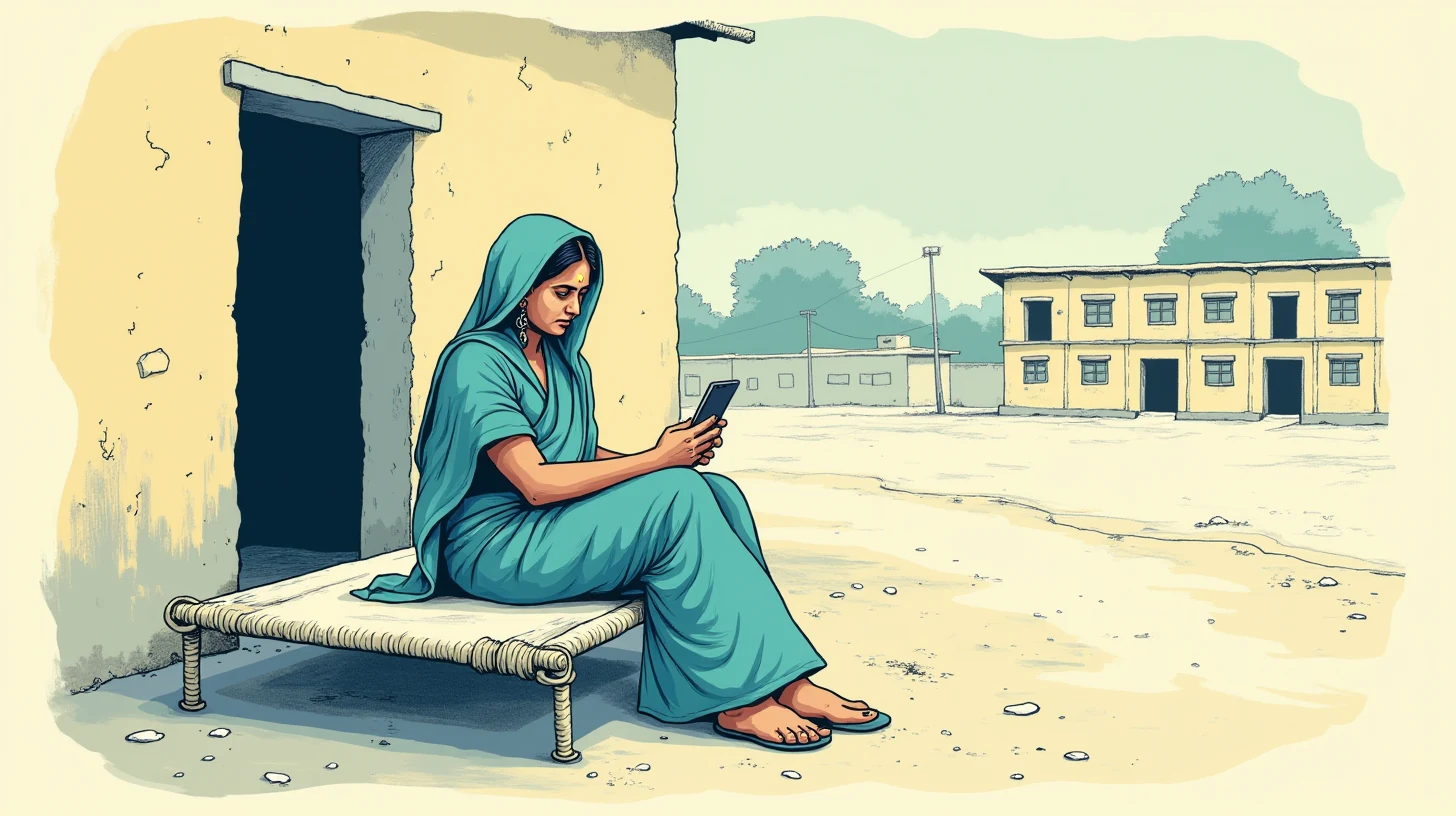
It was mid-December 2025. The deadline was mid-January 2026.
Rekha worked as an anganwadi helper at the Bodh Gaya Panchayat anganwadi center, earning a modest ₹600 a month. Her husband Ramu did agricultural labour during sowing and harvest seasons. Together, their combined income on paper was roughly ₹72,000 a year — well under the NMMS ceiling of ₹1.5 lakh. They had the proof: a ration card, Suresh's school admission documents, and her employment letter from the panchayat. What they lacked was the official income certificate that the portal insisted on.
Her first visit to the Tehsildar's office in Gaya, on the outskirts of Bodhgaya block, was on December 10th. The office was crowded. A clerk glanced at her documents and said: "Ration card, good. But you need an electricity bill or a land record in your name, and a handwritten affidavit on stamp paper."
Rekha nodded. The house where she lived was her father-in-law's, registered in his name decades ago. There was no electricity bill in her name. She had no land. She would have to buy stamp paper and write the affidavit herself.
By the second visit, on December 18th — after borrowing ₹50 for stamp paper and spending an afternoon drafting the affidavit with help from a neighbor who could write Hindi — the Tehsildar's office gave her the timeline that broke her hope. "Four to six weeks," a clerk said, barely looking up. The NMMS portal deadline was January 15th.
Rekha walked back to the anganwadi center that afternoon, defeated.
🗓️ 📱 The Phone That Held the Answer
Meena didi, the senior supervisor at the Bodh Gaya anganwadi, had been using an agent on her phone for the past three months. The tool helped her navigate the beneficiary portal for the Integrated Child Development Scheme (ICDS), pull government circulars, and find faster routes through bureaucratic knots. When Rekha told her about the income certificate deadlock, Meena didi immediately pulled up the agent and typed in a question in Hindi.
"बिहार में एक ऑनलाइन सेवा है जिसका नाम 'सेवा प्लस' है। इसके माध्यम से आप घर बैठे आय प्रमाणपत्र के लिए आवेदन कर सकते हैं। लेकिन इससे भी तेजी का तरीका है। 2024 की एक सरकारी परिपत्र के अनुसार, आपके बेटे के स्कूल के प्रिंसिपल आपके परिवार के लिए एक आय प्रमाणपत्र लिख सकते हैं। वह पत्र, आधार और राशन कार्ड के साथ, नेशनल स्कॉलरशिप पोर्टल द्वारा स्वीकार किया जाता है। कोई देरी नहीं, कोई तहसीलदार नहीं—एक ही दिन में मिल जाएगा।"
(There is an online service in Bihar called Seva Plus where you can apply for an income certificate from home. But there is a faster way. According to a 2024 government circular, your son's school principal can write an income certificate for your family. That letter, along with Aadhaar and ration card, is now accepted by the National Scholarship Portal. No delay, no tehsildar—you get it the same day.)
Bihar, it turned out, had an online system called Seva Plus (also called the Bihar e-Labharthi portal) where income certificates could be applied for digitally. The processing time was 7 to 10 working days — far shorter than the Tehsildar's six weeks. And critically, the agent explained, the National Scholarship Portal accepted income certificates issued through Bihar e-Labharthi as valid proof.
But there was more.
The agent also revealed a 2024 circular from the Bihar government that many families — and many schools — did not know about. For anganwadi families and other marginalized groups applying for scholarships, the school-level NMMS coordinator could issue an income declaration on official school letterhead. Combined with Aadhaar and a ration card, this school declaration was an acceptable substitute for the Tehsildar's certificate, specifically for the purposes of the National Scholarship Portal.
Meena didi helped Rekha understand what this meant in practical terms. "Your son's school principal or the NMMS coordinator can write a letter on the school's official paper saying that your family's income is below the threshold. That letter, plus your Aadhaar card, is enough. No Tehsildar, no weeks of waiting."
Rekha felt a knot in her chest loosen.
⚠️ 🏫 The School Declaration Route
The next day, Rekha walked to Government Middle School, Bodhgaya block, where Suresh was enrolled. She asked to speak to Sharma sir, the NMMS coordinator and an English teacher with twenty years at the school. She had never approached a teacher for anything official before — the culture of anganwadi families and government schools maintained a certain distance — but she explained her situation clearly.
Sharma sir listened. He had seen this problem before. In recent years, the income certificate bottleneck had become routine. He knew the 2024 Bihar circular. Within ten minutes, he typed a letter on the school's letterhead:
Government Middle School, Bodhgaya Block, Gaya District
INCOME DECLARATION
This is to certify that Suresh Kumar, son of Ramu, a student of Class 9 at this school, belongs to an economically weaker section family. His mother, Rekha Devi, is an anganwadi helper with the Bodh Gaya Panchayat, and his father is engaged in agricultural labour. The combined annual family income is approximately ₹72,000, which falls below the income ceiling prescribed for NMMS scholarship eligibility.
This declaration is issued in accordance with the Bihar Government circular dated [2024] permitting school-level income declarations for marginalized families applying for state and national scholarships.
[School Stamp and Signature]
Sharma sir handed it to Rekha. "Take this along with your Aadhaar card and ration card to the National Scholarship Portal. Upload it in place of the Tehsildar's certificate. It will be accepted."
The entire conversation had taken fifteen minutes.
🌗 💡 Why This Route Exists (And Why Few Know About It)
The 2024 Bihar circular that Sharma sir cited reflects a deliberate policy shift. Government schools and anganwadi centers are often the first institutional touchpoint for rural families. The state recognized that routing every scholarship application through the Tehsildar's office — a bottleneck by design, with limited staff and no incentive to fast-track non-urgent work — was systematically excluding eligible students.
The school-level income declaration was meant to decentralize that authority. A principal or coordinator has direct knowledge of their students' socioeconomic status. They see the family's background, the household situation, the father's occupation. They sign off on merit scholarships and school admissions daily. Why should they not also verify income for the purposes of a state scholarship?
For families like Rekha's, this meant the difference between a deadline met and a scholarship lost.
The National Scholarship Portal, operated by the Ministry of Education at the federal level, had been updated to recognize the Bihar e-Labharthi income certificate and school-issued income declarations as equivalent to Tehsildar certificates. The logic was simple: the documents carry official letterhead, official seals, and the signature of an accountable authority. The intent — to verify income — was fulfilled.
But the gap between policy and awareness remained vast.
🧭 📞 The Agent's Role: Connecting the Invisible Dots
The agent's intervention was not about solving a technical problem or filling out a form. Rekha was literate enough to navigate the forms herself. The problem was structural: she did not know that the school route existed, that the 2024 circular applied to her son, or that the National Scholarship Portal would accept an alternative to the Tehsildar's certificate.
The agent, accessed via Meena didi's phone at the anganwadi center, provided three specific pieces of information in Hindi:
"बिहार में एक ऑनलाइन सेवा है जिसका नाम 'सेवा प्लस' है। इसके माध्यम से आप घर बैठे आयमान प्रमाणपत्र के लिए आवेदन कर सकते हैं। लेकिन इससे भी तेजी का तरीका है। 2024 की एक सरकारी परिपत्र के अनुसार, आपके बेटे के स्कूल के प्रिंसिपल या NMMS समन्वयक आपके परिवार के लिए एक आय प्रमाणपत्र लिख सकते हैं। वह पत्र, आधार और राशन कार्ड के साथ, अब नेशनल स्कॉलरशिप पोर्टल द्वारा स्वीकार किया जाता है।"
(There is an online service in Bihar called Seva Plus. You can apply for an income certificate from home through it. But there is a faster way. According to a 2024 government circular, your son's school principal or NMMS coordinator can write an income certificate for your family. That letter, along with Aadhaar and ration card, is now accepted by the National Scholarship Portal.)
This was not a workaround or a shortcut. It was the actual policy. But without the agent's intervention, Rekha would never have discovered it. The policy sat in a circular, filed away in the state education department, referenced in perhaps a handful of schools, unknown to the families who needed it most.
"बारह हजार रुपये सुरेश के चार साल की पढ़ाई के लिए है। हर साल इतना ही मिलेगा, नौवीं से बारहवीं तक। यह एक बहुत बड़ी बात है हमारे घर के लिए। हर साल बारह हजार का मतलब है कि मैं उसकी किताबें, कॉपियाँ, और ट्यूशन के लिए एक पैसा उधार नहीं लूंगी। मैं सोते हुए सपने नहीं देखती कि कहीं स्कूल की फीस न मिल जाए।""Twelve thousand rupees for Suresh's four years of education. Every year, the same amount, from Class 9 to 12. This is a huge thing for our family. Twelve thousand a year means I won't have to borrow money for his books, notebooks, and tuition. I don't lie awake at night dreaming that somehow the school fees won't come through."
— Rekha Devi, anganwadi helper, Bodh Gaya
🌱 ✅ Practical Takeaway: What Families Need to Know
If your child has passed the NMMS selection test and your family income is below ₹1.5 lakh per annum, the National Scholarship Portal requires income verification. Here are the three routes, in order of speed:
Fastest Route: School Income Declaration (Same Day)
Contact your child's school NMMS coordinator or principal. Ask if they can issue an income declaration letter on official school letterhead, stating that your family's income is below the NMMS threshold. This is permitted under the 2024 Bihar government circular for anganwadi families and other economically weaker sections. You will need:
- School letterhead document (signed by principal or NMMS coordinator)
- Your Aadhaar card
- Ration card
Upload these three documents to the National Scholarship Portal under "Income Certificate." The application will be accepted.
Second Route: Bihar e-Labharthi Portal (7–10 Working Days)
Visit the Seva Plus / Bihar e-Labharthi portal (check with your anganwadi supervisor for the exact link or search "Bihar e-Labharthi income certificate online"). Apply with your Aadhaar number and supporting documents (ration card, self-declaration of income on notarized paper, or Aadhaar itself). Once approved, download the certificate and upload it to the National Scholarship Portal.
Third Route: Tehsildar's Office (4–6 Weeks)
Visit your local Tehsildar or Sub-Divisional Officer (SDO) with a ration card, an electricity bill or land record in your name (if you have one), and a handwritten affidavit on stamp paper declaring your income. Request an income certificate. This is the slowest route but works if the above two are not accessible.
Do not wait for the Tehsildar route if your NSP deadline is within two months. The school route or e-Labharthi portal will get you across the finish line.
Rekha Devi's son Suresh is now in Class 9. The NMMS scholarship is deposited in the school's account twice a year. Rekha no longer loses sleep over tuition. She was recently promoted to a slightly higher position at the anganwadi center, a small increase in responsibility and pay. When other mothers at the center mention the NMMS scholarship as something "only rich families can get because they have land records," Rekha tells them about the school letter and about the agent on Meena didi's phone that showed her the way.
The policy was always there. The circular was always there. The school principal's authority to issue the declaration was always there. What was missing was a single moment of connection — a mother, a supervisor, a phone, and a tool that knew where to look. That moment, four minutes of conversation, changed the arc of one boy's education.