
The Imphal mother and the minor bank account that blocked the scholarship
Sonia Devi sat on her stool at Ima Keithel market, the morning light catching the deep indigo folds of the Meitei fabric draped across her stall. She had been selling handloom cloth here for thirteen years—careful, meticulous work, earning just enough to keep her household afloat. Her husband Ibohal tended the vegetable garden behind their home in Singjamei. Their son Rohan, fifteen now, was in Class 10 at Government High School Singjamei, and for once, good news had arrived.
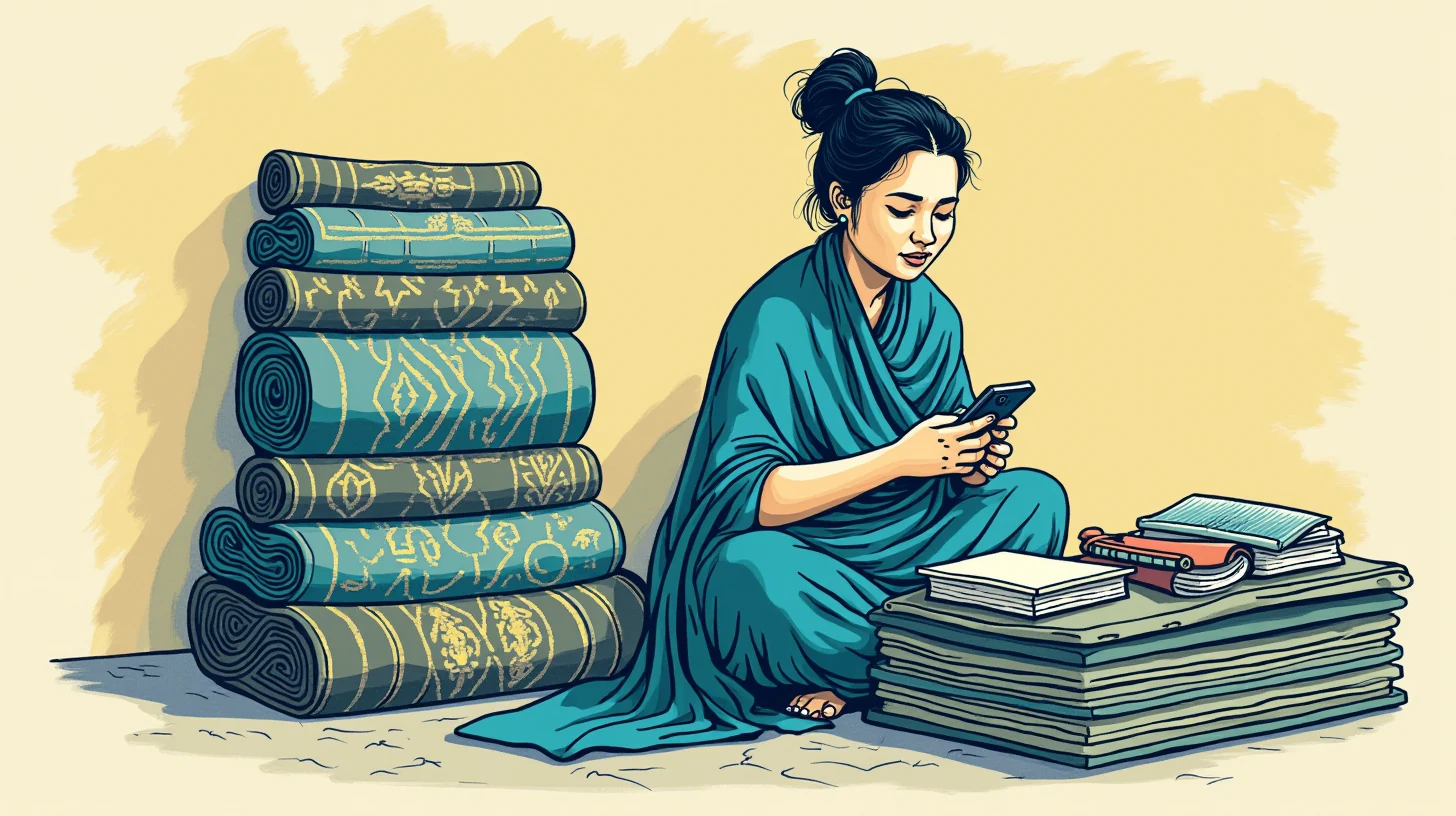
Rohan had qualified for the National Scholarship Portal's pre-matric OBC scholarship. The amount wasn't large—₹5,000 for the academic year—but it mattered. To a family with an annual income of ₹78,000, that scholarship meant textbooks, a better pair of shoes, perhaps some tuition help. Sonia had filled out the forms carefully, gathered the documents, submitted everything through the NSP portal.
And then she hit a wall that neither the portal nor the bank could clearly explain.
🗓️ The Scholarship Approval That Went Nowhere
The National Scholarship Portal had processed Rohan's application smoothly. His OBC certificate was in order. His family's income fell within the pre-matric threshold. The system displayed a status: Approved for payment processing. But below that simple phrase lay a technical requirement that would strand the entire application for weeks.
The NSP requires that before any scholarship disbursement, the student's bank account must be seeded with their Aadhaar number. This is a security measure meant to prevent fraud and ensure that funds reach the intended beneficiary. It's standard practice across India's digital welfare infrastructure: the student's Aadhaar, the student's bank account, a clean electronic trail.
Rohan had a bank account. He'd opened it at UCO Bank, Singjamei Branch, when he was thirteen—a modest savings account with a passbook that he carried to school sometimes when pocket money needed a formal deposit. His mother Sonia was listed as the guardian on the account form, the legal custodian required by banking norms for any minor.
When Sonia went to the bank to seed Rohan's Aadhaar for the scholarship application, the teller at UCO Bank looked at the account type and shook their head.
"Aadhaar seeding failed," the screen showed. "Account type: MINOR. Requires parent Aadhaar as primary."
Sonia explained the situation—the scholarship portal wanted the student's Aadhaar, not the guardian's. The teller was sympathetic but unmoved. The bank's system had a rule: minor accounts could not have the minor's Aadhaar seeded directly. The guardian's Aadhaar was the designated primary account link. That was how the account had been opened; that was how the bank's core system was configured.
It was a technical catch-22. The scholarship system wanted the student's name and Aadhaar. The bank's minor account structure gave that prominence to the parent instead.
Sonia, who had navigated the informal economy of the Ima Keithel market for over a decade, understood that rules in government offices and banks rarely existed without a workaround. But she didn't know what it was, and no one at the branch seemed prepared to discuss it.
⚠️ Finding the Neighbour Who Knew Someone
A few mornings later, Sonia was arranging bolts of freshly dyed cotton at her stall when Tombi, who sold handloom cloth at the adjacent stall, called her over with a knowing smile. Tombi had been wrestling with her own administrative problem—a ration card matter—a few months earlier. She'd mentioned it to a woman online, received advice that sorted the issue in one government visit. A few days ago, Sonia had mentioned the scholarship account problem to Tombi in passing.
"My friend used an agent for the ration card," Tombi said, recalling the conversation. "Someone who helps with these things. I have a contact. Let me send you the number."
By mid-September, Sonia had reached out. The agent responded within an hour, in Meitei language, by text. Sonia felt a small relief at that—she could explain the situation clearly in her own language, without needing to translate in her head.
The agent asked for the key details: Rohan's age, the account type at the bank, the NSP requirement, the scholarship status. Within twenty minutes, the agent had outlined two distinct paths forward. Both were legitimate. Both were used in Manipur. The choice would be Sonia's based on what felt simpler.
🌗 Path One: Account Conversion at Fifteen
The first path was direct and often invisible to parents who don't ask about it. Banks in India aren't required by RBI regulation to hold minor accounts indefinitely. Once a child reaches a certain age—typically fifteen—the account can be converted from a "minor account" with guardian oversight to a "regular savings account" in the student's name alone. There's no minimum balance requirement for the conversion. There's typically no fee. It requires a form signed by the account holder and guardian, and a single visit to the branch.
The agent explained that most banks, including UCO, offer this conversion without fuss. The customer service desk would process it. The account number would remain the same. The passbook would be reissued with the student as the sole account holder. Once converted, seeding the student's own Aadhaar would be instantaneous—the NSP's requirement would be satisfied immediately.
"Rohan is fifteen," the agent said in Meitei. "He's old enough for a regular account. This is the clean path. The bank will do it in one visit."
Path Two: The NSP Parent Aadhaar Proxy
The second path existed for situations where a student couldn't or shouldn't convert the account immediately. The National Scholarship Portal, recognizing that some minor accounts would fall into its applicant pool, had a secondary process: the "Parent Aadhaar Proxy."
Under this process, the parent or guardian submits a form to the NSP state coordinator—in this case, the Manipur Education Department. The form includes both the student's Aadhaar and the guardian's Aadhaar, along with a statement that the account is a minor account held in the guardian's custody. The NSP system then seeds the scholarship through the guardian's Aadhaar, designating the student as the beneficiary. The funds would still reach the student's account; the seeding pathway simply goes through the guardian.
"This works," the agent said. "But it takes longer. You'd have to contact the Manipur Education Department, upload the form, wait for processing. Maybe two weeks, maybe three. The first way is faster."
Sonia didn't hesitate. Faster was better. She had a scholarship to capture, and Rohan had a school year to fund. She asked the agent how to proceed with the account conversion.
One Visit to the Branch
The agent sent Sonia a template form—the standard UCO Bank account type conversion request. It was straightforward: the account number, the request for conversion from minor to regular savings, the date, the signatures of both the account holder and guardian.
The next morning, Sonia and Rohan walked to UCO Bank, Singjamei Branch. She'd prepared the form the night before. The teller who had turned her away before seemed slightly embarrassed when she returned with the conversion request. He checked with the manager. The manager nodded. It was routine, apparently. Why hadn't anyone explained it the first time?
Rohan signed the form. Sonia signed it as the guardian consenting to the conversion. The bank retained the original, photocopied the account details for their records, and handed Rohan an updated passbook. In the remarks column, it now read: Account type converted from MINOR to REGULAR SAVINGS on [date]. Aadhaar seeding eligible.
The process took thirty minutes.
That afternoon, Sonia returned to the NSP portal. She re-submitted Rohan's application with the Aadhaar seeding request. The system processed the query. This time, there was no error message. The Aadhaar seed was accepted. The NSP updated Rohan's application status to Payment Processing.
The Scholarship Clears
Four weeks later, Rohan's bank account received a deposit of ₹5,000. The National Scholarship Portal sent a notification to Sonia's registered mobile number: Payment disbursed successfully to student beneficiary.
It was a quiet victory. No ceremony. No letter from the government. Just a bank notification and the knowledge that for the next academic year, Rohan would have a little more room in the family's calculations. He could focus on his studies. Ibohal could focus on the vegetable garden without the anxiety of school fees. Sonia could keep her eyes on the indigo dye pot and her hands on the loom.
But more than the money, there was something else that stayed with Sonia in the weeks that followed: the realization that the problem wasn't actually a problem. The rule wasn't immovable. The catch-22 had a clear exit. And that exit had been traveled by other people in her situation before. It just required knowing where to ask.
What Minor Accounts Are and Why They Matter
A minor account is not a limitation—it's a protection. When a child under eighteen opens a bank account, the law requires that a guardian (usually a parent) maintain legal custody over the account. The guardian can't steal the money, but they can monitor withdrawals, ensure the child isn't making reckless transfers, and protect the account from unsecured access.
For most families in India, a minor account is the natural first account for a child. A parent opens it, deposits birthday money, school deposits, or savings. It's a safe place for a child to learn financial discipline.
The problem arises when government systems assume that accounts are opened in the account holder's name alone. The NSP doesn't recognize minor accounts by default. GST e-commerce refunds can get stuck in minor accounts. Some cooperative banks' investment schemes won't transfer funds into minor accounts because the beneficiary listed in the scheme is a minor, not the guardian.
Sonia hadn't known about account conversion because the bank hadn't mentioned it, and why would they? A minor account is functional. It receives and holds money. It just has a different legal structure when it comes to Aadhaar seeding and digital fund transfers.
The solution—converting the account when the student reaches fifteen—is so routine that it barely shows up in banking training materials. But it's the doorway between childhood financial protection and independent financial access. It's the moment when a child's Aadhaar becomes the primary identifier for the account they've already been using for years.
What the Agent Explained
The agent sent Sonia a voice note in Meitei, recorded carefully so she could listen while working at the stall:
"আধার নম্বর দিয়ে অ্যাকাউন্ট খোলার নিয়ম আছে রোহনের বয়সে। পনেরো বছর পূরণ হলে বাচ্চার নিজস্ব নিয়মিত অ্যাকাউন্ট পেতে পারে এক দিনেই। ব্যাংক নিয়ে সমস্যা করলে তাদের বলবে এটা আধার সিডিং এর জন্য প্রয়োজন। দ্বিতীয় পথ হল জাতীয় বৃত্তি পোর্টালের নিয়ম—অভিভাবকের আধার দিয়েও বৃত্তি পাঠাতে পারে, কিন্তু সেটা তিন সপ্তাহ লাগে। প্রথম পথটা দ্রুত।"
(Account conversion at fifteen is routine at every bank. Your son can get a regular account in his own name in one day. If the bank hesitates, tell them it's for Aadhaar seeding. The second way is through the NSP's own minor account rule—they can send the scholarship through the guardian's Aadhaar, but it takes two to three weeks. The first way is faster.)
মা এবং ছেলের অনুভূতি (Sonia's reflection)"বৃত্তির টাকা নিজেই গুরুত্বপূর্ণ, কিন্তু সবচেয়ে বড় জিনিস হল এটি জানা যে এই রাস্তাগুলি আছে, আর আমরা একা নই এটি খুঁজে পেতে। কত মা আছে যারা এখনও জানে না যে তাদের ছেলের অ্যাকাউন্ট বদলে দেওয়া যায়। আমি খুশি যে রোহান এখন বড় ছেলে, তার নিজস্ব অ্যাকাউন্ট আছে। এবং এই টাকা আমাদের সাহায্য করবে।"
In English: "The scholarship money itself matters, but what matters most is knowing that these paths exist, and that we weren't alone in finding them. How many mothers still don't know their son's account can be converted? I'm glad Rohan is now older, with his own account in his own name. And this money will help us."
🧭 Lessons for Other Parents in Similar Situations
If your child has a minor account and you're trying to access a government scholarship, a GST refund, or any digital fund transfer that requires the student's Aadhaar seeding, here's what you need to know:
First, don't assume the bank's first answer is the only answer. When the teller said "Can't seed a minor's Aadhaar," they were describing the system as configured, not an immovable law. Ask if account conversion is possible. If the branch staff seems unsure, ask for the manager or the customer service head. This is routine.
Second, know your child's age window. Most banks allow conversion from fifteen onwards, some from sixteen, a few from eighteen. But the majority recognize fifteen as the threshold when a student is mature enough to hold an independent account. It's worth asking your specific bank—a quick phone call to the branch.
Third, understand that two paths exist. Even if account conversion seems complicated, the NSP and most state scholarship boards have a backup mechanism for minor accounts. It takes longer, but it's there. Don't let a roadblock become a permanent barrier.
Fourth, reach out. As Sonia discovered, other families have faced this exact problem. That's why solutions like account conversion are so established—because they've been needed many times over. If you're stuck on a scholarship, ask. There are people who specialize in untangling these knots.
🌱 What Changed, and What Stayed
Rohan's life didn't transform. He remained a Class 10 student in Imphal, attending Government High School Singjamei, doing his homework at home while his father tended the garden. The scholarship didn't make him suddenly exceptional. It made him slightly less burdened.
For Sonia, the change was subtler. She had already known how to navigate systems—she ran a market stall, managed a household budget with precision, raised a son in a city of modest means. But this small victory reminded her that the systems she'd assumed were fixed actually had hinges. There were people who knew where those hinges were. And knowing where to ask was as valuable as knowing the answer itself.
The bank account conversion happened once. Rohan's account became a regular savings account, and at fifteen, he stepped across a threshold—not from childhood to adulthood (that would come later, in time), but from a protected financial space to an independent one. His Aadhaar was now the primary identifier. The passbook bore his name alone, no guardian listed. It was a small administrative change that felt, in its way, like growing up.
The scholarship cleared. The money arrived. Rohan bought new school supplies. His mother Sonia returned to her loom with the quiet satisfaction of someone who had solved a problem that the world had presented as unsolvable.
And somewhere in Imphal, Tombi told another friend about the agent. One connection at a time, the knowledge spread—not through government announcements or bank newsletters, but through the informal networks where most people actually find their answers. Through a friend at the market. Through a text message. Through someone who had already faced the problem and lived to solve it.