
The Jammu father and the domicile that twelve years of schooling should have proven
Mohanlal Gupta stood in the Talab Tillo Tehsildar's office on a March morning, holding a thick folder of school certificates. His daughter Priya sat beside him, her Class 12 results—87% in Physics, Chemistry, Mathematics—tucked into her college counsellor's folder. It was a score that should have opened doors. Instead, it had opened a question that Mohanlal thought his family had long ago settled: Where do we really belong?
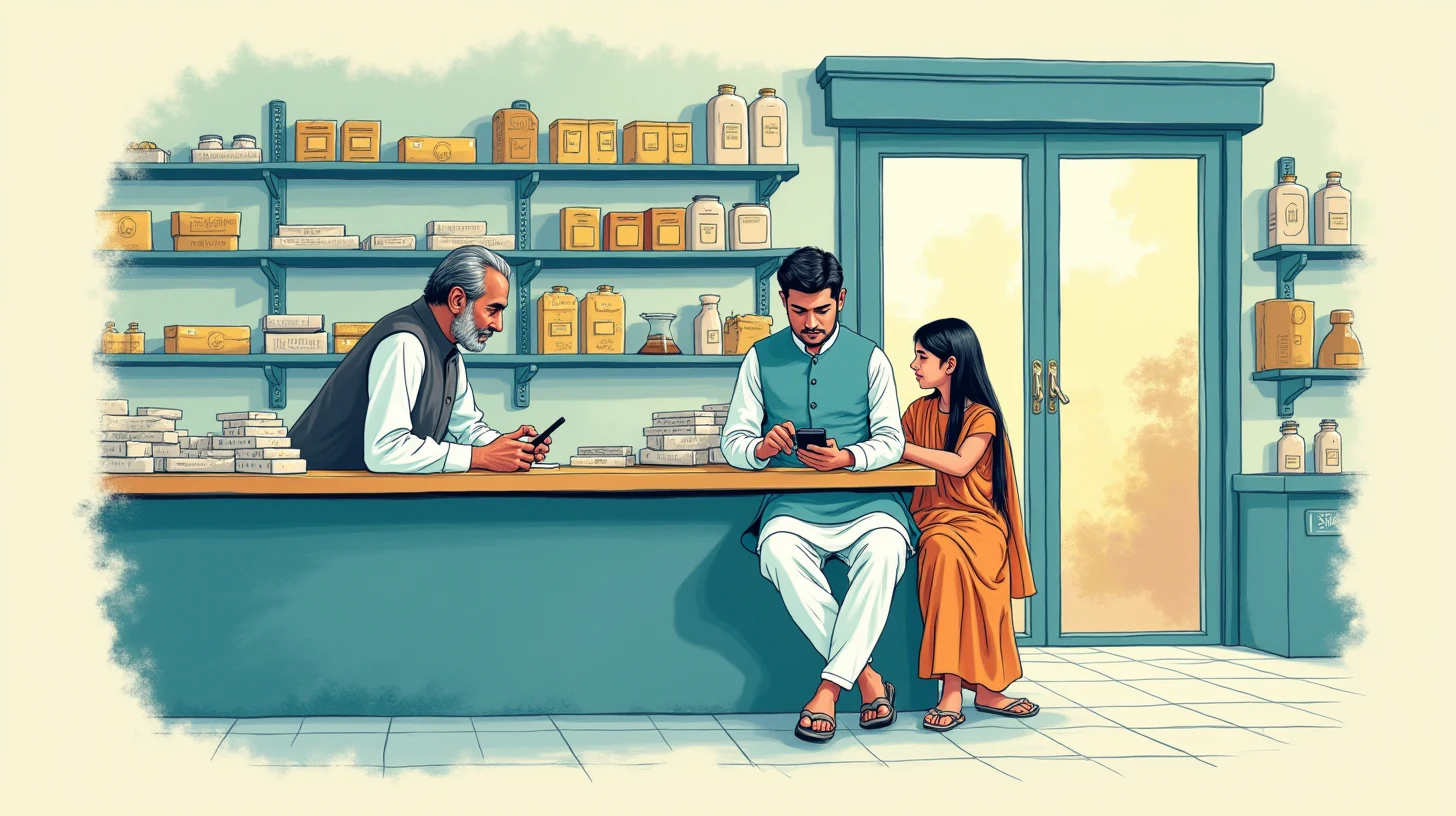
The question was not new, but it had never felt so urgent.
🗓️ 🎓 When 87% Becomes a Question Mark
Priya's path seemed straightforward. At eighteen, she had cleared the CBSE Class 12 exams with distinction in the science stream. The Prime Minister's Special Scholarship Scheme for J&K—known as PMSSS—offered engineering students from the Union Territory up to ₹30,000 per academic year to pursue professional degree courses at colleges outside J&K. It was designed precisely for students like her: bright, ambitious, from a state that had limited engineering seats of its own.
PMSSS is administered through a single portal: aicte-jkssp.nic.in. The application form itself is straightforward. Merit cutoff, entrance exam score, choice of college, proof of domicile. One certificate. That was all that stood between Priya and her engineering future.
Mohanlal had already made the arrangements on the family's side. His wife Sarla, a homemaker, had organized Priya's documents with meticulous care—Class 10 passing certificate, Class 12 marks sheet, migration certificate, school conduct reports. Sarla was a woman who believed that documents, kept in order, kept life in order. She was right about most things. But she could not have anticipated that a certificate issued by the government of the state where Priya had spent her entire life would require a descent into the family's genealogy that began before Partition.
Mohanlal himself had never had to trace his own domicile. He had been born in Jammu forty-five years ago. His kirana shop in Talab Tillo had been his family's only address for decades. His customers knew him by name. His wife had managed the household budget, raised their daughter, and volunteered at the local school. By any reasonable measure, they were Jammu residents.
But the Tehsildar's office was not asking about reasonable measures.
⚠️ 📋 The 2020 Rules Nobody Seemed to Know
Three weeks into the domicile application, Priya's case had stalled. The Tehsildar, a conscientious man in his fifties, explained the problem. Mohanlal's father was born in Mirpur—a town that was now in Pakistan-administered Kashmir. This was not a secret in the family; it was family history. Mohanlal's grandparents had migrated to Jammu in the mid-twentieth century, during one of the region's turbulent periods. The family had settled, married, worked, educated their children. But the Tehsildar said that to issue a modern domicile certificate—the post-2020 domicile introduced after the J&K Reorganization Act 2019—the office needed to trace Mohanlal's origins and confirm permanent residency.
He asked for a Declaration of Permanent Residency from the District Commissioner's office. He also asked for fifteen years of schooling records as evidence of Priya's continuous residence in J&K.
Sarla brought out the school records. Priya had studied at Government Higher Secondary School, Talab Tillo, from Class 1 all the way through Class 12. Twelve years, not fifteen—but twelve continuous years of enrollment, every transcript accounted for. The Tehsildar acknowledged the records but said they would still need the DC's letter.
This could take months. The DC's office had a backlog. PMSSS applications closed in June.
Mohanlal was not an educated man in the formal sense, but he was a businessman who understood margins and timelines. He understood when something was being made harder than it needed to be. He did not know the law well enough to challenge it, but he knew someone who might.
One evening, he spoke to Sharma ji, a retired government employee who lived in Sainik Colony, three lanes away. Sharma ji had used an agent to sort out pension paperwork two years earlier—a woman named Garima who had helped him navigate what seemed like an impossible tangle of old records and new rules. Sharma ji suggested that Mohanlal try the same approach.
🌗 🏛️ The Rule That Should Have Been Read
When Mohanlal met with Garima, the agent, she had only one question before she opened her laptop: "Has Priya been studying in J&K institutions the whole time?"
"Since Class 1," Mohanlal said.
Garima nodded. "Then you may not need what the Tehsildar is asking for."
She pulled up the J&K Domicile Certificate (Procedure) Rules 2020. There it was, in Section 3A. The rule was not new. It had been in place for nearly six years.
"जम्मू-कश्मीर में सात या अधिक वर्षों तक पंजीकृत संस्थानों में पढ़ने वाले व्यक्ति तेजी से ड्राइविंग सर्टिफिकेट के योग्य हैं। स्कूली दस्तावेज़ और निवास घोषणापत्र की आवश्यकता है। जिला आयुक्त की घोषणा की जरूरत नहीं है।"
(Persons who have studied in registered institutions in J&K for seven or more consecutive years are eligible for fast-track domicile certification with proof of schooling records and residence affidavit, without requiring a Declaration of Permanent Residency from the District Commissioner.)
The logic was straightforward. A child who has spent seven or more years in J&K classrooms—who has taken examinations in J&K schools, whose grades are recorded in J&K government archives, who has gone to school assemblies and participated in state sports days—is, by any functional definition, a resident of J&K. The rule recognized that domicile is not only about genealogy; it is about where a person has actually lived and studied.
Priya had studied for twelve years. She exceeded the threshold by five years.
The Tehsildar, Garima explained to Mohanlal, was applying migration-origin scrutiny that was meant for first-generation claimants—people born outside J&K who were claiming domicile for the first time. Priya was different. She was born in J&K, had lived her entire life in J&K, and had completed her entire education in J&K.
Mohanlal's Reflection (Hindi & English)"मैंने सोचा कि पड़ोसियों की बदलती नस्लें, बिना पूछे, यह तय कर सकती हैं कि कौन सच में यहाँ रहता है। लेकिन नियम कहते हैं: अगर आपके बच्चे का स्कूल बस्ता यहाँ दस साल तक भरा है, तो आप यहाँ हैं।"
"I thought that generational borders could decide, without asking, who truly belongs here. But the rules say: if your child's schoolbag has been packed here for ten years, then you belong here."
—Mohanlal Gupta, speaking after Priya's domicile was approved
📄 What Priya Actually Needed
The agent helped Mohanlal prepare a covering letter that cited the J&K Reorganization Act 2019, Section 3A, and the 2020 Domicile Rules. The letter was written in English but referenced the Urdu and Hindi versions of the rules as well—a small detail, but one that ensured the Tehsildar could not claim ignorance of the applicable law.
Priya gathered seven volumes of school records—enrollment certificates from Class 1 through Class 12, all bearing the official seal of Government Higher Secondary School, Talab Tillo. She obtained a fresh Aadhaar printout. Sarla drafted a simple residence affidavit, which Mohanlal had notarized at a local lawyer's office.
Three days later, they submitted the file to the Talab Tillo Tehsildar office.
The Tehsildar was initially hesitant. "The rules say fast-track," he admitted, "but I have not seen many cases use it this way."
"That is why we brought the rules with us," Garima said. "Your office issues the certificate under these rules every month for other applicants. The law applies to Priya the same way it applies to anyone else."
The Tehsildar made a phone call to the Domicile Cell at the DC office. There was a brief conversation in Urdu. When he hung up, he opened a new case file in the domicile tracking system and marked it as "Fast-Track, Education-Based."
The certificate was issued twelve working days later.
🧭 ✅ What Changed After the Domicile Was Issued
Within two days of receiving the domicile certificate, Priya filed her PMSSS application on aicte-jkssp.nic.in. The portal accepted the submission immediately. Her merit score—87% in Class 12, plus her entrance exam performance—placed her in the upper percentile of PMSSS applicants that year.
By May, her engineering seat at a Delhi-based college was confirmed. Mechanical Engineering, four-year course, with PMSSS covering ₹30,000 per year toward tuition.
What struck Mohanlal most, looking back, was not the outcome—though that was remarkable—but the gap between what the rules actually said and what he had been told the rules required. The Tehsildar had not been trying to be cruel. He was simply applying a standard procedure to a case that fell outside that standard. No one had told him—and he had not thought to check—that the rules had been reformed six years earlier specifically to avoid situations like this.
This was the pattern that Garima explained to him over tea before she left. Many government offices update their procedural manuals. But not all of them update uniformly, and not all of them make sure that front-line staff know about the changes. A person who has never used a rule often does not know it exists. A rule that is rarely cited becomes invisible.
Mohanlal understood this differently than most fathers might. He understood it as a risk. If Priya had not had access to an agent who knew the 2020 rules, she would have waited for the DC's letter. The DC's office would have issued it, eventually. The PMSSS deadline would have passed. She would have applied next year instead. The scholarship would have gone to someone else.
"The rule was always there," he said to Sarla, holding the domicile certificate. "But nobody reads it until they have to."
🌱 🎯 The Path Forward for Other Parents
For any parent in J&K with children pursuing scholarships, professional degrees, or government benefits that require domicile certification, the lesson is clear: if your child has studied in J&K for seven or more consecutive years, you are entitled to fast-track domicile based on education alone.
You do not need to trace your family's migration history. You do not need the DC's Declaration of Permanent Residency. You do not need to wait months.
What you do need:
- School records (enrollment and conduct certificates from all years, Class 1 through 12)
- A valid identity document (Aadhaar, voter ID, passport)
- A notarized residence affidavit
- A covering letter that cites J&K Domicile Certificate (Procedure) Rules 2020, Section 3A
Take these documents to your local Tehsildar office. Ask for fast-track domicile based on education. If the office staff hesitate, show them the 2020 rules—they are public, available on the J&K government portal.
The Tehsildar's office processes these applications in seven to twelve working days.
For PMSSS specifically, the portal at aicte-jkssp.nic.in requires the domicile certificate to be scanned and uploaded with your application. Once the domicile is issued, upload it immediately. Do not wait. The PMSSS application window is typically open from February through June, but merit-based seats fill quickly.
When Priya submitted her application, she had already cleared the entrance examination with a percentile that placed her in the engineering colleges of her choice. The domicile was the ticket. It arrived just in time.
How an agent helped: Garima had worked with dozens of J&K applicants on domicile and scholarship issues. She knew that the Tehsildar's office often applied the more stringent standard procedure even when a more lenient rule applied. She knew the 2020 rules because she had read them—not just heard about them, but actually read the text on the government portal. When Mohanlal described Priya's case, she recognized it immediately as a fast-track eligible case. She prepared the covering letter and coached Mohanlal on how to present the documents to the office. She also made a phone call to the Domicile Cell to confirm that the fast-track rule was still in effect and how it was being applied. The result was that what could have been a 6–8 week wait became a 12-day process, and Priya met the PMSSS deadline by three weeks.
The agent's insight came down to this: Read the rules that exist, not the rules you assume. The 2020 Domicile Rules had been published on every government portal for six years. But a front-line Tehsildar, processing dozens of applications with a standard checklist, did not know they applied to cases like Priya's. And Mohanlal, a businessman without legal training, had no reason to suspect that the rules he was being asked to follow were not the only rules that applied.
The agent bridged that gap by doing what governments often do not: she read the fine print and then explained it in plain language to a father who needed it.
What this means for the J&K government: The domicile certification process has been reformed to be faster and more equitable for people educated in the state. But the reforms only work if the people who administer them know the rules. The Tehsildar's office in Talab Tillo processes hundreds of domicile applications. If even half of the applicants who qualify for fast-track instead receive standard-track processing, the office is creating unnecessary delays and confusion. A simple internal memo—circulated every year—could solve this. Fast-track domicile applies to all applicants (including first-generation and non-education-based) who have studied in registered J&K institutions for seven or more consecutive years. One sentence. That is all it would take.
Until that happens, the burden falls on applicants and their families to know the rules that apply to them. It is not ideal. But it is the reality. And it is why agents who specialize in these processes—who read the rules, understand the exceptions, and know how to present them to government offices—have become essential bridges between families and the opportunities they are entitled to claim.
Priya is beginning her engineering degree in September. Mohanlal has already started saving against the non-scholarship portions of her fees. Sarla has begun to plan the family celebrations—the kind that mark, in a Kashmiri household, that something has changed for good.
The domicile certificate sits in a plastic sleeve in their home office, right next to Priya's Class 12 results.
Two pieces of paper. One that measures what she learned. One that certifies where she has always lived.
Both of them true.