
The Ranchi mother and the scholarship certificate from before the rule changed
Sunita Toppo has worked at the anganwadi centre in Namkum block for eight years. She knows the rhythms of rural Jharkhand—the monsoon calendar, the school cycle, the slow bureaucratic seasons. Her son Birsa is in Class 11 now, sixteen, bright enough that high school is working. But high school costs money. Books, tuition in some subjects, travel to the Government Higher Secondary School in Namkum each day. The family income is ₹68,000 a year—Rajesh does small farming, Sunita earns from the anganwadi. Every rupee gets counted twice.
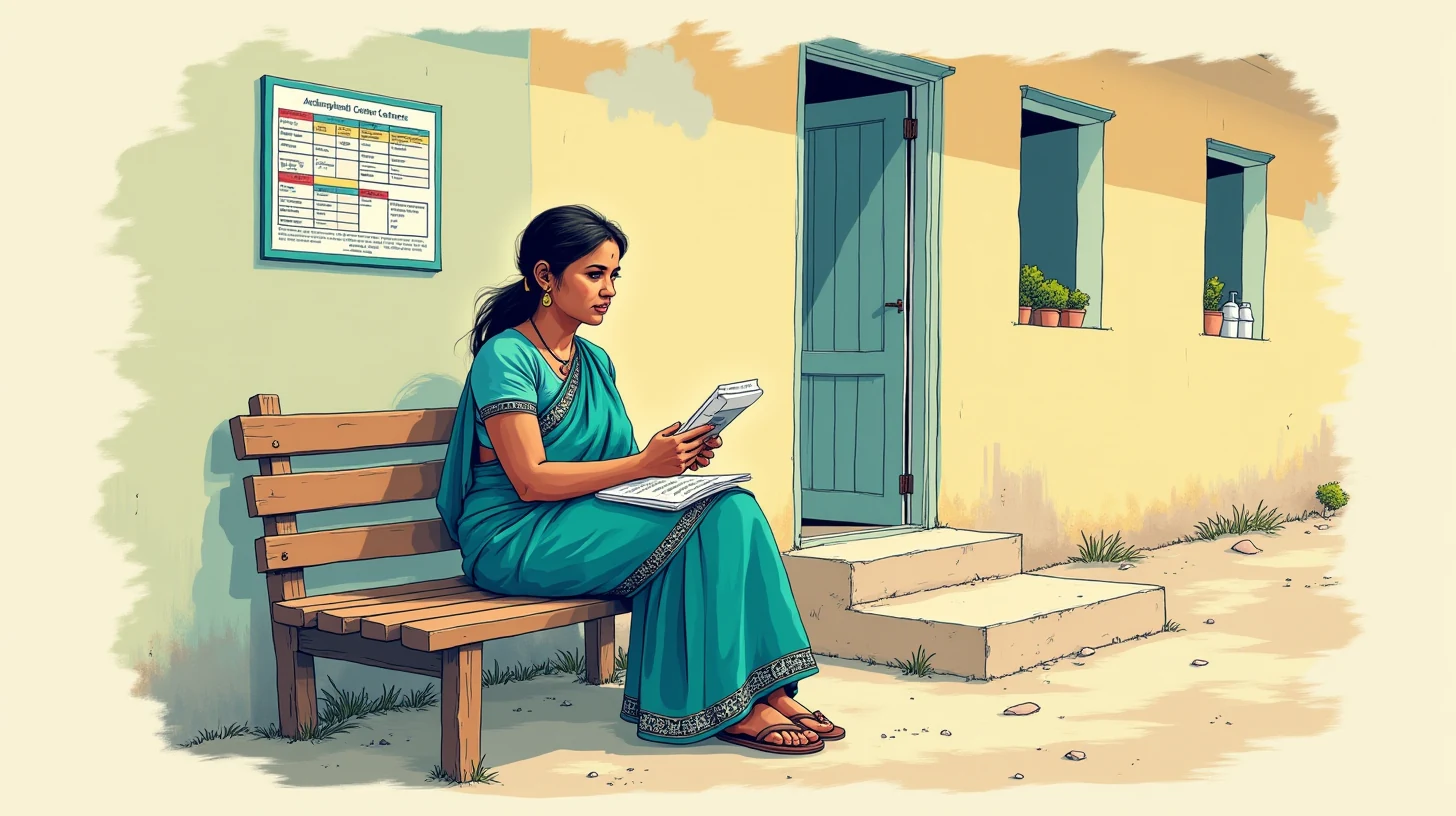
Then she heard about the Jharkhand e-Kalyan scholarship for post-matric students. Birsa qualifies: he's Oraon, registered as Scheduled Tribe, and the family income is well below the ₹2.5 lakh ceiling. The scholarship would be ₹5,400—not enough to change everything, but enough to ease the pressure on Rajesh's farming calendar and Sunita's anganwadi paycheck.
What should have been straightforward became a knot.
🗓️ The Portal Rejects What It Should Have Accepted
Sunita collected the documents. Birsa's ST certificate had been issued by the Block Development Officer in 2021—a valid certificate under the old system, the one that had worked for other children's scholarships for years. She filled the e-Kalyan form on the portal (ekalyan.jharkhand.gov.in), uploaded the certificate, and submitted.
Three days later, the rejection came back. The portal's automated system flagged her submission with a single line: "ST certificate authority: INVALID — only DC/SDO issued certificates accepted."
Sunita stared at it. The certificate was real. The BDO had issued it. It had worked before.
What she didn't know—what the rejection didn't explain—was that a 2022 circular had changed the rules. Before March 2022, Block Development Officers could issue ST certificates. After the circular, only District Collectors (DC) or Subdivisional Officers (SDO) could. Birsa's 2021 certificate, perfectly valid under the old system, was technically pre-standard by the new one.
Getting a new DC-level certificate meant joining a queue at the DC office in Ranchi—a six to eight week wait, during which Birsa's scholarship window was shrinking. Sunita had already seen the deadline: applications for the current session had to be submitted within sixty days.
She had perhaps thirty days left.
⚠️ The Colleague's Suggestion
It was Paro didi, another anganwadi worker at the centre, who mentioned it one afternoon in September.
Paro had older children—they were already past this stage—but she'd kept notes and a memory of the process. Two years earlier, when her eldest son's scholarship had been flagged for a document issue, she'd used an agent to help her navigate the exception paths. She'd shown Sunita at the centre: a phone, an app, a conversation in Hindi with an interface that explained things as if someone from Ranchi was telling her directly.
"It helped me understand that the rules weren't what I thought they were," Paro had said. "Not that they were wrong—just that there was a faster way through them."
Sunita decided to try.
🌗 What the Agent Revealed
The conversation happened over two days, in Hindi, on Paro's old smartphone that Sunita borrowed and brought home to the small room she shared with Rajesh and Birsa.
The agent explained two things that changed everything.
First: the 2022 circular had changed the certificate authority level, yes. But it hadn't invalidated pre-2022 certificates. Under the Jharkhand Scheduled Tribe Act, a certificate issued by a BDO before March 2022 remained legally valid. The e-Kalyan portal's automated filter—the one that was rejecting Birsa's certificate—was a technical restriction, not a legal requirement. There was a reason for the distinction: sometimes technology moved faster than policy, and when it did, there was always a way around it. The portal had been built with an exception submission path for exactly this scenario. Students with legally valid but technically flagged certificates could upload both the original certificate and a "certificate validity declaration"—essentially a letter from the original issuing authority confirming that the certificate they had issued was genuine and remained valid.
Second: getting that validity declaration didn't mean waiting in the DC queue. The BDO office that had issued the certificate could provide it in a single day—usually for free, since they were simply confirming their own work. Moreover, the District Welfare Office in Ranchi, which was separate from the DC office, had started running a "Certificate Verification Express" counter specifically for scholarship applications. This counter could typically process verifications in three to five working days, not weeks. It wasn't a new certificate; it was a verification that the old one was still good.
The Timeline
Sunita went to the BDO office in Namkum the next morning. She brought Birsa's original certificate and explained the situation to the clerk. There was no fee, no delay—the BDO confirmed that the certificate had been issued under his authority and remained valid, and wrote a simple letter to that effect.
Two days later, she logged into the e-Kalyan portal again. This time, instead of the standard submission form, she found the exception pathway. She uploaded Birsa's original BDO certificate and attached the BDO's validity declaration.
Five working days later, the portal sent a message: "Exception submission forwarded to District Welfare Office for verification."
Another five working days, and the decision came through. Approved.
Birsa's ₹5,400 post-matric scholarship was processed.
The Boundary: Why This Matters
What Sunita discovered, with the agent's help, is that government rules and government portals don't always move at the same pace. The rule had changed in 2022; the portal's automated system had adapted. But the gap between a legal rule and a technical filter had created a false barrier. The exception path existed because this gap had happened before—to someone else, in some other office—and someone had insisted that there be a way through it.
The barrier was real. The path around it was real too.
The Scholarship, The School, The Breath
When the approval came through and the first installment of ₹5,400 arrived, Sunita transferred half of it directly to the school for Birsa's fees. The other half she saved. Rajesh had been talking about rotating the north field—it needed a phosphate treatment, and the cost had been hanging over the season. Now it didn't have to.
Birsa noticed, in the way children do. He asked his mother why the mood in the house had shifted. She told him: the scholarship came through. He understood that this meant something—not a celebration, but a small unclenching.
The Agent's Explanation (Hindi Context)
When Sunita had asked the agent about the e-Kalyan process, this is what it had said in Hindi:
"e-Kalyan के लिए ST certificate की authority में 2022 में बदलाव हुआ था — पहले Block Development Officer से भी certificate मान्य था, अब सिर्फ District Collector या Subdivisional Officer से ही मान्य है। लेकिन 2022 से पहले issued certificate अभी भी legally valid है। portal पर ही एक exception path है — original certificate और BDO का validity declaration दोनों submit करें। BDO office से letter एक दिन में, बिना फीस के। District Welfare Office का Express counter 3-5 दिन में verification करता है।"
(The authority for ST certificates changed in e-Kalyan in 2022 — before that, Block Development Officers' certificates were accepted; now only District Collector or Subdivisional Officer certificates are. But certificates issued before 2022 are still legally valid. There is an exception path on the portal itself — submit both the original certificate and a BDO validity declaration. The BDO office issues this letter in one day, at no cost. The District Welfare Office Express counter verifies in 3–5 days.)
"Birsa एक अच्छा student है। स्कूल उसका है। लेकिन रोज़ वहाँ जाना, किताबें खरीदना, फीस देना — यह सब भार है। स्कॉलरशिप सब कुछ नहीं सुलझाती, लेकिन एक भार हटा देती है। और जब एक भार भी उतर जाए — तो आप अलग तरीके से सांस लेते हो।"— Birsa is a good student. School is his. But going there every day, buying books, the fees — these are weights. The scholarship doesn't solve everything, but it removes one weight. And when one weight lifts — you breathe differently.
🧭 The Practical Path Forward
If you're applying for a post-matric scholarship through Jharkhand e-Kalyan and your ST or SC certificate has been flagged as having an invalid authority, here's what to do:
Step 1: Confirm the legal validity. Check the date your certificate was issued. If it was issued before March 2022, it was valid under the old system and remains legally valid now. The portal's rejection is a technical filter, not a legal one.
Step 2: Get the BDO confirmation. Visit the Block Development Officer's office that issued your certificate. Bring the original certificate and ask for a "certificate validity declaration" or "letter of confirmation." This should be issued the same day, at no cost. The BDO is simply confirming that they issued the certificate and that it remains valid.
Step 3: Use the exception path. Go back to the e-Kalyan portal. Instead of the standard submission form, look for an "exception submission," "clarification," or "appeal" option. Upload both your original certificate and the BDO's validity declaration. Submit.
Step 4: Track the verification. The portal will forward your submission to the District Welfare Office. If the queue at the regular DC office is 6–8 weeks, ask whether the Welfare Office has an express verification counter for scholarship applications. If it does, your verification typically takes 3–5 working days.
Step 5: Wait for the approval. Once the District Welfare Office verifies your certificate, the portal will update your application status. The scholarship approval usually follows within a week.
The entire process—from the BDO confirmation to the portal approval—typically takes 1–2 weeks instead of 6–8. The path exists because this problem has happened before, and someone built a way around it.
🌱 Why the Boundary Exists
Government rules change. Technology adapts, but not always at the same pace. Sunita's situation was not unique—it's a boundary where the old rule (BDO authority) meets the new rule (DC/SDO only), and a document that was valid becomes technically invalid, even though it remains legally valid.
These boundaries exist in almost every scholarship portal, every government form, every rule that has changed in the past five years. The exception paths exist because people like Sunita's colleague Paro had asked for help and discovered them, and because someone in government had the wisdom to build a way through the gap.
The agent didn't change any rules. It didn't create any new authority. It simply showed Sunita that the gap between what the portal rejected and what the law accepted was navigable—that someone had already built the path, and it was right there on the portal if you knew to look for it.
Birsa's scholarship came through. The field got treated. The breath came easier.
That's what happens when the path is clear.