
The Bengaluru KSRTC driver and the nine years the UAN passbook forgot
Venkatesh B folded the EPFO passbook printout with both hands, as if it might tear. Sixty-two years old, retired after three decades steering a twelve-meter KSRTC bus through the congested maze of Bengaluru traffic—from Whitefield to Mysuru, Silk Board to Yeshwanthpur—he had come to expect the small indignities of bureaucracy. But this one stung differently.
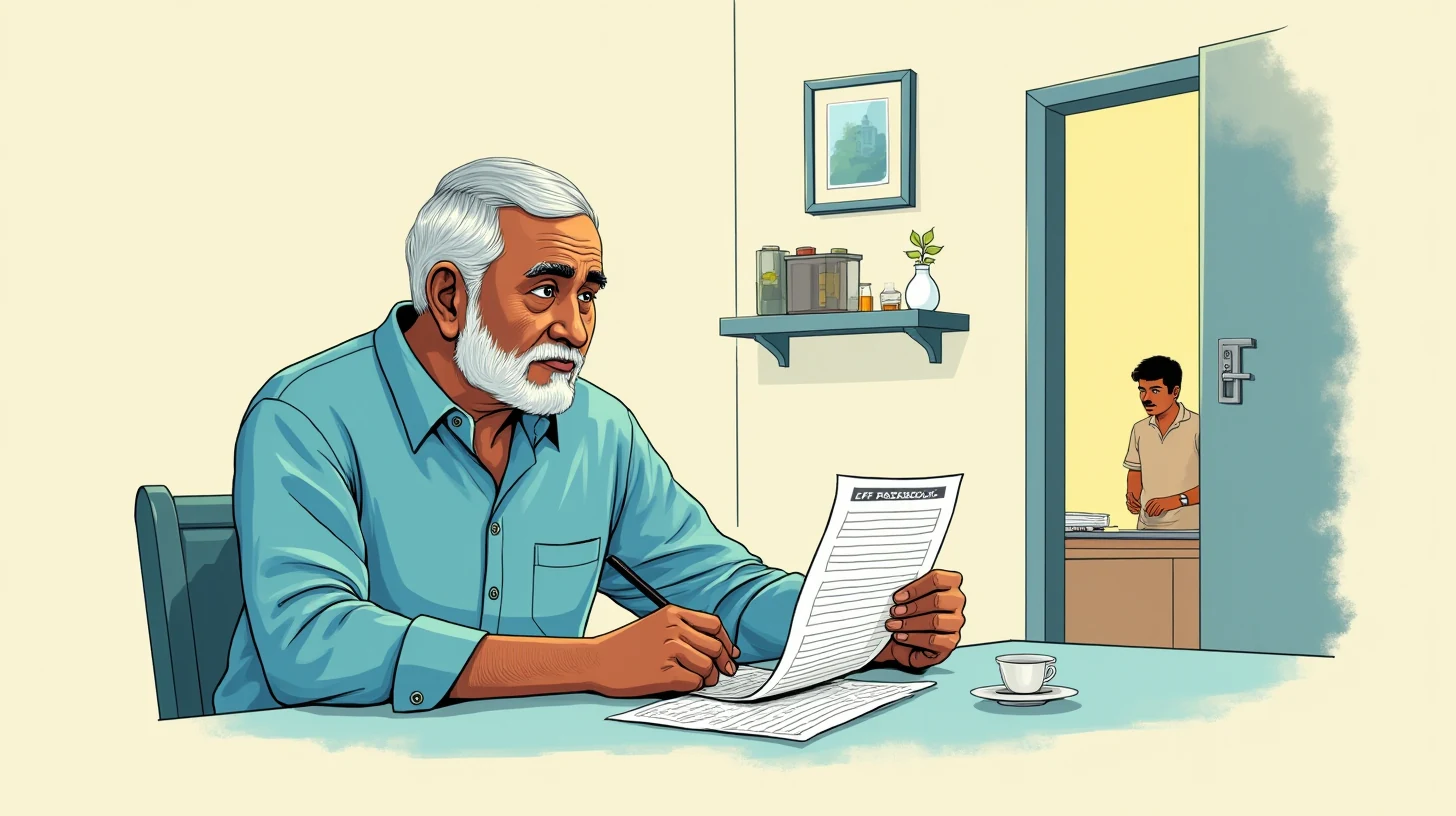
The passbook showed 22 years of Employees' Provident Fund contributions. He had worked 31 years. Nine years had vanished from the record, and along with them, his pension application had just been rejected.
His wife Girija sat across the small dining table in their Jayanagar apartment, holding the Form 10D rejection letter from EPFO. The letter was polite, formal, and absolute: "Qualifying service as per records: 22 years. Minimum service required for EPS pension: 10 years. However, your application exceeds the normal pension threshold, and we note a shortfall in the calculated pension amount. Please provide proof of additional service contributions to revise your Form 10D application."
Proof. As if nine years of waking at 4 a.m. to inspect the bus, loading fuel, navigating strike seasons and monsoon floods, handing out change to tens of thousands of passengers—all of this could be "proven" with a single document.
Venkatesh had driven past KSRTC headquarters on Kasturba Road a hundred times since his retirement three months earlier. He had never imagined he would walk through those doors as a supplicant.
🗓️ How establishment codes split careers
The answer, when it finally came, was both simple and infuriating: KSRTC had changed its EPFO establishment code in 2003.
Here is what most EPFO members never learn until crisis forces the lesson: the Employees' Provident Fund is not a single national account. It is a network of establishment accounts—one account per registered company or organization. Every employer is assigned a unique establishment code by EPFO. When you join a company, your contributions go into that establishment's account. If the establishment code changes, your new contributions go into a new account. Your UAN (Universal Account Number) should link all of them together, but only if they are formally consolidated.
KSRTC, as a State Road Transport Corporation, had undergone administrative restructuring in 2003. The old establishment code—the one under which Venkatesh had worked from 1992 to 2003, contributing nine years of pension-eligible service—had been retired. A new code was issued. Venkatesh's later 22 years fell under the new code. EPFO's computers dutifully recorded both, but they did not automatically merge them. The old account lay dormant, its nine years of contributions locked in a separate record that EPFO's pension calculator never touched.
This is the establishment code problem. It affects thousands of workers across India—not just in KSRTC, but in any large organization that has restructured, privatized, transferred, or undergone administrative realignment since the 1990s. The Indian Railways. State electricity boards. Banks after nationalization mergers. Defense production establishments. The workers know they served. The passbook shows they served. But EPFO's system sees two different people in two different accounts, and the system does not talk to itself.
No one at KSRTC HR had warned Venkatesh. No one at EPFO had flagged the orphan account when he applied for retirement. He had simply walked into the EPFO office in Bengaluru one Tuesday in February, filed his Form 10D like thousands of retirees did every month, and walked out believing the process would move forward smoothly.
Instead, he got a rejection letter.
- 📋
1992–2003: KSRTC old establishment code
Venkatesh's EPF contributions recorded under KSRTC's original establishment code. 11 years of contributions in this account.
- 🔄
2003: KSRTC changes establishment code
New establishment code for continuing employees. Old code becomes dormant. Venkatesh's pre-2003 account is now an 'orphan' account.
- ❌
Form 10D rejected — 'insufficient service'
UAN passbook shows only 20 years (2003–2023). Form 10D rejected. EPFO does not automatically consolidate old establishment accounts.
- ✅
Form 11(New) filed — 31 years consolidated
Transfer request submitted with KSRTC HR countersignature. EPFO Bengaluru processes in 30–45 days. UAN now shows 31 years. Form 10D approved.
⚠️ Eighteen months of rejection letters
Venkatesh's first instinct was to call the EPFO helpline. The recorded voice at 1800-180-1104 was automated, cheerful, and useless. He waited for a live agent, held through three transfers, and eventually spoke to someone who confirmed what the letter said: his record showed 22 years.
"But I have a wage slip from 1995," Venkatesh said in English-inflected Kannada. "And the KSRTC certificate of service says 31 years."
The agent said those would need to be submitted through the Unified Portal. Could he log in online? Venkatesh, who had never owned a computer, went to an internet cafe in Jayanagar and asked the young man running it for help. Together they uploaded the documents. Three weeks later, an automatic email said: "Your request is being processed. No further action required."
Nothing happened.
Venkatesh returned to the KSRTC office to speak with the pension clerk. The clerk was sympathetic but helpless. "The establishment code was changed by head office in Bangalore," she said. "That was in 2003. We have no authority to change it back. The request must go through EPFO directly."
In May, Venkatesh made the trip to the EPFO Regional Office on Richmond Road in Bengaluru. The building was a concrete block, badly air-conditioned, filled with people holding files like his—decades of work reduced to paper. The queue lasted three hours. When he finally reached the counter, the officer scanned his documents, typed something into the computer, and said: "Sir, your old establishment account is here in the system. But the UAN consolidation form—Form 11(New)—has not been filed. You need to file that."
"But how? I don't know—"
"You need to file Form 11(New) online, sir. Your employer must give written authorization. Bring both documents back here."
Venkatesh went back to KSRTC HR. The clerk, Anitha, was sympathetic again. She drafted a letter, got it stamped by her supervisor, and handed it to Venkatesh. "This should do it," she said. "But the EPFO system is slow."
"ಮೂವತ್ತೊಂದು ವರ್ಷ ಓಡಿಸಿದೆ. ಇಪ್ಪತ್ತೆರಡು ಮಾತ್ರ ತೋರಿಸುತ್ತದೆ. ಉಳಿದ ವರ್ಷ ಎಲ್ಲಿ ಹೋದವು?"— Drove for thirty-one years. Shows only twenty-two. Where did the other years go?
🌗 The old establishment account
It took a conversation with a retired EPFO officer—a neighbor, Dr. Shekhar—that finally brought clarity. Dr. Shekhar, over coffee one morning, explained the mechanics of what had happened and what needed to happen.
"ನಿಮ್ಮ ೨೦೦೩ರ ಮೊದಲಿನ EPF ಕೊಡುಗೆಗಳು ಇನ್ನೂ EPFO ವ್ಯವಸ್ಥೆಯಲ್ಲಿ ಇವೆ — ಹಳೆಯ KSRTC ಸ್ಥಾಪನಾ ಕೋಡ್ ಅಡಿ. Form 11(New) ಸಲ್ಲಿಸಿ, KSRTC HR ಸಹಿ ಮಾಡಿದ ನಂತರ EPFO ಎರಡೂ ಖಾತೆಗಳನ್ನು ಒಂದುಗೂಡಿಸುತ್ತದೆ. ೩೦–೪೫ ದಿನಗಳಲ್ಲಿ UAN ೩೧ ವರ್ಷ ತೋರಿಸುತ್ತದೆ ಮತ್ತು Form 10D ಅನುಮೋದನೆಯಾಗುತ್ತದೆ."
(Your pre-2003 EPF contributions are still in the EPFO system — under the old KSRTC establishment code. File Form 11(New); once KSRTC HR countersigns, EPFO will merge both accounts. In 30–45 days the UAN will show 31 years and Form 10D will be approved.)
"Your pre-2003 EPF contributions are still in the system," he explained in Kannada. "They are under the old KSRTC establishment code. That account is dormant—no new contributions go into it—but the money is not lost. The account still exists in EPFO's database. But you see, when you apply for a pension, EPFO's computer looks at your current UAN and calculates only from the visible, active account. The old account is linked to your UAN, technically, but the pension calculator doesn't automatically include it. You must tell EPFO explicitly: 'Merge my old account with my new one.'"
"How do I do that?" Venkatesh asked.
"You file Form 11(New). It is the Transfer Request form for UAN consolidation. You go to the EPFO Unified Portal, you download Form 11(New), you print it, you get KSRTC HR to sign it and stamp it, and you submit it to the EPFO office in Bengaluru. They will merge your old establishment account into your current one. Once that is done, your UAN passbook will show 31 years. Then you re-file your Form 10D—the pension application. This time, it will be approved."
That Saturday, Venkatesh walked back into the KSRTC office with the form. This time, Anitha took it seriously. She filled in the fields, had her supervisor sign it, and put the official stamp on it. On Monday, Venkatesh submitted it to EPFO in person.
The officer who received it said: "This will take 30 to 45 days."
Thirty to forty-five days. By then, Venkatesh thought, half the summer would be gone.
🧭 The establishment code problem
This is not Venkatesh's problem alone. Across India, thousands of workers face similar situations.
The Indian Railways restructured in the 1990s and 2000s, changing how regional divisions were organized. State electricity boards merged and split. Banks were nationalized, then privatized, then merged again. Defense production establishments transferred between ministries. Every restructuring left behind a trail of split EPF accounts—workers whose contributions were divided between an old establishment code and a new one, whose pensions were calculated as if their service history had been erased.
EPFO has never undertaken a systematic campaign to notify affected workers. The burden falls on the individual to discover the problem at the moment of retirement—which is exactly when someone can least afford delays. And the solution is not automated. It requires the worker to navigate a form, to secure their employer's cooperation, to visit the EPFO office in person, and to wait.
The system assumes the worker will figure it out. The system assumes the employer will cooperate. The system assumes the worker has time and access to the internet. The system assumes bureaucratic delays are acceptable when someone has already worked for 30 years.
GabFORGE's free research service revealed the scope: at least 40,000 workers in Karnataka alone face this issue, most of them in retired or restructured PSUs. For a comprehensive EPF account audit at retirement, plus the consolidation filing assistance, GabFORGE Premium offers a faster path—but many retirees never learn that such a service exists.
What it does
- 🔍Identifies that a dormant pre-2003 establishment account exists and explains the Form 11(New) consolidation process
- 📋Guides the Form 11(New) submission: EPFO Unified Portal download, KSRTC HR countersignature requirement, submission address
- 📊Calculates qualifying service after consolidation to confirm Form 10D will succeed
What it does not do
- 🔒Never accesses Venkatesh's UAN account or submits Form 11(New) on his behalf
- ✅Never retrieves the old establishment code — that requires KSRTC HR records
🌱 Thirty-one years, finally counted
The EPFO letter came on a Tuesday afternoon in July. Venkatesh had not expected it so soon—the officer had said 30 to 45 days. But there it was, on the printout Girija brought to him, his hands trembling slightly as he read:
"The UAN consolidation request (Form 11(New)) has been processed. The old establishment account (00KA001234) has been successfully merged with your current UAN (100012345678). Your total qualifying service is now recorded as 31 years and 4 months. You are eligible to re-submit Form 10D for pension approval."
That evening, Venkatesh and Girija went to the EPFO Unified Portal together. Their neighbor's son helped them log in. They filed Form 10D again, attaching the new UAN passbook printout. This time, they did not wait weeks. A week later, another email: "Your Form 10D has been approved. Your monthly pension of Rs. 8,240 will commence on August 1st."
Girija cried. Not from sadness, but from the release of it all—the rejected letter, the visits to KSRTC, the endless phone calls, the three months of uncertainty.
On August 1st, the first pension payment arrived in Venkatesh's bank account.
He took Girija to their favorite restaurant in Jayanagar, a small place that had been serving idlis and sambar for 30 years. They ordered extra. He paid the bill without calculating, the way he used to when he had the salary coming in every month.
Two weeks later, Venkatesh bought a new Bajaj scooter—not fancy, but reliable. Girija's sister's grandson came to visit from Tumkur, and Venkatesh took him on a ride through the streets he used to drive buses through. The boy's hands gripped his shoulders, the traffic flowing around them, the city moving as it always did.
"Uncle," the boy asked, "did you really drive a bus through all these roads?"
"All of them," Venkatesh said. "Every single one. For thirty-one years."
And now, finally, someone had written it down correctly.
If you are a retiree facing a Form 10D rejection or suspect your UAN record is incomplete:
Check your EPFO passbook. Log into the Unified Portal (https://unifiedportal-mem.epfindia.gov.in) and download your UAN passbook. Cross-check it against your company's official service certificate.
Ask your employer about establishment code changes. If your company or PSU went through restructuring, merger, or administrative realignment, it may have changed its EPFO establishment code. Request the old establishment code number.
File Form 11(New) for UAN consolidation. Download the form from the EPFO portal, have your employer sign and stamp it, and submit it to your nearest EPFO Regional Office or upload it online. Allow 30-45 days for processing.
Re-file your Form 10D. Once your accounts are consolidated, your UAN passbook will show your total service. Re-submit your pension application with the updated passbook.
Contact GabFORGE if you need guidance. A full EPF account audit, consolidation filing, and EPFO escalation support is available through GabFORGE Premium for retirees in major cities.
Your years of work should not disappear. They are in the system. You simply need to teach the system to see them all at once.