
The pension factor that dropped when Article 370 fell
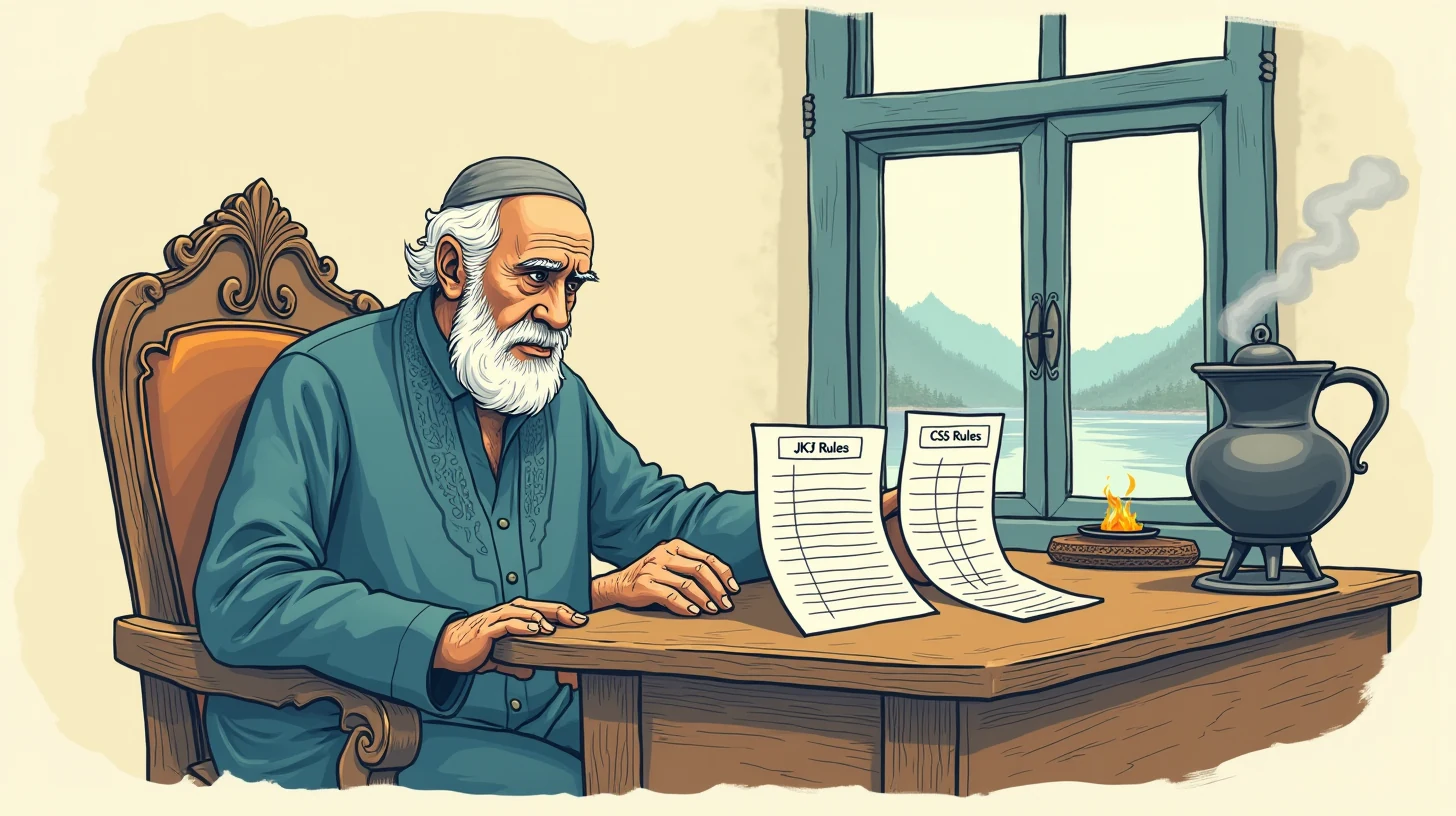
👴 Mohammad Yusuf Bhat, 62, spent thirty-one years in the J&K Administrative Service. When Article 370 was abrogated on August 5, 2019, his pension rules changed overnight from J&K Service Regulations to Central Civil Services (CCS) Rules. His department issued a revised pension statement in October 2019 with a new commutation factor — 9.81 instead of the old 10.46 — without mentioning that he had a choice.
🚨 The problem
On a ₹52,000 monthly pension, the commutation factor difference meant ₹3.2 lakh less in his lump sum payment if he chose to commute part of his pension. The J&K Reorganisation (Pension Protection) Rules 2019 explicitly permitted officers in service before October 31, 2019 to select whichever rule gave them a higher benefit. But the Pension Cell didn't explain this. His department didn't volunteer it. It remained hidden in the official gazette, waiting for someone to read it. 🔍
🚀 How GabFORGE helped
His son Arun, working in Gurgaon, spotted the protection clause while reading the reorganisation gazette on a train to Bangalore. He called his father and sent the gazette pages. Together they began to understand what the Pension Cell had not explained:
- 🔍 Identified the gap. The two commutation tables (J&K: 10.46 vs CCS: 9.81) and the specific amount Mohammad could recover — ₹3.2 lakh on six months' commutation.
- 💬 Named the rule. Section 4 of the J&K Reorganisation (Pension Protection) Rules 2019, the clause that gave him the explicit choice.
- 📞 Drafted the representation. Mohammad submitted a formal written request to the J&K Finance Department Pension Cell, citing the protection rule and requesting recalculation under J&K Service Regulations.
The Pension Cell issued a revised calculation within twenty working days. His commutation factor was changed to 10.46. The supplementary payment of ₹3,20,000 was credited to his bank account in February 2022. ✅
🇮🇳 Why this matters
Across Kashmir's civil service, hundreds of retiring officers received revised pension statements without knowing they could choose which rule applied to them. The machinery of administrative transition moved faster than the communication that should have explained it. The gap between rule and notification — between what exists in the gazette and what a retiring officer is told — cost people thousands of rupees.
The long version has the walnut desk, the kangri warming through a Srinagar winter, and the moment Mohammad realised that three years of silence was finally broken.