
The Bhubaneswar officer's wife and the pension she didn't know was hers
Subash Chandra Behera had spent forty-two years in the Odisha Administrative Service. His desk had sat in the secretariat; his morning routine involved briefings, orders, and the measured pace of bureaucratic rank. At sixty-five, he'd retired with the formal dinners and the gold watch. His pension — ₹26,000 a month — arrived without fail. He lived in a government quarter in Bhubaneswar's Chandrasekharpur neighborhood, the flat quiet and orderly, the kind of home that holds decades of small ceremonies.
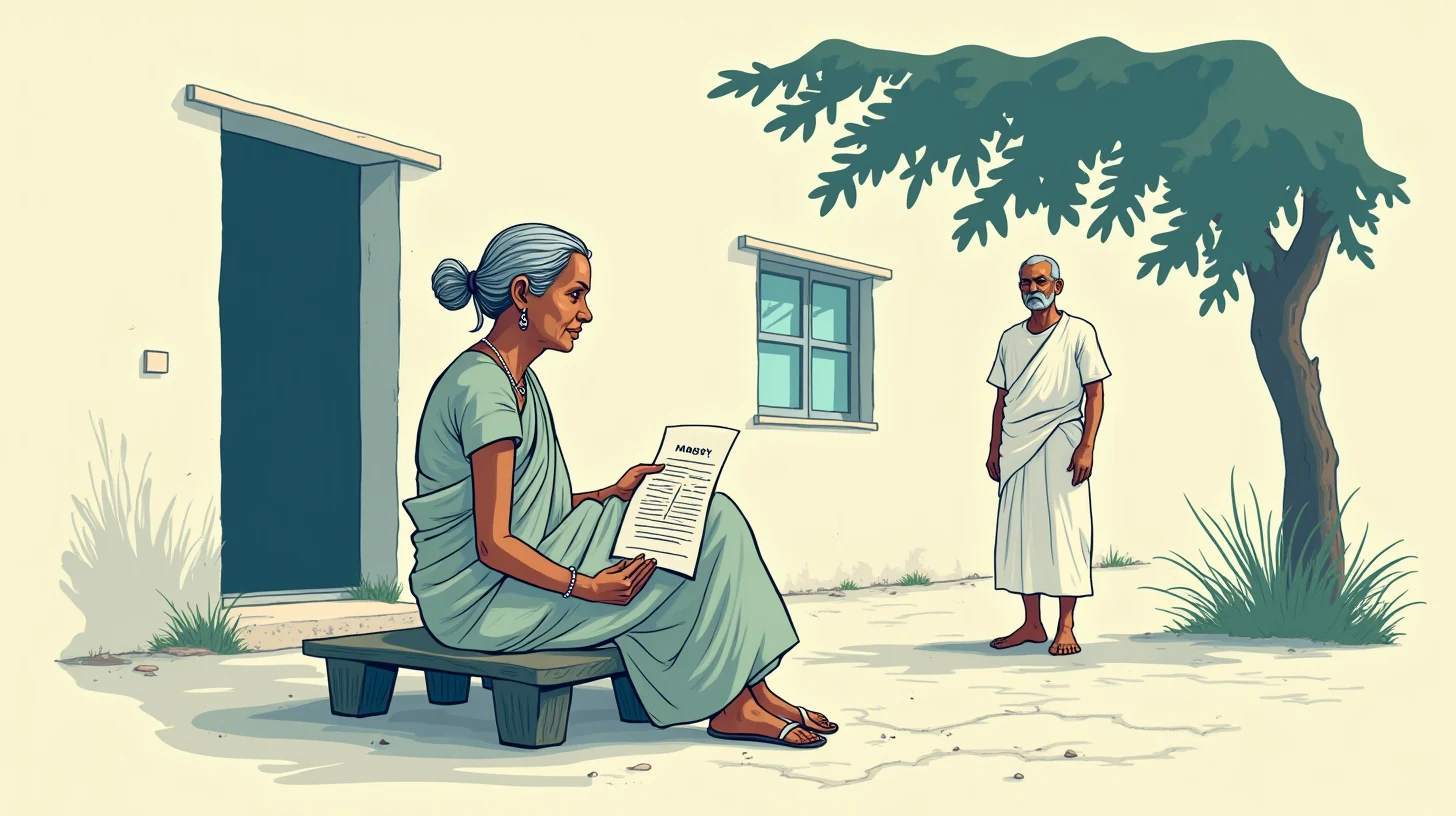
His wife, Sulochana, was sixty-two. She'd never worked in an office. For forty years, she'd moved between households in Bhubaneswar and Cuttack, cleaning, cooking, minding children that weren't hers. The work was daily, invisible, and paid in cash at the month's end — sometimes ₹1,500, sometimes ₹2,000. No receipt. No paper. No pension. She'd raised their two children, both of whom had moved to Hyderabad and Bangalore for IT jobs. When they called, they'd ask about her health but rarely about money. She didn't mention it.
One evening in April 2025, a relative visiting from Balasore mentioned a government scheme for older people. "My neighbor's mother gets ₹500 a month from Madhubabu," the relative said. "No application fee, no waiting."
Sulochana had smiled politely and said nothing. That was for people with no one, she thought. Subash had a pension. They had a roof. Government schemes were for families like her neighbors — the ones who arrived at the BDO office with nothing but hope and a thumbprint.
By May, Subash had retired fully into the house. He read the newspapers cover to cover. He took his morning walk to the Sishu Vihar Garden and back. And one morning, sitting with his tea, Sulochana asked him a question that would change that year: "Do you think I could ever get a pension?"
The question hung in the air. Subash, who knew the civil service inside out, assumed the answer without checking. "No," he said. "I'm a government pensioner. They won't give you anything. The income limit is probably below what we have."
Sulochana didn't push. But something in that question — the word "ever," the possibility — lingered with her. She mentioned it to a neighbor, who suggested she talk to someone who "knew about these things." That conversation led her to an agent in July 2025, someone who worked through social welfare schemes in the Chandrasekharpur area.
🗓️ What Madhubabu Pension is and what it requires
The Madhubabu Pension Yojana (MBPY) is Odisha's old age pension scheme, named after the legacy of welfare initiatives in the state. It's designed for one specific group: Odisha residents above sixty years old (sixty for women, sixty-five for men) who have no existing pension from any government source — state or central — and no pension from EPFO (Employee Provident Fund Organisation).
The monthly amount is modest: ₹500. At first reading, it seems almost token. But for someone like Sulochana, who'd never earned a formal salary, it was recognition. It was written in her name.
The critical detail that families often misunderstand is who the scheme tests. The eligibility is personal. It asks: Does the applicant have a pension? Not: Does anyone in the applicant's household have a pension? Not: Is the applicant's spouse a government employee? The question is narrow and individual.
Sulochana had no pension in her name. She'd never contributed to EPFO. The scheme was built for her.
- 🎂
Sulochana turns 60 — eligibility begins
As a domestic worker with no personal pension, she qualifies for MBPY from age 60. But no one in the family knows.
- 💬
Agent conversation reveals the personal eligibility test
MBPY disqualifies applicants who have their own pension — not households where a spouse has a pension. Sulochana qualifies.
- 📋
Application submitted on e-district portal
Subash files online at edistrict.odisha.gov.in with Aadhaar, income certificate, age proof, and bank passbook.
- ✅
BDO approval — ₹9,000 arrears credited
21-day processing. ₹500/month for 18 missed months credited together. Monthly ₹500 begins the following month.
Timeline: From invisibility to enrollment
May 2025
└─ Sulochana turns 62; eligibility window opens
   └─ Household unaware; 18-month silence begins

July 2025
└─ Agent conversation reveals MBPY eligibility
   └─ Sulochana learns the truth: the scheme tests *her*, not Subash

August 2025
└─ Application submitted via Odisha e-district portal
   └─ Supporting documents: Aadhaar, age proof, no-pension affidavit

September 2025
└─ BDO office processes application (21-day SLA)
   └─ Pension approved; arrears calculated (18 months × ₹500 = ₹9,000)

September 2025
└─ First payment: ₹9,000 arrears + ₹500 current month
   └─ Sulochana receives ₹9,500 in her bank account
⚠️ The officer's assumption
Subash had navigated rules his entire career. He'd read government circulars and understood income ceilings, asset tests, and family-based eligibility criteria. Many government schemes do measure household income. Many do ask about dependents and their status. The civil service logic made intuitive sense: if one member of a family drew a government pension, perhaps the state didn't want to support the same family twice.
But MBPY wasn't built that way. And Subash, precisely because he was trained in reading policy, had made an assumption without reading this particular policy. He'd applied generic logic to a scheme he'd never studied. The eighteen months of lost arrears — ₹9,000 — were the cost of that assumption.
"ଆମ ଘର ଲୋକ IAS ଅଫିସର — ମୁଁ ଭାବୁଥିଲି ସରକାରୀ ଯୋଜନା ଆଉ ଆମ ପାଇଁ ନୁହେ।"
"My husband is a government officer — I thought government schemes were no longer for people like us." — Sulochana, July 2025
"ଆମ ଘର ଲୋକ IAS ଅଫିସର — ମୁଁ ଭାବୁଥିଲି ସରକାରୀ ଯୋଜନା ଆଉ ଆମ ପାଇଁ ନୁହେ।"— My husband is a government officer — I thought government schemes were no longer for people like us.
This belief, held by thousands of spouses of government employees across India, is a silent barrier. It's not formal. No rule states it. But the assumption has become folk knowledge: If someone in your house has a government job, you are not poor enough for welfare.
🌗 The personal eligibility test
The agent arrived at the house on a Tuesday afternoon in July. Subash was out at his walk. Sulochana made tea and sat in the courtyard.
What the agent said, in Odia, was this:
"Madhubabu Pension Yojana ରେ ଯୋଗ୍ୟତା ପ୍ରାର୍ଥୀ ନିଜ ପେନ୍ସନ ଉପରେ ନିର୍ଭର କରେ — ଘର ଲୋକ ବା ସ୍ବାମୀ ଙ୍କ ପେନ୍ସନ ଉପରେ ନୁହେ। ଆପଣ ଘରେ ଘର କାମ କରୁଥିଲେ ଏବଂ ଆପଣ ଙ୍କ ନାଁ ରେ କୌଣସି ପେନ୍ସନ ନାହିଁ। ଆପଣ ଯୋଗ୍ୟ। e-district ପୋର୍ଟାଲ ବା ନିକଟ BDO ଅଫିସ ରେ ଆବେଦନ କରନ୍ତୁ।"
In English: "Madhubabu Pension Yojana eligibility depends on the applicant's own pension — not the household or husband's pension. You worked as a domestic worker and have no pension in your name. You are eligible. Apply on the e-district portal or at your nearest BDO office."
The agent showed her the online portal. They filled out the form together: name, date of birth, Aadhaar number, a declaration that she had never worked in a government role, never contributed to EPFO, and held no pension. She signed with her thumbprint (she'd never learned to write her name).
🧭 The household income fallacy
Across India, spouses of government employees harbor a quiet belief: we are disqualified by association. This belief isn't always wrong — some schemes do test household income. But many don't. Many, like MBPY, test the individual applicant alone.
The consequence is measurable. Low-income spouses of modest-earning government employees never apply for widow pensions (which also test the widow's own pension status, not the deceased's), disability pensions, or old age pensions. They qualify. They don't apply.
For Sulochana, the assumption had cost her eighteen months. From May 2025 (when she turned sixty) to November 2025 (when the pension was approved), she'd forgone ₹9,000 in arrears. In her household budget, that was real money: three months of groceries, one new saree, the spare parts for the water tank that she'd been hoping Subash would agree to fix.
The systemic issue is simple: scheme eligibility is scattered across portals, helplines, and local BDO offices. There's no single place where a person can ask, "Which schemes am I personally eligible for, independent of my spouse?" Even the e-district portal doesn't volunteer this information; it requires the applicant to know which scheme to search for.
What it does
- 🔍Clarifies that MBPY personal eligibility test applies to the applicant — not the household income or spouse's pension
- 📋Explains the e-district portal application process and the list of documents required for BDO submission
- 🏦Confirms that Sulochana's domestic work history means no EPFO or government pension in her name
What it does not do
- 🔒Never accesses the e-district portal or submits the application on the family's behalf
- ✅Never determines eligibility officially — that is the BDO's decision after document verification
🌱 ₹500 that is hers
In September 2025, Sulochana received her first payment: ₹9,500 in her bank account. The account was in her name — a requirement of the scheme. She'd opened it at the district cooperative bank with an Aadhaar card.
She didn't tell Subash the exact amount. He'd said the money was hers, and she believed him. For the first time in her life, she had money that was written in her name, that came from the state, that she didn't have to ask permission to spend. She transferred ₹3,000 to her daughter in Bangalore for her grandson's school fees. She kept ₹5,000 aside. The remaining ₹1,500 she spent on a good saree for the Durga Puja festival, cream silk with a gold border, the kind she'd always admired but never bought for herself.
The ₹500 that arrives each month now, she transfers to a separate account. By December 2025, she'd accumulated ₹2,000. She hadn't decided what it was for yet. That was new too — not needing to know the answer immediately.
Subash, when he saw the saree, smiled. He didn't comment. But one evening he said to her, quietly: "You should have asked me about the scheme. I would have helped you apply immediately."
"I did ask," Sulochana said. "You said no."
He was quiet for a long time. Then he said, "You were right to ask the agent. I was wrong."
It was the kind of apology that took forty-two years of authority to admit. Sulochana didn't need him to say it again.
How to apply for MBPY
If you're an Odisha resident above sixty with no government or EPFO pension in your name, the process is straightforward:
Gather documents: Aadhaar card, age proof (birth certificate, school leaving certificate, or NREGA job card), and any document showing you have no government employment.
Choose your route: Apply through the Odisha e-district portal (https://edistrict.odisha.gov.in) or visit your nearest Block Development Office in person. Both are free.
Submit application: Fill the MBPY form with your name, date of birth, Aadhaar, and a declaration of no pension. The BDO office staff will help if you're not comfortable filling online.
Wait for processing: The BDO office typically processes applications within 21 days. You'll receive approval via SMS or letter.
Bank account: You'll need a bank account in your name. The pension is transferred directly — no cash handouts, no intermediaries.
The ₹500 per month begins from the month you turn sixty (or the month your application is approved, whichever is later). If there's a delay in application, you'll receive arrears for the months you were eligible but didn't apply.
What Sulochana understood: The scheme doesn't ask who she married. It asks who she is. That distinction — personal eligibility instead of family status — is everything.
If you're a spouse of a government employee and you're above sixty with no pension, you likely qualify. The assumption that disqualifies you is a belief, not a rule. Check anyway. ₹500 a month is a small amount until it's yours.