
The Chandigarh officer and the two treasuries that couldn't agree on who owed him what
Balwinder Singh Sandhu turned 63 on a Tuesday in March 2025. Thirty years of service completed—twelve in Punjab's education department, eighteen in the Chandigarh Administration. A clean career arc, the kind government recruitment posters celebrate: steady work, loyal service, a pension waiting at the end.
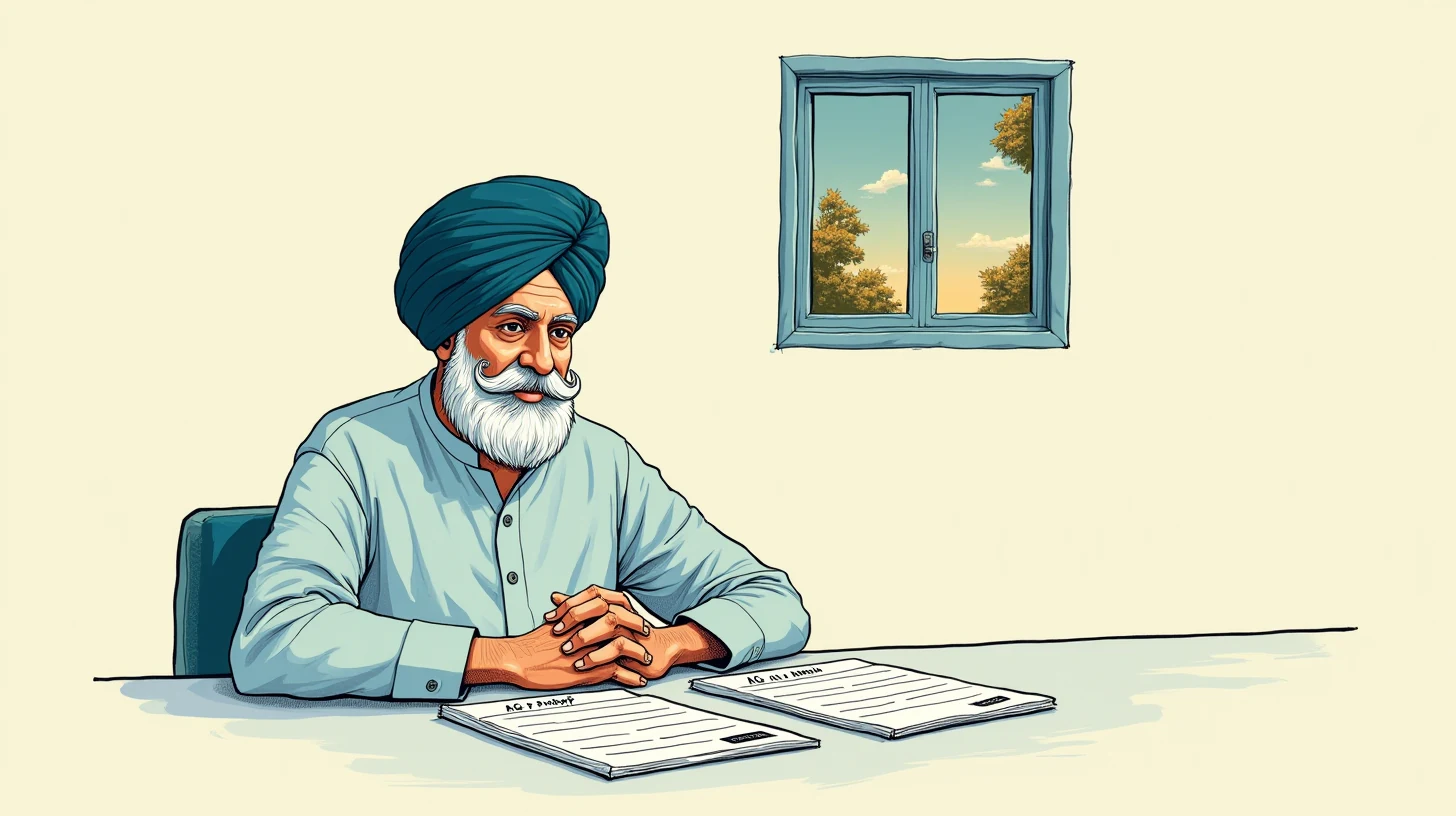
🗓️ Punjab, Chandigarh, and the old divide that still shapes pensions
But the pension wasn't waiting. It was stuck.
The story begins not with Balwinder, but with 1966. That year, the Indian government partitioned Punjab into three pieces: Punjab state (smaller, Punjabi-majority), Haryana state (carved from the south), and Chandigarh—a brand-new union territory that would serve as capital to both. Officers who had served in old Punjab faced an awkward reality: their service history spanned two masters now, and nobody had quite figured out how to add them together.
Balwinder joined the Punjab Education Department in 1982 as a teacher. In 1994, after twelve years, he transferred to the Chandigarh Administration's Education Wing. Eighteen years later, at 63, he applied for retirement. His paperwork was straightforward: date of birth, service record, bank details. The math seemed simple too. Thirty years of qualifying service, split between two employers.
The treasury disagreed on whose numbers to use.
⚠️ Three returned files, two offices pointing at each other
The first sign of trouble came six weeks after his application.
"Your pension file is being processed," the Chandigarh UT Administration's Pension Cell wrote. Then: "File returned for clarification from AG Punjab (Chandigarh)."
Balwinder didn't know what that meant. His wife, Harpreet, did the math. At 63, with health costs rising, the delay stung. "What do they need to clarify?" she asked over chai one evening, her voice pitched between exasperation and dread.
The problem was structural. The Chandigarh Pension Cell had looked at his file and found twelve years of Punjab service on his record—years the UT Administration didn't have official documentation for. They sent the file to the AG Punjab (Chandigarh office) to verify those years and calculate how much pension they should account for.
The AG Punjab received it, reviewed it, and sent it back. Their calculation: "Pension for Punjab service years should be processed by the UT Administration as the final employer." Not our responsibility, the message implied. You calculate it.
Two weeks later, the UT Pension Cell received the returned file. They read the AG Punjab's note, puzzled. Then they sent the file back again—this time to AG Punjab, asking for a consolidated calculation across both periods.
AG Punjab returned it a second time with a terse note: "This office has no authority to calculate pension for UT service years. UT Administration Pension Cell should issue a consolidated pension order."
By the third return, Harpreet was no longer making chai with calm hands. Their son, Arnav, had suggested hiring a pension consultant—there were dozens advertising on Instagram, all promising to "unlock your pension within 30 days" and charging 15,000 rupees upfront. Balwinder, wary of such promises, instead spent an evening scrolling through government websites and WhatsApp groups for retirees, getting nowhere.
🌗 The agent explains the last-employer rule
Balwinder's query reached an agent on a Thursday afternoon. The agent saw the pattern immediately: two offices, one rule they'd both forgotten.
"Your file is stuck in a loop," the agent began in Punjabi, knowing the language would matter. "But there's a rule that ends this loop. Let me explain."
The rule, formally known as the inter-state service aggregation rule under the All India Services Rules and extended to civil services, holds a single principle: the last employer bears responsibility for calculating the total pension across all prior qualifying service. Last employer means the government that received you last and is processing your retirement today. For Balwinder, that was the Chandigarh UT Administration.
"ਇਹ ਸੇਵਾ ਦਾ ਨਿਯਮ ਹੈ—ਅਖੀਰ ਦੀ ਮਜਦੂਰ ਤਾਂ ਸਾਰੇ ਸਾਲਾਂ ਦੀ ਗਣਿਤ ਕਰਦੀ ਹੈ। ਚੰਡੀਗੜ੍ਹ ਪ੍ਰਸ਼ਾਸਨ ਤੁਹਾਡਾ ਆਖਰੀ ਮਾਲਿਕ ਹੈ। ਉਹ ਪੰਜਾਬ ਦੇ ਬਾਰਾਂ ਸਾਲ ਵੀ ਜੋੜੇ।"
"This is the rule of service—the last employer always calculates across all years. Chandigarh Administration is your final master. They must add in your twelve Punjab years too."
The confusion, the agent explained, arose because neither office fully owned the problem. The AG Punjab thought: "He transferred out; we're done." The UT Pension Cell thought: "His earlier service was under Punjab; they should confirm it." But the rule says the UT Pension Cell doesn't wait for permission—they request the service record, and AG Punjab must supply it.
"What you need," the agent said, "is for the UT Pension Cell to issue a formal 'Requisition for Service Verification' to AG Punjab. This is standard. It's not AG Punjab choosing to help. It's procedure."
🧭 Systemic: How inter-state service disputes fester
Balwinder's case is not unique. Every year, dozens of officers retire with split service histories—Punjab to Chandigarh, Haryana to Delhi, Maharashtra to Gujarat, or any combination. Some transfers happen mid-career by policy (deputation, cadre exchange). Others happen because administrative boundaries themselves shifted.
The problem festers because the rule exists but is not widely publicized. Pension cells operate in silos. Retired officers rarely have a copy of the All India Services Rules in their hands. Most assume the office that holds their original appointment letter must be the one to process their pension.
What makes inter-state disputes particularly thorny is that two separate treasuries are technically involved. Punjab's treasury paid Balwinder's salary for twelve years. Chandigarh's treasury paid it for eighteen. When the pension is finally calculated, there's a moment of hesitation: which treasury actually owes the money?
The answer is cleaner than the hesitation suggests. The last treasury pays. The UT Administration's budget covers Balwinder's pension, in full, for all thirty years. Punjab doesn't contribute; they provide the service record. The UT Administration's Pension Cell then calculates a "notional" share for the Punjab years and a direct share for the UT years, but it all comes out of one pension order.
This distinction matters because it removes the temptation for either office to claim the other's responsibility. There is no shared cost, no split bill. One employer owns the pension, and that owner must calculate it across the full tenure.
The moment the loop broke
Balwinder walked into the UT Pension Cell office on a Monday morning with a one-page summary the agent had drafted—not a full legal document, just a clear restatement of the rule and the request.
The official he'd been dealing with, a Deputy Accountant, read it, made a small sound of recognition, and nodded.
"This is correct," she said. "We should have done this from the start. I'll issue the requisition today."
The file began moving. AG Punjab received the formal requisition, verified Balwinder's twelve years of service without delay, and sent the records back to the UT Pension Cell within a week. The UT Pension Cell calculated the consolidated pension across all thirty years—12 years of Punjab service at the applicable rate, 18 years of UT service at its rate, combined into a single monthly amount.
Three months later, Balwinder's pension payment arrived in his bank account. 28,400 rupees per month. Not glamorous, but enough. Harpreet made chai to celebrate, not out of exasperation this time.
"Why did it take three returned files?" she asked the agent later, when Balwinder shared the news.
The agent was honest: "Because the rule works. But the rule is not in the hiring handbook or the retirement paperwork. It's in a regulation that most people never read. The offices know it exists, but they're trained to be defensive about their own domain. When you name the rule clearly, the defensiveness melts. They remember they're part of a system."
🌱 Quiet close
Balwinder is back in Chandigarh now, with time to walk the Rose Garden on cool mornings and sit with old neighbors. His pension is processing on schedule. The UT Pension Cell even sent a formal apology letter—nothing dramatic, just an acknowledgment that the file should not have bounced.
He doesn't consider himself an expert on pension law now. But he carries a scrap of paper with the agent's summary, and when another retiree asks him about their stuck file, he hands them the paper and says: "Ask for a requisition. They have to ask the other office. It's in the rule."
What Balwinder's file revealed, quietly, is that government systems often work—just not automatically. The rules are there. The procedures are documented. But they require someone on the outside to name them. The officer at the UT Pension Cell wasn't being obstructive; she was following an inherited hesitation. Once someone showed her the rule again, the loop closed, and the pension came through.
For others in similar positions—split service, split treasuries, files that won't move—the path is the same. Find the rule. State it clearly. Hand it to the last employer, and let the system do what it was built to do.
Key Takeaway: If your pension file is stuck between two states or a state and a UT, your last employer (the final office where you worked) is responsible for calculating your consolidated pension. Request them to issue a formal Requisition for Service Verification to your former employer's AG office. The rule is in the All India Services Rules, inter-state service aggregation section. Naming it explicitly often ends the delay.