
The Gangtok officer and the pension formula that isn't the Central Government's
Tshering Wangchuk Lepcha's last day at the Sikkim Darbar offices on MG Marg was a Tuesday in March 2024. Twenty-eight years he had given to the administration—first as an Assistant Secretary in the Finance Department, later moving to coordination roles under successive ministers. The Gangtok hill station had been his entire career backdrop: the monsoons that flooded the lower roads, the rhododendron blooms in spring, the mountain silence at dusk.
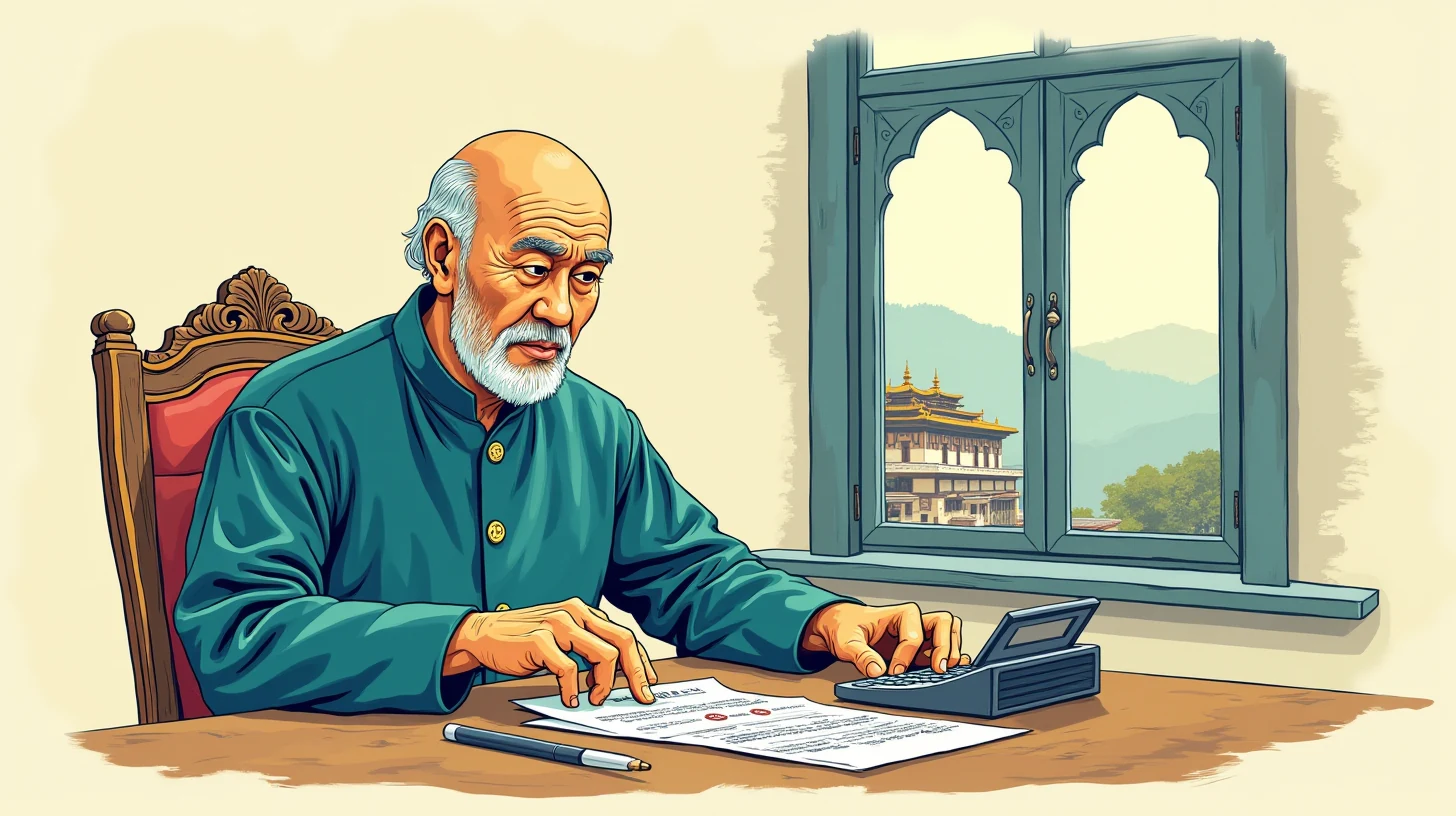
🗓️ Sikkim's unique pension history
His wife, Dolma, had passed away six years earlier. They had no children of their own, but his cousin's son Dawa—who now worked in Bengaluru—had taken to calling weekly after retirement was announced. "You'll finally have time to visit," Dawa said. "Spend some months here. We have space."
But before any of that could begin, Tshering needed to understand his pension. On the surface, it seemed straightforward: he had more than twenty years of service (twenty-eight, to be precise), so under the Central Government formula he had studied, his pension should be simple to calculate. Half of his last drawn salary. Simple fraction. ₹28,000 a month felt right, maybe even conservative.
The letter from the Pension and Provident Fund Division arrived six weeks after retirement. The approved amount: ₹19,400 per month.
For the first few days, he thought there was an error. He had the letter photocopied. He walked to the nearest internet café—he had never quite adopted computers—and asked the young owner, Norbu, to show him the "pension calculation" online. Norbu tried to help but eventually shrugged. "Sikkim rules are different," he said. "Not like Delhi."
It was that phrase—different—that made Tshering sit down at his kitchen table with a notebook and write down three questions.
⚠️ Near-miss: the ₹9,000 gap
The discrepancy was too large to be a simple error. The difference between ₹28,000 and ₹19,400 was ₹8,600—a gap that represented something structural, not a clerical mistake.
He called Dawa that evening.
"Let me research this," Dawa said from Bengaluru. Tshering heard the rustle of laptop keys over the phone. "There's something about Sikkim and pensions. It's not the same as the CCS formula."
"But I calculated correctly," Tshering said. "Twenty-eight years times the fraction. More than twenty years of service equals half pension. That's the rule."
"It is the rule," Dawa said carefully, "but maybe not Sikkim's rule."
The next morning, Tshering walked to the office of a retired colleague, Karma Sherpa, who had left the Darbar three years earlier and now ran a small advisory practice helping retirees navigate pensions and insurance. Karma was in his office—a modest corner room above a vegetable market, with a single window overlooking the main bazaar.
Tshering opened his pension letter on Karma's old desk.
Karma adjusted his glasses and read it twice. Then he leaned back.
"The formula they used," Karma said slowly, "is not the CCS formula. It's the Sikkim Government Service Pension Rules. Different fraction. Older rules, from when Sikkim was still under the Chogyal."
"Different how?" Tshering asked.
"The denominator is different. Instead of half, it's a smaller fraction. And the calculation includes a multiplier based on the specific years of service in Sikkim. Most officers don't know this until the letter arrives."
Tshering felt something settle—not relief yet, but the beginning of understanding. The number wasn't wrong. It was different because Sikkim's rules were different.
🌗 Agent explains the formula
That afternoon, Tshering used the computer café again. This time, with Norbu's help, he accessed an online assistant designed for retirees. He typed his question carefully:
"I retired from Sikkim Darbar with 28 years of service. My pension was calculated as ₹19,400 per month, but I calculated ₹28,000 using the central government half-pay formula. Why is there a difference? Which rule applies to me?"
The agent responded in English, but offered to switch to Nepali, Sikkim's official language.
In Nepali:
"तपाईंको अवस्था सिक्किमको अनौठो पेनसन इतिहासको कारण हो। १९९६ मा तपाईंले सिक्किम सरकारमा सेवा गर्नु भएको थियो, जब सिक्किम अझै पनि केन्द्रीय सरकारको CCS नियमको अन्तर्गत थिएन। सिक्किमको आफ्नै पेनसन नियम छ—Sikkim Government Service Pension Rules—जो पुरानो Chogyal काल र १९७५ पछि भारतीय एकीकरणबाट आएको हो। तपाईंको सही पेनसन ₹१९,४०० हो।"
(Your situation is because of Sikkim's unique pension history. When you joined Sikkim government service in 1996, Sikkim was not yet under the Central Government CCS rules. Sikkim has its own pension formula—the Sikkim Government Service Pension Rules—which comes from the old Chogyal era and the post-1975 Indian integration. Your correct pension is ₹19,400 a month.)
Tshering read it aloud to Norbu. The young man nodded.
:::infographic type: compare Sikkim Formula vs. Central Government (CCS) Formula
| Aspect | Sikkim Rules | Central Gov (CCS) |
|---|---|---|
| Base Fraction | 1/45 × years of service | 1/2 of last pay (20+ years) |
| Multiplier | 1/45 × 28 years = 0.622 of last pay | Direct: 0.5 of last pay |
| Last Basic Pay | ₹31,200 | ₹56,000 (indexed basis) |
| Pension Calculated | ₹31,200 × 0.622 = ₹19,406 | ₹56,000 × 0.5 = ₹28,000 |
| Who Gets It | Sikkim Darbar staff (pre-2005) | Central Government staff |
| Adjustment | Simple, fixed at retirement | Dearness adjustment linked to DA |
:::
The agent continued:
"यो गणना सही छ। तपाईंले केन्द्रीय सूत्र प्रयोग गरेर ₹२८,००० गणना गर्नु सही थियो, तर यो सिक्किमको नियमको लागि लागु हुँदैन। सिक्किमको नियमले विभिन्न अंश प्रयोग गर्छ। यो भेद महत्त्वपूर्ण छ किनभने सिक्किम एक अलग राज्य थियो र आफ्नो प्रशासनिक व्यवस्था थियो।"
(This calculation is correct. Your calculation of ₹28,000 using the central formula was right, but it does not apply to Sikkim rules. Sikkim's formula uses a different fraction. This difference is important because Sikkim was once a separate kingdom with its own administrative system.)
Tshering asked a second question: what about the NPS that was mentioned in his paperwork?
The agent's response surprised him:
"तपाईं १९९६ मा सिक्किमको पेनसन योजनामा सामेल हुनु भएको हुनुहुन्छ—पुरानो निर्धारित लाभ पेनसन। २००५ को अप्रिलपछि सिक्किमले NPS (National Pension System) अपनायो। तपाईंको जस्ता अधिकारीहरु जो २००५ अघि सेवामा भेटिनु भएको, पुरानो नियम अन्तर्गत पेनसन पाउँछन्। २००५ पछि आएका अधिकारीहरु केवल NPS मा छन्।"
(You would have enrolled in Sikkim's pension scheme in 1996—the old defined benefit pension. After April 2005, Sikkim adopted NPS. Officers like you who joined service before 2005 get pension under the old rules. Those who joined after 2005 are under NPS only.)
Tshering's next question was about Dawa's colleagues in Bengaluru. One of them, also a Sikkimese, had joined state service in 2006. Was their pension different?
"हरेक कर्मचारीको लागि, भर्ना मिति महत्त्वपूर्ण छ। २००५ अघि = पुरानो निर्धारित पेनसन। २००५ पछि = NPS मात्र। NPS मा, कर्मचारी र सरकार दुवै योगदान गर्छन्। निवृत्तिमा, corpus लिन्छ र वार्षिकी वा निकासी योजना चयन गर्छ। तपाईंको साथी को अवस्था अलग छ।"
(For each employee, the enrollment date matters. Before 2005 = old defined pension. After 2005 = NPS only. In NPS, both employee and government contribute. At retirement, the corpus is taken and an annuity or withdrawal plan is chosen. Your friend's situation is different.)
Tshering sat back. The structure was becoming clear. He was not in a gap or a mistake. He was in a specific system—Sikkim's system—that predated the national shift to NPS.
🧭 Systemic: state vs. central pension rules
The agent, sensing Tshering's growing clarity, offered more context:
:::infographic type: boundary Sikkim's Pension Boundary: Pre- and Post-2005
Timeline:
━━━━━━━━━━━━━━━━━━━━━━━━━━━━━━━━━━━━━━━━━━━━━━━━
   1975            1996                2005              2025
   ↓              ↓                   ↓
Chogyal Era    Tshering joins    NPS introduced
   →               →                   →
Indian             Old               State
Integration        Pension Rules     Switches to NPS
                   (Defined          (Thereafter only)
                    Benefit)

━━━━━━━━━━━━━━━━━━━━━━━━━━━━━━━━━━━━━━━━━━━━━━━━

Tshering's Cohort (1996-2004):
├─ Pension: Sikkim Government Service Rules
├─ Formula: 1/45 × years of service
├─ Dearness: Fixed at retirement
└─ Status: Locked into old system

Post-2005 Cohort (2005-):
├─ Pension: NPS Tier-1 only
├─ Contribution: 10% employee + 14% employer
├─ Withdrawal: Lump sum or annuity
└─ Status: Market-dependent returns
:::
The agent explained further:
"सिक्किम र अन्य राज्यहरुको पेनसन नियमहरु केन्द्रीय सरकारको CCS नियमहरु जस्तै समान नहुन सक्छन्। कारण: प्रत्येक राज्यको आफ्नो इतिहास, बजेट, र प्रशासनिक परम्परा छ। सिक्किमको अवस्थामा, १९७५ को अघि Chogyal सरकार थियो। पछि भारतीय संघमा आएपछि, सिक्किमले आफ्नै पेनसन नियमहरु राखे। यो सामान्य प्रथा हो। उदाहरणका लागि, Goa, Mizoram, र अन्य पूर्वोत्तर राज्यहरुको आफ्नै नियमहरु छन्।"
(Sikkim and other states' pension rules may not be identical to the Central Government CCS rules. Reason: each state has its own history, budget, and administrative traditions. In Sikkim's case, before 1975 there was the Chogyal government. After joining the Indian Union, Sikkim retained its own pension rules. This is common practice. For example, Goa, Mizoram, and other northeastern states have their own rules.)
Tshering had one more practical question: would his pension increase with inflation?
"तपाईंको पेनसन सिक्किम सरकारको Dearness Allowance (DA) संग सम्बन्धित हुन सक्छ। यो आमतौर पर वर्षमा एक पटक वा छ महिनामा एक पटक बढाइन्छ, राष्ट्रीय महंगाई सूचकाङ्क अनुसार। तपाईंको ₹१९,४०० आज को दर हो। भविष्यमा बढ्नेछ।"
(Your pension may be linked to Sikkim government's Dearness Allowance. This is typically increased once a year or twice a year, according to the national inflation index. Your ₹19,400 is today's rate. It will increase in the future.)
"मैले केन्द्र सरकारको हिसाब लगाएँ। सिक्किमको हिसाब फरक रहेछ।"
That phrase—the one Tshering would repeat to Dawa and later to Karma Sherpa—crystallized something. The formula wasn't wrong. The state had chosen a different path. And that path, once understood, became less of a disappointment and more of a simple fact to live with.
🌱 Quiet close
Three weeks after that conversation in Norbu's internet café, Tshering sat at Karma Sherpa's desk again, this time with a printout of the agent's explanation.
"The agent was right," Karma said after reading. "That's exactly what happened. Sikkim chose not to align with the central pension. It's cheaper for the state, but it's also part of Sikkim's autonomy. You joined under the old system. You live under the old system."
"So the number is correct," Tshering said.
"Correct. Fair, given Sikkim's budget constraints, and it's written into law."
Tshering had already filed for his ₹19,400. The transfer would come by the 25th of the month. He had done the math with Dawa: ₹19,400 a month, even with the gap from his initial calculation, was enough. The house was paid for. His medical expenses were modest. The monastery's annual festival donation was fixed at ₹2,000.
Dawa had called again that evening.
"So you were wrong, but not wrong," Dawa said from Bengaluru.
"I calculated correctly," Tshering replied. "But for the wrong government."
"That's one way to put it."
After they hung up, Tshering sat on his small balcony overlooking the Gangtok bazaar. The evening light was beginning to fade. Somewhere below, monks were chanting in one of the monasteries—the sound carrying up through the cool mountain air, thin and clear.
He thought about Dolma. She had always trusted his sense of order and calculation, even when the numbers seemed wrong. "Let him figure it out," she used to say to his worries. "He always does."
He had figured it out. Not the way he expected—the pension was smaller than he'd calculated—but in a way that made sense. Sikkim had its own rules. He was not in violation of them. He was in compliance with them. And sometimes, understanding the system—even a system that gives you less than you hoped—is a form of peace that money alone cannot provide.
The pension letter sat on his desk, no longer a source of confusion. It was simply the shape of his retirement, framed by a state's particular history and a formula that traced back to a kingdom that no longer existed in its original form.
He would accept the ₹19,400. And sometime next month, when Dawa had a few days off, he would visit. They would sit in Bengaluru traffic and talk about nothing in particular, as men who have finally stopped calculating often do.
Key Takeaways
State pension rules differ from Central Government CCS rules. Sikkim's Pension Rules use a different fraction (1/45 × years of service) rather than the straight half-pay formula.
Enrollment date matters for NPS. Sikkim switched to NPS in 2005. Pre-2005 retirees like Tshering get defined benefit pension under the old rules; post-2005 enrollees are NPS-only.
The "gap" is structural, not an error. Tshering's calculation was mathematically sound, but applied the wrong state's formula. His ₹19,400 is correct under Sikkim rules.
Dearness Allowance adjustments continue. The pension is not frozen; it links to Sikkim's DA index and will rise with inflation.
This applies to other northeastern states too. Goa, Mizoram, Tripura, and others also retained state-specific pension formulas post-integration with India.