
The Gurugram bus driver and the bank that disappeared into another bank
Suresh Kumar Sharma turned sixty-five on a Thursday morning in Gurugram. He was not at home, but at the Haryana Roadways depot in Manesar, conducting his final inspection walk through the parking lot—the same lot where he had parked buses every morning for twenty-nine years. The Route 51 to Delhi was running; the Route 27 to Jaipur was running. He ran through the checklist in his head the way he had ten thousand times before. At noon, the roads division gave him two envelopes: a letter thanking him for his service, and a printout of his pension details. Shant samprapt, the letter said. Rest now. He had earned it.
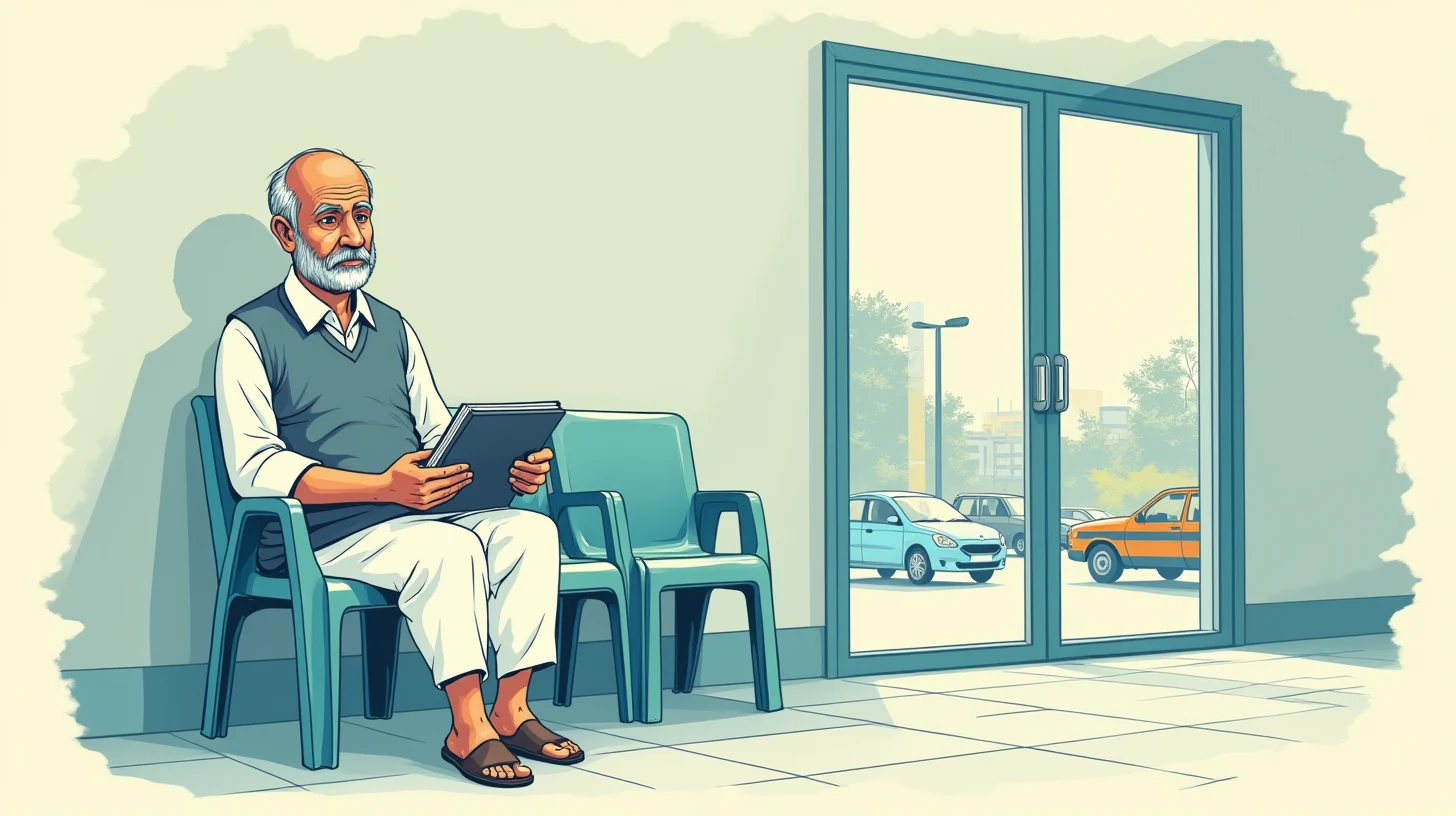
The pension was modest—₹18,400 per month, enough to keep the house in Sector 14 going, enough for Savitri's medicines, enough to visit his daughter in Bangalore twice a year. The Haryana Roadways had always been reliable that way. A government pension. A government bank. Money arrived on the fifteenth of every month, without fail, into his account at the Oriental Bank of Commerce branch in Gurugram City.
For two and a half years, nothing changed. Then, in early 2024, on the fifteenth of the month, the money did not arrive.
Suresh checked his phone. No notification. He went to the ATM. The balance showed zero credits since December. Four months—₹73,600—had simply vanished into the gap between a bank that no longer existed and a system that did not know he had moved.
His son Rajesh called the bank. "Your account," the branch manager said, "is tied to the old Oriental Bank system. We can't process it anymore."
"But the account is still open," Rajesh said.
"We merged into PNB," the manager replied. "The Pension Payment Order in the treasury is from before the merger. It still lists the OBC branch code. Until the treasury updates that code, we can't credit the pension."
Nobody, Rajesh learned, had told thousands of pensioners that their bank had disappeared into another one, and that they would need to fix it themselves.
🗓️ The merger nobody told pensioners about
In April 2020, India's banking sector underwent one of its largest consolidations. The Oriental Bank of Commerce—a 112-year-old bank with roots in the independence movement—merged into Punjab National Bank. At the same time, United Bank of India merged into the same umbrella. These were not small administrative shuffles. They were the disappearance of two entire institution identities.
For thousands of government pensioners across Haryana, Uttar Pradesh, and Punjab, the merger created a bureaucratic trap. Their Pension Payment Orders—the documents that told the state treasury where to send pension money—still carried the old OBC branch codes. The treasury system could not automatically remap these codes. PNB did not have permission to activate old pension mandates until the original issuing authority (the Accountant General of each state) formally updated the PPO to include the new PNB branch details.
The result was straightforward but invisible to most pensioners until they checked their bank balance: the pension mandate was orphaned. The money went to a desk, a code, and a bank that no longer existed. It sat there—or more likely, bounced back to the treasury in a daily file of failed transactions—while letters went unsent and calls went unanswered.
Haryana, with one of the largest government payrolls in northern India, saw this affect hundreds of state road corporation pensioners, municipal retirees, and retired PWD staff. Suresh was one of the first in Gurugram to notice. Others would follow, more quietly, often waiting weeks before they dared to ask what had happened.
[OBC merged into PNB — April 2020]
         ↓
[PPO branch codes became invalid across Haryana]
         ↓
[Suresh retires, pension begins — May 2021]
         ↓
[Pension stops without notification — January 2024]
         ↓
[Suresh discovers four months of arrears — May 2024]
         ↓
[AG Haryana updates PPO, remaps branch code — May 2024]
         ↓
[PNB pension migration desk processes account linkage — May 2024]
         ↓
[Four months of arrears credited in full — May 2024]
- 🏦
April 2020: OBC merges into PNB
Oriental Bank of Commerce absorbed into Punjab National Bank. Suresh's account migrated but PPO branch code remains OBC-specific.
- ❌
Early 2024: pension credit stops
Haryana Treasury cannot map old OBC branch code to any active PNB branch. Four months of pension missing.
- 📋
AG Haryana Chandigarh: Form PPO-1 submission
Suresh submits PPO branch code update request. Brings PPO copy, PNB account passbook, Aadhaar. Processed in 3 working days.
- ✅
Pension resumes — four months arrears credited
New PNB branch code mapped to PPO. Four months of arrears credited in first resumed payment.
⚠️ Four months of silence
The bank did not call. The treasury did not call. The Haryana Roadways pension department did not call. Suresh found out only because he checked his balance, a habit Savitri had asked him to develop five years earlier after reading an article about pension fraud.
"Why didn't they tell me?" Suresh asked Rajesh.
Rajesh had already spent two hours on hold with the PNB branch helpline. The first call: "We don't issue pension mandates, call the AG." The second call: "You need to update the PPO, that's not us." The third call, transferred to a pension desk supervisor: "Give us your account number and PPO number. Hmm. Yes, this was an OBC account. Those merged in 2020. Your branch code is not in our system yet. You need to contact the Accountant General."
The Accountant General's office in Chandigarh had its own labyrinth. The main helpline number rang to a reception desk that took messages. The pension section helpline was frequently busy. An email address for pension changes existed, but there was no guarantee of a response time. Rajesh left a message and waited three days. When the AG's office called back, they asked for: the PPO copy, a bank letter confirming the OBC-to-PNB merger, proof of the new PNB branch code, Aadhaar, and a Form PPO-1 requesting the bank mandate update.
Rajesh realized this would require a visit to the AG office in Chandigarh—a two-hour drive from Gurugram, which meant time off work. Suresh's neighbor, also a retired PSU employee, suggested asking his nephew who worked in the Chandigarh office. The nephew said the process was routine: just fill out the form and submit it with the documents. Three working days, typically.
But routine is not simple when no one tells you it exists.
"उनीस बैंक, चार महीने, और मेरी पेंशन गायब। किसी ने नहीं बताया कि क्या करना है।"— Nineteen banks, four months, and my pension gone. Nobody told me what to do.
🌗 Two desks, one solution
By the time Rajesh understood the full picture, he knew exactly what his father needed: a single, clear explanation of how to reconnect a severed pension mandate. He called the Haryana Pension Helpline's pension fraud monitoring desk (a division separate from the general helpline). Here is what they explained:
"यह एक पीपीओ अधिदेश की समस्या है जो २०२० के बैंक विलय के कारण हुई है। दो कदम हैं:
१. अकाउंटेंट जनरल, हरियाणा, चंडीगढ़: अपने पीपीओ में बैंक शाखा कोड अपडेट करने के लिए फॉर्म पीपीओ-१ जमा करें। ओरिएंटल बैंक कोड से अपनी वर्तमान पीएनबी शाखा में। साथ में लाएं: पीपीओ की प्रति, आपके पीएनबी खाते की पासबुक, आधार। यह ३ कार्य दिवसों में पूरा हो जाता है।
२. पीएनबी शाखा (आपकी शाखा): अपनी शाखा पर जाएं और पीएनबी के विलय विभाग से पूछें: पुरानी ओरिएंटल बैंक खाता पीएनबी खाते में माइग्रेट हो गई है? एक बार पीपीओ अपडेट हो जाने के बाद, पीएनबी आपकी पेंशन सक्रिय कर देगा।
चार महीने का पिछला पेंशन सब जमा हो जाएगा।"
In English:
"This is a PPO mandate problem caused by the 2020 bank merger. Two steps are needed:
1. Accountant General, Haryana, Chandigarh: Submit Form PPO-1 requesting the bank branch code in your PPO to be updated from Oriental Bank code to your current PNB branch code. Bring: PPO copy, PNB account passbook, Aadhaar. It takes 3 working days.
2. Your PNB Branch: Visit your branch and ask the merger migration desk: Has my old Oriental Bank account been migrated to PNB? Once the PPO is updated, PNB will reactivate your pension.
All four months of arrears will be credited once the PPO is updated."
What it does
- 🔍Traces the pension stoppage to the 2020 bank merger and identifies the specific PPO mandate problem
- 📋Explains the two-step process: AG Haryana PPO branch code update + PNB merger migration desk confirmation
- 📑Lists the exact documents needed for the AG Chandigarh submission and the PNB branch visit
What it does not do
- 🔒Never contacts the AG office or PNB on Suresh's behalf
- ✅Never confirms the arrears amount or timeline — Treasury processes independently after the PPO update
🧭 Why the OBC merger still breaks pension mandates
The banking consolidations of 2020 were celebrated as administrative modernisation. Three mergers in one year: Oriental Bank of Commerce and United Bank of India into Punjab National Bank; Syndicate Bank into Canara Bank; Allahabad Bank into Indian Bank. The government described it as streamlining. For pensioners, it was a silent time bomb.
The problem was not the merger itself but the PPO — the Pension Payment Order. Every government pensioner in India has one. It lists the pensioner's name, service history, and critically, the bank branch code where the pension must be credited. That code is not automatic. It does not update when a bank merges. It sits in the treasury's records exactly as it was written on the day the pensioner retired.
When Oriental Bank became Punjab National Bank, the old OBC branch codes became invalid — not immediately, but progressively, as the treasury systems were updated. Pensioners who retired before 2020 and had their pensions directed to OBC branches were caught in the transition. Nobody sent letters. Nobody called. The pension simply stopped arriving.
"सर, यह पीपीओ बैंक मैंडेट की समस्या है जो २०२० के विलय के कारण हुई। दो कदम हैं: AG हरियाणा से PPO में नई PNB शाखा का कोड अपडेट कराएं, फिर PNB माइग्रेशन डेस्क से खाते का सत्यापन कराएं। चार महीने का बकाया एक साथ आ जाएगा।"
(Sir, this is a PPO bank mandate problem caused by the 2020 merger. Two steps: get the AG Haryana to update the PPO with the new PNB branch code, then get the PNB migration desk to verify your account. The four months of arrears will come together.)
Across Haryana, an estimated 3,000 to 5,000 pensioners were affected by this same transition. Most did not know the process. Some waited months before asking anyone. A few stopped checking their balances altogether, assuming the money was simply delayed.
🌱 Arrears on a Thursday morning
Rajesh submitted the Form PPO-1 to the AG office on a Tuesday morning, along with photocopies of everything: the PPO, Aadhaar, bank passbook, the merger letter from PNB confirming that the OBC branch in Gurugram had become a PNB branch.
On Thursday, the AG office called. The form was processed. The new PNB branch code—HARYANA (Gurugram) / IFSC PUNB0206400—had been added to the PPO. The treasury had been notified. The pension mandate was now valid.
Rajesh then went to the PNB branch in Gurugram City and asked to speak to the pension migration desk. A clerk named Asha Kumar pulled up the account. "Yes," she said, "the old OBC account is mapped. Now that we have the updated PPO, the system will process your arrears automatically. Usually by Friday."
On Friday morning, Savitri checked the account balance while Suresh was in the garden. She called him inside. The balance had changed. Four months of pension—₹73,600—had been credited in a single batch. Suresh sat down. Savitri counted it out loud, month by month, her finger moving down the passbook.
"It's all there," she said.
No notification had come. No letter of apology. The system had simply corrected itself, once the paperwork was filed and two desks—one at the Accountant General's office, one at the bank—had synchronized their records.
Rajesh did not need to take time off work the following month. When the fifteenth came around, the pension arrived automatically, as it had in the beginning. Suresh went back to his morning routine: checking the balance, printing his passbook, sitting with Savitri to confirm that the month's money had arrived.
The bank merger had happened four years earlier. The notification to pensioners that they needed to update their PPOs had never come. The process itself took five days. The only mystery remaining was why no one had told them sooner—and why thousands of other pensioners, even now, were still waiting in the same four-month gap, checking their balances and wondering where their money had gone.
If you are a government pensioner in Haryana and your pension has stopped after a bank merger, visit the AG Haryana office in Chandigarh or contact the Haryana Pension Helpline. The PPO update is free and takes three working days. Bring your original PPO, Aadhaar, and your new bank passbook. Your arrears will be credited once the mandate is restored.