
The Kavaratti teacher and the pension that arrived on an island with no ATM
Ibrahim Kunhi stepped out of his house in Kavaratti just after 6 am, when the lagoon was still grey-blue and the fishermen were pulling nets near the shore. He had walked this path every morning for thirty years—first to the school where he taught Malayalam and history to three generations of island children, then, after his retirement five years ago, to the SBI bank counter to withdraw his pension.
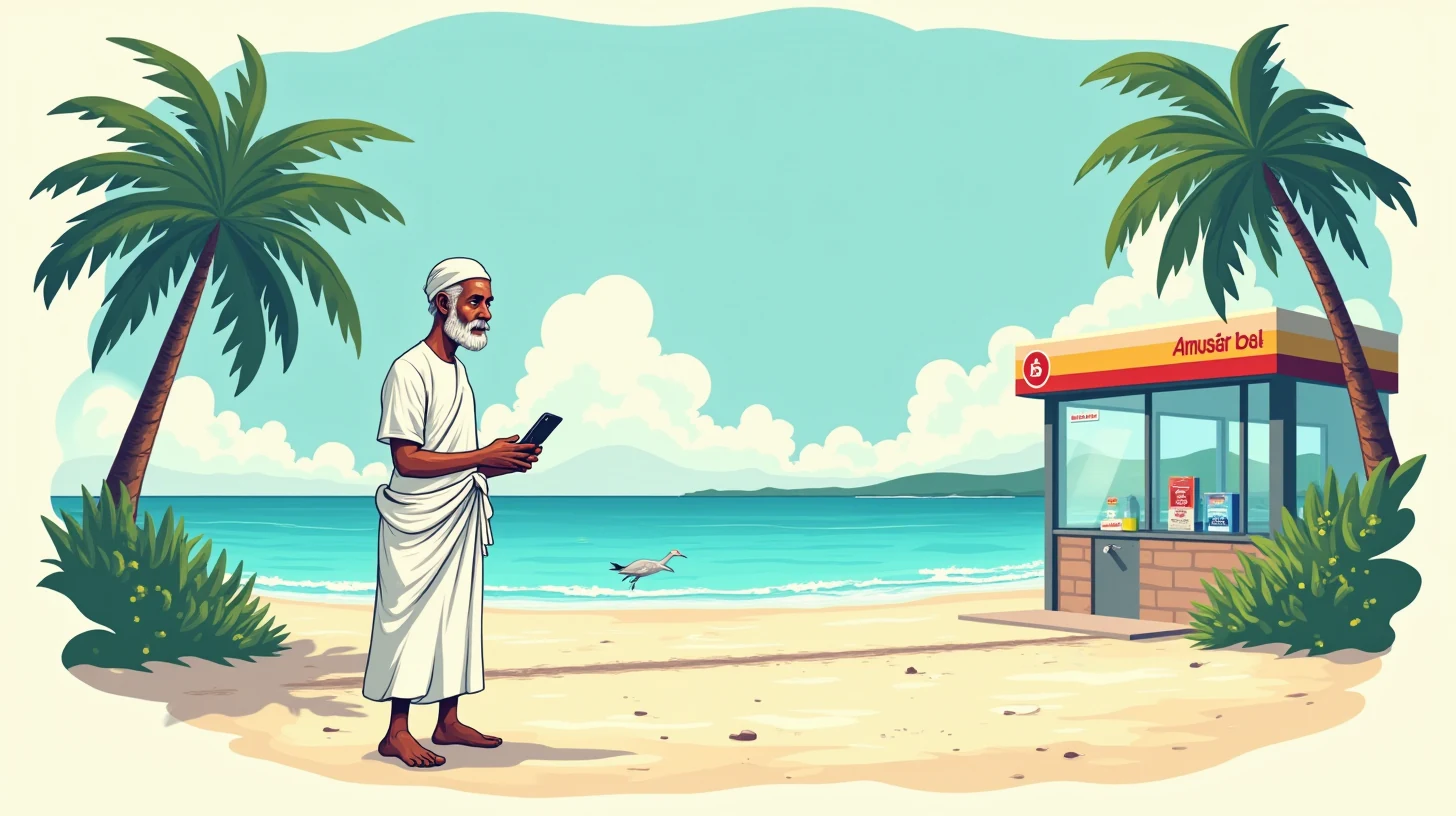
🗓️ Island Banking and Pension Access in Lakshadweep
Forty-five minutes round trip. No shortcut. No ATM.
At sixty-six, Ibrahim moved slowly now. His left knee troubled him on humid days, and Kavaratti's humid every day was humid. The morning walk to the bank counter—the only place in Kavaratti where he could withdraw cash from his pension account—had become a small tax on his freedom. Once a month, sometimes twice if he needed to buy medicine or pay his grandson's school fees, he made the journey.
The pension itself was reliable. Twenty-four thousand rupees, every month, credited to his SBI Kavaratti account without fail. Thirty years of teaching, and the government had honoured its promise. But the promise had an asterisk: the money arrived in a bank with no automated machines, no 24-hour access, no way to withdraw cash except by presenting his passbook to a teller between 10 am and 2 pm on weekdays.
Ahmed, his youngest son, called from Kochi every Sunday evening. "Appa, why don't you move here? Come stay with us. No more island, no more counter visits, no more shipping your documents around."
But Ibrahim had never left Kavaratti. His wife was buried here. His students' children were here. The lagoon was here—that particular shade of turquoise that existed nowhere else on earth, the shade he had tried to describe to his grandchildren in every letter he wrote to the mainland.
He had never asked if there was another way.
⚠️ Counter-Only Access, Counter Closed, Pension Inaccessible
In 2024, the problem became acute.
The SBI counter closed for branch renovation—three months of work, no warning in advance. Ibrahim showed up one Thursday morning and found the metal shutters down, a photocopied notice taped to the door. Reopening in 12 weeks. All services temporarily unavailable.
Twelve weeks. His pension would be credited three times during that period.
He had asked the bank manager, Rajesh Kumar, what he should do. "Withdraw in advance when we reopen," Rajesh suggested. "Keep the cash in a fixed deposit at home."
But that wasn't the real solution. That was a workaround for a man with nowhere better to be.
The real problem was deeper: Kavaratti, like many small island communities across Lakshadweep, existed in a banking gap. It had a bank branch (now temporarily closed). It had no ATM. It had no NACH (National Automated Clearing House) mandate facility. It had no digital payment infrastructure beyond the occasional NEFT transfer, which required in-person instruction at the counter anyway.
For a retiree on a fixed pension, that gap meant choosing between:
- Making a 300-kilometre journey by ship to Kochi every time he needed cash—a two-day ordeal, expensive, exhausting.
- Asking Ahmed to receive the money on his behalf—transferring dependence instead of autonomy.
- Withdrawing everything at once and keeping cash at home—risky, impractical, and contrary to banking advice.
- Accepting the counter walk as the price of living on an island he loved.
Ibrahim had chosen option 4 for five years. Now the counter was closed.
He sat in his house, looking at his pension passbook, and felt something close to anger for the first time since his retirement.
🌗 Agent Explains IPPB Option in Kavaratti
It was Ahmed's wife, Amina, who found the solution. She worked in insurance in Kochi and had used the India Post Payments Bank (IPPB) for her GST refunds. One evening, during a call home, she mentioned it to Ibrahim.
"There's a branch in Kavaratti," she said. "Near the market. I looked it up."
Ibrahim was skeptical. He had used the same SBI branch for thirty years. Change felt like betrayal.
But Amina sent him the contact details, and Ibrahim called the IPPB outlet the next morning. The manager, Fatima Naz, answered on the first ring.
"Yes, sir, we can take your pension credit. You would need to fill out a bank mandate change form and send it to the Lakshadweep Finance Department. They will update your Pensioner Payment Order. Takes about ten working days."
Ibrahim went to the IPPB outlet on a Friday afternoon. It was smaller than the SBI branch, tucked into a narrow shopfront near the fish market. But Fatima was waiting, and she had the forms ready.
Fatima walked him through the process in Malayalam. The form was straightforward—just his PPO details, his new bank account number (which she helped him open that same afternoon), and a letter to the Lakshadweep Finance Department.
"You'll need to get this form signed by two gazetted officers as witnesses," she explained. "Or you can have it certified by the Lakshadweep Finance Department office directly when you submit."
Ibrahim had taught government students for thirty years. He knew people. A retired district magistrate lived two houses away.
The letter took two days to draft. Ibrahim wrote it in his careful hand, explaining his situation without complaint, asking only for the pension bank to be changed. The magistrate signed it. Fatima witnessed it. Ibrahim submitted it to the Finance Department office in Kavaratti on Monday morning.
Fatima had warned him: ten working days. But in practical terms, it was faster. By the eleventh day, the pension mandate had been updated. The next month's twenty-four thousand rupees appeared in his new IPPB account instead of the old SBI account.
What it does
What it does not do
That first morning, when Ibrahim checked his phone and saw the balance—24,000 rupees in his new IPPB account—he set up UPI on his phone with Fatima's help. It took three hours. Fatima was patient. By the end, Ibrahim had a four-digit PIN, a QR code, and the ability to send money to Ahmed whenever he wanted.
He called Ahmed that evening.
"Appa, you did it," Ahmed said. There was relief in his voice. "Now you can send me money whenever you want. You don't need to keep cash."
"I can also keep some," Ibrahim said. "But yes. This is better."
"പെൻഷൻ വരുന്നു. പക്ഷേ എടുക്കാൻ ബാങ്ക് കൗണ്ടറിൽ നിൽക്കണം. ATM ഇല്ല. ഇത് ജീവിക്കാൻ പറ്റുന്ന ഏർപ്പാടല്ല."The pension comes. But to take it out I must stand at the bank counter. No ATM. This is not a liveable arrangement.
The agent who helped Ibrahim—in this case, Fatima at the IPPB branch—understood the problem not as bureaucratic but as human.
"കവരാത്തിയിൽ ATM ഇല്ല. SBI കൗണ്ടർ മാത്രം. പക്ഷേ IPPB ഉണ്ട്—അത് ഓപ്പൺ ഓടുന്നു, ആറ് ദിവസം. UPI സാധ്യമാണ്. നിങ്ങളുടെ പെൻഷൻ ഇവിടെ ക്രെഡിറ്റ് ചെയ്യാൻ കഴിയും. അരനാഴിക നടത്തത്ത് വിട്ടേർപ്പാടാകാം."
(Kavaratti has no ATM. Only SBI counter. But IPPB is here—it runs six days a week. UPI is possible. Your pension can be credited here. The forty-five-minute walk can stop.)
🧭 Systemic: Island Communities and the Banking Gap
Ibrahim's problem was not unique to him. It was endemic to Lakshadweep—and to many island and remote communities across India.
The banking gap exists at the intersection of geography and policy. Banks optimize for density and volume. A branch in a city with fifty thousand people justifies an ATM, a 24-hour service, digital integration. A branch in Kavaratti, serving perhaps two thousand, becomes a counter-only operation. The economics are brutal and impersonal.
The policy gap comes next. The Pensioner Payment Order (PPO)—the document that authorizes monthly pension disbursement—is tied to a specific bank account at a specific branch. Changing it requires intervention from the state Finance Department. There is no simple online process. There is no recognition that an elderly retiree in a place with no ATM might reasonably want to change banks.
NACH (National Automated Clearing House) mandates—which could solve the problem by allowing automatic transfer of pension credits to a second account—are theoretically available in Kavaratti. But they require infrastructure, training, and awareness from both the originating bank (where the pension is credited) and the receiving bank (where the retiree wants the money). When the originating bank is counter-only, the mandate becomes moot.
The third gap is awareness. Ibrahim had never heard of IPPB until Ahmed's wife mentioned it. The SBI manager had never suggested it. The Lakshadweep Finance Department had no public communication about pension bank change options for residents in underbanked areas.
And so the gap perpetuates. Retirees walk. Or they leave the island. Or they ask their children to help, converting autonomy into dependence.
Ibrahim had never thought to complain about this until the SBI counter closed. Then, suddenly, the gap became a crisis.
🌱 Quiet Close: UPI Access from Kavaratti
On the morning of the day the IPPB account was fully activated, Ibrahim woke at 5:30 am as always. He sat on his verandah with tea, watching the lagoon change colour. The turquoise was beginning to appear—first pale, then deeper, until by 7 am it was the colour he had tried to paint in a card for his grandchildren years ago.
He took out his phone—a second-hand Samsung that Ahmed had sent him, with large print—and opened the IPPB app. The balance showed 24,000 rupees. It was a small thing, seeing money on a screen instead of in his passbook. But it felt like freedom.
He had nowhere to go this morning. No counter to visit. No appointment to keep.
He opened WhatsApp and called Ahmed. His son picked up immediately.
"Can you receive a transfer?" Ibrahim asked in Malayalam.
"Now?"
"Yes, now."
Ahmed sent his UPI ID. Ibrahim found the send button in the app—Fatima had shown him three times—and typed in Ahmed's details. He sent 5,000 rupees. It took forty seconds. The confirmation came back instantly.
"Appa, I got it," Ahmed said, laughing. "You did it. You actually did it."
Ibrahim hung up and sat back in his chair. The sun was fully up now. The fishermen were farther out, tiny figures in boats. The school—his school—was just visible over the palm trees, its white walls bright against the blue sky.
He had taught in that school for thirty years. He had taught the children of fishermen and administrators and shopkeepers. He had taught the history of the islands, the Malayalam language, the stories of India. He had stayed when others left. He had loved this place.
And now, from his verandah, without walking anywhere, he could send money to his son in Kochi. He could check his balance any time. He could withdraw cash from the IPPB counter when he needed it—which he probably would, sometimes, out of habit.
But the walk was optional now. That was the change.
That afternoon, Ibrahim went to the IPPB branch to thank Fatima. She was busy with another customer, so he waited. When she was free, he brought her a small package of halwa his wife had made, stored in the freezer since her death—he had taken it out that morning, thawed it carefully, and wrapped it in wax paper.
"You changed my life," he told her in Malayalam.
Fatima laughed. "I just showed you what was already possible. You did the work."
But Ibrahim knew it was more than that. Fatima had taken a problem that felt impossible and broken it into steps. She had not told him to ask his son for help. She had not suggested he move away. She had offered autonomy back to him, disguised as a bank account.
He walked home slowly, the afternoon sun hot on his shoulders. The lagoon was at its brightest now—the turquoise so vivid it seemed unreal. He thought about Ahmed in Kochi, about the pension that had arrived faithfully every month for five years, about the counter in SBI that was closed but no longer mattered.
The island had not changed. Kavaratti still had no ATM. The SBI counter would eventually reopen, and he might never visit it again. But something in his relationship to the island had shifted. He was not trapped here. He was not dependent. He was simply here—choosing to be here, able to be here, with his pension in an accessible account and his phone in his pocket.
The next morning, he did not wake at 5:30. He slept until 6. When he got up, he made tea without rushing. He sat on his verandah and watched the lagoon turn from grey to turquoise, and for the first time in five years, he had nowhere he needed to go.