
The Shimla teacher and the HimCare card that lapsed during the lockdown
Kamla Devi Thakur has walked the pine-lined lanes of Shimla every day for thirty-one years. Not as a tourist, but as a teacher—first at a primary school in the Mall Road bazaar, then at a government senior secondary school on the ridge that overlooks the Himalayas. Her students called her Kamla ma'am. She taught Hindi, history, and civics. She believed that teaching was nation-building, and she carried that belief through three decades of monsoons, exam seasons, and the quiet victories of a child learning to read.
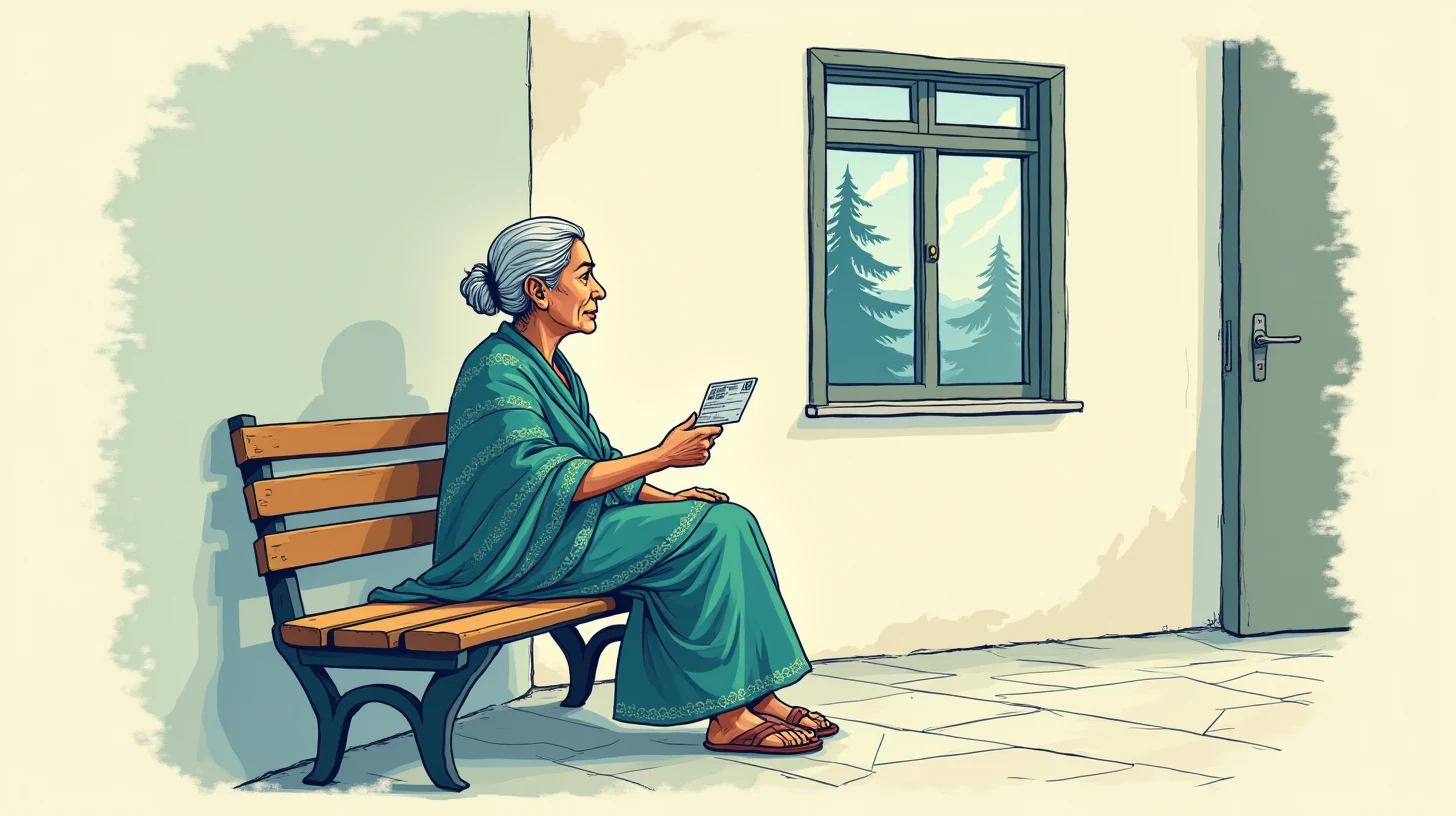
At sixty-nine, Kamla should have been the kind of woman who sits in the sun outside her home, watching the rhododendrons bloom. Instead, she was limping. The pain in her left hip had started in 2022—a small ache that became a sharper ache, then a constant throb that made climbing the government school's outdoor stairs an ordeal. By early 2024, she could barely manage a full day of standing in the classroom. Her GP referred her to an orthopaedic surgeon at Indira Gandhi Medical College in Shimla. The diagnosis was clear: osteoarthritis with bone-on-bone contact. She needed a hip replacement.
The surgeon gave her an estimate: ₹2.8 lakh. Even with her government pension, that was nearly eighteen months of her income. She had savings, yes—a modest deposit kept for emergencies—but the amount felt impossible. She thought of her HimCare card, tucked in a drawer at home. HimCare was supposed to cover this. She was a state government pensioner. She had been enrolled at retirement. The card had been in her wallet for a decade. Surely it would work.
But when she called the HimCare helpline to ask about coverage, the agent checked her number and paused. "Ma'am, your card shows inactive. When did you last pay your premium?"
The word inactive landed like a stone.
🗓️ HimCare and the renewal most pensioners miss
HimCare is Himachal Pradesh's answer to healthcare security for government workers and their families. It is not glamorous—it covers treatment at empanelled government and private hospitals, caps claims at ₹5 lakh per year, and operates on the principle of cashless treatment at the point of service. But for a pensioner like Kamla, living on ₹18,000 a month in a hill town, HimCare is the difference between getting medical care and selling land to pay for it.
The scheme works on an annual renewal cycle. The premium is modest: ₹365 per year for retired teachers. That is just over ₹30 a month—the price of a cup of chai at a street stall. The catch is that the premium must be paid during the renewal window, which officially runs from June to August. Miss the window, and the card becomes inactive. You are out. Your coverage is void.
For educated, urban retirees who pay bills online and track deadlines in their phones, this is manageable. For elderly women living in hills, many of whom do not have smartphones or regular internet access, the renewal window is a thin line to walk. And in 2020, when the entire country locked down, that line became invisible.
The renewal window of 2020 fell during the peak of the COVID lockdown. Offices were shuttered. The internet in many parts of Shimla was spotty. Instructions about how to renew were not broadcast widely. The state extended the renewal window—this part is crucial—but the extension was announced through official channels that many pensioners did not monitor. Newspapers carried notices in small print. WhatsApp messages circulated, but slowly and unreliably in the elderly networks where Kamla moved. When the window quietly closed, Kamla had not renewed her premium. Neither had thousands of other HP pensioners. The card had lapsed.
For four years, she had carried an inactive card. She did not know it was inactive. The card looked the same. It felt real in her hand. But in the system, it was a ghost.
- 📅
2020–2022: HimCare renewal window missed
COVID lockdowns prevent Kamla from reaching the renewal office. The standard June–August renewal window passes each year. Card becomes inactive.
- ❌
Hospital: card inactive — ₹2.8 lakh required
IGMC Shimla confirms the HimCare card is inactive. Without coverage, hip replacement costs ₹2.8 lakh. Kamla considers selling ancestral land.
- 📋
Grace period reinstatement application on NHPS HP portal
COVID-era lapse provision: file reinstatement with COVID-lockdown reason + all missed premiums (₹365 × years). Takes 12 working days.
- ✅
Card reinstated — hip surgery covered
HimCare reinstated. IGMC Shimla is empanelled. Surgery scheduled. ₹2.8 lakh covered under ₹5 lakh annual HimCare limit.
⚠️ The ₹2.8 lakh question
Kamla's daughter, Sunita, lived in Delhi. When her mother called with the news that the card was inactive, Sunita wanted to send money immediately. But her own finances were tight—her husband worked in IT, yes, but Delhi rents were brutal. ₹2.8 lakh was not a sum she could wire without upending her own household. Kamla knew this. She did not ask twice.
Instead, she thought of the plot of land her husband had bought forty years ago, a small piece of Himalayan earth on the outskirts of Shimla. It was not much—maybe worth ₹35 lakh now, if the market was generous—but it was an inheritance for Sunita. The thought of selling even a corner of it made her chest tight. That land was supposed to be her daughter's future.
She called an orthopedic surgeon who worked at a private hospital in the city center. His price: ₹2.8 lakh, payable up front. She asked if she could do it in installments. He said no. Medical tourism to Delhi or Bangkok? The travel alone would be a problem at her age, in her pain.
For the first time in her life, Kamla felt trapped by the system she had served. Thirty-one years of teaching civics—lessons on the right to health, on government schemes, on the social safety net—and now the safety net had a hole.
"मैंने तीस साल पढ़ाया। क्या मुझे अपनी जमीन बेचकर कूल्हा ठीक करना होगा?"— I taught for thirty years. Must I sell my land to get my hip fixed?
🌗 The grace period provision
It was Sunita who found the solution, late on a Tuesday evening, scrolling through an HP government health website on her laptop in Delhi.
There was a provision. A COVID-era grace period for state pensioners whose HimCare cards had lapsed due to missed renewals between March 2020 and December 2022. The provision allowed reinstatement if:
- You filed an application through the NHPS HP (National Health Protection Scheme Himachal Pradesh) unified portal.
- You cited the COVID-lockdown as the reason for the lapse.
- You paid all missed premiums at once.
The provision existed. It was in the official documents. But it was not advertised. It was not sent via SMS to lapsed members. It was not called out in renewal notices. It was simply there, a quiet exit from the trap, waiting for someone to find it.
Sunita called her mother. She read out the procedure. Kamla sat very still, listening.
"So I can get the card back?" she asked.
"Yes, Maa. You just need to apply."
The next morning, Kamla walked to the cyber café on the main road in Shimla—a small shop run by a young man named Rohan, who helped pensioners file government forms. She brought her HimCare card number, her Aadhaar, and a notebook where she had written down the years: 2020, 2021, 2022. Three years of missed premiums. ₹365 × 3 = ₹1,095. The cost of her silence.
Rohan filled out the NHPS HP reinstatement form. The application asked for the reason for lapse. Kamla dictated in Hindi, and Rohan typed: "COVID-19 lockdown, renewal notice not received, window not monitored during health crisis." They uploaded the documents. They paid the ₹1,095 for the three missed years, plus the current year's premium of ₹365. ₹1,460 total. They submitted.
The submission confirmation came immediately. The next part would take time.
Two weeks later, Kamla received a call from the NHPS HP helpline. The application had been reviewed. The grace period reinstatement was approved. Her HimCare card would be reactivated within 48 hours. Her coverage, backdated to 2024, would be effective immediately.
She hung up the phone and sat on her bed, holding the handset in both hands.
What it does
- 🔍Identifies the COVID grace period provision and confirms Kamla's premium lapse falls within the eligible window
- 📋Guides the NHPS HP portal reinstatement application: what to write in the COVID-reason field and how to pay missed premiums
- 🏥Confirms that IGMC Shimla is a HimCare empanelled hospital and that hip replacement is covered under the scheme
What it does not do
- 🔒Never accesses the NHPS HP portal or submits the reinstatement application on Kamla's behalf
- ✅Never guarantees the reinstatement will be approved — the NHPS HP review determines that
Agent dialogue: Understanding the reinstatement
When Kamla visited the NHPS HP office in Shimla to confirm her reinstatement and ask about hospital coverage for her hip surgery, the health advisor, a woman named Priya, walked her through the details in Hindi.
Priya: "देखिए, आपका हिमकेयर कार्ड अब एक्टिव हो गया है। कोविड के दौरान जो प्रीमियम मिस हुए, उसका ग्रेस पीरियड प्रोविजन से आप रीइंस्टेट हो सकती हैं। आप ₹1,460 का पेमेंट कर चुकी हैं। अब आपको ₹5 लाख तक का कवरेज मिलेगा।"
"Look, your HimCare card is now active. The grace period provision for premiums missed during COVID allows you to reinstate. You have paid ₹1,460. Now you will get coverage up to ₹5 lakh."
Kamla: "और हिप रिप्लेसमेंट? इंदिरा गांधी मेडिकल कॉलेज में?"
"And the hip replacement? At Indira Gandhi Medical College?"
Priya: "हाँ, आईजीएमसी हमारे नेटवर्क में है। आपकी सर्जरी पूरी तरह कवर होगी। आप सीधे अस्पताल जाइए, अपना कार्ड दिखाइए, और कैशलेस ट्रीटमेंट लीजिए। कोई भी पैसा पहले से नहीं देना है।"
"Yes, IGMC is in our network. Your surgery will be fully covered. Go directly to the hospital, show your card, and get cashless treatment. No money upfront."
Kamla: "और आने वाले साल में?"
"And in the coming years?"
Priya: "हर साल जून में अपनी रिन्यूअल प्रीमियम का इंतजार करिए। अगर आप हर साल भर देंगी, तो कार्ड हमेशा एक्टिव रहेगा। और अगर कभी आप प्रीमियम भूल जाएँ, तो तुरंत हमें कॉल करिए। हम अब जानते हैं कि आप कौन हैं।"
"Every year in June, watch for your renewal premium notice. If you pay every year, your card will stay active. And if you ever miss the premium, call us right away. We know who you are now."
The conversation lasted ten minutes. When Kamla left the office, she had a reinstatement letter, a list of empanelled hospitals, and Priya's direct phone number written on the back of a yellow sticky note.
🧭 The renewal gap COVID created
Kamla's story is not unusual in Himachal Pradesh. The state health ministry estimates that roughly four thousand pensioners had HimCare cards lapse between 2020 and 2022. Most were elderly, many in rural or semi-rural areas. Most did not know that the grace period provision existed.
This gap reveals a systemic problem: schemes work only when people know about them. HimCare itself is well-designed—the premium is affordable, the coverage is meaningful, and the network of empanelled hospitals reaches into district towns and villages. But the grace period, though well-intentioned, was a quiet policy inserted into official documentation with no accompanying public campaign. Pensioners who missed the news were left stranded, unaware that they had a path back to coverage.
The core service—HimCare reinstatement through the grace period—is free for eligible pensioners. A premium service, available through GabFORGE, could add value: automated renewal reminders sent to a pensioner's registered email or phone number 30 days before the June renewal window opens. It would be a small thing. But it would prevent the grief.
For now, the provision remains a secret kept by bureaucrats and discovered by daughters scrolling through PDFs.
🌱 Walking downhill again
Kamla's hip replacement was scheduled for July 2024, three months after her card was reinstated. The surgery took place at IGMC Shimla on a hot Tuesday morning. The hospital staff knew her card was active. She walked in, showed her HimCare card, and underwent a three-hour operation. She paid nothing at the hospital. The costs went directly to HimCare's ledger.
The recovery was slow and difficult. Physiotherapy three times a week. Pain. Patience. But the pain of recovery was different from the pain of the disease. It was pain with a purpose.
Six weeks after the surgery, Kamla walked to the school where she had taught for thirty-one years. The principal, a woman Kamla had trained during her own years of leadership, met her at the gate. They sat in the staff room, drinking chai, and the younger teachers came to say hello to Kamla ma'am.
The walk had taken twenty minutes—down the ridge, through the Mall Road bazaar, up the slope to the school's entrance. Without a cane. Without limping.
When she left the school, she walked past the statue of Kali Nath in the center square, and she smiled.