
The Srinagar civil servant and the commutation table that changed in 2019
Mohammad Yusuf Bhat sat in his Srinagar home, the walnut desk beneath his hands still bearing the weight of three decades of government service. Thirty-one years in the J&K Administrative Service—from a young officer in 1988 to a man of 62 in 2019, when the world shifted beneath him.
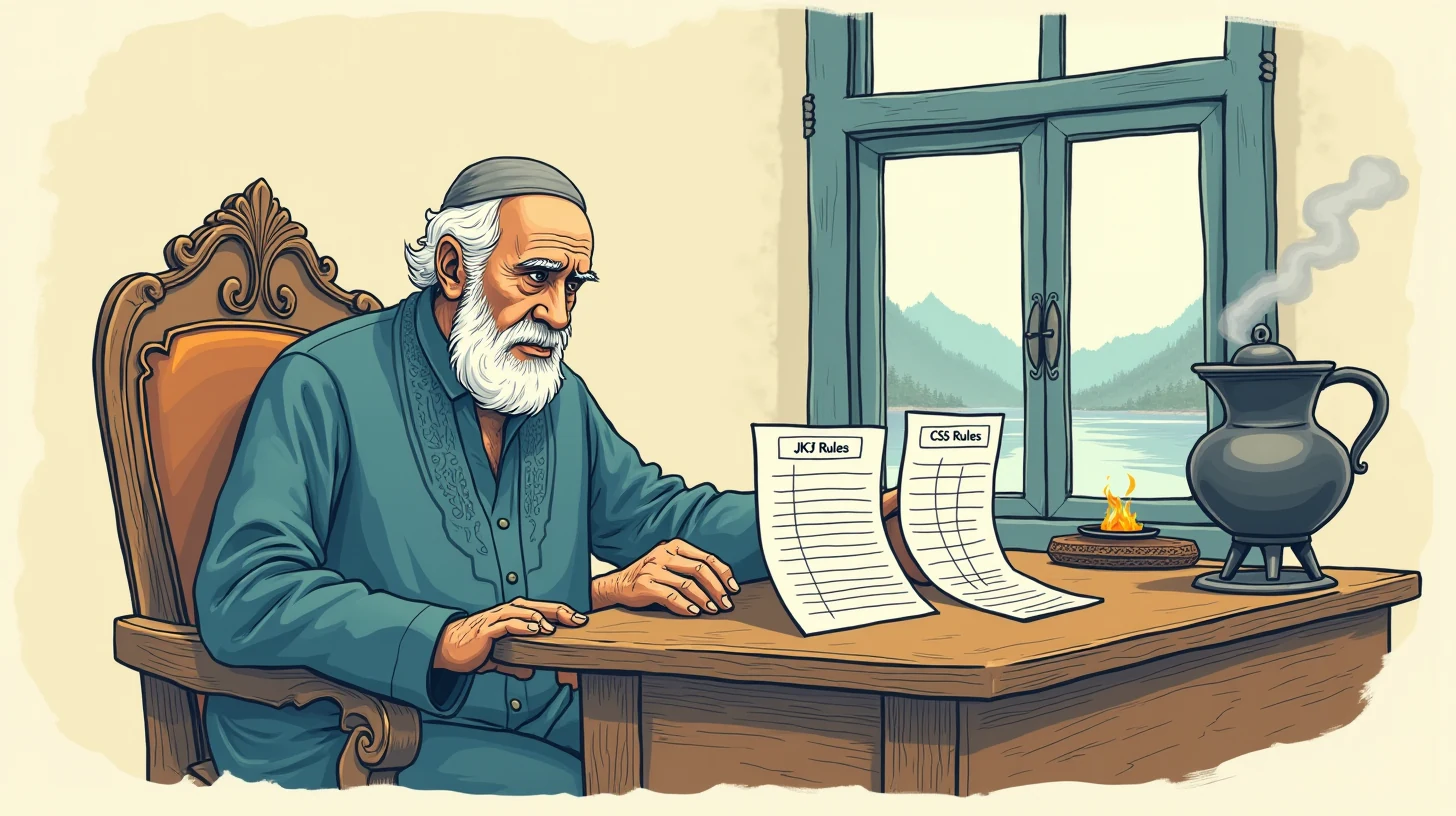
🗓️ J&K reorganisation and what changed for civil servants' pensions
On August 5, 2019, Article 370 of the Indian Constitution was abrogated. The state of Jammu and Kashmir ceased to exist as a constitutional entity. In its place stood a Union Territory, governed by different rules. For the 15,000 civil servants in the state's establishment, the change was not merely political—it was financial, administrative, and for many, deeply personal.
The pension rules that had governed Mohammad's career for three decades were replaced overnight. The J&K Service Regulations, which had defined how officers like him would retire and receive their due, gave way to the Central Civil Services (CCS) Rules. These were the same rules that governed officers across India—uniform, centralized, and in Mohammad's case, offering him less.
His department had issued a pension account statement in October 2019, two months after the reorganisation. He had been eligible for commutation—the option to exchange a portion of his monthly pension for a lump sum payment at retirement. The number on that statement looked reasonable to him then. He was sixty, ready to retire, and the figure seemed in line with what he expected.
He didn't know it was wrong.
⚠️ The ₹3.2 lakh difference he almost didn't notice
The difference might have stayed hidden forever if his son hadn't been following the rules gazette from Delhi.
Arun Bhat, Mohammad's younger son, worked in a software firm in Gurgaon. When the reorganisation happened, he had ordered the official gazette from the Government of India's publications portal, less out of filial duty than professional curiosity—he wanted to understand the administrative mechanics of what was perhaps the most significant constitutional change in Kashmir's modern history. Scrolling through the dense text on a train to Bangalore one evening, something caught his eye.
The J&K Reorganisation (Pension Protection) Rules 2019 contained a clause about transitional benefit. Officers who were in service before October 31, 2019 could choose—could actually choose—which set of rules to apply to their pension calculation. Not just their basic pension, but the specific factors used for commutation.
Arun called his father that night.
"Abbu, did they ask you which table you wanted?"
Mohammad said no. He had been told his pension would be calculated under CCS rules. That was all.
Arun sent him the gazette pages. Together, over video calls, they began to understand what their family accountant had not explained, what the Pension Cell had not volunteered.
Under the old J&K Service Regulations, the commutation table used a factor of 10.46 for an officer commuting at age 60. Under the CCS Rules, the factor was 9.81. The difference between these two numbers—seemingly minor—was not minor at all.
Mohammad's monthly pension was ₹52,000. If he commuted one year's worth of pension (a common choice), the calculation would be:
- Under J&K rules: ₹52,000 × 12 × 10.46 = ₹65,52,480
- Under CCS rules: ₹52,000 × 12 × 9.81 = ₹61,27,440
The difference was ₹4,25,040.
But Mohammad had not claimed his full year's commutation. He had claimed for six months. Even on that reduced figure, the J&K table would have given him ₹3,20,000 more.
Three years later, sitting in his home with winter approaching, Mohammad Bhat understood that his retirement had cost him more than ₹3 lakh—money that should have been his, according to rules that had once been law.
:::infographic type: compare title: Commutation factor at age 60 — J&K Rules vs CCS Rules data:
- name: "J&K Service Regulations" value: 10.46 color: "#1985A1" label: "Higher commutation factor"
- name: "CCS Rules" value: 9.81 color: "#1E2226" label: "Lower commutation factor" impact: "On a ₹52,000 monthly pension commuted for 6 months: ₹3,20,000 difference" :::
:::infographic type: boundary entity: "Mohammad Yusuf Bhat, J&K Administrative Service" before: "August 4, 2019" after: "August 5, 2019" change: "Pension rules shift from J&K Service Regulations to Central Civil Services (CCS) Rules" impact: "Commutation factor drops from 10.46 to 9.81; transitional protection clause not communicated" :::
🌗 Agent explains the protection clause
"آپ کے سروس سے پہلے کے قوانین منتقل کرنے کا حق آپ کو ہے۔ 31 اکتوبر 2019 سے پہلے خدمت میں رہنے والے افسروں کو یہ اختیار دیا گیا ہے کہ وہ اپنے فائدے کے لیے پرانے قوانین منتوں یا نئے قوانین منتو—دونوں میں سے کہ جو انہیں زیادہ فائدہ دے۔"
"You have the right to apply the rules that were in place before you retired. Officers who were in service before October 31, 2019 have been given the option to choose between the old rules or new rules—whichever gives you a better benefit."
The pension system, like many bureaucratic systems, does not announce its gifts. It waits to be asked. The clause existed in the official gazette, published without fanfare. But between publication and application lies a gap—the gap where civil servants retire without knowing what they were entitled to claim.
The J&K Reorganisation (Pension Protection) Rules 2019 laid this out with technical precision in Section 4:
"An officer who has completed service before the appointed date [October 31, 2019] and has chosen to take commutation under the erstwhile J&K Service Regulations shall be entitled to receive such commutation in accordance with the commutation table applicable under the erstwhile J&K Service Regulations, provided such commutation yields a benefit higher than what would accrue under the CCS Rules."
This is the language of fine print. Of an umbrella designed to protect, but only for those who knew to carry it.
Mohammad's case was not unique. Across Kashmir's civil service, hundreds of retiring officers had received revised pension statements without explanation of what rules governed them. Some had already taken their commuted lump sums and moved on. Others, like Mohammad, sat with the knowledge that their department had never told them they had a choice.
The protection clause was there—but only if you read the gazette. Only if your son in Delhi was curious about constitutional law. Only if you had the confidence to challenge a pension statement issued by a government that had just reorganised itself.
🧭 Systemic: transition rules nobody informed civil servants about
This is not a story about corruption or deliberate wrongdoing. It is a story about the machinery of administration moving faster than the people it serves.
When J&K became a Union Territory, the transition was handled by the Ministry of Home Affairs. The Pension Cell in the UT Administration was tasked with recalculating pensions for thousands of officers under new rules. The work was technical, urgent, and largely invisible. Officers like Mohammad received letters informing them of their revised pension, but no one explained that they could have chosen differently.
In Srinagar, in Jammu, in smaller towns where J&K officers had spent their careers, there were no seminars. No circulars explaining the protection clause. No advisories suggesting that officers might want to compare tables.
The burden of knowledge fell entirely on the retiree.
"قواعد بدل گئے، لیکن ہمیں بتایا نہیں گیا۔ فرق سمجھنے میں تین سال لگ گئے۔"The rules changed, but we were not told. It took three years to understand the difference.
This gap between rule and notification is endemic in how India's bureaucracy manages transitions. A new rule is published in the official gazette—technically, notification is complete. Whether officers understand it, whether they know they can exercise it, whether they have the resources to challenge an existing statement: these are not the administration's responsibility.
Mohammad's walnut desk held not just his own service records, but the weight of this systemic assumption—that bureaucracy speaks, and citizens listen. That rules are rules, even when they are not explained. That a pension statement, once issued, is final, even when better options exist.
For a man who had spent thirty-one years being the administration, retiring into this assumption was particularly bitter.
🌱 Quiet close: revised calculation, higher commutation
The solution, when it came, was neither quick nor easy. It required Mohammad to write a representation—a formal letter to the J&K Finance Department Pension Cell—citing the protection clause and requesting recalculation under J&K Service Regulations. This step required confidence: the confidence to contest a government statement, even if the rules allowed it.
His son Arun helped him draft the letter. Mohammad submitted it in January 2022, three years after his retirement.
The response took twenty working days. The Pension Cell issued a revised calculation. The commutation factor was changed to 10.46. His lump sum was recalculated, and he received the additional ₹3,20,000 in a supplementary payment.
The amount was transferred to his bank account on a Tuesday in February. He received a terse acknowledgment letter. No one called to explain what had happened or why the original statement had been silent about his options.
Mohammad deposited the cheque in the bank, and for the first time in three years, the weight shifted slightly. The money was his. Not justice—justice would have been knowing about the option when he retired. But it was recovery.
He sits now in his home in Srinagar, with the kangri warming against the cold coming off Dal Lake. His son calls less frequently—life in Gurgaon has become busier. The walnut desk still holds papers, though now they are mostly old service records, letters of posting, performance reports from a career that exists only in memory and archive.
The pension keeps coming every month. It is higher than he expected it to be. And that, in a system that often forgets its own rules, is a small form of grace.
What Mohammad Yusuf Bhat learned:
The J&K Reorganisation (Pension Protection) Rules 2019 explicitly grant officers who were in service before October 31, 2019 the right to choose whichever pension rule—old or new—gives them a higher benefit. This applies to commutation factors, rates of dearness relief, and other benefit calculations. If you were a J&K civil servant and have received a pension statement since the reorganisation, check your commutation factor. If you chose commutation but your statement uses the CCS factor (9.81), you may be eligible for recalculation under the J&K table (10.46 or higher, depending on your age at commutation). Submit a written representation to the J&K Finance Department Pension Cell with specific reference to Section 4 of the protection rules. Most officers receive revised calculations within 20 working days.